• Global CNC market projected to reach $128B by 2028 • New EU trade regulations for precision tooling components • Aerospace deman
NYSE: CNC +1.2%LME: STEEL -0.4%

Industrial lathe vibration causes that are not machine wear
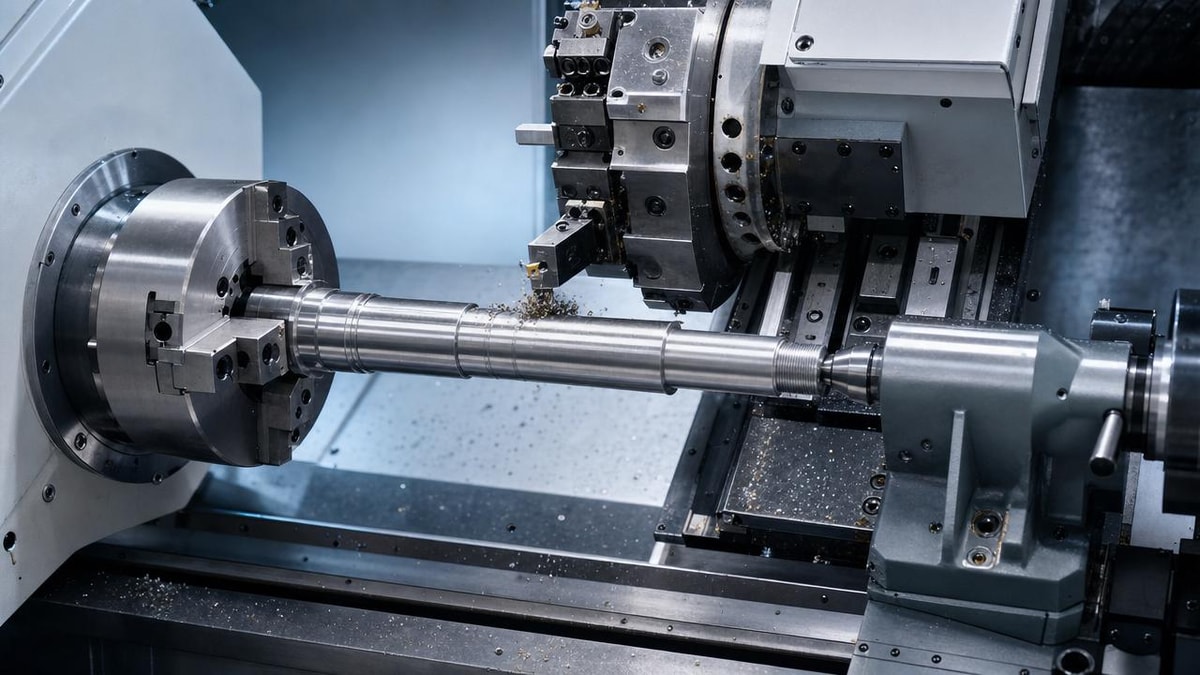
Vibration in an industrial lathe does not always mean worn bearings, loose slides, or aging components. For after-sales maintenance teams, many vibration issues actually come from setup errors, unstable foundations, tooling imbalance, workpiece clamping, cutting parameters, or external interference. Understanding these non-wear causes can help technicians diagnose problems faster, reduce unnecessary part replacement, and restore stable machining performance with greater accuracy and efficiency.
Why non-wear vibration issues are becoming more important in industrial lathe service
A clear change is taking place across the CNC machine tool sector. In the past, vibration complaints on an industrial lathe were often handled through a wear-first mindset: inspect bearings, replace belts, tighten mechanical joints, and assume the root cause was age-related degradation. That approach still matters, but it no longer explains a large share of field problems. Modern production environments run faster cycles, tighter tolerances, shorter batches, and more frequent changeovers. As a result, many vibration events now appear on machines that are mechanically healthy but operating under unstable process conditions.
This shift matters especially for after-sales maintenance personnel. Customers expect rapid recovery, accurate diagnosis, and minimal downtime. If the maintenance response focuses only on component wear, the team may replace parts that are not defective while the actual source of vibration remains active. That leads to repeat service visits, lower trust, and higher support cost. In today’s manufacturing climate, the better question is not only “what is worn?” but also “what changed in the process, setup, environment, or workload?”
For the industrial lathe market, this reflects a broader trend toward system-level troubleshooting. Machine performance is increasingly shaped by tooling strategy, fixture design, floor conditions, operator setup discipline, spindle load variation, digital parameter changes, and interactions with nearby automated equipment. In other words, vibration diagnosis is moving from isolated machine repair to cross-functional production analysis.
What current shop-floor signals are telling after-sales teams
Several practical signals suggest that non-wear vibration causes are becoming more common in industrial lathe applications. First, many service cases involve relatively new machines. Second, vibration may appear only during a specific job, material, tool overhang, or spindle speed band. Third, the same machine may run smoothly during one shift and poorly during another because setup consistency changes. Fourth, automation upgrades such as bar feeders, robots, or conveyor systems can introduce dynamic interference even when the core machine remains in good condition.
These signals are especially visible in industries with mixed-part production, demanding surface finish requirements, and higher spindle utilization. Automotive suppliers, aerospace subcontractors, energy equipment shops, and precision component manufacturers all push the industrial lathe closer to process limits. Under these conditions, a small setup deviation can generate chatter, harmonic vibration, or dimensional instability that looks like wear but is actually operational.
The main non-wear causes behind industrial lathe vibration
The most important trend in diagnosis is that vibration on an industrial lathe increasingly comes from dynamic conditions, not only from mechanical deterioration. One major factor is installation quality. A machine that is poorly leveled, mounted on an uneven floor, or exposed to a weak foundation may transmit vibration through the structure. This becomes more visible as machining speeds rise and part tolerances tighten.
Another frequent cause is tooling imbalance or unsuitable tool assembly. High-speed holders, long overhang tools, mismatched insert geometry, and damaged tool seating can all create unstable cutting behavior. In many cases, the industrial lathe itself is not faulty; the cutting system is exciting vibration under certain speed and feed combinations. This is why parameter tuning and tool configuration review are now essential parts of service work.
Workpiece clamping is also a growing issue. As customers machine thinner walls, longer shafts, harder alloys, and more complex geometries, the margin for clamping error narrows. Excessive chuck pressure can deform the part, while insufficient support can allow deflection and chatter. Tailstock alignment, steady rest setup, jaw condition, and grip length all influence the stability of the cut.
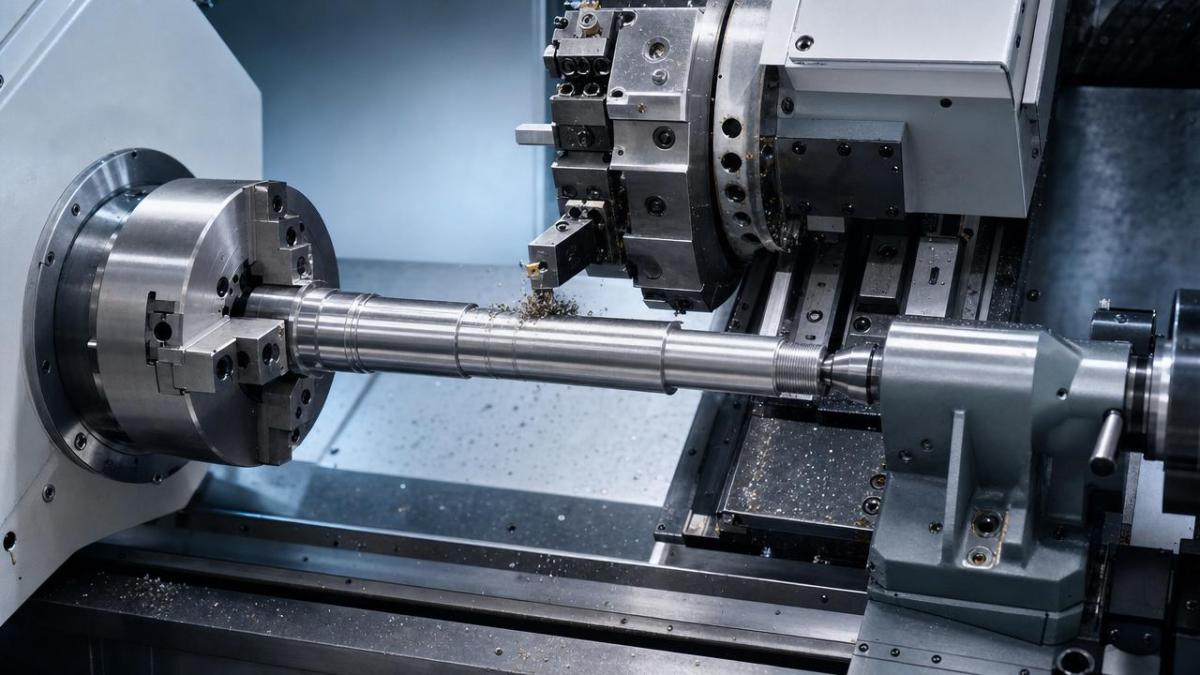
External interference should not be underestimated either. Nearby stamping presses, forklifts, overhead cranes, compressors, coolant units, and robotic handling cells may introduce periodic disturbance into the industrial lathe environment. Electrical supply fluctuation can also affect servo behavior and spindle smoothness. These influences are easy to miss if the service team limits inspection to the machine envelope alone.
Finally, software and process changes are becoming a larger contributor. Updated NC programs, altered spindle acceleration settings, modified tool paths, or more aggressive cycle time targets may push the machine into unstable operating zones. In highly automated factories, even small digital adjustments can create a vibration complaint that has no connection to machine wear.
Why these changes are happening now
The rise of non-wear vibration causes in industrial lathe service is not random. It is driven by several broader industry shifts. Manufacturers are pursuing higher productivity, which means faster spindle speeds, larger depth-of-cut strategies, and reduced setup time. At the same time, part diversity is increasing. A single industrial lathe may process different materials, diameters, and batch sizes in one day, creating more opportunities for setup inconsistency.
Another driver is labor structure. Many plants face skill gaps, especially in setup optimization and vibration interpretation. Operators may know how to run the machine, but not always how to identify the difference between structural wear and process-induced chatter. This makes after-sales teams more important as technical advisors rather than just repair responders.
The continued expansion of smart manufacturing also plays a role. Integrated monitoring, automated loading, remote diagnostics, and data-driven maintenance are improving visibility, but they also reveal that many vibration problems are event-based and context-dependent. This is changing expectations: customers increasingly want root-cause clarity, not just part replacement.
How the impact differs across maintenance, production, and customer service
For after-sales maintenance personnel, the biggest impact is diagnostic complexity. A vibration complaint on an industrial lathe may now involve the machine installer, process engineer, tooling supplier, and production supervisor. Service teams need stronger cross-check routines, including job history review, parameter verification, fixture inspection, and environmental observation.
For production teams, the impact is lost stability. If a non-wear cause is mistaken for component failure, valuable time may be spent waiting for parts or performing unnecessary disassembly. Meanwhile, scrap rates, tool consumption, and cycle variation continue. In high-mix manufacturing, this can quickly affect delivery performance.
For customer-facing service organizations, the impact is commercial. Repeated unresolved vibration issues can reduce confidence in the industrial lathe brand even when the machine design is not the real problem. That is why faster differentiation between wear-related and non-wear-related causes has become a strategic service capability.
What maintenance teams should pay closer attention to now
The strongest signal for service teams is that industrial lathe vibration should be investigated in sequence, not by assumption. A practical sequence starts with the operating context: when did the vibration begin, during which program, at what speed, with which tool, and after what change? Next comes setup verification: leveling, foundation stability, chucking, tailstock, support method, and tool projection. Only after these checks should the team move deeper into spindle, drive, and mechanical component analysis.
Another priority is trend recording. If the industrial lathe vibrates only in a narrow speed range or only with one workpiece family, that pattern is valuable evidence. Field technicians should document process windows, not just symptoms. Over time, this builds a knowledge base that improves first-time fix rates.
It is also increasingly useful to coordinate with customer process staff. In many cases, the final solution may involve changing insert grade, reducing overhang, adjusting spindle speed to avoid resonance, improving support, or correcting floor anchoring. The service result is better when the industrial lathe is treated as part of a manufacturing system rather than a standalone box.
A practical judgment framework for future vibration cases
As industrial lathe applications continue moving toward high precision and digital integration, after-sales teams will benefit from a clearer judgment framework. The goal is not to eliminate wear analysis, but to place it in the right order. Start by asking whether the vibration is permanent or condition-specific. Then confirm whether there was any recent change in tooling, workpiece, installation, automation interface, or program logic. If the answer is yes, non-wear causes deserve priority.
A second judgment point is repeatability. If vibration can be reproduced under one exact process window but disappears under another, the industrial lathe may be mechanically sound. That shifts the focus toward dynamic behavior and process stability. A third point is customer history. Machines with frequent product switching often need stronger setup discipline and verification standards than machines running one stable job.
Action guidance for service organizations and field technicians
The wider industry direction is clear: industrial lathe maintenance is becoming more diagnostic, more collaborative, and more data-driven. For service organizations, this means training teams to identify setup-driven and environment-driven vibration patterns, not just mechanical failure modes. For field technicians, it means arriving with a checklist that includes process, fixture, tooling, installation, and surrounding equipment conditions.
If a company wants to reduce repeat industrial lathe vibration cases, the best next steps are practical. Build a standard fault intake form. Record speed range, workpiece type, recent changes, and exact symptom timing. Review leveling and anchoring during commissioning and relocation. Encourage customers to report tooling and program changes together with machine complaints. Most importantly, separate “machine wear” from “machine behavior under current conditions.” That distinction now drives better service outcomes.
If your team is trying to judge how these vibration trends affect your own industrial lathe service workload, focus on five questions: Are complaints linked to new jobs more than old jobs? Do issues cluster around speed bands? Are customers changing tooling more often? Has automation altered machine interaction? Are technicians documenting process context consistently? The answers will reveal whether non-wear causes are already shaping your field performance, and where your diagnostic process should evolve next.
PREVIOUS ARTICLE
Recommended for You
![]() ANVISA New Rule: Portuguese Biocompatibility Labels for Medical CNC Machines in BrazilManufacturing Policy Research Center
ANVISA New Rule: Portuguese Biocompatibility Labels for Medical CNC Machines in BrazilManufacturing Policy Research Center![]() EMO Hannover 2027 Booth Booking Opens: China AI-Machining Pavilion LaunchesGlobal Machine Tool Trade Research Center
EMO Hannover 2027 Booth Booking Opens: China AI-Machining Pavilion LaunchesGlobal Machine Tool Trade Research Center![]() KATS Updates KC Rules: CNC Cybersecurity Modules Must Meet IEC 62443-4-2Manufacturing Policy Research Center
KATS Updates KC Rules: CNC Cybersecurity Modules Must Meet IEC 62443-4-2Manufacturing Policy Research Center![]() Shanghai Port Launches Green Clearance Channel for CNC EquipmentManufacturing Market Research Center
Shanghai Port Launches Green Clearance Channel for CNC EquipmentManufacturing Market Research Center![]() ISO 23218-3:2026 Published: CNC Digital Twin Interoperability StandardCNC Machining Technology Center
ISO 23218-3:2026 Published: CNC Digital Twin Interoperability StandardCNC Machining Technology Center![]() Vietnam Cuts CNC Equipment Import Tariff to 3.8% from June 2026Global Machine Tool Trade Research Center
Vietnam Cuts CNC Equipment Import Tariff to 3.8% from June 2026Global Machine Tool Trade Research Center


Aris Katos
Future of Carbide Coatings
15+ years in precision manufacturing systems. Specialized in high-speed milling and aerospace grade alloy processing.
▶
How to choose a CNC metal lathe for mixed part sizesCNC Machining Technology Center▶
Industrial turning tolerances that look easy but fail in batchesCNC Machining Technology Center▶
Industrial lathe vibration causes that are not machine wearCNC Machining Technology Center▶
Choosing a metal lathe for repeat jobs without overbuyingCNC Machining Technology Center▶
Automated Lathe Setup Mistakes That Slow Down OutputCNC Machining Technology Center
Mastering 5-Axis Workholding Strategies
Join our technical panel on Nov 15th to learn about reducing vibrations in thin-wall components.

Providing you with integrated sanding solutions
Before-sales and after-sales services
Comprehensive technical support