• Global CNC market projected to reach $128B by 2028 • New EU trade regulations for precision tooling components • Aerospace deman
NYSE: CNC +1.2%LME: STEEL -0.4%

How to tell when a metal lathe no longer meets tolerance needs
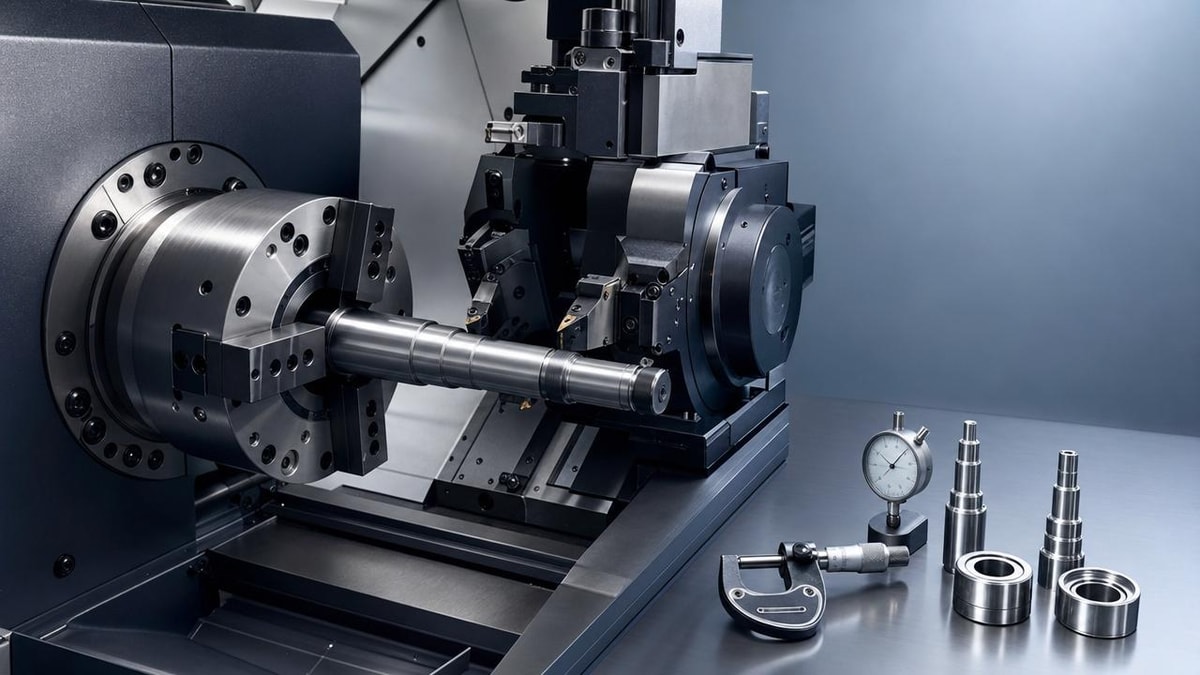
A metal lathe that once delivered stable accuracy can gradually become a hidden risk in precision manufacturing. For technical evaluators, knowing when a metal lathe no longer meets tolerance needs is critical to protecting part quality, process capability, and production efficiency. This article outlines the practical signs, measurement indicators, and operational issues that suggest it may be time to recalibrate, retrofit, or replace the machine.
What are the first signs that a metal lathe is falling out of tolerance?
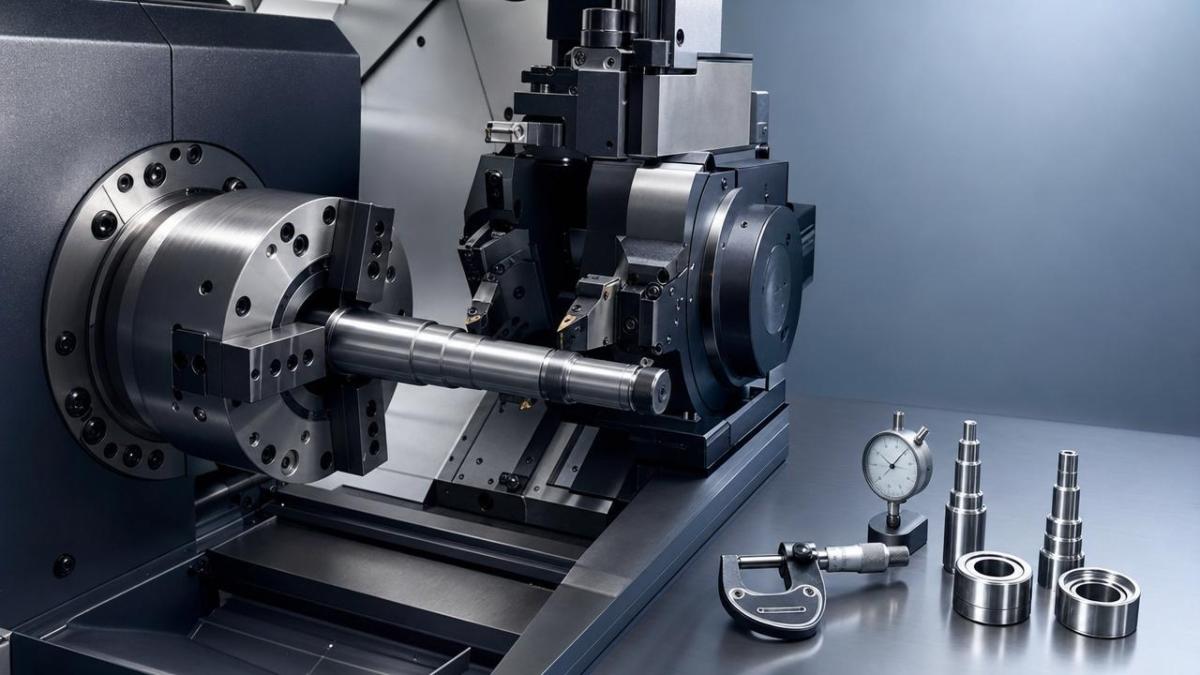
In many factories, a metal lathe does not fail suddenly. It drifts. The early warning signs usually appear in scrap trends, operator compensation habits, and inspection records before they become visible as a major machine breakdown. For a technical evaluator, the key is to separate normal process variation from machine-related deterioration.
Tolerance loss matters more today because modern manufacturing depends on repeatability across automated cells, flexible production lines, and mixed-batch workflows. A metal lathe that still “runs” may no longer support the precision requirements expected in automotive shafts, aerospace sleeves, energy components, electronics housings, or subcontract machining with strict drawing tolerances.
Common symptoms usually appear in a pattern rather than in isolation. When several of the following occur together, the metal lathe should be evaluated more formally.
- Part dimensions shift between the first piece and the tenth piece, even when tooling, material, and program remain unchanged.
- Operators increasingly use wear offsets or manual adjustments to hold nominal size.
- Roundness, cylindricity, or taper errors rise despite acceptable tool condition.
- Surface finish becomes inconsistent, especially on long or slender workpieces.
- Machine warm-up time becomes longer before stable results can be achieved.
- Rework and in-process inspection frequency increase, reducing spindle utilization.
These symptoms are especially relevant in facilities that have moved toward smart manufacturing, where upstream planning and downstream assembly assume stable machining capability. If a metal lathe introduces variation, the problem no longer affects only one workstation. It can disrupt scheduling, traceability, and final product compliance.
Why evaluators should not rely only on operator feedback
Operator feedback is valuable, but it is often reactive. A skilled machinist may compensate for a worn metal lathe long enough to keep production running. That can hide the real decline in machine capability. Technical evaluation should therefore combine human observation with dimensional data, machine geometry checks, maintenance history, and cycle stability analysis.
Which measurement indicators show that the metal lathe no longer meets tolerance needs?
The best evaluation method is to compare part tolerance requirements with actual machine behavior under real production conditions. Not every machine needs ultra-high precision, but every metal lathe should consistently support the tolerances required by the parts it is assigned to produce.
The table below summarizes practical indicators that technical evaluators can use when reviewing a metal lathe for continued production suitability.
A metal lathe does not need to be completely inaccurate to become unsuitable. If the machine consumes too much of the available tolerance window, process capability drops. That means the machine may still produce acceptable parts today, but only with higher inspection effort, lower productivity, and greater quality risk.
Key test methods during a technical review
- Run a capability study on a representative part family rather than a simplified test coupon.
- Check dimensional drift at cold start, mid-shift, and full operating temperature.
- Measure diameter, length, taper, and runout across multiple samples from the same batch.
- Review backlash, spindle runout, turret indexing repeatability, and tailstock alignment where applicable.
- Compare actual output with drawing tolerance, not just nominal machine specification.
This is particularly important in global CNC machining environments where one machine may be expected to support export production, customer audits, and stricter process documentation.
How do wear, maintenance history, and process changes affect metal lathe tolerance performance?
Tolerance loss is not caused by age alone. Some older machines remain productive because they are well maintained and used within a suitable process envelope. By contrast, a newer metal lathe can become a poor fit if production demands have changed faster than the machine’s capability.
Mechanical and control-related causes
- Slideway wear can change cutting behavior, especially during long-axis travel or heavier cuts.
- Ball screw wear or backlash can reduce axis repeatability and sizing consistency.
- Spindle bearing deterioration can increase vibration, runout, and poor surface finish.
- Turret indexing issues can cause tool position variation that appears as unstable part size.
- Outdated control systems may limit compensation, data integration, or modern monitoring functions.
Process changes that expose machine limits
A metal lathe may have been suitable when producing medium-tolerance parts in small volumes. Problems emerge when the same machine is later assigned to tighter tolerances, more difficult materials, longer unattended shifts, or larger production batches. In many workshops, the real issue is not simple wear but mismatch between current production strategy and historical machine capability.
Technical evaluators should review whether recent changes in customer requirements, inspection plans, cutting tools, automation interfaces, or material grades have pushed the machine beyond its practical limit.
Recalibrate, retrofit, or replace the metal lathe?
Once a metal lathe shows persistent tolerance issues, the next decision is economic as well as technical. Recalibration may solve alignment drift. Retrofit may extend productive life. Full replacement may be justified when digital integration, automation readiness, or tighter tolerances are now required by the business.
The comparison below can help evaluators structure a practical decision path.
For many manufacturers, the right answer is not binary. A metal lathe may be retained for less critical work while high-value production moves to a newer CNC platform with better repeatability, monitoring, and automation compatibility.
Questions that make the decision clearer
- Is the machine failing because of one repairable condition, or because of cumulative structural wear?
- Can the metal lathe meet future tolerance needs, not only current emergency demand?
- How much inspection, rework, and setup time is being used to compensate for lost capability?
- Does the machine support digital data collection, automation interfaces, and production traceability required by key customers?
What should technical evaluators check before approving continued use or replacement?
A disciplined evaluation reduces the risk of replacing a machine too early or keeping it too long. In precision manufacturing, both mistakes are expensive. The checklist below is useful when reviewing a metal lathe across procurement, maintenance, and production functions.
Evaluation checklist for a metal lathe under tolerance pressure
- Map current part families by tolerance class, material, batch size, and process criticality.
- Review inspection records for drift trends, not only pass-fail outcomes.
- Check machine maintenance history, including spindle work, axis repairs, lubrication issues, and geometry correction.
- Assess whether tooling, fixtures, coolant, and programming have already been optimized before blaming the machine.
- Estimate the hidden cost of extra offsets, slower feeds, repeated setups, and containment inspection.
- Confirm whether replacement should include automation compatibility, probing, data connectivity, or multi-axis expansion.
This type of assessment is increasingly relevant as machine tool investment decisions are tied to broader smart factory planning. A metal lathe should be judged not only by standalone performance, but also by how well it fits integrated production goals.
How do standards, capability, and industry expectations shape the decision?
In general industry, tolerance expectations vary widely, but the direction is clear: customers increasingly require consistency, traceability, and documented control. Even when no specific machine standard is mandated in a sourcing project, evaluators often need evidence that the machining process is stable and measurable.
Relevant references may include internal process capability targets, drawing-based geometric tolerance checks, calibration practices for measuring equipment, and accepted machine accuracy verification methods used in industrial quality systems. The exact standard set depends on sector and customer requirement, but the practical message is the same: a metal lathe must support controllable output, not only nominal operation.
Common misconception
A frequent mistake is assuming that if a metal lathe can still produce some conforming parts, it is adequate. Technical evaluation should focus on sustained capability under real production conditions, including heat growth, shift length, material variation, and operator change. Capability, not occasional success, is what protects delivery performance and customer confidence.
FAQ: common questions when a metal lathe starts missing tolerance
How much dimensional drift is too much for a metal lathe?
There is no single number that fits every application. The practical threshold is whether machine variation takes up an unacceptable portion of the drawing tolerance. If the metal lathe leaves too little room for tool wear, material change, or thermal variation, it becomes a process risk even before scrap rates rise sharply.
Can a metal lathe with good spindle power still fail tolerance needs?
Yes. Power and rigidity are only part of the picture. A metal lathe may still cut aggressively while suffering from positioning errors, spindle runout, poor thermal behavior, or unstable turret repeatability. These issues often show up in dimensional scatter rather than obvious machine alarms.
When is retrofit more practical than replacement?
Retrofit is often practical when the machine structure remains sound and the main gaps are in controls, drives, feedback devices, or selected wear components. If the bed, spindle system, and fundamental geometry are heavily degraded, replacement usually offers a clearer long-term return.
Should evaluators test the metal lathe with actual production parts?
Yes, whenever possible. Test cuts on actual materials and representative geometries reveal more than simplified checks alone. A metal lathe that appears acceptable on a short, easy sample may struggle on a longer shaft, a thin-wall component, or a tolerance-critical shoulder under real cycle conditions.
Why choose us for machine tool evaluation and sourcing support?
For technical evaluators, the challenge is rarely just identifying a problem. The harder part is deciding what to do next without disrupting output or overinvesting. Our platform focuses on the global CNC machining and precision manufacturing industry, connecting machine tool knowledge with market updates, technology insight, and practical sourcing judgment.
We can support discussions around metal lathe capability review, tolerance risk analysis, replacement planning, retrofit direction, and supplier comparison. If you are reviewing a machine for tighter tolerance work, you can consult us on parameter confirmation, production suitability, delivery lead time considerations, alternative machine configurations, certification-related documentation needs, sample evaluation planning, and quotation communication.
If your team is deciding whether to keep, upgrade, or replace a metal lathe, contact us with your part drawings, tolerance range, material type, batch volume, and target delivery window. That information makes it easier to compare practical machine options and build a more reliable decision path for precision manufacturing.
PREVIOUS ARTICLE
NEXT ARTICLE
Recommended for You
![]() Beijing’s New E-Bike Lock Regulation Spurs CNC Housing DemandGlobal Machine Tool Trade Research Center
Beijing’s New E-Bike Lock Regulation Spurs CNC Housing DemandGlobal Machine Tool Trade Research Center![]() New Drone Standard GB/T 44723–2026 Takes Effect May 2026Manufacturing Policy Research Center
New Drone Standard GB/T 44723–2026 Takes Effect May 2026Manufacturing Policy Research Center![]() New Maritime Code Takes Effect May 1, 2026: CNC Equipment Shipping Rules UpdatedManufacturing Market Research Center
New Maritime Code Takes Effect May 1, 2026: CNC Equipment Shipping Rules UpdatedManufacturing Market Research Center![]() 2026 China Cycle Shanghai: CNC E-Bike Frame Capacity Draws ODM FocusManufacturing Market Research Center
2026 China Cycle Shanghai: CNC E-Bike Frame Capacity Draws ODM FocusManufacturing Market Research Center![]() 2026 Foshan Tanzhou Auto Expo: EV Parts Sourcing FocusGlobal Machine Tool Trade Research Center
2026 Foshan Tanzhou Auto Expo: EV Parts Sourcing FocusGlobal Machine Tool Trade Research Center![]() New Hazardous Chemicals Safety Law Takes Effect May 2026Manufacturing Policy Research Center
New Hazardous Chemicals Safety Law Takes Effect May 2026Manufacturing Policy Research Center


Aris Katos
Future of Carbide Coatings
15+ years in precision manufacturing systems. Specialized in high-speed milling and aerospace grade alloy processing.
▶
Vertical lathe or horizontal setup for heavy parts?CNC Machining Technology Center▶
How to tell when a metal lathe no longer meets tolerance needsCNC Machining Technology Center▶
Vertical lathe or horizontal setup for large ring parts?CNC Machining Technology Center▶
Automated lathe vibration issues that reduce part accuracyCNC Machining Technology Center▶
CNC Metal Lathe Accuracy Loss Often Starts With HeatCNC Machining Technology Center
Mastering 5-Axis Workholding Strategies
Join our technical panel on Nov 15th to learn about reducing vibrations in thin-wall components.

Providing you with integrated sanding solutions
Before-sales and after-sales services
Comprehensive technical support