• Global CNC market projected to reach $128B by 2028 • New EU trade regulations for precision tooling components • Aerospace deman
NYSE: CNC +1.2%LME: STEEL -0.4%

Vertical lathe or horizontal setup for heavy parts?
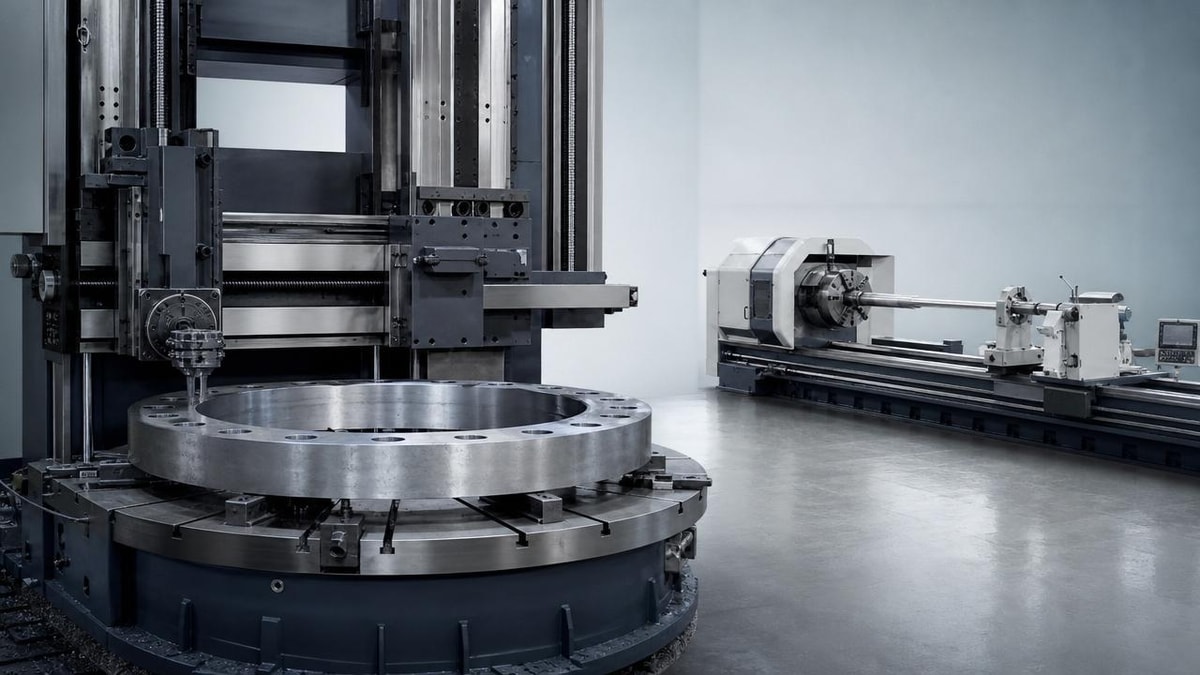
When evaluating heavy-part machining, the choice between a vertical lathe and a horizontal setup directly affects stability, accuracy, floor space, and handling efficiency. For technical assessment teams, understanding where a vertical lathe delivers stronger support for large, heavy, or unbalanced workpieces is essential to making a reliable equipment decision and optimizing long-term production performance.
Why a checklist-based evaluation is the safest way to compare layouts
For heavy-part applications, layout selection should not start with brand preference or spindle power alone. It should start with a structured review of part behavior, loading method, stability requirements, chip control, footprint, and process consistency. This is why a checklist is more useful than a general comparison. A heavy workpiece that looks acceptable on a horizontal machine may create clamping risk, sag, alignment error, or operator handling inefficiency once production begins.
In many technical reviews, the real question is not whether a vertical lathe is “better” in every case. The better question is whether the part family, plant conditions, and process goals favor gravity-assisted support and face-oriented machining more than shaft-oriented turning. For discs, rings, large flanges, valve bodies, wheel hubs, bearing housings, and energy components, a vertical lathe often becomes the more stable answer. For long shafts and bar-fed rotational parts, horizontal configurations usually remain more practical.
First-screen decision checklist: what to confirm before comparing machine models
Before reviewing machine specifications, technical assessment teams should confirm these high-priority points. This first-screen checklist helps determine whether a vertical lathe deserves priority in the evaluation process.
- Is the workpiece diameter large relative to its length? If yes, a vertical lathe usually provides more natural support and safer positioning.
- Does the part have a high mass concentration near the outer diameter? A vertical setup often reduces the effect of overhang and improves rotational stability.
- Is the workpiece difficult to balance in a horizontal chuck? Unbalanced heavy parts are often easier to manage on a vertical lathe because gravity acts downward onto the table rather than sideways across the spindle axis.
- Will loading require overhead crane access? A vertical lathe commonly simplifies top loading for heavy castings, rings, and large forged components.
- Are face turning, boring, grooving, and internal diameter control the key operations? If so, a vertical lathe may improve accessibility and process confidence.
- Is shop floor space limited in terms of linear machine length? A vertical lathe can offer a more compact footprint for certain heavy-part capacities.
- Does the process demand reduced risk of part deflection during clamping? Vertical orientation often supports the part more evenly, especially for large thin-walled components.
Core judgment standard: when a vertical lathe is usually the stronger option
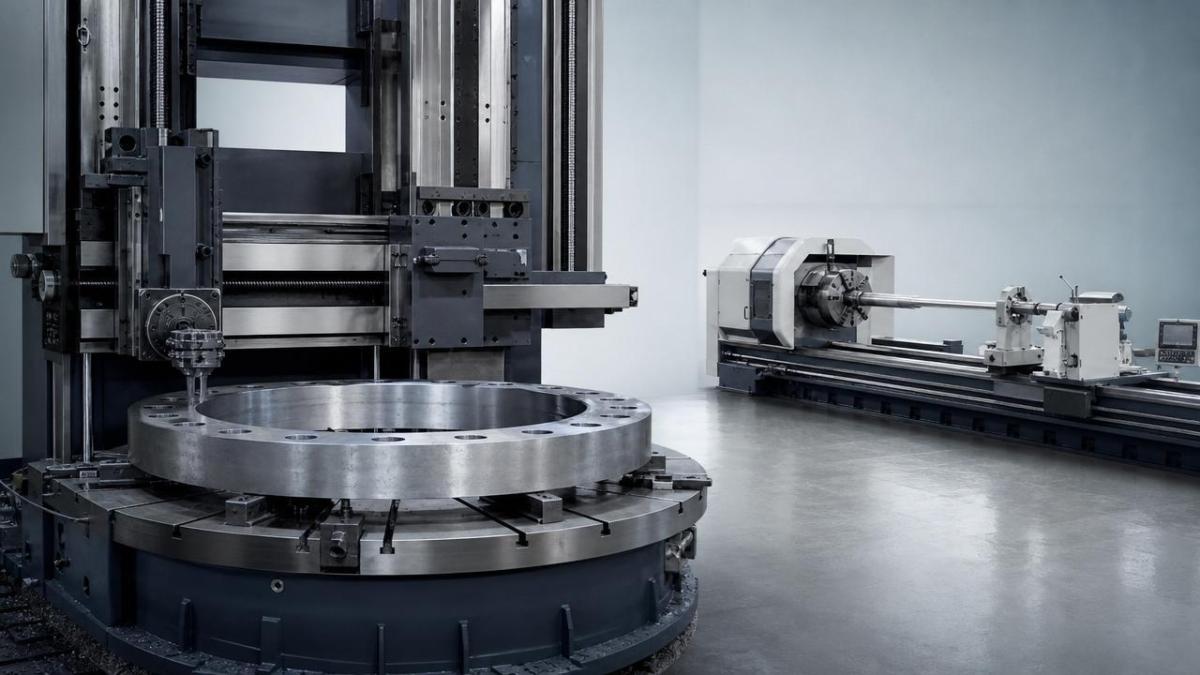
A vertical lathe generally becomes the stronger option when the workpiece is heavy, wide, and difficult to support horizontally without introducing setup complexity. Gravity is the central advantage. In a vertical lathe, the part sits on the table or chuck face, so the machine is not fighting the same bending tendency seen when a heavy diameter is mounted horizontally. This matters in roughing and finishing alike.
Technical teams should pay special attention to four performance outcomes. First, setup stability often improves because the workpiece is seated rather than suspended. Second, repeatability can improve for large batches of similar discs or housings. Third, crane-based loading may become simpler and safer. Fourth, machine structure may better absorb cutting forces on large diameters, especially during interrupted cuts in castings and forgings.
Part types that frequently favor a vertical lathe
- Large flanges and ring-shaped parts
- Bearing seats and housings
- Pump casings and valve bodies
- Railway wheels and brake discs
- Wind power, energy, and mining components
- Aerospace structural rings and large circular blanks
Practical comparison table for technical assessment teams
The table below is designed as a fast reference for evaluating a vertical lathe against a horizontal setup in heavy-part machining projects.
Must-check technical items before selecting a vertical lathe
Even when the application seems ideal for a vertical lathe, assessment teams should not skip detailed verification. The following checks often separate a successful investment from a costly mismatch.
- Table load and dynamic load capacity: Verify not only static weight limit but also cutting-force behavior, eccentric loading, and allowable imbalance at target RPM.
- Swing and maximum turning diameter: Ensure adequate clearance for fixtures, jaws, probes, and future part variants, not just the current drawing.
- Ram rigidity and tool head configuration: Heavy roughing, deep boring, and interrupted cuts require structural strength beyond basic catalog values.
- Clamping method: Review jaw design, custom fixtures, hydraulic stability, and changeover time for mixed production.
- Chip evacuation and coolant flow: Large cast iron and alloy steel parts generate chip volumes that can affect thermal stability and operator safety.
- Thermal control: For precision bores and sealing surfaces, thermal drift can erode the expected advantage of a vertical lathe if not managed properly.
- Measurement integration: Confirm whether in-process probing, post-process gauging, and datum transfer support the required tolerance chain.
Scenario-based guidance: where horizontal still wins
A balanced technical review should also identify situations where a horizontal setup remains the better fit. If the part is long relative to diameter, requires tailstock support, or belongs to a shaft-dominant production line, horizontal machines often deliver more direct process logic. The same applies when bar work, center work, or multi-operation shaft flow is central to throughput targets.
A vertical lathe should also be reviewed carefully if the part mix changes constantly from very small to very large dimensions, because fixture flexibility and loading rhythm may affect actual utilization. In some plants, the machine itself is suitable, but crane scheduling becomes the hidden bottleneck. In others, floor height or foundation constraints reduce the expected benefit of vertical installation.
Commonly overlooked risks in heavy-part layout decisions
Many selection errors do not come from choosing the wrong machine category in theory. They come from overlooking practical limits in the production environment. These are the most common risk points technical teams should flag early.
- Assuming all heavy parts benefit equally from a vertical lathe without checking center-of-gravity behavior.
- Comparing only machine purchase cost while ignoring fixturing, crane interface, foundation work, and maintenance access.
- Underestimating how chip buildup affects roughing stability and cleaning downtime.
- Failing to review spindle torque at actual cutting ranges instead of peak marketing values.
- Ignoring operator ergonomics for jaw change, inspection, and part transfer.
- Using a trial part that does not represent the most difficult production geometry.
Execution advice: how to run a reliable equipment assessment
If your team is preparing to compare a vertical lathe with a horizontal setup, build the assessment around evidence rather than assumptions. Start with a representative part family, including the largest diameter, highest eccentricity, and most difficult tolerance zone. Then compare setup time, loading method, roughing stability, finishing consistency, floor impact, and labor interaction.
It is also useful to classify requirements into three groups: non-negotiable technical limits, productivity targets, and future expansion needs. For example, table capacity and dimensional envelope are non-negotiable. Cycle time and automation options belong to productivity. Planned expansion into larger energy or aerospace components belongs to future growth. This structure helps determine whether a vertical lathe is merely acceptable today or strategically stronger over the equipment life cycle.
Recommended information package before supplier discussions
- Part drawings with tolerances, weight, and material data
- Annual volume, batch size, and expected mix variation
- Current loading method and available lifting capacity
- Key surface finish and concentricity requirements
- Cycle time target and changeover expectations
- Planned automation, probing, or digital monitoring needs
- Plant constraints such as floor strength, height, utilities, and safety rules
FAQ for technical evaluators
Is a vertical lathe always more accurate for heavy parts?
Not always. A vertical lathe often improves support and setup confidence for large-diameter parts, but final accuracy still depends on machine rigidity, thermal control, tooling, fixturing, process discipline, and measurement strategy.
Does a vertical lathe reduce loading risk?
In many heavy-part scenarios, yes. Top-down crane loading is often more straightforward than positioning a bulky part onto a horizontal spindle axis. However, this depends on the lifting plan, fixture access, and operator workflow.
What is the biggest mistake when choosing between vertical and horizontal machines?
The biggest mistake is selecting based on general machine category instead of actual part behavior. A vertical lathe should be chosen because it fits the geometry, load path, tolerance needs, and handling method of the workpiece family.
Final decision guide and next-step questions
For technical assessment teams, the most practical rule is simple: prioritize a vertical lathe when the workpiece is heavy, large in diameter, difficult to balance, and best supported by gravity during turning. Prioritize horizontal setups when the process is centered on long shafts, center support, or linear rotational flow. In between these two cases, the right answer depends on clamping risk, crane logic, floor conditions, tolerance stability, and future part strategy.
If your company is moving toward a formal selection, the next conversation should focus on five items: actual part envelope, weight distribution, required tolerances, loading and fixturing method, and expected production mix. After that, discuss machine configuration, automation compatibility, delivery cycle, installation conditions, service support, and total project budget. These details will show whether a vertical lathe is only technically possible or truly the best long-term solution for heavy-part manufacturing.
PREVIOUS ARTICLE
NEXT ARTICLE
Recommended for You
![]() Beijing’s New E-Bike Lock Regulation Spurs CNC Housing DemandGlobal Machine Tool Trade Research Center
Beijing’s New E-Bike Lock Regulation Spurs CNC Housing DemandGlobal Machine Tool Trade Research Center![]() New Drone Standard GB/T 44723–2026 Takes Effect May 2026Manufacturing Policy Research Center
New Drone Standard GB/T 44723–2026 Takes Effect May 2026Manufacturing Policy Research Center![]() New Maritime Code Takes Effect May 1, 2026: CNC Equipment Shipping Rules UpdatedManufacturing Market Research Center
New Maritime Code Takes Effect May 1, 2026: CNC Equipment Shipping Rules UpdatedManufacturing Market Research Center![]() 2026 China Cycle Shanghai: CNC E-Bike Frame Capacity Draws ODM FocusManufacturing Market Research Center
2026 China Cycle Shanghai: CNC E-Bike Frame Capacity Draws ODM FocusManufacturing Market Research Center![]() 2026 Foshan Tanzhou Auto Expo: EV Parts Sourcing FocusGlobal Machine Tool Trade Research Center
2026 Foshan Tanzhou Auto Expo: EV Parts Sourcing FocusGlobal Machine Tool Trade Research Center![]() New Hazardous Chemicals Safety Law Takes Effect May 2026Manufacturing Policy Research Center
New Hazardous Chemicals Safety Law Takes Effect May 2026Manufacturing Policy Research Center


Aris Katos
Future of Carbide Coatings
15+ years in precision manufacturing systems. Specialized in high-speed milling and aerospace grade alloy processing.
▶
Vertical lathe or horizontal setup for heavy parts?CNC Machining Technology Center▶
How to tell when a metal lathe no longer meets tolerance needsCNC Machining Technology Center▶
Vertical lathe or horizontal setup for large ring parts?CNC Machining Technology Center▶
Automated lathe vibration issues that reduce part accuracyCNC Machining Technology Center▶
CNC Metal Lathe Accuracy Loss Often Starts With HeatCNC Machining Technology Center
Mastering 5-Axis Workholding Strategies
Join our technical panel on Nov 15th to learn about reducing vibrations in thin-wall components.

Providing you with integrated sanding solutions
Before-sales and after-sales services
Comprehensive technical support