• Global CNC market projected to reach $128B by 2028 • New EU trade regulations for precision tooling components • Aerospace deman
NYSE: CNC +1.2%LME: STEEL -0.4%

Vertical lathe or horizontal setup for large ring parts?
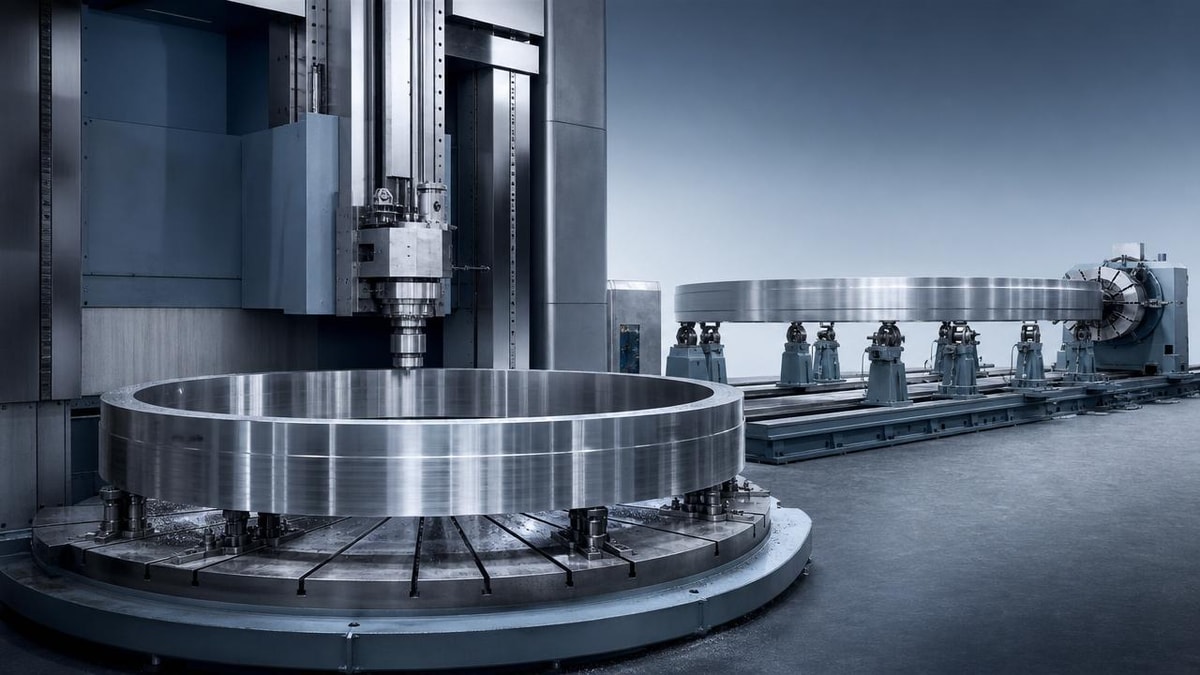
When machining large ring parts, the choice between a vertical lathe and a horizontal setup directly affects stability, accuracy, loading efficiency, and overall cost. For technical evaluators, understanding how a vertical lathe handles heavy, large-diameter components compared with horizontal alternatives is essential to selecting the right process for demanding manufacturing applications.
Why this choice is drawing more attention now
A clear shift is taking place across precision manufacturing: large ring parts are no longer limited to traditional heavy industry orders. Wind power components, bearing rings, energy equipment, aerospace structures, metallurgical assemblies, and large transmission systems are creating broader demand for stable turning capacity on oversized diameters. As a result, the question is no longer simply whether a part can be machined, but which machine architecture delivers better risk control, throughput, and dimensional consistency.
For technical evaluation teams, the rising use of larger forged and cast rings has changed the decision framework. A horizontal setup may still work well for many shaft-like or medium-weight rotating parts, but as ring diameter increases and wall geometry becomes less forgiving, a vertical lathe often moves from being an optional configuration to a strategic process choice. That trend is especially visible where part mass, clamping safety, and concentricity requirements intersect.
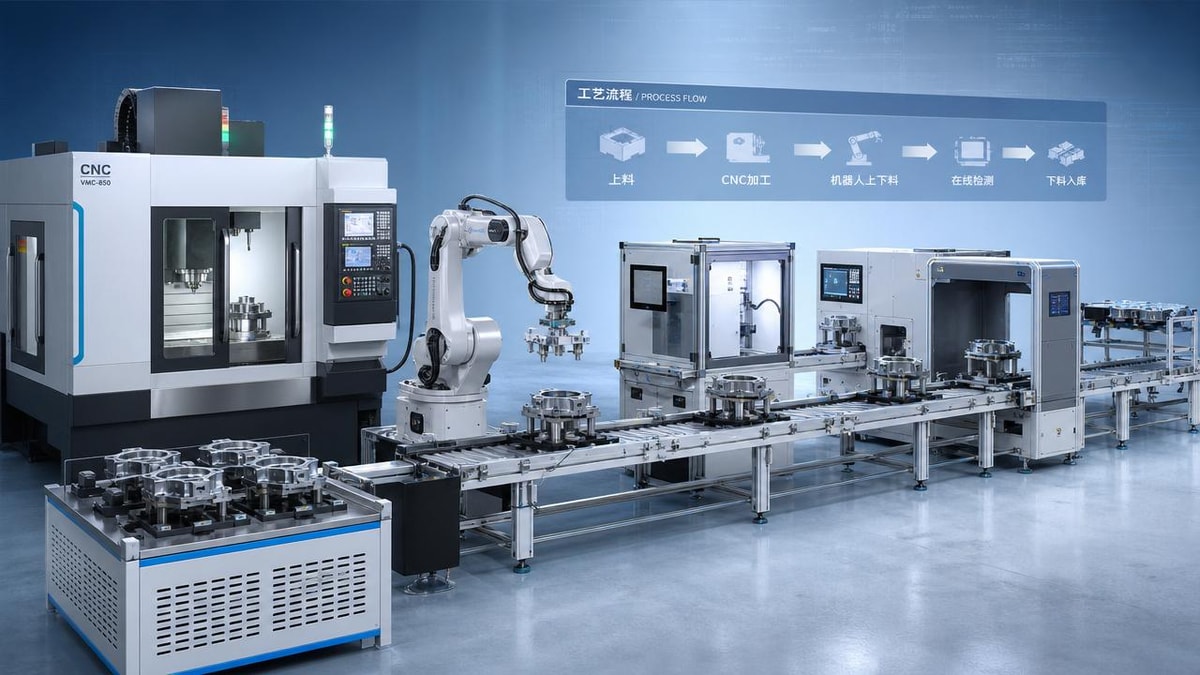
This is also tied to wider industry movement toward automation, fewer manual interventions, and better process predictability. In modern CNC environments, reducing setup uncertainty is becoming just as important as improving cutting speed. For large ring components, that makes the vertical lathe a growing focus in technical planning discussions.
The main trend signal: gravity is becoming a stronger process factor
One of the strongest signals in recent project evaluations is that gravity-related behavior matters more as parts get larger. With large ring parts, deflection, uneven load distribution, and chucking distortion can alter machining outcomes even before cutting parameters are optimized. In a horizontal setup, the workpiece axis is parallel to the floor, which can be practical for many jobs, but large-diameter rings may experience more challenging support conditions depending on section thickness and clamping strategy.
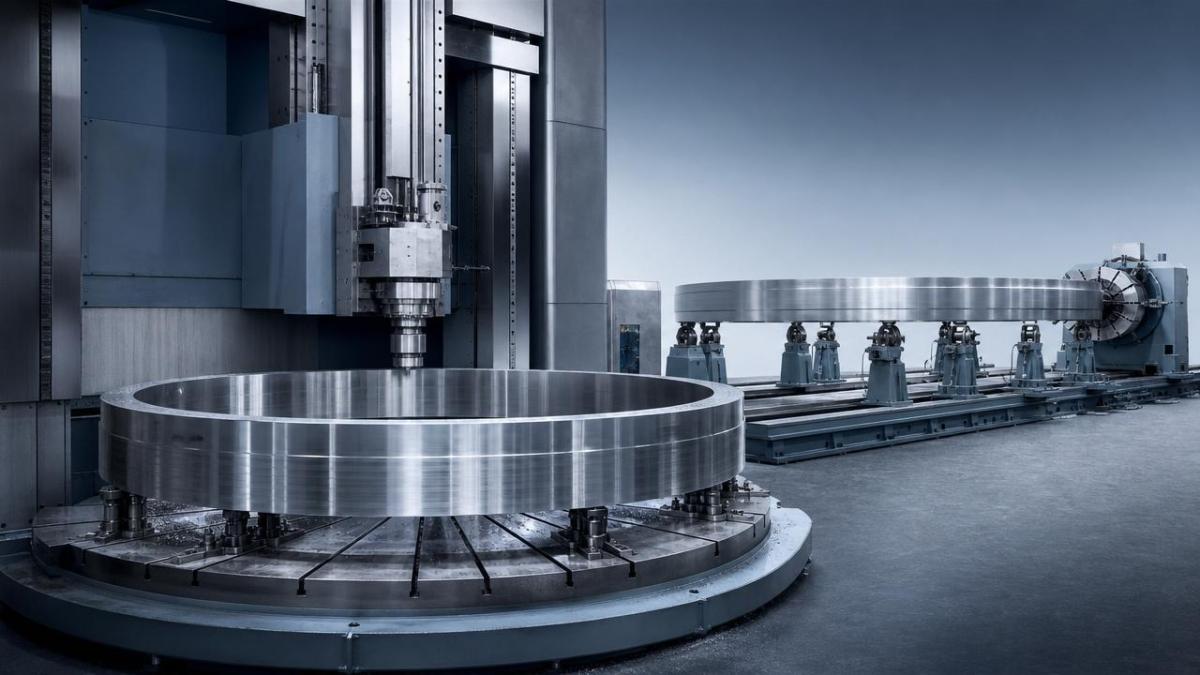
A vertical lathe changes that condition by placing the workpiece on a table where its weight is naturally supported downward. For heavy rings, this often improves setup stability and reduces the risk of shape deviation caused by unsupported mass. That does not automatically make every vertical lathe the best answer, but it explains why the market increasingly views vertical turning as the safer route for difficult ring geometries.
Technical evaluators are therefore paying closer attention to how machine orientation interacts with part physics. The discussion has shifted from machine preference to process behavior under load, especially for roughing and semi-finishing of large rings.
What is driving the shift toward the vertical lathe for many ring applications
Several forces are pushing technical teams to reconsider machine layout for ring machining. First, ring parts used in energy, heavy transport, and industrial systems are often becoming both larger and more value-critical. A rejected large ring consumes expensive material, machine time, inspection effort, and logistics capacity. That raises the cost of setup risk.
Second, many buyers now expect not only dimensional compliance but also more stable process documentation. In that environment, a vertical lathe is often favored because it offers a more intuitive support condition for heavy circular parts. Evaluators can more easily connect machine structure, load path, and expected behavior during machining.
Third, shop floor practicality matters. Large rings can be awkward to align in a horizontal setup, especially when overhead crane handling, auxiliary supports, or multiple clamping corrections are needed. A vertical lathe may reduce handling complexity by allowing the ring to be lowered onto the table in a gravity-assisted position, which can improve both safety and setup time.
Finally, digital manufacturing is changing procurement criteria. More companies now assess machine tools not only by peak capacity but by how well they integrate with in-process measurement, load monitoring, fixture repeatability, and operator standardization. For large ring parts, the vertical lathe often aligns better with those process assurance goals.
Where horizontal setups still remain relevant
The market trend toward a vertical lathe for large rings should not be treated as a universal rule. Horizontal setups still remain valid in several situations. If the ring is moderate in diameter, relatively light, and part of a mixed-product environment that also includes shafts or cylindrical families, a horizontal machine may provide better asset utilization. Existing tooling, operator experience, and process familiarity can also support good results.
In some facilities, a horizontal setup is preferred when machining requirements extend beyond ring turning into operations better suited to the same production cell. That can reduce equipment switching or simplify plant layout. Technical evaluators therefore need to examine the whole manufacturing route, not just one turning operation.
However, the closer the part moves toward high weight, thin-wall sensitivity, difficult balancing, or strict roundness control, the more carefully the horizontal option should be tested. In many such cases, a vertical lathe shifts from a premium preference to a risk-reduction measure.
How the decision affects different roles in the manufacturing chain
The choice between a vertical lathe and a horizontal setup does not affect only machining engineers. It has wider operational implications across quoting, fixturing, quality, maintenance, and delivery planning. This is why the topic has become more visible in cross-functional equipment reviews.
The next phase of evaluation is less about machine type alone and more about process architecture
A notable change in the market is that buyers are no longer comparing only nominal machine specifications. Instead, they are evaluating process architecture: table design, bearing capacity, ram rigidity, clamping adaptability, measurement integration, and loading method. In this broader comparison, the vertical lathe gains attention because it can support a more robust process chain for heavy rings, especially when part families are expected to grow in size over time.
Technical evaluators should therefore avoid a simplistic “vertical versus horizontal” debate. The better question is whether the selected architecture can maintain geometry under actual production conditions. That includes roughing forces, heat generation, interrupted cuts, tool access, chip evacuation, and inspection transfer. A vertical lathe may win because of its orientation, but the final decision should still be based on the complete operating scenario.
This broader view is especially important as manufacturers pursue smarter factories. Machines are expected to produce data, support repeatable setup logic, and fit into digital quality loops. For oversized rings, that makes process confidence a strategic purchasing factor rather than a secondary technical detail.
Signals that a vertical lathe should move higher on the shortlist
There are several practical signals that indicate a vertical lathe deserves stronger consideration. One is repeated difficulty achieving consistent roundness or runout in a horizontal setup as ring size increases. Another is excessive setup time caused by alignment corrections, support adjustments, or operator dependency. A third is frequent concern around loading heavy parts safely and efficiently.
Additional signals include a shift toward thinner ring sections, more valuable materials, or tighter traceability requirements from end users. When process failure becomes expensive to absorb, the most stable setup often becomes the most economical choice, even if the machine investment appears higher initially.
Technical evaluators should also watch product portfolio direction. If future orders are expected to include more large-diameter rings for energy, bearing, or rotating equipment markets, adopting a vertical lathe earlier can create a stronger capability base and reduce later disruption.
How companies can judge the decision more effectively
A sound evaluation should compare not just machine price or cutting power, but the full chain of impact. Start with part families rather than a single sample component. Review diameter range, weight range, wall stiffness, material class, tolerance pattern, and loading frequency. Then connect these factors to setup repeatability, floor safety, expected staffing, and downstream inspection burden.
It is also useful to test how each setup behaves at the process extremes. A horizontal setup that performs adequately on a moderate ring may not behave the same way near maximum size. Likewise, a vertical lathe should be reviewed for table access, tool reach, chip management, and integration with available crane systems. The goal is not to confirm assumptions, but to identify which architecture remains stable as conditions become more demanding.
Another important step is to calculate hidden operational costs. These include fixture changes, setup correction time, scrap exposure, re-inspection, and training dependency. In many cases, the vertical lathe becomes more attractive when these indirect factors are brought into the decision model.
A practical judgment framework for the coming market cycle
Final perspective for technical evaluators
The current industry direction is clear: as large ring parts become heavier, more precise, and more operationally sensitive, machine orientation is turning into a strategic manufacturing decision. A horizontal setup still has valid applications, especially in mixed production environments, but the vertical lathe is gaining importance because it often provides stronger support logic, safer loading, and more predictable results for large-diameter work.
For companies reviewing future capacity, the best next step is to examine not only present jobs but incoming part trends. If your business expects larger rings, tighter quality targets, or higher process documentation demands, the vertical lathe should be evaluated as part of a broader capability upgrade rather than as a simple equipment alternative.
If you want to judge how this trend affects your own operation, focus on five questions: Are your ring sizes increasing? Are setup-related deviations recurring? Is loading efficiency limiting throughput? Are quality expectations rising? And does your current process remain stable at the largest planned diameter? Answering those questions will reveal whether a vertical lathe is merely an option—or the more resilient direction for the next phase of production.
PREVIOUS ARTICLE
NEXT ARTICLE
Recommended for You
 Industrial Robotics payback depends on one hidden variableManufacturing Market Research Center
 Shaft Parts machining problems linked to concentricity lossCNC Machining Technology Center
 Production Process changes that quietly raise defect ratesCNC Machining Technology Center
 Industrial Automation projects stall without process mappingCNC Machining Technology Center
 CNC metal cutting heat issues behind poor surface finishCNC Machining Technology Center
 High precision lathe claims that deserve a closer lookMachine Tool Industry Editorial Team


Aris Katos
Future of Carbide Coatings
15+ years in precision manufacturing systems. Specialized in high-speed milling and aerospace grade alloy processing.
▶
Vertical lathe or horizontal setup for large ring parts?CNC Machining Technology Center▶
Automated lathe vibration issues that reduce part accuracyCNC Machining Technology Center▶
CNC Metal Lathe Accuracy Loss Often Starts With HeatCNC Machining Technology Center▶
Vertical Lathe or Horizontal Setup for Large Ring Parts?CNC Machining Technology Center▶
Metal Lathe Wear Signs You Should Not Ignore Too LongCNC Machining Technology Center
Mastering 5-Axis Workholding Strategies
Join our technical panel on Nov 15th to learn about reducing vibrations in thin-wall components.

Providing you with integrated sanding solutions
Before-sales and after-sales services
Comprehensive technical support