• Global CNC market projected to reach $128B by 2028 • New EU trade regulations for precision tooling components • Aerospace deman
NYSE: CNC +1.2%LME: STEEL -0.4%

Shaft Parts Machining: Common Errors to Avoid
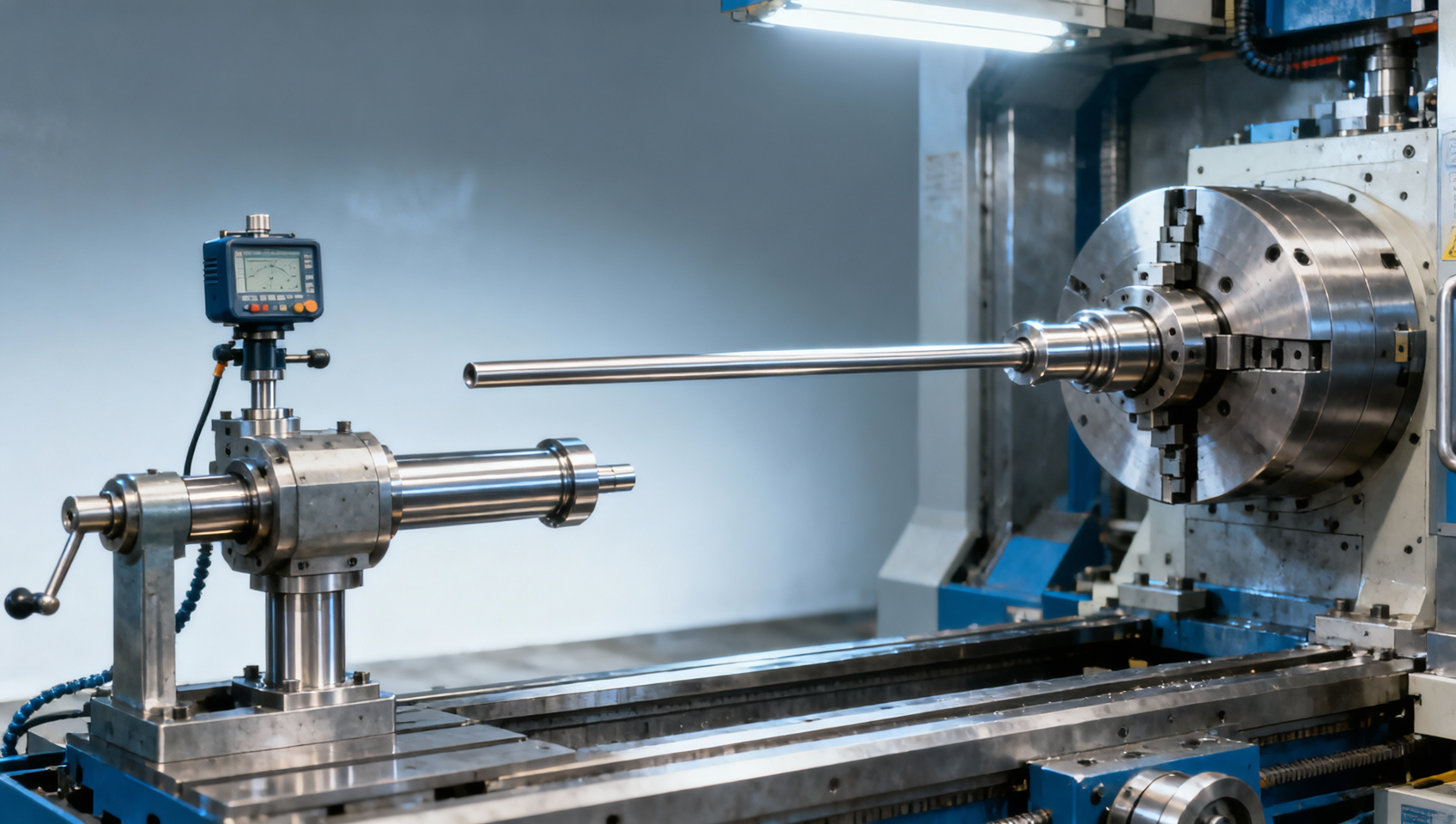
Shaft Parts machining plays a critical role in metal machining and CNC production, where even small errors can affect quality, cost, and delivery. In today’s Manufacturing Industry, from industrial CNC and automated lathe systems to advanced CNC milling and CNC cutting, avoiding common mistakes is essential for stable automated production and better performance across the Global Manufacturing supply chain.
For production engineers, machine operators, sourcing teams, and commercial evaluators, shaft component quality is never only about dimensional accuracy. It also affects assembly stability, bearing life, vibration control, delivery reliability, and total manufacturing cost. A shaft that misses concentricity by a small margin, such as 0.02 mm to 0.05 mm beyond tolerance, may still look acceptable visually, yet it can trigger rejection, rework, or early field failure.
In CNC turning, multi-axis machining, and automated production lines, errors usually do not come from one dramatic mistake. More often, they are the result of small process gaps: poor raw material control, unstable workholding, incorrect cutting parameters, insufficient in-process inspection, or incomplete communication between design and production teams. Understanding these risks is the first step toward better machining outcomes.
This article explains the most common errors in shaft parts machining, why they happen, and how manufacturers can reduce scrap, shorten lead time, and improve repeatability. It is designed for practical decision-making in CNC machining and precision manufacturing environments.
Why Shaft Parts Are Sensitive to Machining Errors
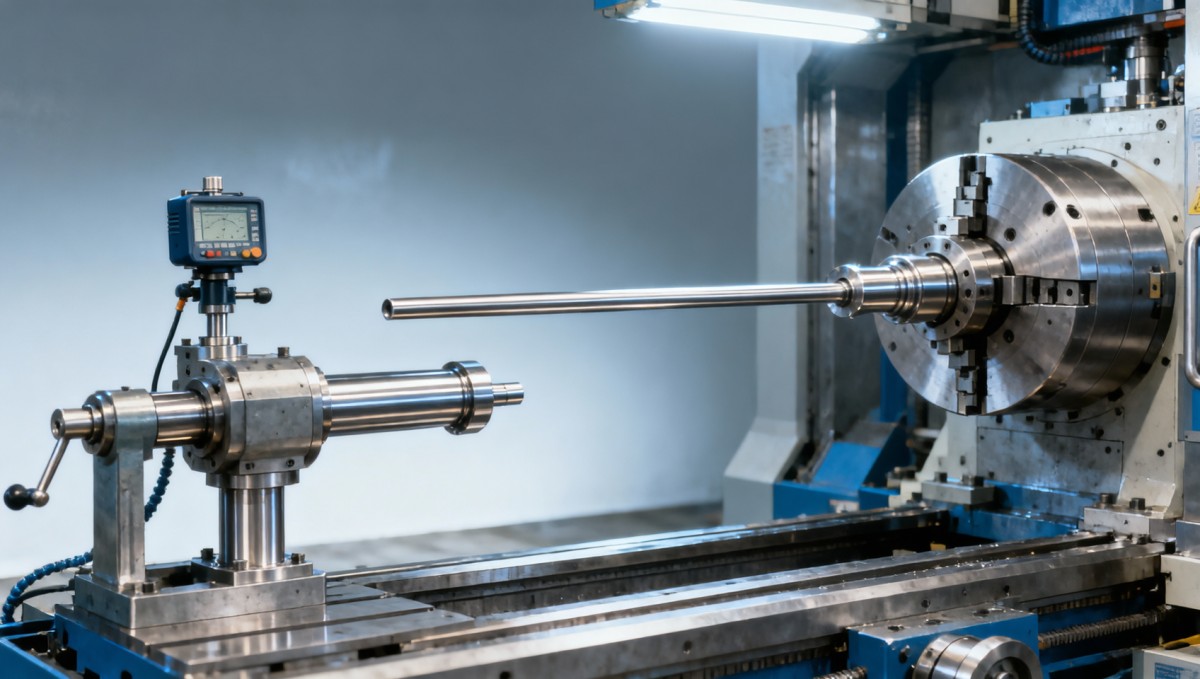
Shaft components are common in automotive systems, motors, pumps, gearboxes, aerospace assemblies, and energy equipment. Unlike many simple prismatic parts, shafts combine rotational function with strict geometric relationships. Diameter, straightness, roundness, surface finish, and coaxiality often need to work together within narrow limits, typically from ±0.01 mm to ±0.05 mm depending on the application.
A major challenge is that shafts are often long relative to their diameter. When the length-to-diameter ratio exceeds 8:1 or 10:1, deflection becomes more likely during turning or grinding. Even with a capable CNC lathe, weak support can cause taper, chatter, or runout. This means machining strategy matters as much as machine capability.
Another issue is that many shaft parts include multiple features in one workpiece. These can include shoulders, keyways, threads, oil grooves, splines, cross holes, and heat-treated bearing seats. Each additional feature adds process complexity. If the process route is poorly sequenced, one operation can damage or distort a previously finished surface.
From a procurement and business perspective, shaft parts may look similar on a drawing, but manufacturing risk varies significantly based on material grade, tolerance stack-up, batch volume, and post-processing requirements. A part quoted for 7 to 10 days may extend to 2 to 3 weeks if the supplier underestimates setup, tooling wear, or inspection demands.
Core Quality Characteristics in Shaft Machining
Before discussing errors, it helps to define the quality factors that usually drive performance in shaft parts machining. These factors shape both process planning and supplier evaluation.
- Dimensional tolerance: common critical diameters may require ±0.01 mm to ±0.02 mm control.
- Geometric accuracy: roundness, straightness, concentricity, and total runout often determine fit and rotation stability.
- Surface quality: Ra 0.4 to 1.6 μm is common for bearing and seal contact areas.
- Material integrity: distortion after heat treatment or residual stress can affect the final result.
- Repeatability: batch consistency matters especially in volumes above 100 to 500 pieces.
When one of these items is poorly controlled, the machining result may still pass partial inspection but fail during assembly or operation. This is why quality control in shaft manufacturing needs a process view, not only a final measurement view.
Common Errors in Shaft Parts Machining and Their Root Causes
Most shaft machining problems can be grouped into several recurring categories. The table below summarizes common issues, likely causes, and practical production impacts across CNC turning, milling, grinding, and automated machining lines.
The key lesson is that shaft parts machining errors are usually process-linked. A dimensional issue often begins earlier than the operation where it is detected. This is why root cause analysis should include raw stock condition, clamping, cutting tools, machine state, and inspection method.
Error 1: Ignoring Material Behavior Before Machining
Some suppliers assume that if the bar stock meets nominal diameter and grade, it is ready for machining. In reality, residual stress, surface decarburization, hardness variation, or slight straightness problems can create trouble later. For medium-carbon steel, alloy steel, stainless steel, and hardened shaft materials, these effects become more visible when machining precision seats or long slender profiles.
A practical example is pre-machining distortion. If rough turning removes 2 mm to 4 mm of stock unevenly, the shaft may bend slightly before finishing. On long parts, that can push straightness out of tolerance even when the machine program is correct.
How to reduce the risk
- Verify raw material straightness and hardness before release to production.
- Use balanced stock removal in rough machining where possible.
- Allow stress relief or semi-finish holding time for distortion-sensitive materials.
- Separate roughing and finishing in 2 stages for critical shafts above 300 mm length.
Error 2: Poor Workholding and Support Strategy
Workholding is one of the most underestimated factors in shaft parts machining. A three-jaw chuck may be fast, but it is not always stable enough for long shafts, thin-wall ends, or critical concentric features. Without a live center, steady rest, or custom fixture, radial force and vibration can distort the part during cutting.
In many workshops, the issue appears only after batch production begins. The first 5 pieces may look acceptable, while pieces 20 to 50 start showing gradual variation because jaw wear, thermal expansion, or support drift increases over time. That pattern often leads to hidden quality escapes.
Error 3: Using Generic Cutting Parameters
Operators sometimes reuse successful programs from another shaft family without adjusting for diameter, material hardness, or overhang. Yet spindle speed, feed rate, and depth of cut should reflect real conditions. For example, a parameter set that works on a 40 mm carbon steel shaft may produce chatter on a 20 mm stainless shaft with a longer unsupported section.
For finish turning, reducing feed from 0.25 mm/rev to 0.10 mm/rev may improve surface quality, but if the insert geometry and rigidity are not matched, surface finish can still remain unstable. Cutting data should be validated through trial runs and not treated as universal settings.
Process Control Methods That Prevent Scrap and Rework
Avoiding errors in shaft parts machining requires more than operator experience. It needs process discipline. In practical CNC manufacturing, the most effective plants use a staged control method: incoming material check, setup confirmation, first article approval, in-process verification, and final inspection. This 5-step structure is especially useful for medium to high precision shafts and production runs above 50 pieces.
The following table outlines common control points and the quality purpose of each step. It can help operators, production planners, and procurement teams understand whether a supplier is controlling risk early enough.
This approach reduces expensive rework because defects are found where they start, not after downstream processing. It also helps commercial teams compare suppliers beyond unit price by asking how each factory controls variation during the run.
Practical Control Priorities on the Shop Floor
On real production lines, not every dimension needs the same level of monitoring. Critical functional features should receive higher control frequency. These usually include bearing seats, seal diameters, thread start positions, spline alignment, and mating shoulders. If tolerance is tighter than ±0.02 mm, relying only on final inspection increases the chance of hidden batch defects.
Tool life monitoring is also important. Insert wear can gradually affect diameter and finish long before the tool fails visibly. A preventive tool replacement rule, such as every 80 to 150 parts depending on material and load, is often safer than waiting for poor results to appear.
A simple 4-point operator checklist
- Confirm workholding repeatability before the first cut and after any jaw or collet change.
- Measure the first article on all critical dimensions, not only the outside diameter.
- Track size drift at planned intervals and record correction values.
- Inspect surface finish and runout after tool changes, especially on slender shafts.
These basic controls are low-cost compared with the expense of scrap, urgent remanufacture, and delayed delivery. In automated production, they also provide the data needed for process stability over longer runs.
How Buyers and Evaluators Should Assess Shaft Machining Capability
For purchasing teams and business evaluators, selecting a shaft machining supplier should go beyond machine count and quoted lead time. Two workshops may both own CNC lathes and machining centers, but their actual capability in shaft parts machining can differ greatly. What matters is whether they can handle the required tolerance, material, volume, and process consistency.
A useful evaluation method is to review capability across four dimensions: process planning, equipment matching, inspection ability, and delivery control. This framework helps identify whether the supplier can produce one prototype, a 200-piece pilot batch, or a 5,000-piece annual demand with the same stability.
Supplier Evaluation Matrix for Shaft Parts Machining
The table below can be used during RFQ review, supplier audits, or technical discussions. It focuses on practical questions that reveal actual manufacturing maturity.
The strongest suppliers usually answer with clear process logic rather than broad promises. If a factory can explain how it manages support for an 8:1 shaft, how often it checks diameter drift, and how it controls post-heat-treatment finishing stock, that is a stronger sign of readiness than a low headline price.
Questions worth asking before placing an order
- What tolerance range can you hold consistently on critical diameters: ±0.01 mm, ±0.02 mm, or wider?
- How do you support long shafts during turning or grinding?
- What is your normal lead time for prototypes, such as 7 to 15 days, versus repeat orders?
- Which dimensions are checked 100%, and which are checked by sampling?
- Can you manage heat treatment, coating, or grinding through an integrated process flow?
These questions help clarify risk early and reduce later disputes over quality responsibility, acceptance criteria, and delivery timing.
Implementation Tips, FAQ, and Next-Step Guidance
Whether you operate CNC equipment directly or evaluate machining partners, the best results come from combining technical discipline with clear communication. Shaft parts machining becomes more reliable when drawings define critical datums, tolerance priorities, surface finish requirements, and inspection expectations before production starts. That alignment can reduce revision loops and improve on-time delivery by several days in standard project cycles.
For new parts, a controlled launch process is often more effective than rushing into full batch manufacturing. A common pattern is 1 prototype stage, 1 pilot batch of 10 to 30 pieces, and then volume release after process confirmation. This structure helps detect distortion, fixture limits, or hidden feature conflicts before cost escalates.
FAQ: What are the most common warning signs of poor shaft machining?
Typical warning signs include unstable diameter readings between consecutive parts, chatter marks on bearing seats, increasing runout after secondary operations, and inconsistency between first article and batch production. If these appear within the first 10 to 20 pieces, the process should be reviewed immediately.
FAQ: When is grinding necessary after CNC turning?
Grinding is often required when the shaft needs tighter geometry, harder material finishing, or lower roughness than turning can reliably provide. For example, bearing or sealing zones may require Ra 0.4 to 0.8 μm and tighter roundness control, especially after heat treatment. In those cases, turning alone may not be enough.
FAQ: How long does shaft parts machining usually take?
Lead time depends on material availability, complexity, tolerance, and whether secondary operations are needed. Simple prototypes may take 7 to 10 days, while precision shafts with heat treatment, grinding, and inspection documents may require 2 to 4 weeks. Repeat production is usually faster once tooling and process settings are stabilized.
Final action points for manufacturers and buyers
- Define critical dimensions and functional surfaces clearly before quotation.
- Ask for process control details, not only machine lists and prices.
- Validate support, tooling, and inspection plans for long or high-precision shafts.
- Use pilot batches to confirm repeatability before scaling volume production.
Avoiding common errors in shaft parts machining is not only a technical issue; it is a supply chain and cost-control issue as well. Better process planning, stronger in-process checks, and smarter supplier evaluation can reduce scrap, protect delivery schedules, and improve product performance in demanding CNC manufacturing environments.
If you are reviewing shaft component projects, comparing machining partners, or planning a new CNC production program, now is the right time to assess your process risks and sourcing criteria. Contact us to discuss your application, request a customized machining solution, or learn more about practical CNC manufacturing options for precision shaft parts.
PREVIOUS ARTICLE
NEXT ARTICLE
Recommended for You
![]() China Releases First Eastern Sea Seabed Elemental MapGlobal Machine Tool Trade Research Center
China Releases First Eastern Sea Seabed Elemental MapGlobal Machine Tool Trade Research Center![]() AIMM National Standard Advances for CNC Smart Factory CertificationManufacturing Policy Research Center
AIMM National Standard Advances for CNC Smart Factory CertificationManufacturing Policy Research Center![]() eVTOL Mass Production Drives CNC Export GrowthGlobal Machine Tool Trade Research Center
eVTOL Mass Production Drives CNC Export GrowthGlobal Machine Tool Trade Research Center![]() China Launches World's Largest Agri-Meteorological Observation NetworkManufacturing Market Research Center
China Launches World's Largest Agri-Meteorological Observation NetworkManufacturing Market Research Center![]() Robotics ToB Scaling Hits Data Bottleneck in CNC AI InspectionCNC Machining Technology Center
Robotics ToB Scaling Hits Data Bottleneck in CNC AI InspectionCNC Machining Technology Center![]() SAMR to Complete 1,800+ Standards Revisions in 2026Manufacturing Policy Research Center
SAMR to Complete 1,800+ Standards Revisions in 2026Manufacturing Policy Research Center


Aris Katos
Future of Carbide Coatings
15+ years in precision manufacturing systems. Specialized in high-speed milling and aerospace grade alloy processing.
▶
Industrial Lathe vs CNC Lathe: Key DifferencesCNC Machining Technology Center▶
How to Cut Operating Costs on an Industrial LatheCNC Machining Technology Center▶
How to Machine Shaft Parts with Better ConcentricityCNC Machining Technology Center▶
Shaft Parts Machining: Common Errors to AvoidCNC Machining Technology Center▶
Automated Lathe Cycle Time Gains Can Hide Quality LossesCNC Machining Technology Center
Mastering 5-Axis Workholding Strategies
Join our technical panel on Nov 15th to learn about reducing vibrations in thin-wall components.

Providing you with integrated sanding solutions
Before-sales and after-sales services
Comprehensive technical support