• Global CNC market projected to reach $128B by 2028 • New EU trade regulations for precision tooling components • Aerospace deman
NYSE: CNC +1.2%LME: STEEL -0.4%

Automated Lathe Cycle Time Gains Can Hide Quality Losses
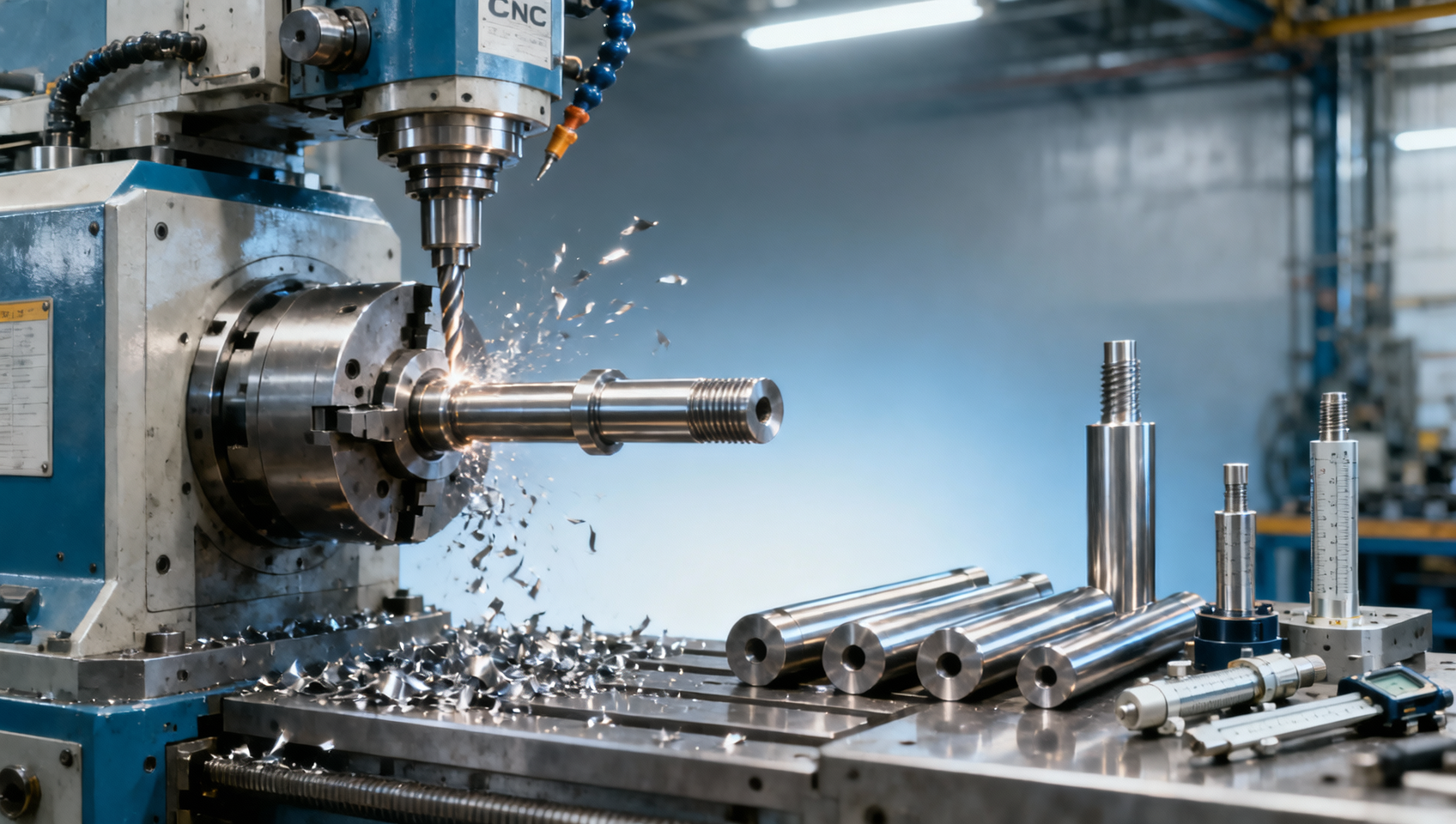
In industrial CNC and automated lathe operations, faster cycle times can boost CNC production and strengthen automated production goals, but hidden quality losses may quietly erode output value. For manufacturers in metal machining, CNC metalworking, and the broader Manufacturing Industry, understanding how speed affects precision, shaft parts, and production process stability is essential before chasing efficiency alone.
Why faster automated lathe cycle time is not always a real productivity gain
In CNC turning, cycle time is easy to measure, quote, and report. Quality loss is harder to detect because it may appear only after 200–500 parts, during final assembly, or when a downstream process such as grinding, balancing, coating, or leak testing starts to fail. This is why many factories believe they improved output while actual sellable production stayed flat or even declined.
For operators, the warning signs often begin with unstable chip control, rising tool wear, surface finish drift, and offset corrections becoming more frequent within one shift. For purchasing teams, the problem appears as higher insert consumption, rework labor, and customer complaints. For decision-makers, it shows up in OEE gaps, margin pressure, and delivery risk despite shorter spindle-on time.
A practical view is to separate gross cycle time from net qualified output. If a lathe cycle is reduced from 70 seconds to 58 seconds, the headline improvement looks attractive. But if scrap rises from 1%–2% to 4%–6%, and in-process inspection time increases by 10%–15%, the production process may no longer be economically better. In shaft part production, even small roundness or concentricity deviations can cancel the value of speed.
This issue is especially relevant in modern automated production, where robotic loading, unattended night shifts, and batch scheduling depend on stable repeatability. A cycle time gain that damages process capability is not an efficiency gain. It is a hidden transfer of cost from machining to quality, maintenance, sorting, and customer service.
What changes first when speed is pushed too far
In many CNC metalworking environments, the first losses are not dramatic crashes. They are subtle process shifts. Dimensional spread widens, edge break consistency changes, burr formation increases, and tool life becomes less predictable from batch to batch. These effects may still pass first-article inspection, which is why they are often missed during process optimization.
- Thermal growth becomes harder to control during continuous runs of 2–4 hours, especially on tight-tolerance shaft components.
- Higher feed and acceleration can increase vibration, which affects surface finish, tool nose wear, and dimensional repeatability.
- Reduced dwell or skipped verification steps may shorten the cycle but weaken process stability during unmanned shifts.
- Aggressive parameters may overload fixtures, collets, or bar feeding systems, creating intermittent runout problems.
The key lesson is simple: CNC production should be evaluated by stable qualified parts per hour, not by machine motion alone. That standard is more useful for users, procurement teams, and plant managers who need a realistic measure of manufacturing value.
Where hidden quality losses usually appear in metal machining operations
In automated lathe applications across automotive manufacturing, energy equipment, electronics hardware, and general precision manufacturing, quality loss usually appears in predictable zones. Shaft parts, bearing seats, threaded ends, sealing diameters, and mating features are often the first to suffer when cycle time targets become too aggressive. These are also the areas that create the highest downstream cost when defects escape.
The problem becomes more serious in mixed production where one machine handles small batch, medium batch, and larger repeat orders. A setup optimized for speed on one material condition may not hold stability when the next order changes bar stock, heat treatment condition, cutting tool grade, or tolerance stack. In practice, process windows often shrink before teams realize it.
Below is a practical comparison of where cycle time gains can create hidden quality risks in CNC turning and automated production. It is useful for process engineers, operators, and sourcing teams who need to judge whether faster output is truly sustainable.
This comparison shows why quality loss is often a process issue, not a single machine issue. In global CNC machining and smart factory environments, the most competitive plants are not simply the fastest. They are the ones that protect dimensional repeatability, inspection discipline, and traceability while still improving takt time.
How different stakeholders see the same problem
Information researchers usually want to understand whether cycle time optimization is a best practice or a risk. The answer depends on process capability and part function. Operators focus on machine behavior and tool stability. Purchasing teams focus on consumable cost, defect cost, and supplier consistency. Executives focus on output, margin, and delivery reliability over a quarter, not just one trial run.
A useful screening rule
If a proposed cycle reduction changes more than 3 core variables at once, such as feed rate, insert grade, clamping method, and unattended runtime, the trial should be treated as a process revalidation rather than a simple efficiency tweak. That approach reduces hidden quality loss during implementation.
For critical applications, it is common to review stability over 3 checkpoints: first-off inspection, mid-batch verification, and end-of-batch capability review. This adds discipline without creating unnecessary delay.
How to judge whether a cycle time improvement is safe for quality
A reliable decision framework should look beyond machine speed and include process capability, inspection burden, tooling stability, and downstream fit. In the CNC machine tool industry, especially where automated production lines are integrated with robotics and secondary processes, one unstable turning step can affect the entire line. This is why safe cycle time optimization needs cross-functional review.
Before approving faster CNC turning parameters, many plants use a 4-step check: confirm the feature function, review the current defect pattern, test tool life under realistic lot size, and verify that in-process measurement still catches drift early enough. This method is practical for both new procurement and improvement of existing equipment.
The table below provides a structured evaluation guide for purchasing, process engineering, and production management. It helps determine whether a faster automated lathe cycle supports qualified output or only creates short-term KPI improvement.
A good procurement decision also considers machine configuration. CNC lathes, machining centers, and multi-axis systems differ in rigidity, thermal behavior, control response, and automation compatibility. A cycle target that is safe on one platform may be risky on another. This matters when comparing domestic and international suppliers, retrofit options, or automated cell expansion plans.
A simple procurement checklist for buyers and plant leaders
- Request qualified output data by batch size, not only nominal cycle time per part.
- Ask how the machine and tooling package behaves during 4–8 hours of continuous operation.
- Confirm which features are monitored in-process and what happens when trends exceed control limits.
- Review fixture, collet, chuck, and bar feeder compatibility for the intended shaft parts or disc parts.
- Check whether the supplier can support trial parts, process tuning, and post-installation validation.
This kind of review is especially valuable in international trade projects, where lead times may be 6–12 weeks and on-site correction after installation is more expensive than proper evaluation before order confirmation.
Common mistakes in automated production planning and how to avoid them
One common mistake is treating all seconds saved as equal. Saving 8 seconds by optimizing non-critical tool movement is very different from saving 8 seconds by reducing finish stability on a tolerance-critical diameter. In CNC production, time savings must be ranked by risk. Otherwise, small process shortcuts can create large quality costs that appear only after shipping or assembly.
Another mistake is relying on short-run validation. A 20-piece sample may look stable, while a 200-piece lot under changing shop temperature, coolant condition, and spindle load shows a different result. In practical metal machining, process confirmation should reflect actual production rhythm, including shift changes and unattended segments where possible.
A third mistake is isolating machining from the rest of the manufacturing system. Modern smart factory strategies connect machine tools, industrial robots, flexible production lines, and digital monitoring. If a faster lathe cycle causes more tool alarms, manual checks, or line balancing problems, the whole automated production line may lose efficiency even if the machine itself looks faster.
Three practical ways to reduce risk
- Separate roughing optimization from finish-critical optimization so the process window remains visible and controllable.
- Use staged validation over 3 phases: sample run, sustained batch run, and downstream functional confirmation.
- Set acceptance criteria that include scrap, rework, offset frequency, and inspection burden, not just cycle time reduction.
What operators should monitor each shift
Operators can detect early warning signals before managers see KPI changes. Useful checks include insert edge condition, surface finish consistency, spindle load trend, coolant delivery behavior, and frequency of offset edits. If two or more of these indicators worsen after a speed change, the process should be reviewed before a larger batch proceeds.
For decision-makers, this means speed improvement should be linked to standard work. A process that depends on one expert operator making frequent manual corrections is not a robust automated production solution.
FAQ: what buyers, operators, and decision-makers usually ask
How can I tell whether shorter cycle time is really improving CNC production?
Look at qualified parts per hour, not only machine cycle. Include scrap percentage, rework minutes, inspection frequency, and tool cost. If the machine is 12% faster but scrap rises by 3%–4% and measurement workload increases every 30 minutes, the net production gain may be far lower than expected.
Which parts are most sensitive to hidden quality losses in automated lathe work?
Shaft parts with bearing fits, sealing diameters, concentric features, and threaded functional ends are usually the most sensitive. Precision discs and structural parts with strict surface finish or coaxiality requirements can also be affected. These features often pass visual checks but fail in assembly, leakage, vibration, or wear performance later.
What should procurement teams ask suppliers before comparing faster CNC machine tools?
Ask for batch-based evidence, not only demo speed. Request information on tool life over sustained runs, inspection strategy, acceptable material variation, and support for fixtures and automation interfaces. It is also reasonable to ask about delivery windows, such as 6–10 weeks for standard configurations versus longer periods for custom automation cells or integrated gauging packages.
Is digital integration enough to prevent quality drift?
No. Digital integration helps by improving monitoring, alarm handling, and traceability, but it does not replace process capability. Smart manufacturing tools can detect trends faster, yet they still depend on sound cutting parameters, stable fixturing, suitable tooling, and realistic validation under production conditions.
When is a slower cycle actually the better business choice?
A slightly slower cycle is often better when the part has high functional risk, expensive material, tight tolerance, or costly downstream assembly. If reducing speed by 5% prevents sorting, rework, and customer disruption, the total manufacturing result is usually stronger. This is especially true in aerospace-related precision work, energy equipment parts, and safety-critical industrial applications.
Why work with a platform that understands CNC machining, sourcing, and process risk
In the global CNC machine tool market, buyers and production teams no longer need only equipment descriptions. They need practical judgment about precision manufacturing, automation compatibility, trade-offs between speed and quality, and the real sourcing implications of machine, tooling, fixture, and process choices. That is where specialized industry insight becomes valuable.
Our focus on global CNC machining and precision manufacturing helps professionals compare options across machine tools, automated production lines, and related process technologies with a clearer business lens. Instead of viewing faster cycle time as an isolated target, we help frame decisions around qualified output, production process stability, application fit, and implementation risk.
If you are evaluating CNC lathes, machining centers, multi-axis systems, tooling packages, or automated production solutions, you can contact us for specific support on parameter confirmation, application matching, expected delivery cycle, customization scope, sample feasibility, and quotation communication. We can also help you organize comparison points for suppliers from different manufacturing regions such as China, Germany, Japan, and South Korea.
For teams facing urgent sourcing or process review, a useful next step is to prepare 5 items before discussion: part drawing, material condition, tolerance priorities, target batch size, and current bottleneck. With that information, conversations about CNC production, automated lathe performance, and quality risk become faster, more technical, and more actionable.
PREVIOUS ARTICLE
NEXT ARTICLE
Recommended for You
 Global Manufacturing Lead Times Improve but Not EverywhereGlobal Machine Tool Trade Research Center
 Machine Tool Market Inventory Pressure Is Building AgainGlobal Machine Tool Trade Research Center
 Metal Lathe vs CNC Milling for Low Volume Round PartsCNC Machining Technology Center
 CNC Cutting Gas Choice Affects More Than Edge FinishCNC Machining Technology Center
 CNC Metalworking Shops Face New Pressure on TraceabilityManufacturing Policy Research Center
 Automated Lathe Cycle Time Gains Can Hide Quality LossesCNC Machining Technology Center

Aris Katos
Future of Carbide Coatings
15+ years in precision manufacturing systems. Specialized in high-speed milling and aerospace grade alloy processing.
▶
Automated Lathe Cycle Time Gains Can Hide Quality LossesCNC Machining Technology Center▶
Automated lathe setup errors that quietly ruin part consistencyCNC Machining Technology Center▶
Vertical lathe or horizontal setup for heavy parts?CNC Machining Technology Center▶
Metal lathe taper problems often trace back to one setup issueCNC Machining Technology Center▶
Vertical lathe or horizontal setup for oversized ring partsCNC Machining Technology Center
Mastering 5-Axis Workholding Strategies
Join our technical panel on Nov 15th to learn about reducing vibrations in thin-wall components.

Providing you with integrated sanding solutions
Before-sales and after-sales services
Comprehensive technical support