• Global CNC market projected to reach $128B by 2028 • New EU trade regulations for precision tooling components • Aerospace deman
NYSE: CNC +1.2%LME: STEEL -0.4%

CNC industrial setup mistakes that slow output from day one
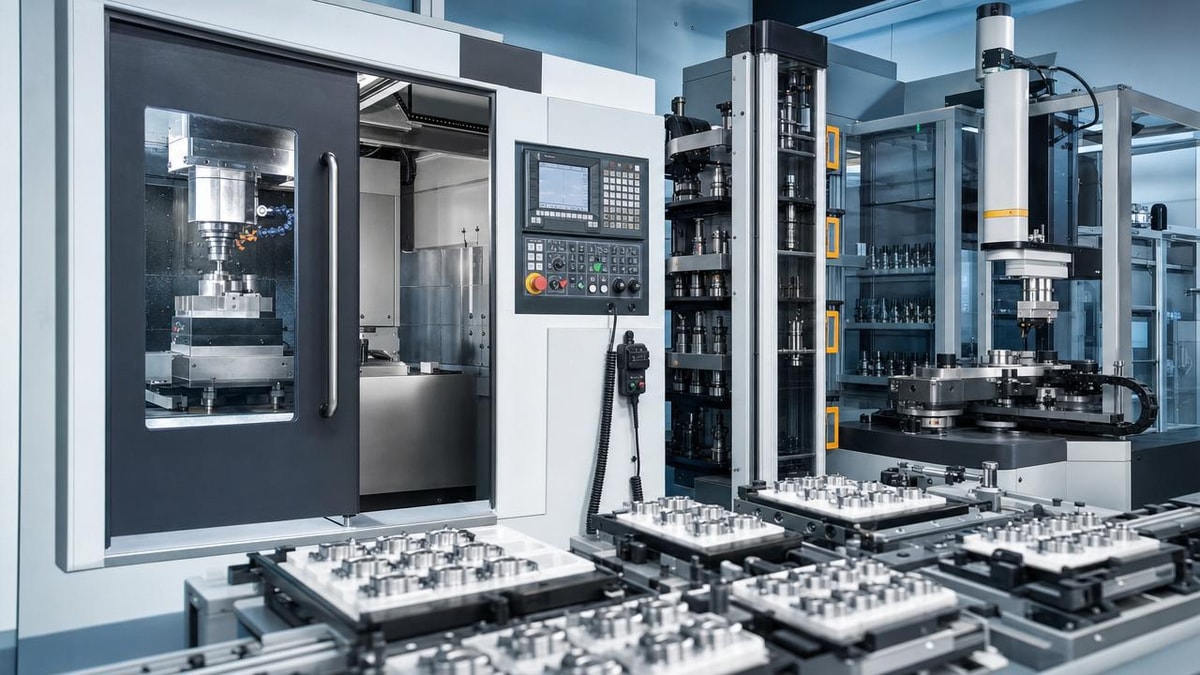
In any CNC industrial project, setup mistakes made on day one can quietly reduce output, increase scrap, and create scheduling risks that follow the entire production cycle. For project managers and engineering leaders, understanding these early errors is essential to protecting machine efficiency, operator workflow, and long-term ROI before small issues become costly bottlenecks.
For most project leaders, the main question is not whether setup errors happen, but which ones damage throughput the fastest and how to prevent them before production ramps up. In a CNC industrial environment, the biggest losses often do not come from dramatic machine failures. They come from poor assumptions in layout, tooling, programming, workholding, material flow, and process validation that reduce performance from the first shift onward.
This matters because output losses caused by early setup decisions are hard to detect in the beginning. A line may still run, parts may still pass inspection, and teams may believe the launch is acceptable. Yet cycle time drift, excessive tool wear, operator waiting time, rework, and unstable scheduling gradually erode capacity. By the time the problem becomes visible in delivery performance, the project is already paying for rushed corrections.
For project managers and engineering owners, the practical takeaway is clear: the most effective way to protect output is to treat initial setup as a business risk control process, not just a technical installation task. The sections below focus on the mistakes that most often slow CNC industrial output from day one, why they happen, how to detect them early, and what decisions reduce long-term disruption.
Why early CNC industrial setup mistakes become output problems so quickly
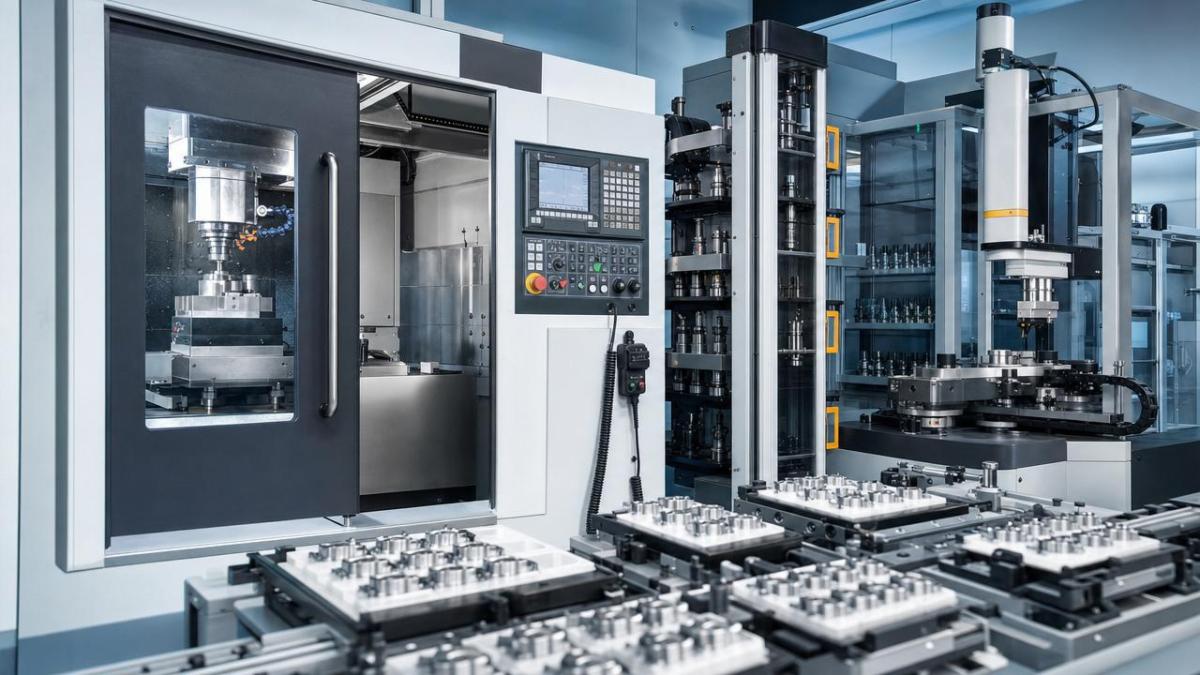
In a new CNC industrial project, setup decisions influence almost every performance variable at once. Machine utilization, spindle time, changeover speed, operator motion, tool life, part consistency, and in-process inspection all depend on what is defined before full production begins. If those conditions are poorly designed, the factory does not simply lose efficiency in one isolated area. It creates a chain of delays that multiplies across shifts.
A common management mistake is assuming that launch inefficiency will naturally disappear once operators gain experience. In reality, training cannot fully compensate for weak process design. Skilled teams may work around setup defects for a while, but those workarounds usually increase labor dependency and reduce repeatability. That is a dangerous model for any operation that expects stable output, multi-shift continuity, or future scale-up.
Early setup errors are especially costly in projects serving automotive, aerospace, electronics, and energy equipment, where tolerance control, traceability, and delivery timing are tightly linked. In those settings, slow output is rarely a simple machine problem. It is usually a systems problem created by incomplete planning between engineering, production, quality, purchasing, and maintenance.
That is why project owners should evaluate setup readiness through one question: can this process maintain target output under real operating conditions, not just under demonstration conditions? If the answer is uncertain, the launch risk is higher than it appears.
1. Machine selection that matches the drawing but not the real production demand
One of the earliest CNC industrial mistakes happens before installation begins: choosing a machine based on part geometry alone instead of full production requirements. A machine may technically be able to make the part, but still be a poor fit for the output target. This often happens when buyers prioritize travel range, spindle specification, or purchase price without fully modeling cycle time, fixturing access, tool magazine needs, automation compatibility, and expected batch variation.
For example, a machining center may have enough capacity for the workpiece, yet offer poor chip evacuation for the material being cut. A lathe may support the part diameter but create inefficient setups for secondary operations. A multi-axis platform may promise flexibility but add programming complexity that slows launch and increases dependency on a small number of advanced programmers.
For project managers, the key question is not “Can this machine make the part?” but “Can this machine make the part repeatedly, at target volume, with stable staffing and predictable maintenance?” That broader evaluation often changes the investment decision.
Useful validation criteria include expected OEE at launch, fixture change time, actual operator handling distance, access for gauging, likely bottlenecks in upstream and downstream processes, and spare parts availability. These are not secondary details. They directly determine whether the CNC industrial cell will achieve commercial output.
2. Layout planning that ignores operator movement and material flow
Many output losses begin with layout errors that seem minor during installation. Machines may be placed to maximize floor fit rather than process flow. Tool carts may be too far from the machine. Raw material and finished parts may cross paths. Inspection stations may sit outside the natural operator route. Coolant access, chip removal, and maintenance service zones may be treated as afterthoughts.
These decisions rarely stop production completely, but they quietly consume time every cycle. An operator who walks extra steps for every part, waits for crane access, or searches for gauges introduces recurring lost seconds that become lost hours by the end of the week. In a high-volume CNC industrial project, poor movement design can reduce practical output more than a small difference in programmed cycle time.
Project leaders should therefore review layout with time-motion logic, not just equipment placement logic. Ask how material enters, where WIP sits, how operators load and unload, where offsets are adjusted, how chips are cleared, and how nonconforming parts are isolated. If these flows are awkward on day one, the line will likely never reach its planned efficiency without redesign.
A useful rule is that the physical layout should support the intended standard work. If the layout forces operators to improvise, the setup is already weakening output stability.
3. Tooling and workholding choices that create instability instead of speed
Tooling and fixturing decisions are often made under launch pressure, which makes them especially vulnerable to compromise. Teams may approve tools with acceptable cutting performance in trials but weak life consistency in continuous production. Fixtures may secure the part well enough for sample runs, yet slow loading, reduce access, or make chip buildup more likely during full-shift operation.
In CNC industrial production, unstable tooling does more than increase consumable cost. It creates frequent stops, offset corrections, dimensional drift, and operator hesitation. Likewise, poor workholding does more than risk scrap. It lengthens clamping time, complicates setup verification, and lowers confidence in aggressive cycle optimization.
Project managers should push for validation beyond first-part success. The better question is whether the tool and fixture package can support repeatable output over a meaningful production window. That means checking tool life variation, clamping repeatability, setup time per changeover, access for cleaning, impact on probing or gauging, and sensitivity to operator technique.
If a process depends on constant manual adjustment to stay within control, it is not production-ready. In most cases, a more robust toolholding or fixturing solution delivers better ROI than a seemingly cheaper setup that causes unstable performance later.
4. Programming and process parameters that are optimized for trial runs, not production reality
Another common mistake is treating a successful prove-out as proof of a mature process. A program that runs safely for a limited sample does not automatically support high output. Feed rates, stepovers, toolpath logic, approach moves, and tool change sequencing may still contain hidden inefficiencies. Worse, programmers may optimize around ideal stock conditions or ideal operator behavior that does not hold in real production.
In a CNC industrial setting, these weaknesses often appear as cycle times that drift upward after launch. Operators add pauses, engineers reduce aggressiveness after tool wear increases, or quality teams introduce extra checks because process capability is unstable. The result is a formal cycle time on paper and a slower cycle time in reality.
To avoid this, process validation should include repeated runs across different material lots, shifts, and operators where possible. Teams should monitor actual machine time versus quoted machine time, causes of feed hold events, tool wear progression, and stop frequency during a sustained production window. This reveals whether the program is truly industrialized or just technically functional.
For managers, the main lesson is simple: do not sign off on setup performance based only on first-pass completion. Sign off on repeatable throughput under normal operating variation.
5. Weak first-article and process validation that hides future scrap and downtime
Some of the most expensive CNC industrial launch problems come from validation that is too narrow. Teams may focus heavily on dimensional conformity of the first approved parts while overlooking process capability, thermal stability, restart behavior, and long-run consistency. That creates a false sense of readiness. Production starts, but scrap, rework, and machine interruptions begin rising as the process experiences real volume conditions.
Strong validation should answer more than “Is the part good?” It should answer “Can this process keep making good parts at target output without unusual support?” That requires checking Cp/Cpk where appropriate, measurement repeatability, tool life distribution, fixture contamination sensitivity, warm-up effects, and response to minor process disturbances.
Project owners should also verify what happens after routine interruptions. If a process loses stability after tool changes, maintenance stops, or shift handovers, then actual production output will suffer even if isolated trial parts look acceptable. Recoverability is part of output performance.
In other words, the validation phase should be designed to expose weakness, not to confirm optimism. That mindset protects schedule integrity far better than a rushed launch.
6. Poor coordination between engineering, quality, maintenance, and production
Many day-one setup mistakes are not technical errors by a single team. They are coordination failures between teams that each optimize their own goals. Engineering may approve a capable process that is difficult to maintain. Quality may require checks that interrupt flow. Production may rearrange tools for convenience but undermine standardization. Maintenance may inherit equipment without proper preventive access or spare part planning.
In CNC industrial operations, output depends on how these functions connect. If responsibilities are unclear at launch, recurring small delays become normal. Tool data is not updated consistently, offset changes are not documented, inspection criteria are interpreted differently by shift, and maintenance actions are reactive rather than planned.
Project managers are in the best position to prevent this because the issue is governance, not just machining. A successful setup plan should define who owns process capability, who approves parameter changes, who monitors downtime patterns, who controls revision history, and how production feedback is escalated during ramp-up.
Even simple daily launch reviews can make a major difference in the first weeks of production. When engineering, quality, production, and maintenance review the same output data, hidden bottlenecks become visible sooner and corrections happen faster.
7. Underestimating training and overestimating how “intuitive” the setup will be
Another reason output slows from day one is that teams assume a well-installed machine is automatically a well-runnable process. But even strong CNC industrial equipment can perform poorly if operator training is thin, setup sheets are incomplete, or troubleshooting logic exists only in the mind of one programmer or engineer.
This issue is especially serious for projects with multiple shifts, labor turnover, or mixed operator experience. A process that depends on tribal knowledge will almost always lose output consistency. Operators may use different loading methods, react differently to alarms, or make offset changes with inconsistent judgment. That variation reduces both speed and quality confidence.
To reduce risk, project leaders should insist on practical launch documentation: setup instructions, tool life standards, alarm response guides, in-process inspection points, visual fixture references, and clear escalation rules. Training should include not only normal operation but also what to do when the process drifts, stops, or restarts.
Good documentation is not administrative overhead. It is a throughput protection tool. The more repeatable the human side of the process, the less output depends on constant expert intervention.
How project managers can detect output-killing setup problems early
The most effective managers do not wait for a missed shipment to discover that a CNC industrial setup is underperforming. They use a short list of operational indicators during launch to identify weak process design early. These indicators are usually more useful than broad averages because they show where instability is entering the system.
Key signals include actual versus planned cycle time, frequency of operator waiting, setup adjustment count per shift, first-pass yield, tool life spread, stoppages by cause category, queue buildup between operations, and time required to recover after routine interruptions. If any of these metrics deteriorate quickly after launch, the process likely has a setup problem rather than a simple learning-curve issue.
It is also important to compare engineering assumptions with shop-floor reality. If the quoted cycle time assumes one-touch loading but operators need two repositioning movements, that gap will persist. If a fixture was designed for clean stock but incoming material varies, setup losses will continue. Early observation at the machine is often more revealing than launch presentations.
For decision-makers, the goal is to distinguish between normal ramp-up noise and structural output loss. Structural loss comes from process design and should trigger corrective action immediately.
A practical launch checklist to avoid CNC industrial output losses
Before full production begins, project teams should review a simple but disciplined checklist. Confirm that the machine matches not only the part envelope but also target volume, changeover pattern, automation plan, and maintenance support. Confirm that layout minimizes movement and supports standard work. Confirm that tooling and fixturing are validated for repeatability, not just feasibility.
Next, verify that the CNC program reflects production conditions, including realistic material variation and repeated-run stability. Validate that first-article approval is supported by process capability evidence where needed. Ensure alarm handling, offset management, gauging methods, and restart procedures are documented and trained. Finally, define ownership of launch data, issue escalation, and parameter revision control.
None of these steps are excessive. They are far less costly than discovering, after customer commitments are active, that the process can only meet output targets under ideal conditions. In most factories, launch discipline is one of the highest-return investments available because it prevents months of hidden efficiency loss.
Conclusion: the fastest way to lose CNC industrial output is to accept weak setup as “good enough”
In a CNC industrial project, output is usually shaped long before formal production metrics begin to look bad. Day-one setup mistakes in machine choice, layout, tooling, programming, validation, coordination, and training create friction that compounds over time. Because these problems often appear manageable at first, they are easy to underestimate and expensive to correct later.
For project managers and engineering leaders, the right approach is to evaluate setup through the lens of throughput, risk, and repeatability. A process is not ready because it can produce parts once. It is ready when it can sustain output with predictable quality, realistic staffing, and controlled variation.
That perspective helps organizations make better launch decisions, protect ROI, and avoid the silent capacity losses that slow production from the very first day. In modern manufacturing, strong setup is not a technical detail. It is a strategic advantage.
PREVIOUS ARTICLE
Recommended for You
![]() Beijing’s New E-Bike Lock Regulation Spurs CNC Housing DemandGlobal Machine Tool Trade Research Center
Beijing’s New E-Bike Lock Regulation Spurs CNC Housing DemandGlobal Machine Tool Trade Research Center![]() New Drone Standard GB/T 44723–2026 Takes Effect May 2026Manufacturing Policy Research Center
New Drone Standard GB/T 44723–2026 Takes Effect May 2026Manufacturing Policy Research Center![]() New Maritime Code Takes Effect May 1, 2026: CNC Equipment Shipping Rules UpdatedManufacturing Market Research Center
New Maritime Code Takes Effect May 1, 2026: CNC Equipment Shipping Rules UpdatedManufacturing Market Research Center![]() 2026 China Cycle Shanghai: CNC E-Bike Frame Capacity Draws ODM FocusManufacturing Market Research Center
2026 China Cycle Shanghai: CNC E-Bike Frame Capacity Draws ODM FocusManufacturing Market Research Center![]() 2026 Foshan Tanzhou Auto Expo: EV Parts Sourcing FocusGlobal Machine Tool Trade Research Center
2026 Foshan Tanzhou Auto Expo: EV Parts Sourcing FocusGlobal Machine Tool Trade Research Center![]() New Hazardous Chemicals Safety Law Takes Effect May 2026Manufacturing Policy Research Center
New Hazardous Chemicals Safety Law Takes Effect May 2026Manufacturing Policy Research Center


Aris Katos
Future of Carbide Coatings
15+ years in precision manufacturing systems. Specialized in high-speed milling and aerospace grade alloy processing.
▶
Can space-saving CNC manufacturing still handle larger part volumes?CNC Machining Technology Center▶
CNC milling chatter problems that tooling changes alone cannot fixCNC Machining Technology Center▶
CNC industrial setup mistakes that slow output from day oneCNC Machining Technology Center▶
CNC Programming errors that cause repeat dimension driftCNC Machining Technology Center▶
CNC milling chatter problems that show up in thin wallsCNC Machining Technology Center
Mastering 5-Axis Workholding Strategies
Join our technical panel on Nov 15th to learn about reducing vibrations in thin-wall components.

Providing you with integrated sanding solutions
Before-sales and after-sales services
Comprehensive technical support