• Global CNC market projected to reach $128B by 2028 • New EU trade regulations for precision tooling components • Aerospace deman
NYSE: CNC +1.2%LME: STEEL -0.4%

Can space-saving CNC manufacturing still handle larger part volumes?
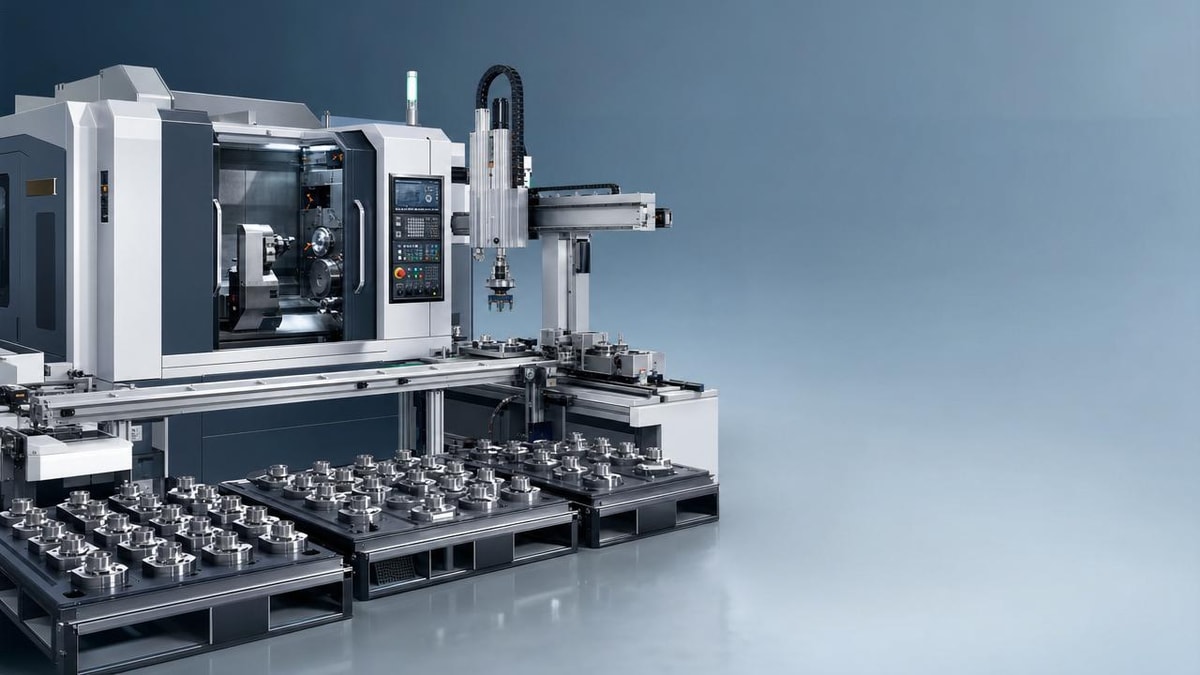
As production footprints shrink and throughput demands keep rising, many project leaders are asking whether space-saving CNC manufacturing can still support larger part volumes without sacrificing precision, workflow efficiency, or delivery speed. The short answer is yes—but not by default. Success depends less on machine size alone and more on spindle utilization, automation design, setup reduction, material flow, and the match between part family and machine architecture. For project managers and engineering leaders, the real question is not whether compact CNC systems can produce more parts, but under what conditions they can do so reliably, profitably, and at scale.
Search intent behind the topic is practical and decision-driven. Readers are typically evaluating whether a compact CNC layout can support expanding demand, new contracts, or mixed-volume production without forcing a move to a larger facility. They want to know what limits output, what technologies offset floor-space constraints, where the risks appear, and how to judge whether a space-efficient manufacturing cell is truly capable of high-volume or medium-high-volume production.
The most useful answer is therefore not a generic discussion of CNC trends. It is a clear assessment framework: what “larger part volumes” really mean in planning terms, which machine and automation choices matter most, how compact production cells compare with traditional layouts, and when the business case works. That is the lens this article follows.
Can space-saving CNC manufacturing really support larger part volumes?
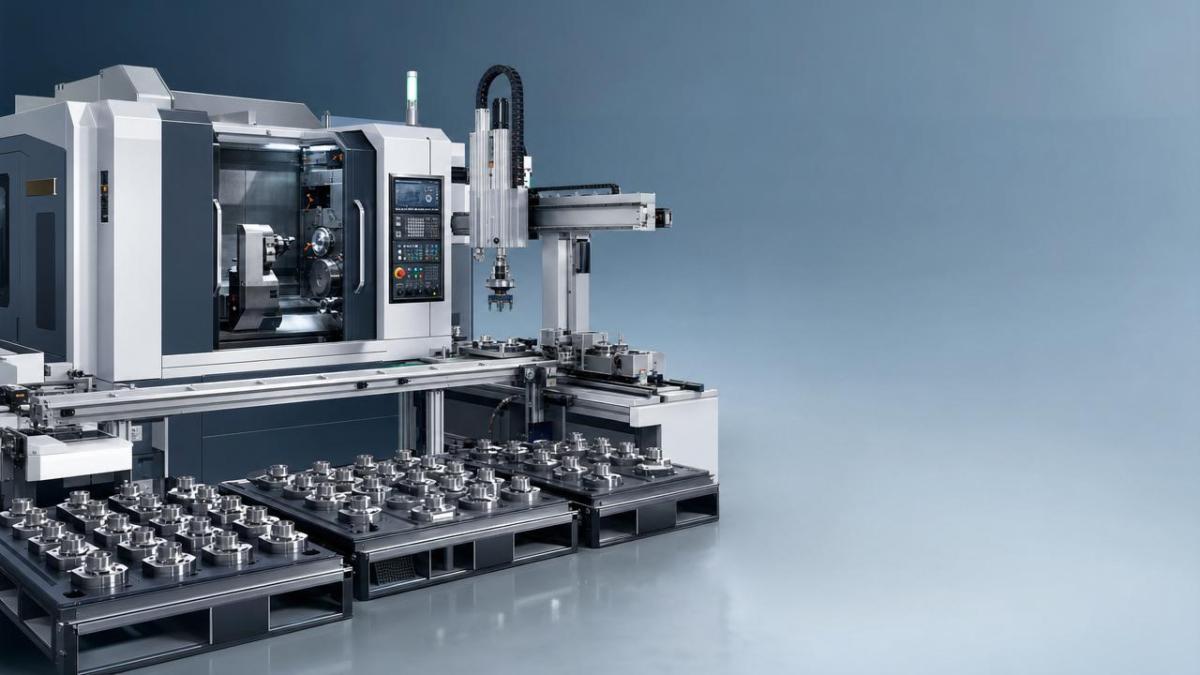
Yes, space-saving CNC manufacturing can handle larger part volumes, but only when volume is created through productivity per square meter rather than by simply adding more machines. In modern manufacturing, compactness does not automatically mean lower capacity. Many smaller-footprint CNC systems are designed to increase output by reducing non-cutting time, consolidating operations, and enabling unattended or lightly attended production.
For project leaders, this distinction matters. A traditional production mindset may assume that higher volume requires a larger workshop, longer lines, or more standalone machines. In practice, a compact CNC strategy can achieve equal or better throughput if cycle times are optimized, setups are minimized, and machine uptime remains high. This is especially true in high-mix environments where production efficiency is often lost between operations rather than during actual cutting.
The limitation is not usually raw machine capability. It is system design. If a compact layout creates bottlenecks in loading, inspection, chip removal, tool management, or material staging, output suffers quickly. If those supporting functions are engineered well, a small-footprint CNC cell can perform far beyond what its physical size suggests.
What project managers are really trying to evaluate
When engineering or operations teams ask about larger part volumes, they are rarely asking a purely technical question. They are asking whether a production system can meet delivery commitments without adding unacceptable cost, complexity, or risk. For project managers, the decision has five practical dimensions: throughput, consistency, scalability, labor dependency, and return on floor space.
Throughput is the obvious metric, but it should be measured in completed good parts over time, not just machine cycle time. A machine may cut quickly yet lose output through frequent setups, tool changes, manual intervention, or queue delays. Consistency matters because increasing volume magnifies every source of variation. A compact CNC line that performs well for pilot batches may struggle under sustained scheduling pressure if process stability is weak.
Scalability is another major concern. Teams want to know whether a space-saving cell can absorb demand growth gradually or whether it reaches a hard ceiling too quickly. Labor dependency is equally critical. If more output requires proportionally more operator attention, then the footprint may be smaller, but the operational burden is not. Finally, return on floor space has become a strategic metric in many factories, particularly where expansion costs, energy costs, and internal logistics complexity are rising.
In short, target readers are not just asking, “Can this machine do it?” They are asking, “Can this production model support the business case over the next two to five years?”
What determines output in a compact CNC environment
The strongest predictor of success in space-saving CNC manufacturing is not machine count. It is the ratio between cutting time and total production time. If a compact system keeps the spindle engaged, reduces changeovers, and limits work-in-progress between steps, it can produce surprisingly high part volumes. If not, a dense layout may simply compress inefficiency into a smaller area.
Several factors have an outsized impact. First is process consolidation. Multi-axis machining centers, mill-turn platforms, and twin-spindle or twin-turret lathes reduce part transfers and secondary operations. This cuts handling time, lowers fixturing requirements, and improves repeatability. In a limited footprint, that kind of integration creates a major capacity advantage.
Second is setup strategy. Large volumes in compact cells usually depend on short setup times, standardized fixtures, modular workholding, and preset tooling. Long setups consume a larger share of available capacity when the number of machines is limited. A smaller factory cannot afford to have critical assets idle during frequent changeovers.
Third is automation fit. Simple automation such as bar feeders, pallet changers, part catchers, conveyors, or robotic tending often makes the difference between acceptable output and strong output. Automation does not need to be complex to be effective. It needs to remove repetitive interruption points that otherwise constrain machine utilization.
Fourth is supporting infrastructure. Coolant systems, chip evacuation, tool life monitoring, in-process measurement, and part traceability may seem secondary during machine selection, but they become central when the goal is sustained volume from a compact line. A machine can only produce at scale if the surrounding process prevents stoppages and quality drift.
Where compact CNC layouts work especially well
Space-saving CNC manufacturing performs best when part geometry, batch structure, and workflow characteristics align with compact cell logic. This often includes precision shaft components, disc parts, valve bodies, fittings, housings, medical components, electronic hardware, and other parts that benefit from multi-operation consolidation and repeatable fixturing.
It is especially effective in medium-volume to high-repeat mixed production, where the challenge is not extreme mass production on one part number, but frequent scheduling changes with a need for dependable output. In these cases, compact CNC cells can outperform larger, fragmented layouts because they reduce internal transport, waiting time, and coordination loss between stations.
Another strong fit is urban or high-cost industrial real estate, where floor expansion is expensive or impossible. Here, productivity per square meter becomes a direct financial lever. Compact production systems can also be a good choice for suppliers serving industries with volatile demand, because modular cells can be rebalanced more easily than long traditional lines.
For contract manufacturers, the appeal is often strategic. A well-planned compact CNC environment allows a business to serve multiple customers, maintain process flexibility, and still increase total monthly output without relocating or overbuilding infrastructure.
Where the limitations begin to show
Compact does not mean universally better. There are real limits, and project leaders should understand them early. The first limitation appears when part size itself is large. Space-saving CNC manufacturing can increase volume, but it cannot ignore the physics of large envelopes, heavy castings, long workpieces, or oversized fixturing. If the parts require large travels, crane access, or substantial staging space, a compact strategy may become inefficient.
Another limitation appears in ultra-high-volume production where dedicated transfer systems or highly specialized lines are economically justified. In that context, compact CNC cells may offer flexibility but not the absolute lowest cost per piece. If a factory is producing very large quantities of a stable part family, dedicated high-output architecture may outperform a flexible compact model.
There is also a planning risk: over-densification. When machines are packed too tightly, access for maintenance, tooling, chip management, inspection, and operator movement can become restricted. This creates hidden downtime that undermines the original space-saving benefit. A layout should be compact, but not cramped.
Finally, compact systems can become vulnerable when they rely too heavily on one machine or one integrated cell. Consolidation raises efficiency, but it also concentrates risk. If one critical platform goes down, multiple operations may stop at once. Redundancy planning and service response become more important as process consolidation increases.
How to judge if a compact CNC solution will meet your volume target
For project managers, the best evaluation method is not a brochure comparison. It is a capacity model built around actual production behavior. Start with takt or required output by shift, then compare it with realistic cycle time, setup time, uptime, scrap assumptions, tool-change frequency, and labor interaction. Use completed parts per day, not nominal spindle speed, as the baseline metric.
Next, examine machine utilization in context. A compact CNC machine that runs at 80 percent effective utilization may deliver better real output than a larger machine with longer idle periods. Include all interruptions: loading, unloading, gauging, deburring, chip clearing, and job changeover. These losses often determine whether a compact system succeeds.
It is also important to map the entire value stream around the machine. Can raw material be staged close enough to avoid interruptions? Is there enough buffer space for in-process parts without creating confusion? How are finished parts inspected and routed? If production flow outside the machine is weak, adding machine capability alone will not solve the volume challenge.
Another useful test is part-family clustering. Identify whether multiple parts can share tooling logic, fixture platforms, programs, and inspection methods. Compact manufacturing becomes more powerful when production variety can be managed through standardization rather than ad hoc scheduling.
Finally, ask vendors and internal teams for proof at three levels: demonstrated cycle time, demonstrated unattended runtime, and demonstrated changeover performance. Volume claims based only on ideal cutting conditions are incomplete. What matters is repeatable output across an entire shift and across multiple part orders.
The role of automation in making small footprints productive
Automation is often the bridge between a compact layout and a high-output layout. In many cases, space-saving CNC manufacturing reaches larger part volumes not because the machine footprint is small, but because automation allows that footprint to be used continuously. Even modest automation can unlock major gains.
Bar-fed turning centers are a good example. They use minimal floor space while supporting extended unattended production for shaft-type parts. Pallet changers and tombstone systems provide a similar benefit in machining centers by reducing waiting time between cycles. Robotic tending can be highly effective when cycle times are long enough to justify hands-free loading and unloading without creating new bottlenecks.
However, automation should be matched carefully to part mix and operational maturity. Over-automating a highly variable process can add cost without stabilizing output. The best automation in compact CNC settings usually removes repeatable handling tasks, supports predictable material flow, and improves utilization without making changeovers excessively complex.
For decision-makers, the key question is not “Should we automate?” but “Which interruptions are currently limiting output, and what is the lowest-complexity way to remove them?” That framing leads to better investment choices.
Business value beyond pure throughput
The case for space-saving CNC manufacturing is not only about producing more parts in less space. For many organizations, the bigger value comes from better operational leverage. A smaller and more integrated production footprint can reduce internal transport, simplify supervision, lower utility consumption, and improve response time when schedules change.
Compact cells can also improve quality economics. Fewer part transfers mean fewer opportunities for damage, mix-ups, and dimensional drift between operations. In-process measurement and shorter feedback loops help teams catch issues earlier. That is especially valuable for project leaders responsible for delivery reliability and customer satisfaction, not just machine utilization.
There is also a strategic resilience advantage. Facilities that maximize output within a constrained footprint often gain more freedom in capital planning. They can postpone building expansion, support pilot-to-production transitions more smoothly, and reallocate space to inspection, assembly, or logistics as the business evolves.
From an ROI perspective, the strongest compact CNC investments usually combine three gains: higher output per square meter, lower labor dependence per part, and lower total lead time through better process integration. Those gains are often more meaningful than headline machine speed alone.
A practical decision framework for engineering and operations leaders
If you are evaluating whether a compact CNC strategy can support larger part volumes, use a phased decision framework. First, define the volume target clearly: average monthly demand, peak demand, mix variability, and required lead time. Second, classify the parts by geometry, setup complexity, and compatibility with process consolidation.
Third, assess the current bottleneck honestly. Is the constraint machine time, labor availability, changeover frequency, floor space, or internal logistics? A compact CNC investment only works if it addresses the real bottleneck. Fourth, compare at least two production scenarios: a conventional expansion model versus a space-saving cell model with realistic automation and utilization assumptions.
Fifth, plan for support systems from the beginning. Tool management, maintenance access, quality control, coolant, chip flow, and digital production monitoring should be treated as core capacity elements, not afterthoughts. Sixth, stress-test the plan for risk concentration. If one compact cell fails, what is the recovery path?
This framework helps project leaders move the conversation away from general impressions and toward measurable production capability. It also makes cross-functional alignment easier, because finance, operations, manufacturing engineering, and procurement can review the same assumptions.
Conclusion: compact capacity is possible, but design decides the outcome
Space-saving CNC manufacturing can absolutely handle larger part volumes, and in many cases it can do so more efficiently than a larger, less integrated layout. But the result depends on how capacity is created. Compact success comes from process consolidation, shorter setups, appropriate automation, strong material flow, and reliable supporting systems—not from footprint reduction alone.
For project managers and engineering leaders, the right question is not whether small-footprint CNC equipment is inherently capable. It is whether the full production system can deliver enough good parts, with enough consistency, at an acceptable cost and risk level. When planned well, compact CNC cells can become a powerful answer to rising demand, limited space, and tighter delivery expectations. When planned poorly, they simply hide bottlenecks in a smaller area.
The practical takeaway is clear: evaluate productivity per square meter, not machine size in isolation. If the process, automation, and workflow are aligned, space-saving CNC manufacturing is not just compatible with larger part volumes—it can become a competitive advantage.
PREVIOUS ARTICLE
NEXT ARTICLE
Recommended for You
![]() Beijing’s New E-Bike Lock Regulation Spurs CNC Housing DemandGlobal Machine Tool Trade Research Center
Beijing’s New E-Bike Lock Regulation Spurs CNC Housing DemandGlobal Machine Tool Trade Research Center![]() New Drone Standard GB/T 44723–2026 Takes Effect May 2026Manufacturing Policy Research Center
New Drone Standard GB/T 44723–2026 Takes Effect May 2026Manufacturing Policy Research Center![]() New Maritime Code Takes Effect May 1, 2026: CNC Equipment Shipping Rules UpdatedManufacturing Market Research Center
New Maritime Code Takes Effect May 1, 2026: CNC Equipment Shipping Rules UpdatedManufacturing Market Research Center![]() 2026 China Cycle Shanghai: CNC E-Bike Frame Capacity Draws ODM FocusManufacturing Market Research Center
2026 China Cycle Shanghai: CNC E-Bike Frame Capacity Draws ODM FocusManufacturing Market Research Center![]() 2026 Foshan Tanzhou Auto Expo: EV Parts Sourcing FocusGlobal Machine Tool Trade Research Center
2026 Foshan Tanzhou Auto Expo: EV Parts Sourcing FocusGlobal Machine Tool Trade Research Center![]() New Hazardous Chemicals Safety Law Takes Effect May 2026Manufacturing Policy Research Center
New Hazardous Chemicals Safety Law Takes Effect May 2026Manufacturing Policy Research Center


Aris Katos
Future of Carbide Coatings
15+ years in precision manufacturing systems. Specialized in high-speed milling and aerospace grade alloy processing.
▶
Can space-saving CNC manufacturing still handle larger part volumes?CNC Machining Technology Center▶
CNC milling chatter problems that tooling changes alone cannot fixCNC Machining Technology Center▶
CNC industrial setup mistakes that slow output from day oneCNC Machining Technology Center▶
CNC Programming errors that cause repeat dimension driftCNC Machining Technology Center▶
CNC milling chatter problems that show up in thin wallsCNC Machining Technology Center
Mastering 5-Axis Workholding Strategies
Join our technical panel on Nov 15th to learn about reducing vibrations in thin-wall components.

Providing you with integrated sanding solutions
Before-sales and after-sales services
Comprehensive technical support