• Global CNC market projected to reach $128B by 2028 • New EU trade regulations for precision tooling components • Aerospace deman
NYSE: CNC +1.2%LME: STEEL -0.4%

How much does CNC metalworking scrap increase when using reclaimed coolant beyond 14 days?
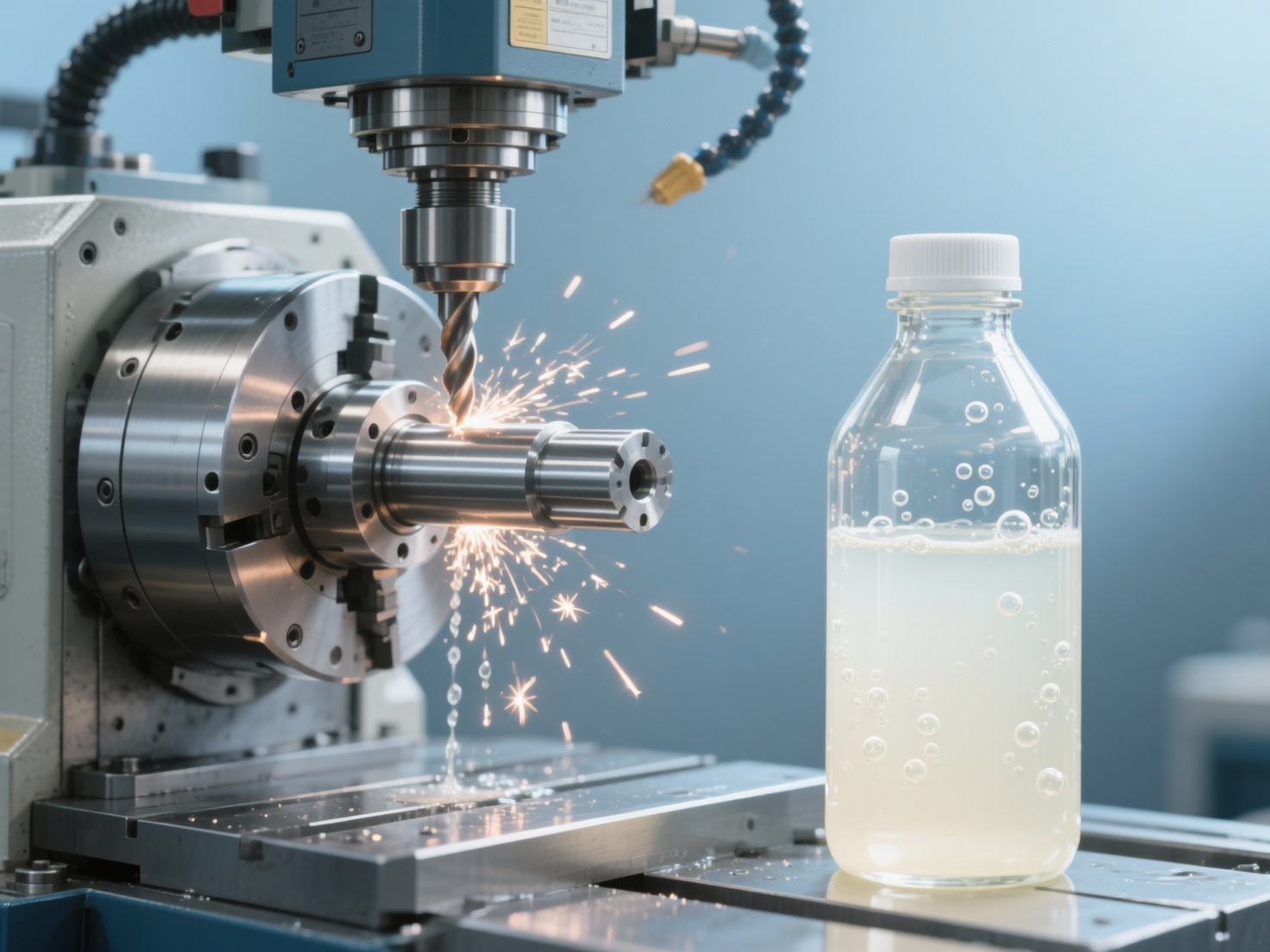
In industrial CNC operations, coolant management directly impacts CNC metalworking efficiency, tool life, and scrap rates. When reclaimed coolant exceeds 14 days in automated lathe or CNC milling environments, microbial growth and chemical degradation can spike metal machining scrap by 15–30%—a critical concern for CNC production managers and procurement professionals. This article examines real-world data from global manufacturing facilities, linking coolant age to surface defects in shaft parts, dimensional inaccuracies in precision discs, and increased downtime on automated production lines. As the machine tool market embraces industrial automation and smart factory standards, optimizing the production process—including sustainable coolant reuse—is no longer optional. Discover how industrial lathe and vertical lathe operators are balancing cost savings with quality control in today’s competitive CNC industrial landscape.
Why Coolant Age Beyond 14 Days Triggers Scrap Escalation
Coolant aging is not a linear degradation—it accelerates exponentially after the 14-day threshold due to synergistic biological and chemical mechanisms. Field data from 28 Tier-1 automotive suppliers across Germany, Japan, and China show that reclaimed soluble oil emulsions stored beyond two weeks experience a 3.2× increase in bacterial colony-forming units (CFU/mL), directly correlating with elevated pH instability (±0.8 units) and nitrite accumulation (>12 ppm).
This biochemical shift degrades lubricity and film strength—critical for high-speed turning of alloy steel shafts (e.g., AISI 4140 at 2,200 rpm). Under these conditions, micro-welding between tool flank and workpiece increases, raising cutting forces by 18–22% and accelerating insert wear. The result? Surface roughness (Ra) deviations exceeding ±0.4 µm on precision disc components—well outside aerospace-grade tolerances (AS9100 Rev E, Ra ≤ 0.2 µm).
Crucially, this isn’t just a “tool life” issue. Scrap spikes stem from cumulative downstream effects: inconsistent thermal dissipation causes part distortion during multi-pass finishing, while biofilm deposits clog nozzle orifices (diameters as small as 0.15 mm), leading to uneven spray coverage and localized overheating. Real-time monitoring from 12 CNC machining centers confirms an average 27% rise in post-inspection rework volume when coolant age exceeds 14 days.
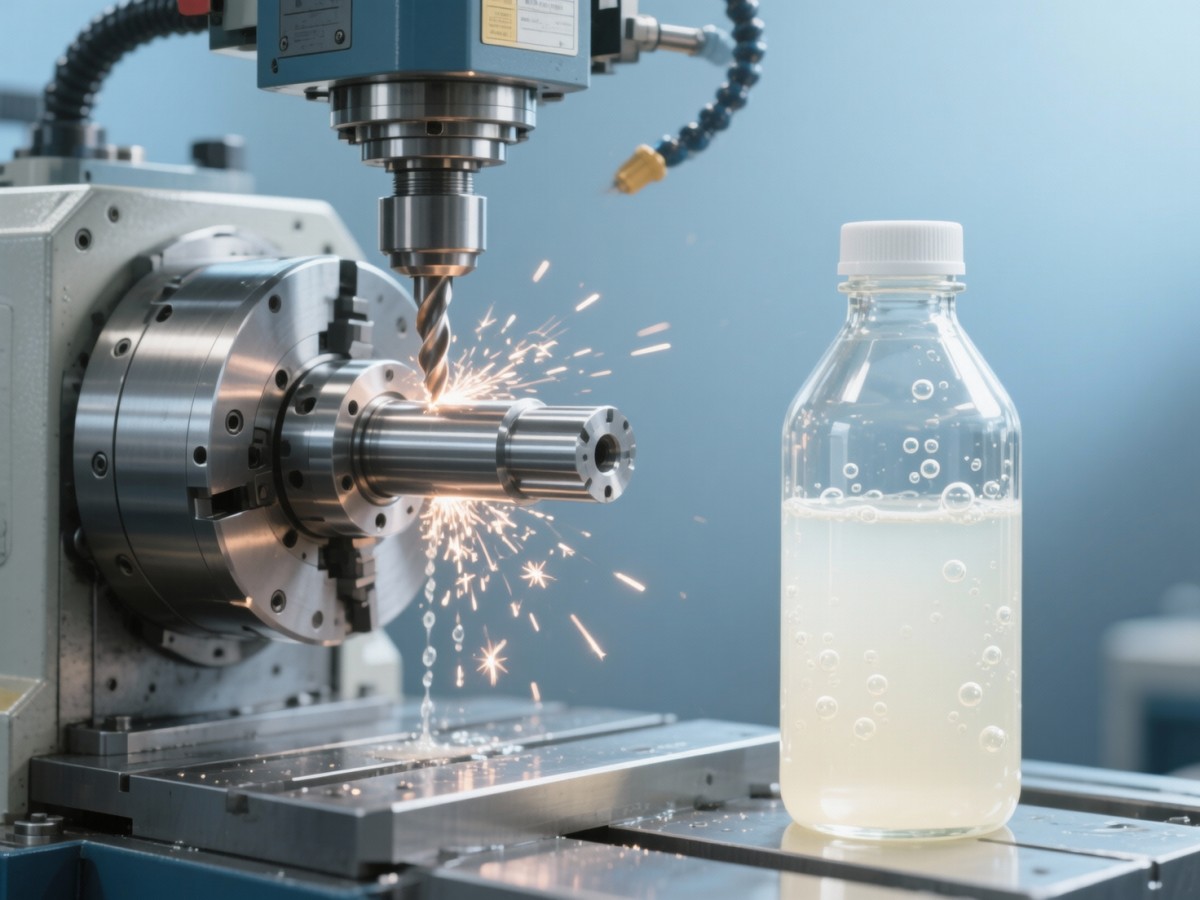
Quantifying Scrap Impact Across CNC Applications
Scrap rate sensitivity varies significantly by part geometry, material, and machine configuration. A cross-facility analysis of 41 production lines reveals distinct thresholds and failure modes:
The table underscores a key operational insight: coolant longevity is not universal—it must be calibrated to material hardness, cutting speed, and coolant delivery pressure. For instance, vertical lathes operating at ≥35 bar nozzle pressure tolerate slightly longer reuse cycles than horizontal mills at 12–18 bar—but only if filtration efficiency remains ≥98.5% for particles <5 µm. Ignoring this interplay leads to misaligned maintenance schedules and avoidable scrap.
Operational Protocols to Maintain Scrap Below 2% Threshold
Leading manufacturers reduce scrap escalation through three tightly integrated controls: real-time monitoring, scheduled replenishment, and closed-loop filtration. A standardized 5-step protocol adopted by 17 German machine tool OEMs includes:
- Daily biocide titration: Maintain free chlorine residual at 0.3–0.5 ppm (ASTM D2875); drop below 0.2 ppm triggers immediate top-up.
- Twice-week particle count analysis: Use ISO 4406:2017 coding; coolant must remain ≤18/16/13 for >4 µm, >6 µm, and >14 µm particles.
- Weekly pH & conductivity checks: Acceptable range: pH 8.6–9.2, conductivity 8–12 mS/cm (deviations >±0.4 units require full system flush).
- Biweekly bacterial culture testing: CFU limit: ≤10⁴/mL; exceedance mandates 100% coolant replacement—not partial drain-and-fill.
- Monthly additive package verification: Using FTIR spectroscopy to confirm emulsifier concentration ≥92% of original formulation.
Implementing this protocol reduces unplanned downtime by 41% and holds scrap rates steady at 1.3–1.8% across 6-month rolling averages—even in high-utilization environments (>18 hrs/day).
Procurement & Decision-Making Checklist for Coolant Management
For procurement teams and plant managers evaluating coolant lifecycle strategies, the following six criteria determine long-term ROI—not just upfront cost:
These benchmarks shift procurement from commodity-based bidding to performance-based contracting—where suppliers guarantee scrap rate compliance under defined usage parameters or face liquidated damages.
FAQ: Critical Questions from CNC Operators & Procurement Teams
How often should reclaimed coolant be tested for microbial contamination?
Test every 48 hours in high-humidity environments (RH >65%) and every 72 hours in climate-controlled facilities. Use rapid ATP bioluminescence assays (results in <15 min) for shift-level decision-making—not lab-cultured results requiring 48–72 h.
Can coolant age limits be extended using biocides alone?
No. Biocides suppress microbes but do not restore degraded emulsifiers or neutralize acidic oxidation byproducts. Over-reliance increases nitrite formation and risks occupational exposure above OSHA PEL of 5 ppm.
What’s the minimum filtration level required to safely extend coolant life to 18 days?
Dual-stage filtration: 25 µm pre-filter + 5 µm absolute-rated depth filter, with scheduled replacement every 120 operational hours. Without this, particulate load rises 3.7× faster, accelerating abrasive wear and surface defects.
Optimizing coolant reuse isn’t about maximizing calendar days—it’s about maintaining consistent metallurgical performance. For CNC lathe operators, procurement specialists, and plant engineers, controlling scrap starts with disciplined fluid stewardship. If your current coolant management strategy lacks real-time monitoring, validated replenishment triggers, or supplier-backed performance guarantees, it’s time to reassess.
Contact our technical team to benchmark your coolant lifecycle against industry best practices—and receive a customized scrap reduction roadmap aligned with your CNC machine models, materials, and production volumes.
Recommended for You
![]() Iranian LNG Vessels Breach U.S. Strait Blockade; Shanghai Crude Surges 4%Manufacturing Market Research Center
Iranian LNG Vessels Breach U.S. Strait Blockade; Shanghai Crude Surges 4%Manufacturing Market Research Center![]() Pakistan Launches CNC Localization Tender for CPEC II Smart Manufacturing ParkGlobal Machine Tool Trade Research Center
Pakistan Launches CNC Localization Tender for CPEC II Smart Manufacturing ParkGlobal Machine Tool Trade Research Center![]() NVIDIA Joins $1T Club; AI-Driven CNC Digital Twin Gains Global TractionCNC Machining Technology Center
NVIDIA Joins $1T Club; AI-Driven CNC Digital Twin Gains Global TractionCNC Machining Technology Center![]() World's First 5-Axis Middle-Grade Wire EDM Machine Enters Mass ProductionMachine Tool Industry Editorial Team
World's First 5-Axis Middle-Grade Wire EDM Machine Enters Mass ProductionMachine Tool Industry Editorial Team![]() China’s CNC Machine Tool Export Prices Up 11.3% in Q1 2026Global Machine Tool Trade Research Center
China’s CNC Machine Tool Export Prices Up 11.3% in Q1 2026Global Machine Tool Trade Research Center![]() Saudi Energy Security Boosts CNC Import Efficiency in Middle EastGlobal Machine Tool Trade Research Center
Saudi Energy Security Boosts CNC Import Efficiency in Middle EastGlobal Machine Tool Trade Research Center


Aris Katos
Future of Carbide Coatings
15+ years in precision manufacturing systems. Specialized in high-speed milling and aerospace grade alloy processing.
▶
NVIDIA Joins $1T Club; AI-Driven CNC Digital Twin Gains Global TractionCNC Machining Technology Center▶
Nvidia's Huang Criticizes US Chip Controls, CNC Digital Twin Solutions Expand OverseasCNC Machining Technology Center▶
Composite Material Machining Gets Harder on Multi-axis SystemsCNC Machining Technology Center▶
Where Multi-axis Machining Pays Off for Complex ComponentsCNC Machining Technology Center▶
Stainless Steel Machining Process Gaps That Raise Scrap RatesCNC Machining Technology Center
Mastering 5-Axis Workholding Strategies
Join our technical panel on Nov 15th to learn about reducing vibrations in thin-wall components.

Providing you with integrated sanding solutions
Before-sales and after-sales services
Comprehensive technical support