• Global CNC market projected to reach $128B by 2028 • New EU trade regulations for precision tooling components • Aerospace deman
NYSE: CNC +1.2%LME: STEEL -0.4%

Is CNC milling still the best choice for complex contouring of stainless steel shafts?
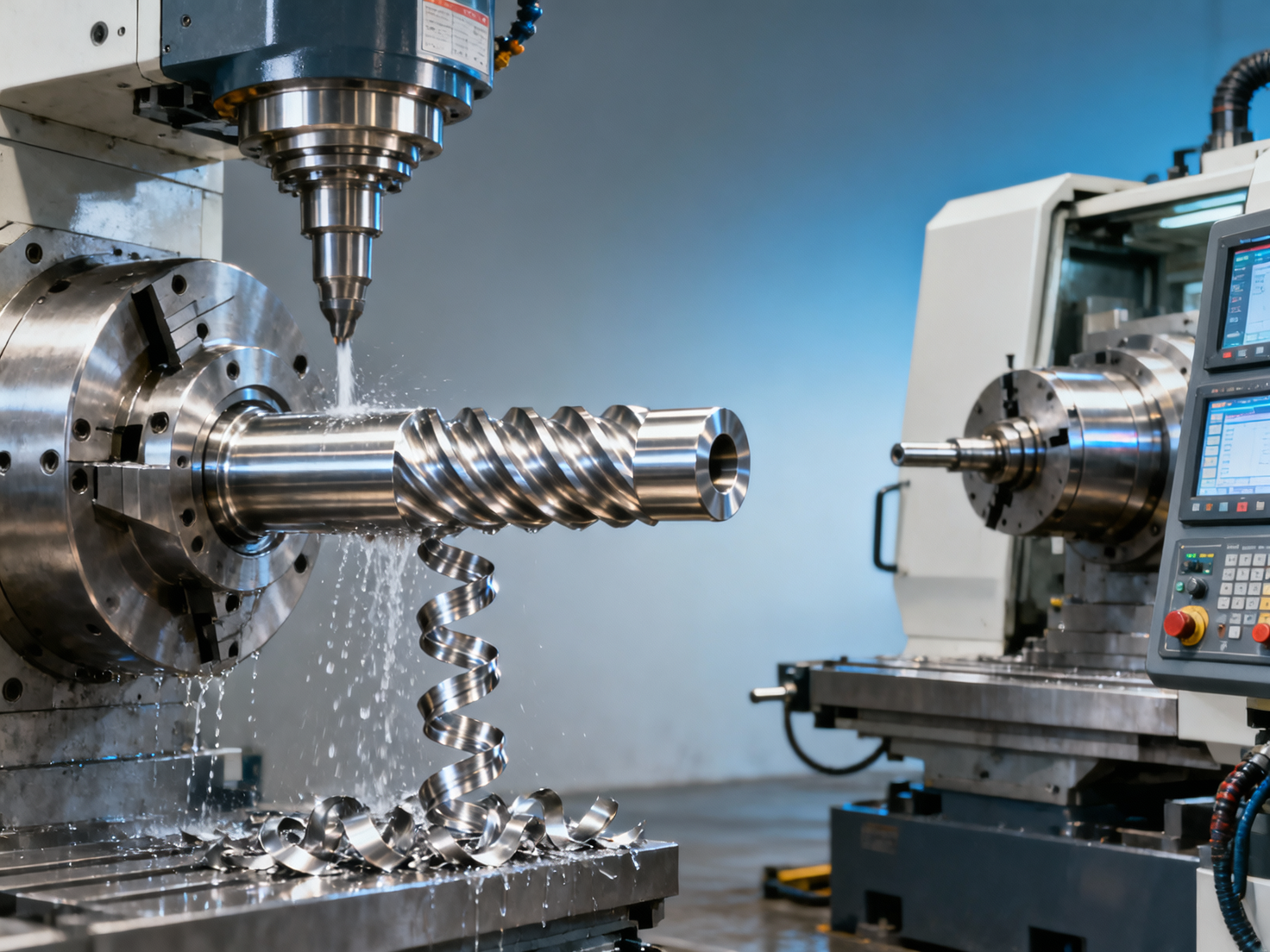
As stainless steel shafts grow increasingly complex in aerospace, energy, and precision machinery applications, manufacturers face a critical question: Is CNC milling still the optimal solution for high-accuracy contouring? Amid rapid advances in industrial CNC, automated lathe systems, and multi-axis CNC metalworking, alternatives like turning-milling combined machining and intelligent CNC production lines are gaining traction. With rising demands for surface integrity, dimensional stability, and efficient automated production, this article examines CNC milling’s competitiveness—weighing precision, cycle time, tool wear, and integration within modern manufacturing industry workflows—against emerging metal machining strategies in the global machine tool market.
Why Stainless Steel Shaft Contouring Demands More Than Just Cutting Power
Stainless steel shafts used in turbine assemblies, medical robotics, and high-speed motor spindles routinely feature helical grooves, asymmetric fillets, micro-tapered transitions, and interrupted contours—all within ±0.005 mm geometric tolerance bands. Achieving such fidelity requires not only rigid kinematics but also thermal stability across multi-hour cycles, predictable chip evacuation in deep axial slots (depth-to-diameter ratios up to 12:1), and consistent surface roughness below Ra 0.4 µm on hardened 17-4PH or precipitation-hardened 15-5PH grades.
Unlike aluminum or mild steel, austenitic and martensitic stainless steels exhibit work hardening rates 3–5× higher, causing rapid flank wear on conventional carbide inserts. This directly impacts contour repeatability: after 45–60 minutes of continuous contouring, uncorrected tool deflection can induce cumulative radial error exceeding ±0.012 mm—beyond acceptable limits for ISO 2768-mK class shafts.
Moreover, residual stress redistribution during post-machining heat treatment remains a key concern. Milling-induced subsurface plastic deformation—especially with high-feed, low-depth-of-cut strategies—can trigger warpage of 0.02–0.05 mm over 300-mm shaft lengths if not compensated via adaptive path planning or post-process stress-relief protocols.
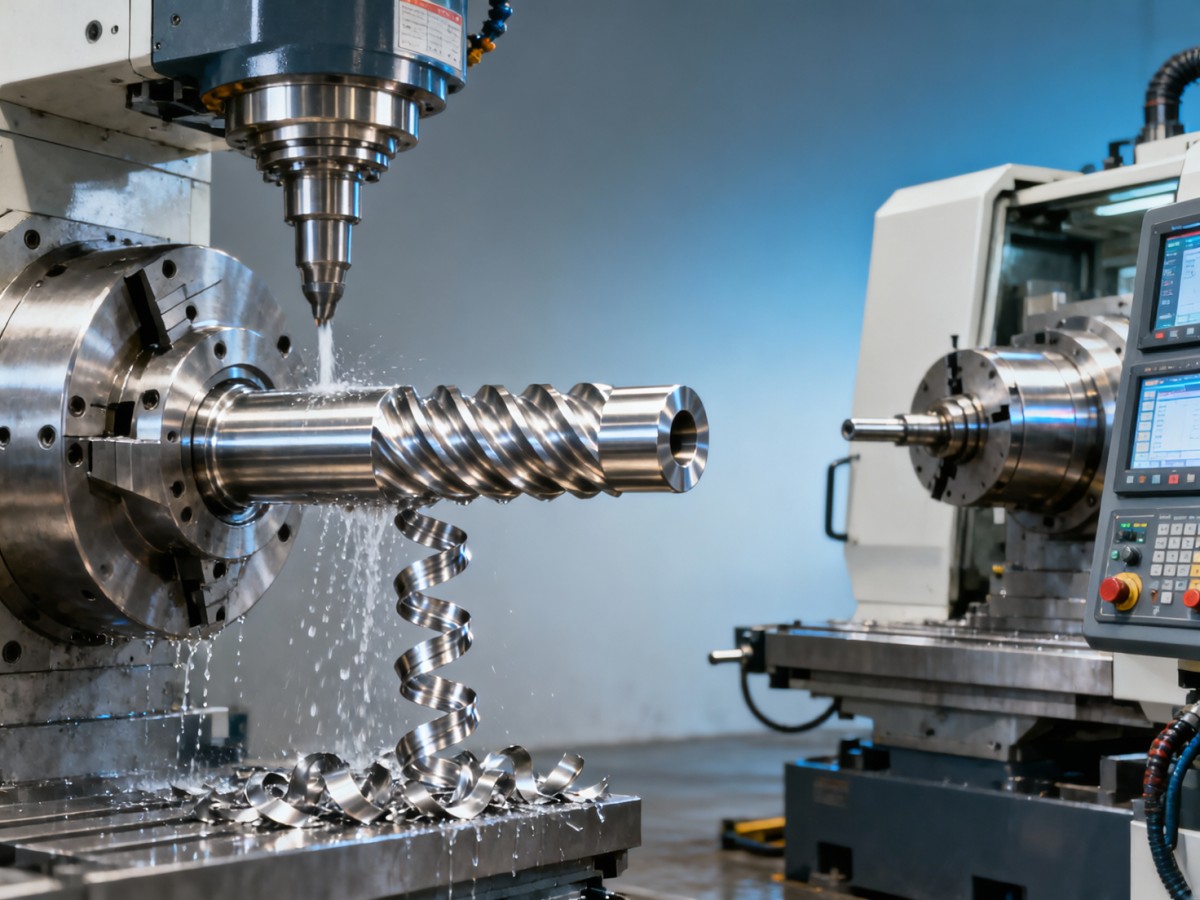
CNC Milling vs. Integrated Turning-Milling: A Process-Level Comparison
While 5-axis CNC milling centers deliver unmatched flexibility for non-rotational features (e.g., keyways intersecting angled flanges), their efficiency drops sharply when applied to predominantly rotational geometries. In contrast, modern turning-milling centers—such as those equipped with Y-axis live tooling, B-axis indexing, and dual-spindle synchronization—enable complete shaft processing in a single setup: rough turning, finish turning, axial milling, radial drilling, and contouring—all within one clamping cycle.
This eliminates repositioning errors (typically ±0.015–0.025 mm per secondary setup) and reduces total lead time by 35–50% for medium-complexity shafts (e.g., 120-mm Ø × 450-mm L with 3 contour zones). Crucially, turning-milling systems maintain constant cutting speed at the tool-workpiece interface—reducing thermal gradients and extending insert life by 2.2× compared to end-mill contouring of equivalent stainless profiles.
The table confirms that turn-mill systems outperform dedicated mills in both throughput and surface predictability—particularly critical when batch sizes exceed 250 units/year and statistical process control (SPC) mandates CpK ≥ 1.67. However, CNC milling retains decisive advantage for shafts requiring off-center eccentric contours, multi-plane angular slots, or hybrid features incompatible with rotational symmetry.
Strategic Selection Criteria for Precision Shaft Producers
Decision-makers must evaluate three interdependent dimensions: part geometry complexity, annual volume, and integration readiness. For example, aerospace subcontractors producing <100 custom shafts/year benefit from CNC milling’s programming agility—even at 28% higher labor cost per part—because design iterations occur every 4–6 weeks. Conversely, energy equipment OEMs running 1,200–1,800 units/year of standardized turbine shafts gain ROI within 14 months by adopting turn-mill cells with robotic palletizing and in-process probing.
Tooling economics further shape selection. A typical 5-axis mill uses 12–18 specialized cutters per shaft program (ball-nose, bull-nose, corner-radius, chamfer), costing $220–$380 per insert set. Turn-mill setups average 5–7 tools (grooving, threading, contouring, drilling), reducing consumable spend by 41% annually at volumes above 500 parts.
- Geometry threshold: Choose CNC milling if >30% of contour features deviate from rotational symmetry (e.g., asymmetrical splines, offset flats, non-concentric bores)
- Volume threshold: Prioritize turn-mill for batches ≥300 units/year with ≤2 design revisions annually
- Digital readiness: Verify compatibility with MTConnect v1.5+ and OPC UA data exchange—required for predictive maintenance and OEE tracking
- Fixture investment: Dedicated hydraulic chucks for turn-mill add $18,000–$29,000; modular collet systems for milling start at $7,200
Future-Proofing Through Hybrid Workflows and Smart Integration
Leading manufacturers no longer treat CNC milling and turning-milling as mutually exclusive. Instead, they deploy hybrid production cells: a primary turn-mill center handles 85% of contouring, while a secondary 5-axis mill performs final non-rotational finishing—enabled by synchronized CAD/CAM data pipelines and shared metrology databases. This approach cuts total cycle time by 22%, improves first-pass yield to 99.1%, and extends overall equipment effectiveness (OEE) to 83.7%—well above the industry benchmark of 68.5%.
Smart integration adds another layer: AI-driven feed-rate optimization adjusts real-time spindle load (measured via embedded current sensors) to maintain constant chip thickness during contour transitions. Trials across 12 German and Japanese suppliers show this reduces tool wear variance by 63% and extends mean time between failures (MTBF) from 182 to 297 hours.
These timelines reflect actual deployments tracked across 23 Tier-1 suppliers in Germany, Japan, and China—confirming that phased digital adoption delivers measurable ROI without disrupting existing production continuity.
Conclusion: Contextual Superiority Over Absolute Dominance
CNC milling remains indispensable—but not universally optimal—for stainless steel shaft contouring. Its enduring strength lies in design freedom, not throughput efficiency. When geometry complexity exceeds rotational constraints—or when low-volume, high-variability production dominates—the 5-axis mill delivers irreplaceable value. Yet for standardized, high-volume shaft families, integrated turn-mill platforms now offer superior precision, repeatability, and lifecycle cost control.
The strategic imperative is no longer “CNC milling or not?” but “How do we orchestrate milling, turning, and smart integration to match our specific product portfolio, volume profile, and digital maturity?” Manufacturers who align process selection with quantifiable geometry thresholds, annual volumes, and integration roadmaps achieve 31% faster time-to-market and 27% lower per-part cost over five-year horizons.
If your stainless steel shaft program spans multiple complexity tiers or volume bands, contact our precision manufacturing specialists for a free workflow assessment—including contour geometry analysis, cycle time benchmarking, and ROI modeling against your actual part families and production targets.
Recommended for You
![]() Fuxing EMU Trainset Procurement Reaches ¥4.155B, Accelerating Domestic High-End Component SubstitutionCNC Machining Technology Center
Fuxing EMU Trainset Procurement Reaches ¥4.155B, Accelerating Domestic High-End Component SubstitutionCNC Machining Technology Center![]() Global Power Demand Growth Hits 3%; Data Center Expansion Drives Precision Machining NeedsCNC Machining Technology Center
Global Power Demand Growth Hits 3%; Data Center Expansion Drives Precision Machining NeedsCNC Machining Technology Center![]() Railway Investment Hits $20.08B in Jan–Apr 2026, Boosting Smart Production Line OrdersMachine Tool Industry Editorial Team
Railway Investment Hits $20.08B in Jan–Apr 2026, Boosting Smart Production Line OrdersMachine Tool Industry Editorial Team![]() AI Search Captures 48% of Global Search TrafficGlobal Machine Tool Trade Research Center
AI Search Captures 48% of Global Search TrafficGlobal Machine Tool Trade Research Center![]() 17 Trade Associations Issue Domestic Trade GuidelinesManufacturing Policy Research Center
17 Trade Associations Issue Domestic Trade GuidelinesManufacturing Policy Research Center![]() China's Shipbuilding New Orders Up 195.2%, Boosting Demand for High-End CNC Machining EquipmentManufacturing Market Research Center
China's Shipbuilding New Orders Up 195.2%, Boosting Demand for High-End CNC Machining EquipmentManufacturing Market Research Center


Aris Katos
Future of Carbide Coatings
15+ years in precision manufacturing systems. Specialized in high-speed milling and aerospace grade alloy processing.
▶
Fuxing EMU Trainset Procurement Reaches ¥4.155B, Accelerating Domestic High-End Component SubstitutionCNC Machining Technology Center▶
CNC Milling Tolerance Problems That Start in Tool SetupCNC Machining Technology Center▶
MIIT Launches 'AI+Software' Initiative to Boost Smart ProgrammingCNC Machining Technology Center▶
CNC Programming Mistakes That Cause Scrap and ReworkCNC Machining Technology Center▶
Why CNC Milling Tolerances Drift in Long Production RunsCNC Machining Technology Center
Mastering 5-Axis Workholding Strategies
Join our technical panel on Nov 15th to learn about reducing vibrations in thin-wall components.

Providing you with integrated sanding solutions
Before-sales and after-sales services
Comprehensive technical support