• Global CNC market projected to reach $128B by 2028 • New EU trade regulations for precision tooling components • Aerospace deman
NYSE: CNC +1.2%LME: STEEL -0.4%

How to Improve Accuracy in CNC Milling
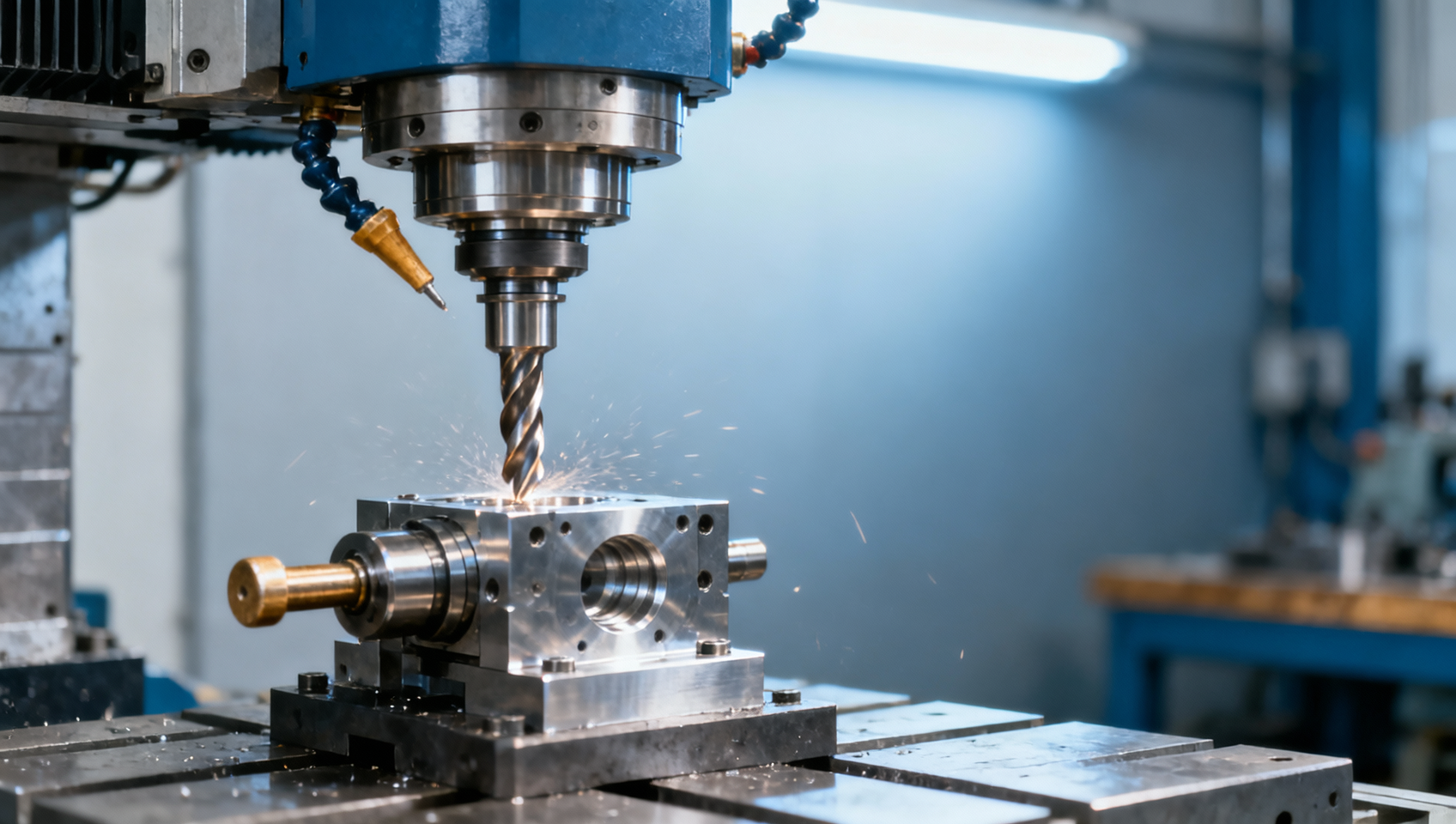
Improving accuracy in CNC milling is one of the fastest ways to reduce scrap, stabilize quality, and improve overall manufacturing efficiency. In practice, better accuracy rarely comes from one single adjustment. It usually comes from controlling the full process: machine condition, tooling, workholding, programming, cutting parameters, thermal stability, inspection, and operator discipline. For manufacturers, operators, buyers, and technical evaluators, the key question is not only how to make CNC milling more accurate, but which factors deliver the most consistent results with the best return on effort and investment.
For most industrial applications, the biggest gains come from a few practical areas: reducing vibration, using the right tool and holder combination, improving fixture rigidity, optimizing feeds and speeds, compensating for thermal effects, and standardizing inspection and setup procedures. When these basics are controlled well, CNC milling accuracy becomes more predictable, especially in high-volume or tight-tolerance production.
What has the biggest impact on CNC milling accuracy?
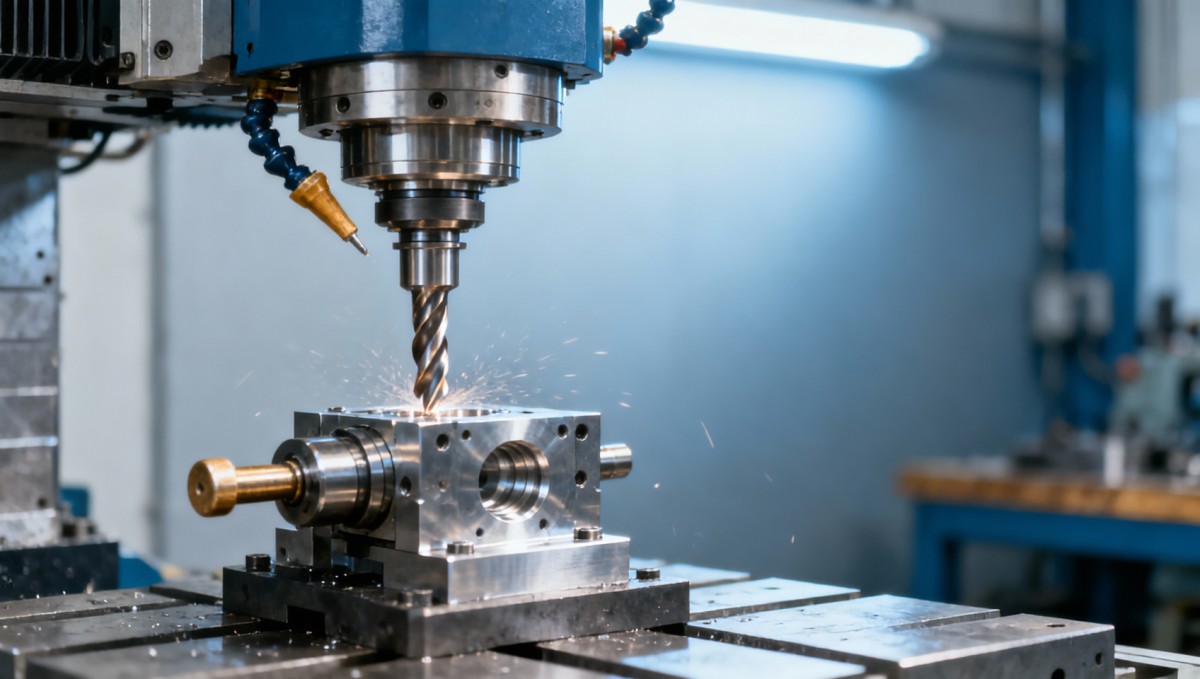
If the goal is to improve accuracy in CNC milling, the most important point is this: accuracy is a system result. Even a high-end CNC machine cannot produce precise parts consistently if the setup, tooling, or process control is weak.
The main factors that affect CNC milling accuracy include:
- Machine rigidity and condition — backlash, spindle runout, worn guideways, and poor maintenance all reduce precision.
- Tool selection and wear — incorrect tool geometry or worn cutting edges increase dimensional variation and poor surface finish.
- Workholding and fixturing — unstable clamping causes vibration, part movement, and deformation.
- Programming strategy — inefficient toolpaths, poor entry methods, and wrong compensation settings create avoidable errors.
- Cutting parameters — feeds, speeds, depth of cut, and step-over directly influence tool deflection and heat generation.
- Thermal stability — machine warm-up, spindle heat, coolant condition, and shop temperature changes affect size consistency.
- Measurement and process feedback — without inspection and compensation, errors repeat through the batch.
For operators, this means daily process discipline matters as much as machine capability. For buyers and business evaluators, it means machine specifications alone do not guarantee part accuracy. Process capability depends on the entire production system.
How can operators improve milling accuracy in daily production?
For shop-floor users, the most effective improvements are often procedural rather than theoretical. Small changes in setup and machining habits can produce major gains in repeatability.
1. Verify machine condition before critical jobs
Check spindle runout, axis backlash, lubrication status, and machine calibration. If a machine has unstable motion or poor repeatability, programming changes alone will not solve the problem.
2. Use the shortest practical tool length
Long tool stick-out increases deflection and chatter. A shorter, more rigid setup improves dimensional control and surface quality, especially in side milling and deep cavity work.
3. Match the tool to the material and operation
Aluminum, stainless steel, titanium, and hardened steel all require different cutter geometry, coatings, and chip evacuation strategies. Using a general-purpose tool for every material often reduces precision and tool life.
4. Improve setup rigidity
Fixtures should support the part close to the cutting zone whenever possible. Weak or uneven clamping can distort thin-wall or precision components. In many cases, fixture optimization delivers better results than adjusting cutting data alone.
5. Reduce vibration and chatter
Chatter causes dimensional inconsistency, rough surfaces, and premature tool wear. Common solutions include reducing overhang, adjusting spindle speed, changing radial engagement, or using more rigid holders.
6. Control tool wear proactively
Do not wait for visible failure. A worn tool can gradually shift dimensions out of tolerance before it breaks. Tool life management, preset replacement intervals, and in-process checks help maintain stable accuracy.
7. Standardize offsets and setup procedures
Errors often come from inconsistent zero-setting, offset entry, and work coordinate handling. Clear setup standards reduce operator-dependent variation and improve multi-shift consistency.
Why do tooling and holders matter so much?
In CNC milling, the cutting tool is where machine capability becomes actual part geometry. Even on a precise machining center, poor tooling choices can create runout, deflection, heat, and unstable cutting forces.
Key tooling-related practices include:
- Use high-quality tool holders such as shrink-fit, hydraulic, or precision collet systems when tolerance demands are high.
- Minimize runout because runout affects cutter balance, uneven tooth loading, and hole or profile accuracy.
- Select proper tool geometry for roughing versus finishing instead of relying on one cutter for both tasks.
- Use balanced tools for high-speed machining to improve stability and reduce vibration.
- Keep holders and tapers clean because contamination at the spindle interface can create measurable inaccuracy.
For procurement teams, tooling should be evaluated as part of the total accuracy package, not as a separate consumable cost only. Lower-cost tools may increase scrap, inspection load, and cycle instability, making them more expensive in actual production.
How does CNC programming affect part precision?
Programming is one of the most underestimated drivers of accuracy. A machine can only follow the path it is given, and poor toolpath strategy often creates unnecessary load, heat, and movement errors.
To improve CNC milling precision through programming:
- Use appropriate roughing and finishing passes instead of trying to hit final dimensions in one aggressive operation.
- Leave stable finishing allowance so the final pass removes consistent material.
- Optimize cutter entry and exit moves to reduce sudden force spikes and tool marks.
- Apply cutter compensation correctly to fine-tune dimensions without rewriting full programs.
- Use climb milling where suitable because it often improves finish and dimensional stability in rigid setups.
- Reduce sharp direction changes that can increase servo load and mark the part.
- Consider machine dynamics because high theoretical feedrates may exceed what the real machine can hold accurately.
For complex parts, CAM strategy is especially important. High-speed machining paths, trochoidal motion, rest milling, and smoothing functions can improve both productivity and accuracy when applied correctly. However, these strategies should be validated against the real machine, material, and tolerance requirement.
How can thermal effects and machine environment be controlled?
Thermal variation is a major cause of dimensional drift in CNC milling, especially in longer production runs or tight-tolerance work. Many shops chase programming or tooling changes when the real problem is temperature instability.
Common thermal control measures include:
- Warm up the machine before precision machining so spindle and axis movement reach a stable condition.
- Maintain consistent shop temperature when possible, particularly for precision metalworking and finishing operations.
- Monitor coolant concentration and flow because poor cooling increases heat and dimensional change.
- Separate roughing and finishing when heat load is high to avoid finishing on a thermally unstable part.
- Use in-machine probing or compensation systems for critical dimensions in advanced production environments.
Thermal management is especially important in aerospace, energy equipment, electronics, and automotive precision parts, where tolerance windows are narrow and batch consistency matters as much as single-part accuracy.
What inspection and quality control methods improve repeatability?
Accuracy improvement is not complete without measurement feedback. If errors are detected only at final inspection, the shop loses time, material, and machine capacity. The best CNC milling operations build quality checks into the process.
Useful methods include:
- First article inspection before full production begins.
- In-process measurement using probes, gauges, or manual checks at critical stages.
- Tool wear tracking linked to part dimension trends.
- Statistical process control for repeated production runs.
- Gauge calibration and measurement system checks to ensure inspection results are trustworthy.
For managers and evaluators, repeatability matters more than isolated success. A process that produces one accurate part but drifts over a batch is not truly capable. Reliable quality control turns CNC milling accuracy from a one-time outcome into a repeatable manufacturing capability.
How should buyers and business evaluators assess CNC milling accuracy capability?
For purchasing teams, sourcing managers, and commercial evaluators, the right question is not simply “What accuracy can this machine reach?” but “What accuracy can this supplier or production system hold consistently under real operating conditions?”
When assessing CNC milling capability, look at:
- Machine construction and brand reputation
- Spindle quality, guideway design, and control system stability
- Calibration and maintenance practices
- Tooling and fixturing standards
- Inspection equipment and process documentation
- Tolerance records, sample parts, and Cp/Cpk data if available
- Operator training and setup consistency
In global manufacturing and international trade, suppliers often promote theoretical precision values. But real commercial value comes from stable output, low defect rates, predictable delivery, and reduced rework. Buyers should therefore evaluate process maturity, not just equipment specification sheets.
Which improvements usually deliver the best return first?
If a company wants to improve CNC milling accuracy without starting with major capital investment, the most cost-effective actions are usually:
- Standardize setup and zero-point procedures
- Upgrade worn or low-quality tool holders
- Control tool wear with planned replacement intervals
- Improve fixture rigidity and part support
- Optimize finishing passes and cutting parameters
- Warm up machines properly and monitor thermal drift
- Add in-process inspection at critical dimensions
These actions often produce faster results than immediately buying a new machine. For many operations, process optimization can recover a large share of lost accuracy before major equipment upgrades become necessary.
In more advanced factories, the next level may include probing systems, tool presetters, digital monitoring, closed-loop compensation, and integration with smart manufacturing systems. These technologies can further strengthen precision and consistency, especially in automated production lines.
Conclusion
To improve accuracy in CNC milling, manufacturers need to treat precision as a full-process discipline rather than a single machine feature. The best results come from combining rigid machines, suitable tooling, stable workholding, optimized CNC programming, thermal control, and reliable inspection.
For operators, this means focusing on setup quality, tool condition, and daily process control. For buyers and business decision-makers, it means evaluating actual production capability, not just nominal machine accuracy. In modern CNC metalworking, consistent precision is what drives better part quality, lower scrap, stronger competitiveness, and more dependable manufacturing performance.
PREVIOUS ARTICLE
NEXT ARTICLE
Recommended for You
![]() China Releases First Eastern Sea Seabed Elemental MapGlobal Machine Tool Trade Research Center
China Releases First Eastern Sea Seabed Elemental MapGlobal Machine Tool Trade Research Center![]() AIMM National Standard Advances for CNC Smart Factory CertificationManufacturing Policy Research Center
AIMM National Standard Advances for CNC Smart Factory CertificationManufacturing Policy Research Center![]() eVTOL Mass Production Drives CNC Export GrowthGlobal Machine Tool Trade Research Center
eVTOL Mass Production Drives CNC Export GrowthGlobal Machine Tool Trade Research Center![]() China Launches World's Largest Agri-Meteorological Observation NetworkManufacturing Market Research Center
China Launches World's Largest Agri-Meteorological Observation NetworkManufacturing Market Research Center![]() Robotics ToB Scaling Hits Data Bottleneck in CNC AI InspectionCNC Machining Technology Center
Robotics ToB Scaling Hits Data Bottleneck in CNC AI InspectionCNC Machining Technology Center![]() SAMR to Complete 1,800+ Standards Revisions in 2026Manufacturing Policy Research Center
SAMR to Complete 1,800+ Standards Revisions in 2026Manufacturing Policy Research Center


Aris Katos
Future of Carbide Coatings
15+ years in precision manufacturing systems. Specialized in high-speed milling and aerospace grade alloy processing.
▶
Robotics ToB Scaling Hits Data Bottleneck in CNC AI InspectionCNC Machining Technology Center▶
How to Choose the Right Metal Machining ProcessCNC Machining Technology Center▶
CNC Metalworking for Small Batches: Is It Worth ItCNC Machining Technology Center▶
How to Plan a Stable CNC Production WorkflowCNC Machining Technology Center▶
How to Improve Accuracy in CNC MillingCNC Machining Technology Center
Mastering 5-Axis Workholding Strategies
Join our technical panel on Nov 15th to learn about reducing vibrations in thin-wall components.

Providing you with integrated sanding solutions
Before-sales and after-sales services
Comprehensive technical support