• Global CNC market projected to reach $128B by 2028 • New EU trade regulations for precision tooling components • Aerospace deman
NYSE: CNC +1.2%LME: STEEL -0.4%

CNC Metalworking for Small Batches: Is It Worth It
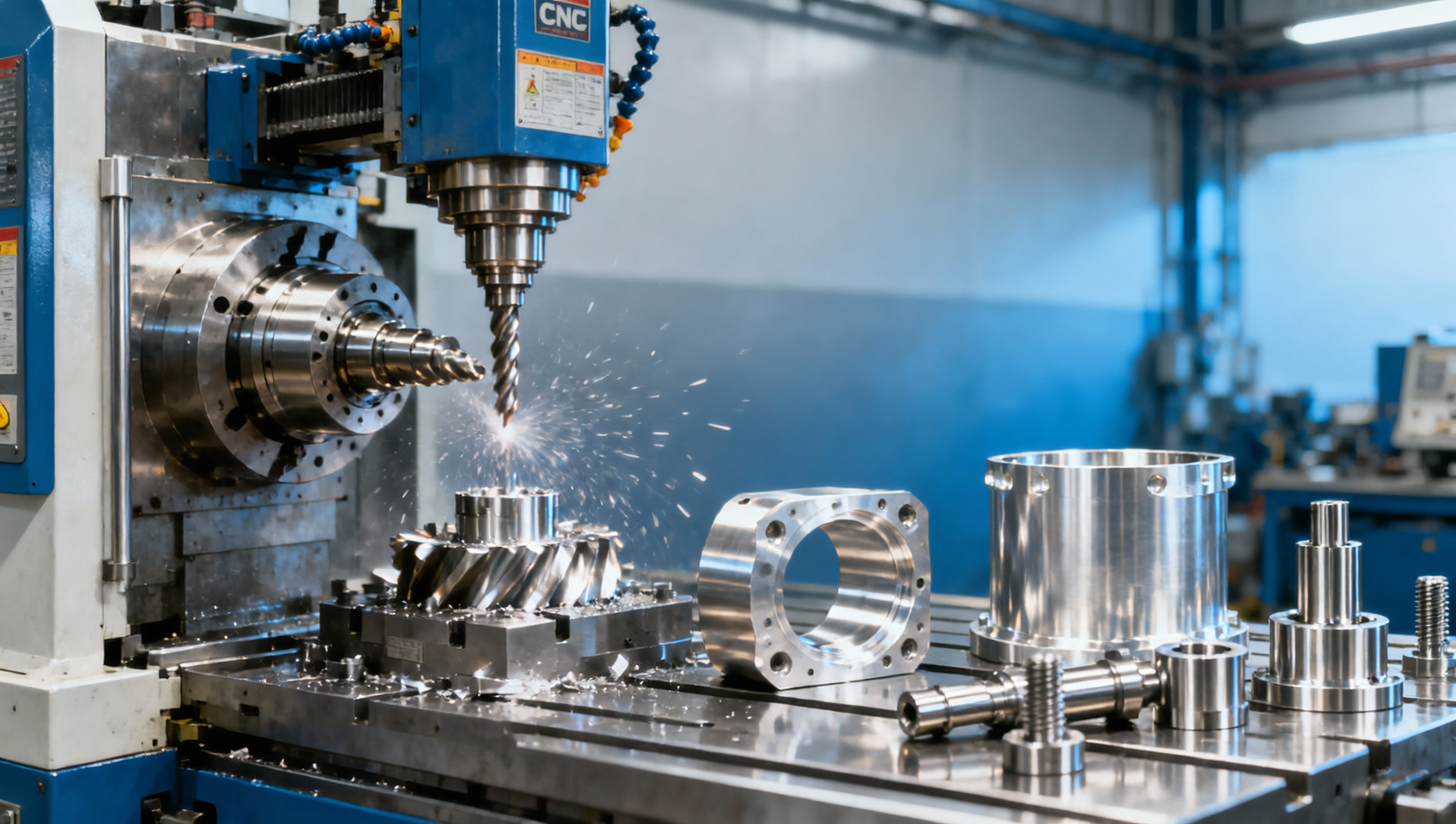
For manufacturers evaluating small-batch production, CNC metalworking offers a practical balance of precision, flexibility, and cost control. From metal machining and CNC milling to automated lathe operations, industrial CNC systems can reduce setup risks while supporting faster production process adjustments. But is small-volume CNC production truly worth the investment? This article explores the real value for buyers, operators, and decision-makers in today’s Manufacturing Industry.
The answer is rarely a simple yes or no. Small-batch CNC production can be highly economical for one company and unnecessarily expensive for another, depending on part geometry, tolerance targets, material choice, change frequency, and downstream assembly requirements. In sectors such as automotive prototypes, aerospace spare parts, electronics enclosures, and energy equipment components, the decision often depends on how much precision, repeatability, and speed matter compared with conventional fabrication or manual machining.
For procurement teams, the real question is total cost per usable part rather than machine hourly rate alone. For operators, the focus is setup stability, tooling life, and programming efficiency. For business evaluators, the issue is whether small-batch CNC supports faster market response, lower inventory exposure, and controlled quality risk. Understanding those dimensions makes it easier to judge where CNC metalworking creates measurable value.
When Small-Batch CNC Metalworking Makes Business Sense
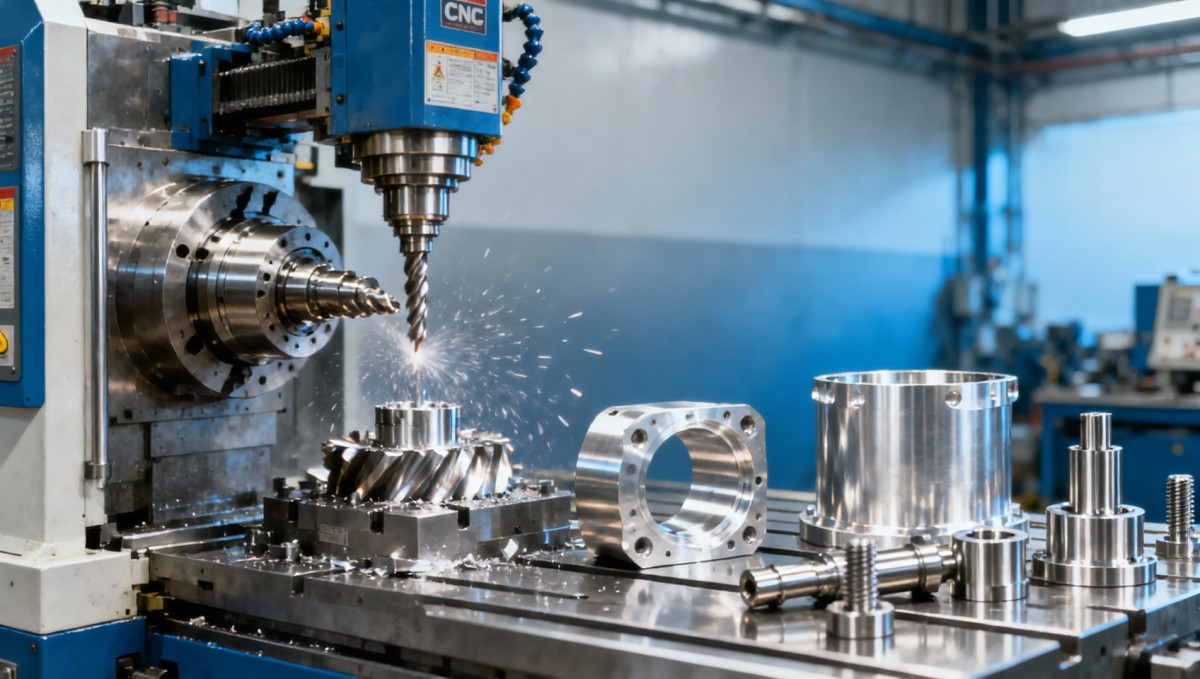
Small-batch CNC metalworking is typically most attractive when production volumes fall between 10 and 500 pieces, although the practical range can be narrower or wider depending on part complexity. If a component has tight tolerances such as ±0.01 mm to ±0.05 mm, multiple machined surfaces, or recurring design revisions, CNC machining often delivers better consistency than manual processes. That matters in industries where each component must fit accurately into an assembly without repeated rework.
Another strong case appears when manufacturers need fast response without committing to mass-production tooling. A stamping die or dedicated casting mold may only pay back after 2,000 to 20,000 units, while CNC machining can start with digital files and standard fixturing. This lowers the financial barrier for pilot runs, replacement parts, engineering validation batches, and market testing. For companies launching a new product, that flexibility can be more valuable than the lowest nominal unit cost.
CNC also becomes worthwhile when the production process must adapt quickly. A machining center or CNC lathe can switch from one part family to another in hours rather than days if programs, tools, and fixtures are managed well. In small-batch environments, that reduction in changeover friction helps avoid idle capacity and supports mixed production schedules. It is especially relevant for subcontract machining suppliers serving 5 to 20 customers with varied order quantities.
Material choice reinforces the value proposition. Metals such as aluminum, stainless steel, brass, tool steel, and titanium often require controlled cutting parameters and stable repeatability. In batches of 20, 50, or 200 parts, scrap reduction of even 3% to 5% can offset part of the machining cost. Where raw material cost is high, reliable CNC programming and toolpath optimization can protect margins more effectively than lower-skill alternatives.
Typical scenarios where small-volume CNC is justified
- Prototype-to-preproduction transitions requiring 10 to 100 parts before tooling investment.
- Aftermarket spare parts with irregular demand and no stable annual volume forecast.
- Precision structural components where flatness, concentricity, or surface finish must remain stable across every lot.
- Export orders with frequent engineering changes, where flexible production is more important than full automation.
The table below helps compare common production choices for low-volume metal parts. It highlights why CNC metalworking is often selected not because it is universally cheap, but because it can control hidden costs linked to quality, delay, and change management.
A key takeaway is that CNC small-batch work tends to win where complexity, tolerance, and change frequency are high. It is less compelling for very simple brackets or plates that can be cut and drilled with minimal variation. The more a part depends on repeatable geometry and digital traceability, the stronger the business case becomes.
Cost Structure: What Buyers Often Underestimate
Many buyers compare suppliers only by quoted unit price, but small-batch CNC cost is driven by at least 6 variables: programming time, fixture design, machine setup, raw material utilization, cycle time, and inspection requirements. For a 30-piece order, the first article may absorb a large share of the total project cost. That does not necessarily mean the supplier is expensive; it may reflect the real engineering effort needed to stabilize production and avoid defects later in the run.
Setup cost is particularly important in CNC milling and turning. If a part requires 2-sided machining, 3 tools, and one soft jaw change, setup may take 1.5 to 4 hours before regular production begins. On a 20-piece batch, that time has a strong impact on unit economics. On a 200-piece batch, the same preparation is diluted across many more parts. This is why low-volume procurement should always assess batch size together with process routing.
Inspection can also shift project economics. Parts with tolerances tighter than ±0.02 mm, critical hole positions, or surface roughness requirements such as Ra 1.6 often need first-piece approval, in-process checks, and final dimensional verification. These steps add time, but they reduce the cost of assembly failure, warranty claims, and customer returns. In B2B manufacturing, a rejected batch can cost far more than the original machining premium.
Lead time is another cost factor that should not be ignored. A supplier delivering in 7 to 10 days may be more valuable than one offering a lower quote with a 4-week lead time, especially when the parts are needed to keep a pilot line running or to complete a machine build. Downtime, delayed launch, and lost order opportunity are business costs even if they do not appear on the machining invoice.
How to evaluate total cost, not only quoted price
- Separate one-time engineering cost from recurring machining cost.
- Check expected scrap rate for the selected material and tolerance level.
- Estimate the impact of delivery time on project milestones.
- Review inspection depth: sampling only, 100% check, or critical-dimension validation.
- Ask whether fixture or tooling cost can be reused across future batches.
The following table shows a practical framework for analyzing low-volume CNC quotations. It can help procurement and business teams avoid decisions based solely on the lowest number in the final column.
In practice, small-batch CNC is worth it when it lowers the total cost of obtaining acceptable, on-time, assembly-ready parts. That usually means evaluating the complete manufacturing process, not just spindle time. Buyers who understand that difference tend to make more reliable sourcing decisions.
Selection Criteria for Operators, Engineers, and Procurement Teams
Choosing the right CNC metalworking approach for small batches starts with part classification. A turned shaft with 4 diameters and one thread is not evaluated the same way as a milled housing with 3 pockets, 2 sealing faces, and positional tolerances across several datums. If the geometry requires 4-axis or 5-axis machining, the supplier’s machine capability becomes a major risk filter. For more conventional 2.5-axis work, process control and tooling strategy may matter more than advanced machine count.
Operators should look closely at setup repeatability. In low-volume work, the ability to repeat a fixture location within a narrow range such as 0.01 mm to 0.03 mm directly affects first-pass yield. Tool presetter discipline, tool life monitoring, and offset verification are not minor details; they determine whether a 50-piece batch runs smoothly or suffers from dimension drift after the first 10 pieces. This is especially relevant for harder materials and deeper cavities where tool deflection becomes visible.
Procurement teams, meanwhile, should verify communication quality before purchase order release. A reliable CNC supplier usually clarifies material grade, surface treatment, tolerance assumptions, deburring expectations, and packaging method before machining starts. Small misunderstandings can become expensive in low-volume projects because there are fewer parts over which to absorb a mistake. One wrong material lot or one omitted chamfer standard can consume the margin of the entire order.
Business evaluators should also consider whether the supplier can support scale-up. A batch of 30 pieces may become 300 pieces within 6 months if a pilot program succeeds. The best partner is often not the cheapest low-volume shop, but the one able to move from prototype to repeat production without changing process logic, quality records, or response speed. That continuity reduces qualification effort and protects the manufacturing schedule.
Core selection checklist
- Machine range: CNC lathe, vertical machining center, horizontal machining center, or multi-axis system.
- Tolerance capability: common production level around ±0.05 mm, precision work around ±0.01 mm depending on part and process.
- Material experience: aluminum, carbon steel, stainless steel, brass, titanium, and heat-treated alloys.
- Inspection method: calipers only, gauges, CMM validation, or first-article report support.
- Batch flexibility: ability to support recurring orders of 20, 100, or 300 pieces without major delay.
Common sourcing mistakes in low-volume CNC
One frequent mistake is over-specifying nonfunctional dimensions. If only 4 dimensions affect assembly, asking for tight tolerance on 20 dimensions increases cost without improving product value. Another mistake is requesting surface finish that the application does not need. Moving from Ra 3.2 to Ra 0.8 can increase cycle time significantly on some metals.
A third error is ignoring secondary operations. Threading, anodizing, plating, heat treatment, laser marking, and custom packaging can add 3 to 10 days to a schedule. These steps should be defined before supplier selection, not after machining is complete. Clear process mapping is one of the simplest ways to keep a small-batch project commercially viable.
Implementation, Lead Time, and Quality Control in Small-Batch Production
A disciplined implementation process is what makes small-batch CNC production practical. In many machine tool and precision manufacturing environments, a realistic delivery cycle for a new low-volume order is 7 to 20 working days, depending on complexity, material availability, and finishing requirements. Rush orders may be faster, but only if drawings are complete and engineering decisions are made early. Incomplete input data is one of the biggest sources of delay.
The first stage is manufacturability review. This usually checks stock size, clamping access, hole depth ratio, corner radius, thread standard, and critical tolerances. Even a 30-minute review can prevent several days of rework. In CNC milling, internal sharp corners or unreachable tool paths may need redesign. In CNC turning, unsupported slender parts may require special support or revised cutting strategy to avoid chatter and diameter variation.
The second stage is first-piece validation. For batches under 100 pieces, this checkpoint is especially valuable because it confirms datum logic, feature sequence, and inspection method before the lot progresses. Operators can compare actual dimensions with tolerance bands, adjust offsets, and confirm burr control. A stable first article often improves the rest of the batch far more than trying to save 1 hour at the beginning.
The third stage is controlled production and final release. In many workshops, in-process inspection is performed every 5, 10, or 20 parts depending on feature risk. Final release should verify not only size but also appearance, labeling, and packaging. For export-oriented suppliers, corrosion prevention, separator materials, and carton marking can matter as much as machining accuracy, especially for stainless and precision-ground parts.
A practical 5-step delivery workflow
- Drawing and requirement review, including material and finish confirmation.
- CAM programming and fixture planning for the selected CNC process.
- First-piece machining with dimensional verification.
- Batch production with scheduled in-process quality checks.
- Final inspection, traceability labeling, packaging, and shipment release.
The table below summarizes common lead-time and quality-control expectations in low-volume CNC metalworking. These ranges are not fixed rules, but they provide a practical benchmark for planning and supplier discussion.
These benchmarks show that low-volume CNC is not only about cutting metal. It is about controlling the entire production process with enough discipline to keep risk, delay, and rework within acceptable limits. When that system is in place, small batches become much easier to justify commercially.
Risks, Misconceptions, and a Clear Decision Framework
One common misconception is that small-batch CNC is always too expensive compared with traditional methods. In reality, it may be the cheaper option when engineering changes are likely, quality requirements are high, or inventory risk must stay low. Producing 1,000 parts to reduce unit price makes little sense if demand is uncertain and 40% of the stock may remain unused after a design revision. Smaller controlled batches can preserve cash flow and reduce obsolescence.
Another misconception is that any CNC supplier can handle precision low-volume work equally well. Machine availability alone is not enough. Process planning, fixture design, operator skill, and inspection discipline determine whether the batch is stable. A shop with advanced equipment but weak process control may deliver more variation than a smaller but better-managed facility. Buyers should therefore review process competence, not just equipment lists.
There is also a risk in treating prototype performance as proof of production readiness. A single good sample does not guarantee that 50 or 200 parts will remain within tolerance. Batch production introduces tool wear, chip evacuation issues, thermal effects, and handling variation. That is why first-piece approval should be followed by defined in-process control rather than visual confidence alone.
A practical decision framework should weigh at least 4 questions: Is the annual volume too low for dedicated tooling? Are tolerances or surface requirements tighter than manual methods can reliably hold? Will design revisions occur within the next 3 to 6 months? Does delayed delivery create larger business costs than the machining premium? If the answer to 3 or more of these questions is yes, small-batch CNC usually has a strong justification.
FAQ: Real questions from buyers and users
How small can a CNC batch be and still make sense?
For highly complex or high-value parts, even a batch of 5 to 20 pieces can be reasonable. For simple geometry, the economic threshold may be closer to 30 to 100 pieces. The more engineering, accuracy, or revision control the part requires, the more likely CNC remains cost-effective at low volume.
What industries benefit most from small-volume CNC production?
Automotive development, aerospace maintenance, industrial equipment manufacturing, electronics housings, energy systems, and custom automation projects frequently benefit. These sectors often need precise metal parts in controlled quantities, sometimes with lead times under 2 weeks and with traceable quality records.
What should be prepared before requesting a quotation?
At minimum, provide 2D drawings or 3D files, material specification, quantity, tolerance notes, surface finish, and any secondary process requirement. If there are 3 to 5 critical dimensions that affect assembly, identify them clearly. This helps suppliers quote the right process and avoid costly assumptions.
How can repeat orders become more economical?
Repeat batches become more efficient when programs, fixtures, tool lists, and inspection points are standardized. Many suppliers can reduce cost or shorten lead time on the second and third order because setup knowledge is already built. Stable revision control is essential to capture that benefit.
Small-batch CNC metalworking is worth it when precision, responsiveness, and controlled risk matter more than the lowest theoretical unit price. For manufacturers dealing with product validation, spare parts, customized assemblies, or uncertain demand, CNC machining often provides the best balance between flexibility and production discipline. The key is to evaluate total cost, lead time, quality control, and future scalability as one connected decision.
If you are comparing sourcing options for CNC milling, turning, or precision metal machining, now is the right time to review your drawings, tolerance priorities, and expected batch plan. Contact us to discuss your small-batch production needs, request a tailored machining solution, or learn more about practical CNC strategies for the manufacturing industry.
PREVIOUS ARTICLE
NEXT ARTICLE
Recommended for You
 How to Choose the Right Metal Machining ProcessCNC Machining Technology Center
 Metal Machining vs CNC Metalworking: What MattersCNC Machining Technology Center
 What Drives Cost in Industrial CNC ProjectsManufacturing Market Research Center
 Is Industrial CNC Worth Upgrading in 2026Machine Tool Industry Editorial Team
 How CNC Industrial Systems Improve Shop EfficiencyMachine Tool Industry Editorial Team
 CNC Industrial Setup Mistakes to Avoid FirstCNC Machining Technology Center

Aris Katos
Future of Carbide Coatings
15+ years in precision manufacturing systems. Specialized in high-speed milling and aerospace grade alloy processing.
▶
How to Choose the Right Metal Machining ProcessCNC Machining Technology Center▶
CNC Metalworking for Small Batches: Is It Worth ItCNC Machining Technology Center▶
How to Plan a Stable CNC Production WorkflowCNC Machining Technology Center▶
NVIDIA Joins $1T Club; AI-Driven CNC Digital Twin Gains Global TractionCNC Machining Technology Center▶
Nvidia's Huang Criticizes US Chip Controls, CNC Digital Twin Solutions Expand OverseasCNC Machining Technology Center
Mastering 5-Axis Workholding Strategies
Join our technical panel on Nov 15th to learn about reducing vibrations in thin-wall components.

Providing you with integrated sanding solutions
Before-sales and after-sales services
Comprehensive technical support