• Global CNC market projected to reach $128B by 2028 • New EU trade regulations for precision tooling components • Aerospace deman
NYSE: CNC +1.2%LME: STEEL -0.4%

How to Choose the Right Metal Machining Process
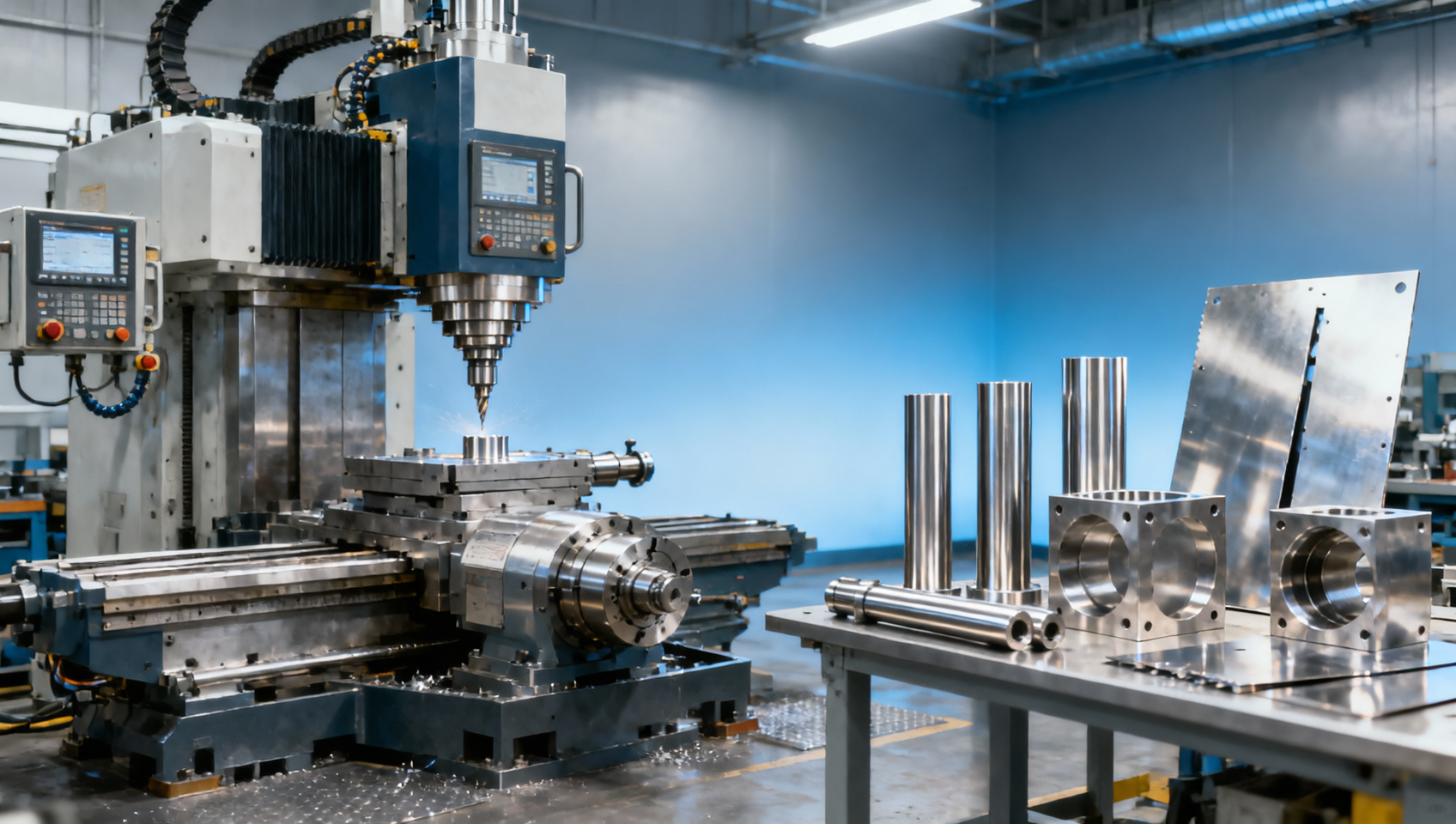
Choosing the right metal machining process is critical for balancing precision, cost, and production efficiency in today’s manufacturing industry. From CNC milling and CNC cutting to automated lathe systems and industrial CNC solutions, each method serves different materials, part geometries, and output goals. This guide helps researchers, operators, buyers, and evaluators understand how CNC metalworking supports smarter automated production and better process decisions.
If you are trying to choose the right metal machining process, the fastest way to make a good decision is to match five factors first: part geometry, material, tolerance, production volume, and budget. In practice, there is no single “best” process. The right choice depends on what you need the part to do, how consistently it must perform, and how efficiently it must be produced. For most buyers and technical teams, the real question is not simply “Which process is more advanced?” but “Which process gives the required quality at the lowest total production risk and cost?”
What should you evaluate first when choosing a metal machining process?
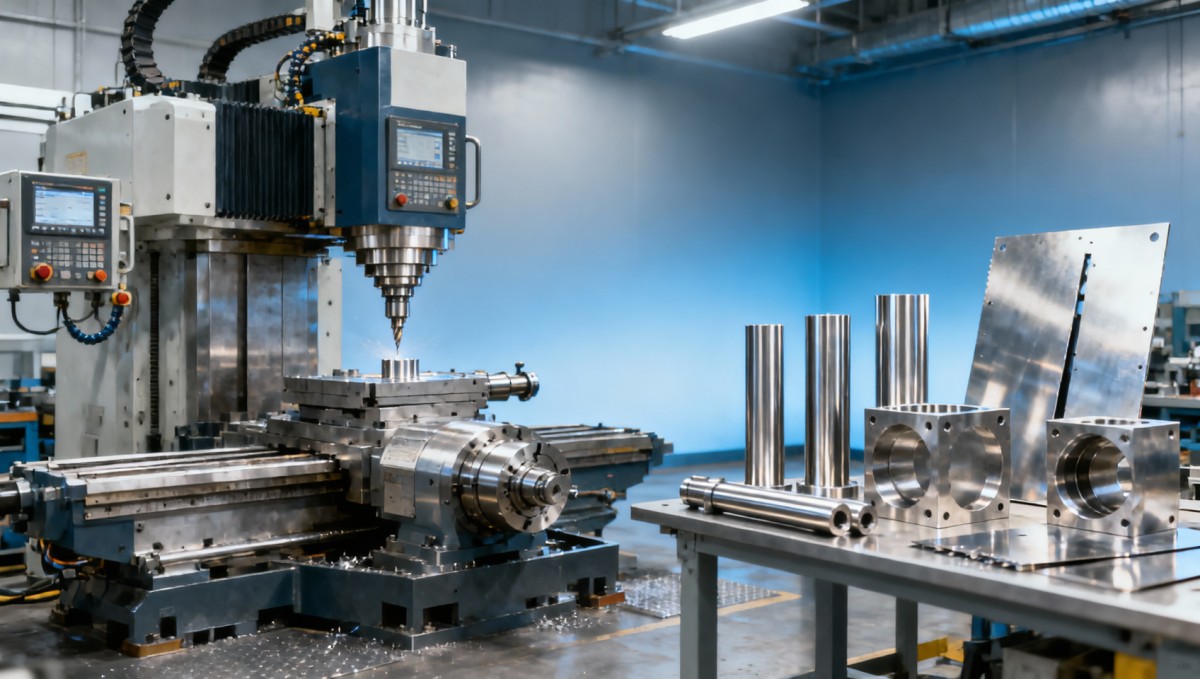
Before comparing machines or suppliers, define the part requirement clearly. This step matters more than many companies expect, because process selection errors usually begin with incomplete technical input rather than poor machine capability.
Start with these key questions:
- What material is being machined? Aluminum, stainless steel, carbon steel, titanium, brass, and hardened alloys behave very differently during cutting.
- How complex is the part geometry? Simple rotational parts may fit CNC turning, while complex surfaces often require CNC milling or multi-axis machining.
- What tolerances and surface finish are required? Tight dimensional control may require precision machining, secondary finishing, or more rigid equipment.
- What is the production volume? Prototype, small batch, and mass production often justify different process routes.
- What is the acceptable cost per part? A highly capable process may not be the best option if it adds unnecessary setup time or tooling cost.
- Are there downstream assembly or functional requirements? Hole position, flatness, concentricity, and burr control can affect product performance later.
For information researchers and commercial evaluators, this is the most useful framework because it turns a broad search into a practical decision model. For operators and users, it also helps prevent overprocessing or underprocessing.
How do the main metal machining processes differ in real manufacturing use?
Different machining methods are designed for different manufacturing goals. Understanding where each one performs best helps avoid costly mismatches.
CNC turning
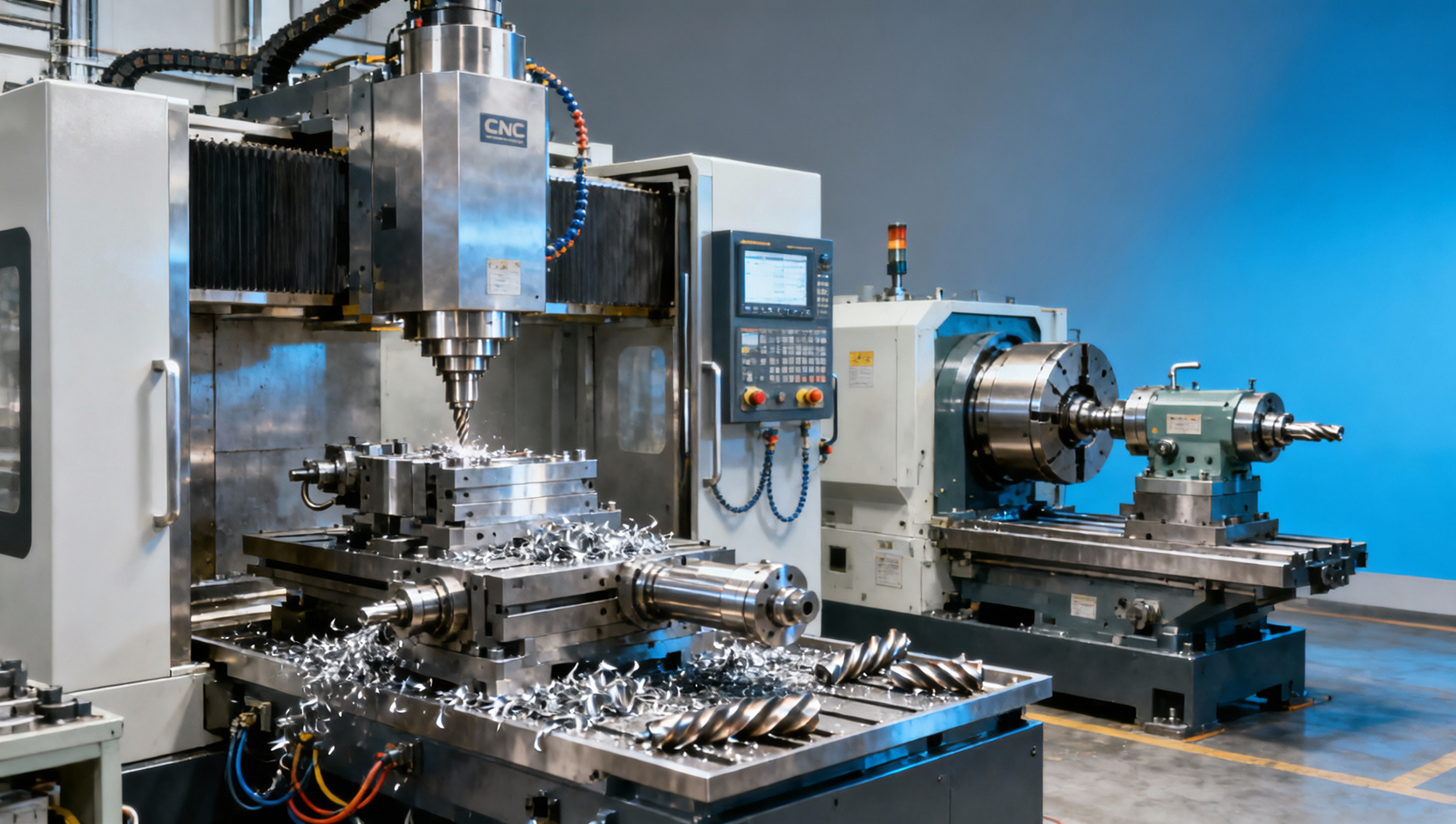
CNC turning is ideal for cylindrical or shaft-type components. If the workpiece rotates around its axis and the geometry is mainly round, stepped, threaded, or grooved, turning is often the most efficient option. CNC lathes are widely used for automotive parts, bushings, connectors, precision shafts, and valve components.
Best for: round parts, high repeatability, efficient production of symmetrical components.
Watch for: limited suitability for non-rotational geometries unless combined with live tooling or multi-axis functions.
CNC milling
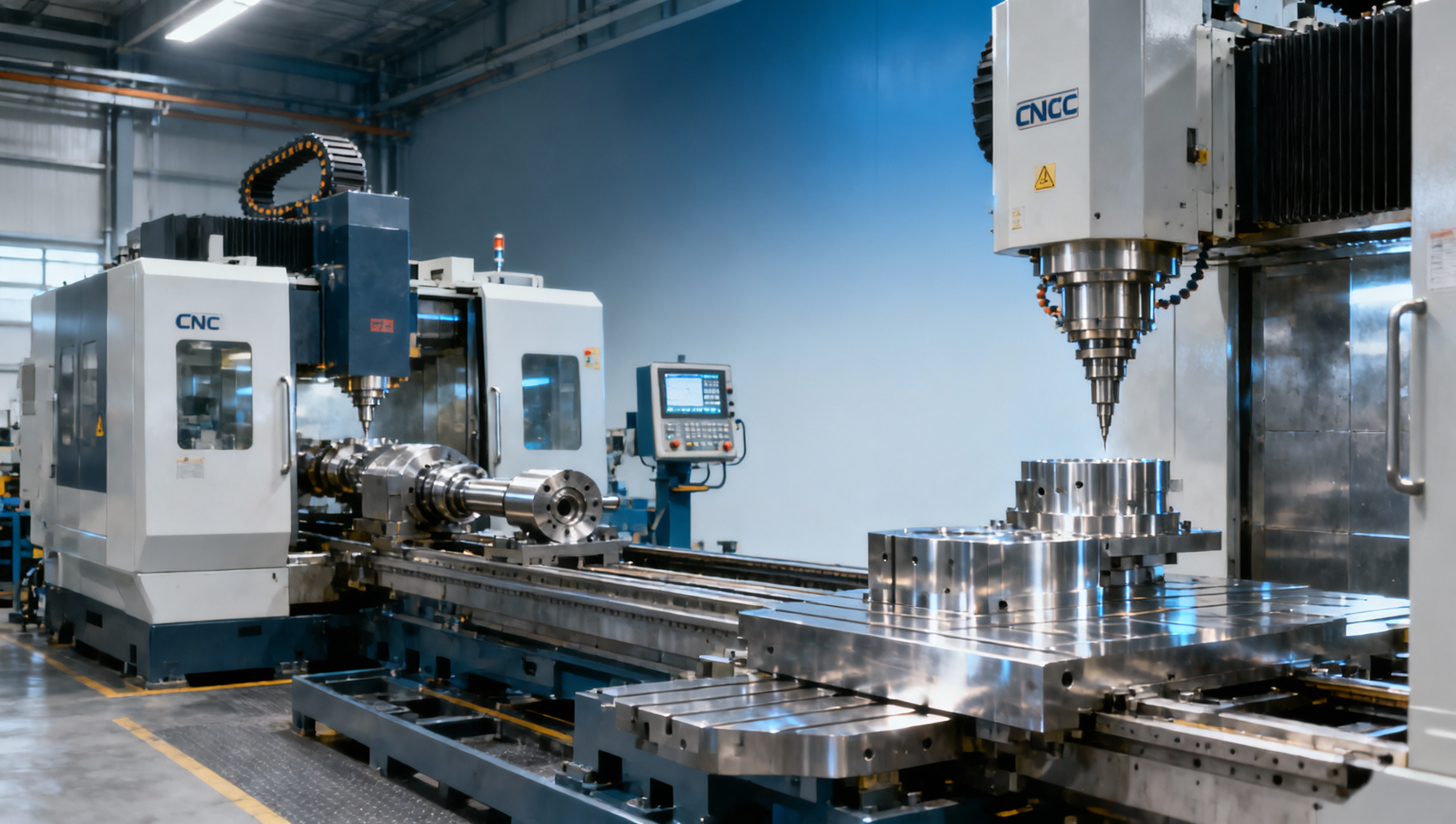
CNC milling is one of the most flexible metal machining processes. It can create flat surfaces, pockets, slots, holes, contours, and complex 3D forms. Machining centers are commonly used for housings, plates, molds, fixtures, structural components, and precision parts across aerospace, electronics, and industrial equipment sectors.
Best for: prismatic parts, complex surfaces, multi-feature components.
Watch for: longer cycle times and more complex fixturing on some parts compared with turning.
CNC cutting
CNC cutting often refers to laser cutting, plasma cutting, waterjet cutting, or flame cutting for sheet metal and plate materials. This process is suitable when parts need to be cut from flat stock before secondary machining, bending, or welding.
Best for: sheet metal profiles, rapid blank preparation, lower-cost shape cutting.
Watch for: edge quality, heat-affected zones, and the fact that cutting alone may not achieve final tolerance requirements.
Drilling, tapping, and hole-making operations
Many parts depend heavily on accurate holes, threads, and fastening features. In some cases, hole-making quality is more important than overall shape complexity. Dedicated drilling and tapping operations may be integrated into CNC machining centers or automated production lines.
Best for: parts with multiple precision hole features, assembly-critical components.
Grinding and finishing
When dimensional precision, roundness, flatness, or surface finish requirements are extremely demanding, grinding may be necessary after primary machining. This is common in bearing components, tooling, precision discs, and high-performance machine elements.
Best for: ultra-tight tolerance parts and fine surface finish requirements.
Watch for: added cost and process time.
Multi-axis machining
For highly complex geometries, especially in aerospace, medical, and advanced equipment manufacturing, 4-axis and 5-axis machining can reduce multiple setups and improve access to difficult surfaces.
Best for: complex contours, impellers, structural parts, precision components with many angled features.
Watch for: higher machine investment, programming complexity, and operator skill requirements.
How do material type and part geometry affect process selection?
Material and geometry are often the two biggest technical drivers in CNC metalworking.
Aluminum is generally easy to machine, making it suitable for high-speed CNC milling and machining centers. It is common in electronics, automotive lightweight parts, and fixtures.
Stainless steel offers strength and corrosion resistance but is harder to machine than aluminum. It may require slower cutting speeds, stronger tooling, and careful chip control.
Carbon steel is widely used in industrial applications and is often cost-effective, but machinability varies by grade.
Titanium is valued in aerospace and medical sectors but presents major machining challenges due to heat concentration and tool wear.
Brass and copper alloys may machine well in some cases, but softness, burr formation, and conductivity-related considerations can influence process choice.
Geometry matters just as much. A simple shaft should not be routed through an expensive multi-axis machining center if a CNC lathe can produce it more efficiently. On the other hand, a complex housing with multiple faces, angled holes, and precision surfaces may justify a machining center or 5-axis approach to reduce repositioning and accumulated tolerance error.
In short, the more difficult the material and the more complex the geometry, the more important machine rigidity, tooling strategy, and process planning become.
What do buyers and evaluators need to compare beyond price?
For procurement teams and business evaluators, choosing a machining process is rarely just a technical decision. It is also a quality, lead time, and supplier capability decision.
Key comparison points include:
- Total cost, not just piece price: Include tooling, programming, setup, scrap risk, finishing, inspection, and logistics.
- Repeatability: Can the process hold stable quality over long production runs?
- Capacity: Can the supplier or internal line support your required volume and delivery schedule?
- Process maturity: Is the method proven for similar parts and industries?
- Inspection capability: Does the production system include proper measurement and quality control?
- Automation level: Automated loading, tool monitoring, and integrated production lines can improve consistency and reduce labor dependency.
- Scalability: Will the process still make sense if demand increases?
For example, a low quotation from a less capable shop may seem attractive at first, but if the process cannot control tolerance consistently, the hidden cost appears later through rejection, rework, delayed assembly, and field failure risk. That is why industrial CNC solutions should be evaluated as part of a wider manufacturing system, not as isolated machine functions.
When is automated CNC production the better choice?
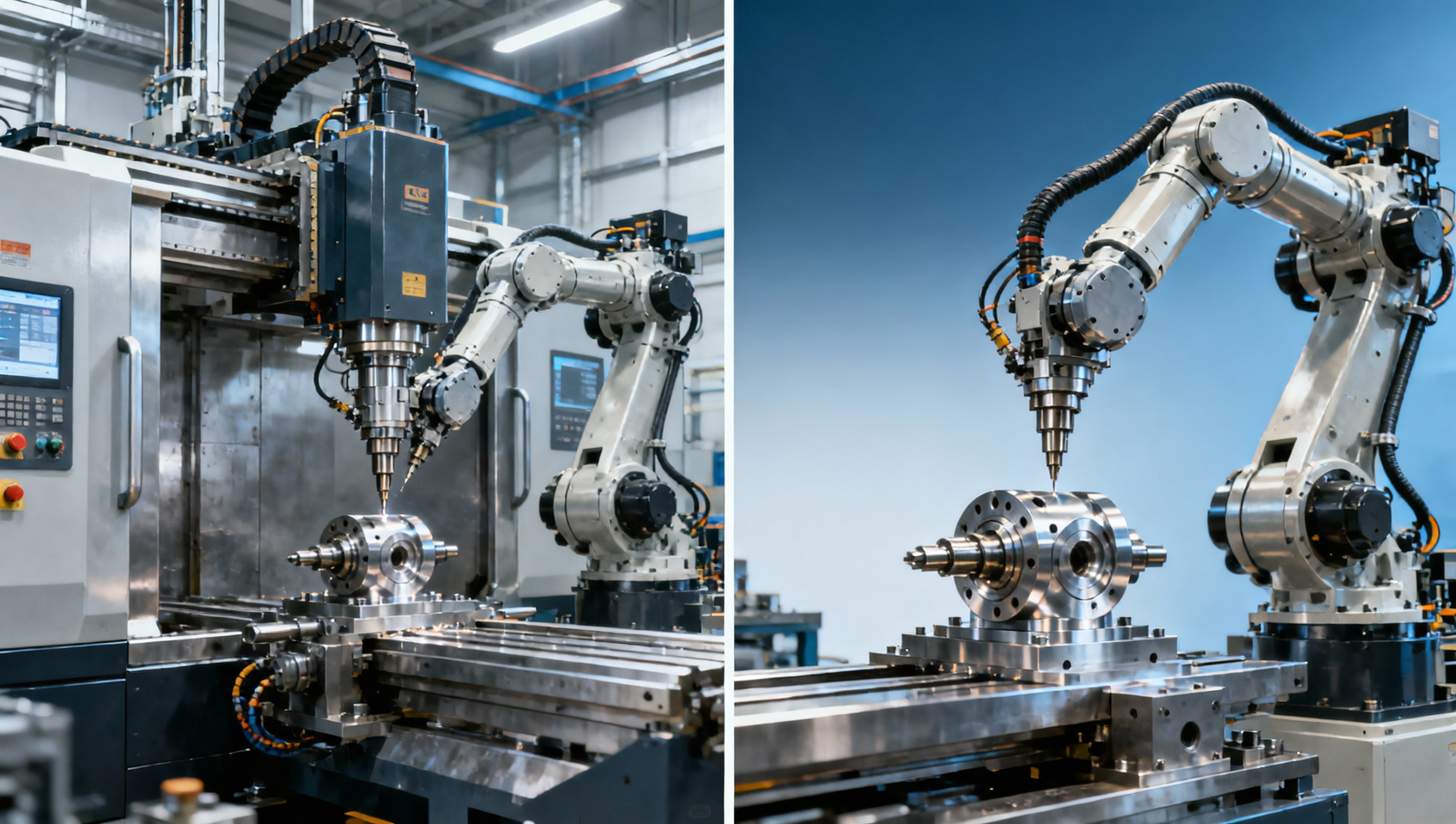
Automated CNC production becomes especially valuable when a company needs stable quality, faster throughput, and lower dependence on manual intervention. This is increasingly important in smart manufacturing environments, where machine tools, robotics, fixtures, and digital controls work together.
Automation is often the better choice when:
- Production volume is medium to high
- Part demand is consistent
- Quality variation must be minimized
- Labor availability is limited
- Cycle time reduction affects profitability
- Traceability and process monitoring are important
Automated lathe systems, pallet-changing machining centers, robotic loading cells, and flexible manufacturing systems can reduce idle time and improve machine utilization. However, automation is not always necessary for every job. For low-volume, high-mix work, a flexible CNC setup with skilled operators may be more practical than full automation.
The right decision depends on production economics. If setup cost and automation investment cannot be spread across enough parts, the return may be weak. But for repeat production in automotive, electronics, and precision industrial components, automation can significantly improve competitiveness.
How can operators and engineers reduce machining risk early?
Many machining problems can be prevented at the planning stage. Operators, programmers, and engineers should focus on manufacturability before production begins.
Useful actions include:
- Simplify part features where possible
- Match tolerance levels to actual functional needs
- Avoid unnecessary surface finish demands
- Choose materials with suitable machinability when application requirements allow
- Design fixturing for stability and repeatability
- Review tool access and chip evacuation in complex cavities
- Plan inspection points for critical dimensions
This matters because the “best” metal machining process is often the one that reduces process risk, not the one with the most advanced specification. A simpler CNC milling or CNC turning route may outperform a more complex alternative if it offers better control, lower scrap risk, and easier scaling.
A practical way to choose the right metal machining process
If you need a clear decision path, use this sequence:
- Define the part: material, dimensions, geometry, tolerance, finish, function.
- Classify the production need: prototype, batch, or mass production.
- Identify process-fit options: turning, milling, cutting, grinding, or multi-axis machining.
- Compare cost drivers: setup time, tooling, cycle time, scrap, finishing, and inspection.
- Assess supplier or machine capability: equipment, automation, quality systems, and delivery performance.
- Run a manufacturability review: confirm whether design adjustments can improve efficiency.
- Select based on total value: quality, speed, repeatability, and long-term production suitability.
This approach helps all four target reader groups. Researchers gain a structured understanding, operators get practical selection logic, buyers can compare vendors more accurately, and business evaluators can connect machining choice to production outcomes.
Conclusion
Choosing the right metal machining process means aligning technical requirements with production reality. CNC turning is efficient for rotational parts, CNC milling offers flexibility for complex geometries, CNC cutting supports fast profile preparation, and grinding or multi-axis machining serves higher-precision or more advanced applications. The best process is the one that delivers the required quality, reliability, and cost performance for the actual job.
For modern manufacturing, successful process selection is not only about machine capability. It also depends on automation level, material behavior, design suitability, supplier strength, and total production economics. When these factors are evaluated together, companies can make smarter CNC metalworking decisions and build more efficient, scalable manufacturing systems.
PREVIOUS ARTICLE
NEXT ARTICLE
Recommended for You
 How to Choose the Right Metal Machining ProcessCNC Machining Technology Center
 Metal Machining vs CNC Metalworking: What MattersCNC Machining Technology Center
 What Drives Cost in Industrial CNC ProjectsManufacturing Market Research Center
 Is Industrial CNC Worth Upgrading in 2026Machine Tool Industry Editorial Team
 How CNC Industrial Systems Improve Shop EfficiencyMachine Tool Industry Editorial Team
 CNC Industrial Setup Mistakes to Avoid FirstCNC Machining Technology Center

Aris Katos
Future of Carbide Coatings
15+ years in precision manufacturing systems. Specialized in high-speed milling and aerospace grade alloy processing.
▶
How to Choose the Right Metal Machining ProcessCNC Machining Technology Center▶
CNC Metalworking for Small Batches: Is It Worth ItCNC Machining Technology Center▶
How to Plan a Stable CNC Production WorkflowCNC Machining Technology Center▶
NVIDIA Joins $1T Club; AI-Driven CNC Digital Twin Gains Global TractionCNC Machining Technology Center▶
Nvidia's Huang Criticizes US Chip Controls, CNC Digital Twin Solutions Expand OverseasCNC Machining Technology Center
Mastering 5-Axis Workholding Strategies
Join our technical panel on Nov 15th to learn about reducing vibrations in thin-wall components.

Providing you with integrated sanding solutions
Before-sales and after-sales services
Comprehensive technical support