• Global CNC market projected to reach $128B by 2028 • New EU trade regulations for precision tooling components • Aerospace deman
NYSE: CNC +1.2%LME: STEEL -0.4%

CNC cutting quality problems often start with material choice
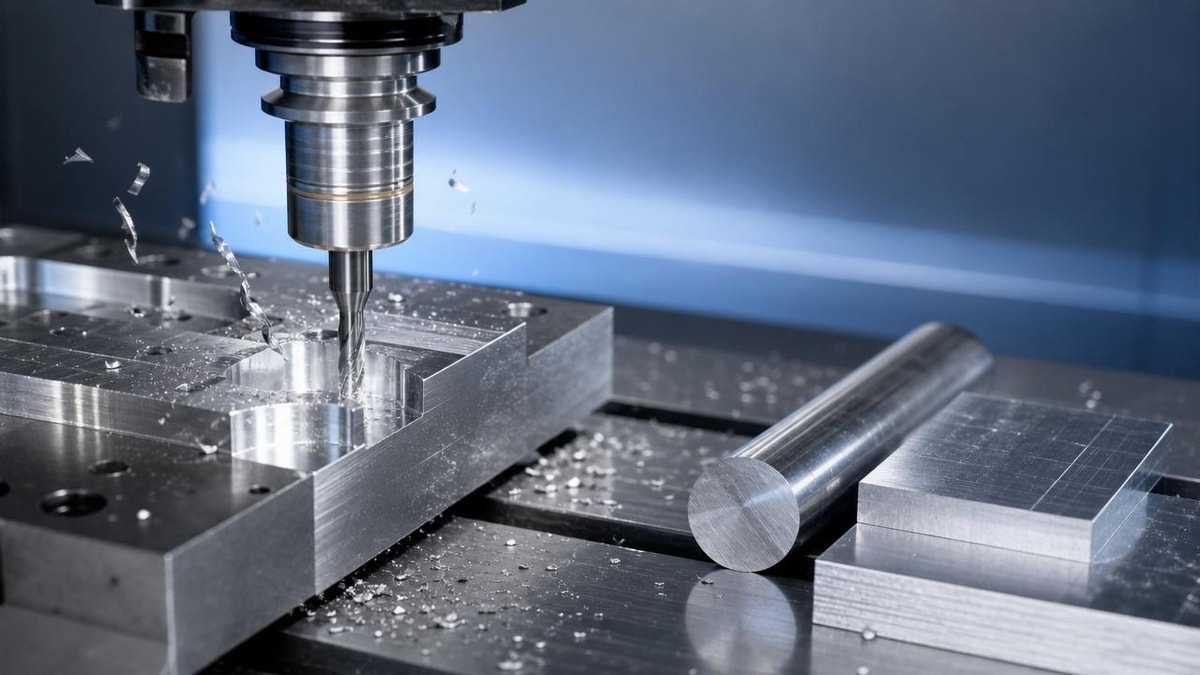
Many CNC cutting quality problems are traced back not to machine settings, but to the material itself. From hardness variation and internal stress to surface condition and alloy consistency, material choice can directly affect accuracy, tool life, and finished-part performance. For manufacturers and buyers researching process reliability, understanding this connection is the first step toward more stable production and better machining results.
Understanding why material choice matters in CNC cutting
In modern manufacturing, CNC cutting is often discussed in terms of spindle speed, feed rate, programming accuracy, coolant strategy, and machine rigidity. These factors are essential, but they do not tell the whole story. The workpiece material is the physical foundation of the process. If the material behaves inconsistently, even a high-end machine tool and an optimized toolpath may produce unstable results.
This issue matters across the broader precision manufacturing ecosystem, especially in automotive, aerospace, electronics, energy equipment, and general industrial production. CNC lathes, machining centers, and multi-axis systems are expected to deliver repeatable accuracy at scale. However, repeatability depends not only on machine capability but also on whether the incoming bar, plate, forging, or casting has predictable machinability.
For information researchers, engineers, quality teams, and sourcing professionals, the key point is simple: CNC cutting performance starts before the first tool engages the material. Material selection influences chip formation, heat generation, dimensional stability, burr behavior, surface finish, and tool wear. In many shops, the visible defect appears at the machine, but the root cause begins upstream in procurement, material specification, or supplier control.
Why the industry is paying closer attention
The global machine tool industry is moving toward higher precision, greater automation, and tighter digital control. As smart manufacturing expands, production systems increasingly rely on stable inputs. Automated lines cannot easily compensate for unpredictable material behavior, especially when cycle times are short and tolerance windows are narrow. This is why CNC cutting quality has become a cross-functional concern involving machining, quality assurance, supply chain, and process engineering.
Another reason for increased attention is cost pressure. When material quality is inconsistent, manufacturers may experience higher scrap rates, shorter tool life, more machine stoppages, and repeated inspection failures. These losses are not always obvious in material pricing alone. A lower-cost raw material can create a higher total machining cost if it causes unstable CNC cutting, frequent insert changes, or rework.
In sectors that require traceability and process control, such as aerospace components or precision automotive parts, material variability also creates compliance and documentation risks. Buyers and producers are therefore looking beyond nominal grade names and paying more attention to actual consistency from batch to batch.
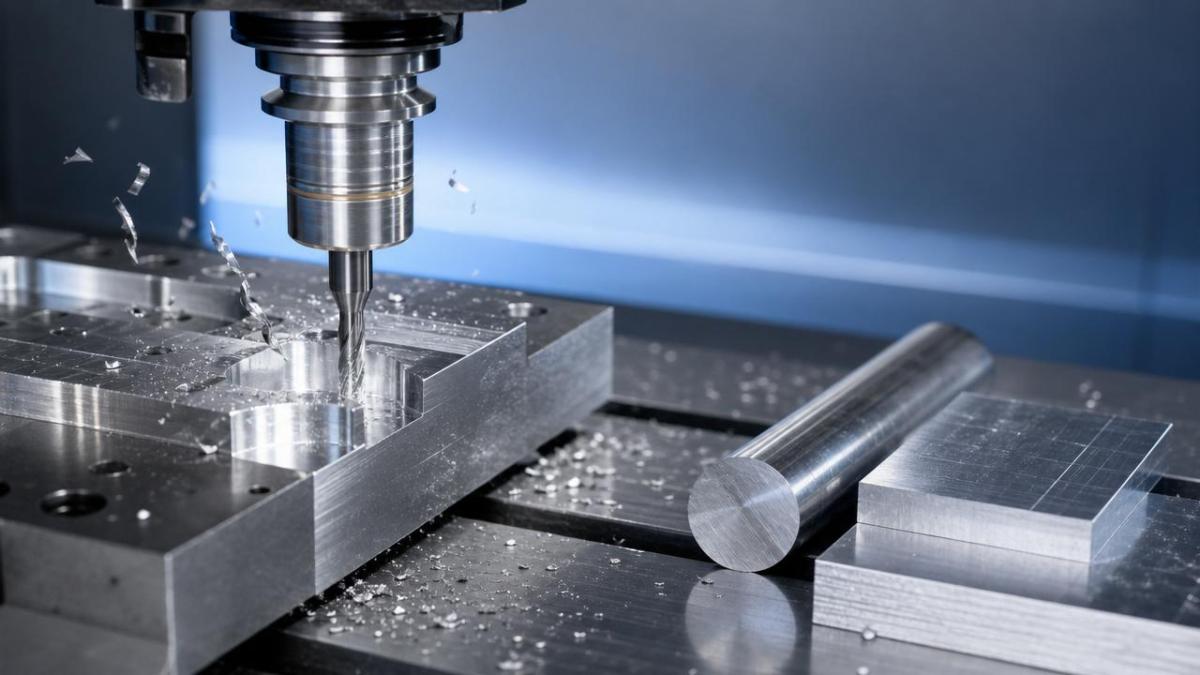
The material factors that most often affect CNC cutting quality
Not every material issue is visible at receiving inspection. Some of the most damaging factors only appear during machining. Understanding these variables helps explain why similar parts can behave differently under the same program.
Hardness variation
If hardness varies within a batch or across a single workpiece, cutting forces can change suddenly. This often leads to inconsistent surface finish, unstable dimensions, and irregular tool wear. In CNC cutting, even small changes in resistance can affect part accuracy when the feature is thin, deep, or tolerance-sensitive.
Internal stress
Residual stress in rolled, forged, cast, or heat-treated materials may not appear until material is removed. The part can distort during roughing, semi-finishing, or final finishing. Shops sometimes blame fixturing or programming, but the real source is stress redistribution inside the workpiece.
Microstructure and alloy consistency
Nominally identical grades may still perform differently if grain structure, inclusion content, or alloy balance varies. This affects chip control, edge build-up, and thermal behavior. For example, in stainless steels or aluminum alloys, slight differences in composition can noticeably change CNC cutting stability.
Surface condition
Scale, oxidation, coatings, contamination, or rough stock surfaces may damage cutting edges early in the process. This is especially important in turning and milling operations where the first passes determine later dimensional behavior. A poor starting surface can distort tool life comparisons and create false assumptions about tooling quality.
Material form and prior processing
Bar stock, plate, casting, extrusion, and forging each respond differently to CNC cutting. Prior heat treatment, straightening, cold working, or welding can further alter machinability. A process proven on one material form may not transfer directly to another without adjustment.
A practical industry overview of common material-related risks
The table below summarizes how common material characteristics influence CNC cutting outcomes in precision manufacturing environments.
Where this has the most practical value
The relationship between material choice and CNC cutting quality is valuable for several groups in the manufacturing chain. It is not only a machining issue.
For process engineers
Material-aware process design improves parameter selection, fixture planning, and tool strategy. Engineers who understand material behavior can better predict distortion, heat concentration, and chip evacuation risks before a job is released to production.
For quality teams
Inspection data often shows symptoms, not root causes. If dimensional drift or surface finish variation appears intermittently, reviewing material history can be more productive than repeatedly adjusting offsets. Linking incoming material records to CNC cutting outcomes supports stronger corrective action.
For sourcing and purchasing professionals
Buyers evaluating suppliers should consider machinability consistency, not only grade certification and price. A supplier that delivers stable material performance can reduce total manufacturing cost even if the unit material price is higher.
For production managers
Stable material supports more reliable scheduling and better use of automated cells. When CNC cutting runs predictably, machine utilization improves and unplanned intervention decreases.
Typical scenarios where material choice changes the outcome
Different applications highlight different material risks. The following examples show why material selection cannot be separated from CNC cutting decisions.
How to evaluate material suitability before machining begins
A practical approach does not require overcomplication. What matters is building a repeatable evaluation path that connects material selection to machining results.
First, define the actual machining requirement rather than relying only on material grade names. Critical dimensions, wall thickness, finish requirements, and expected tool life should inform the material decision. A material that is acceptable for rough structural parts may not be suitable for precision features.
Second, review supplier capability and process history. Ask whether the supplier can control heat treatment, straightness, internal defects, and lot consistency. For recurring parts, compare production records across suppliers instead of evaluating material solely on certificate data.
Third, connect incoming inspection to CNC cutting performance. Hardness checks, visual surface review, and traceability by batch can provide an early warning. In more demanding applications, metallurgical verification or trial machining may be justified.
Fourth, document the relationship between material lot and process output. Over time, this creates a useful internal database for understanding which material sources support stable CNC cutting and which require parameter changes or added risk controls.
Practical recommendations for more stable CNC cutting results
Companies trying to improve machining consistency can start with a few realistic actions. Standardize material specifications beyond the basic grade when necessary. Include hardness range, stock condition, heat treatment state, or surface requirements if those factors affect the part. Align engineering, procurement, and production so that material decisions are not made in isolation. Validate new suppliers with trial parts rather than assuming nominal equivalence. And when quality issues appear, include material review in root-cause analysis before changing tools or machine programs repeatedly.
These steps are especially relevant in factories adopting automation, flexible production lines, and digital manufacturing systems. Smart equipment performs best when the physical input is controlled. Reliable CNC cutting is therefore not only a machine issue, but a system issue that begins with material discipline.
A stronger foundation for machining decisions
For anyone researching process reliability in the CNC machine tool industry, the takeaway is clear: material choice is not a secondary detail. It directly shapes quality, efficiency, cost, and confidence in production planning. Whether the application involves precision shafts, discs, housings, or structural components, better CNC cutting results usually start with better control of what enters the machine.
If your organization is reviewing machining stability, supplier consistency, or production quality trends, begin by asking a basic but powerful question: is the material helping the process, or forcing the process to compensate? The answer often reveals the fastest path to stronger performance.
PREVIOUS ARTICLE
Recommended for You
![]() ANVISA New Rule: Portuguese Biocompatibility Labels for Medical CNC Machines in BrazilManufacturing Policy Research Center
ANVISA New Rule: Portuguese Biocompatibility Labels for Medical CNC Machines in BrazilManufacturing Policy Research Center![]() EMO Hannover 2027 Booth Booking Opens: China AI-Machining Pavilion LaunchesGlobal Machine Tool Trade Research Center
EMO Hannover 2027 Booth Booking Opens: China AI-Machining Pavilion LaunchesGlobal Machine Tool Trade Research Center![]() KATS Updates KC Rules: CNC Cybersecurity Modules Must Meet IEC 62443-4-2Manufacturing Policy Research Center
KATS Updates KC Rules: CNC Cybersecurity Modules Must Meet IEC 62443-4-2Manufacturing Policy Research Center![]() Shanghai Port Launches Green Clearance Channel for CNC EquipmentManufacturing Market Research Center
Shanghai Port Launches Green Clearance Channel for CNC EquipmentManufacturing Market Research Center![]() ISO 23218-3:2026 Published: CNC Digital Twin Interoperability StandardCNC Machining Technology Center
ISO 23218-3:2026 Published: CNC Digital Twin Interoperability StandardCNC Machining Technology Center![]() Vietnam Cuts CNC Equipment Import Tariff to 3.8% from June 2026Global Machine Tool Trade Research Center
Vietnam Cuts CNC Equipment Import Tariff to 3.8% from June 2026Global Machine Tool Trade Research Center


Aris Katos
Future of Carbide Coatings
15+ years in precision manufacturing systems. Specialized in high-speed milling and aerospace grade alloy processing.
▶
CNC metal cutting burr problems and what usually causes themCNC Machining Technology Center▶
CNC cutting quality problems often start with material choiceCNC Machining Technology Center▶
CNC Metal Cutting Tool Wear Is Costing More Than You ThinkCNC Machining Technology Center▶
Why CNC Cutting Quality Drops on Thin Metal SheetsCNC Machining Technology Center▶
CNC metal cutting costs rise fast when material data is wrongCNC Machining Technology Center
Mastering 5-Axis Workholding Strategies
Join our technical panel on Nov 15th to learn about reducing vibrations in thin-wall components.

Providing you with integrated sanding solutions
Before-sales and after-sales services
Comprehensive technical support