• Global CNC market projected to reach $128B by 2028 • New EU trade regulations for precision tooling components • Aerospace deman
NYSE: CNC +1.2%LME: STEEL -0.4%

CNC metal cutting costs rise fast when material data is wrong
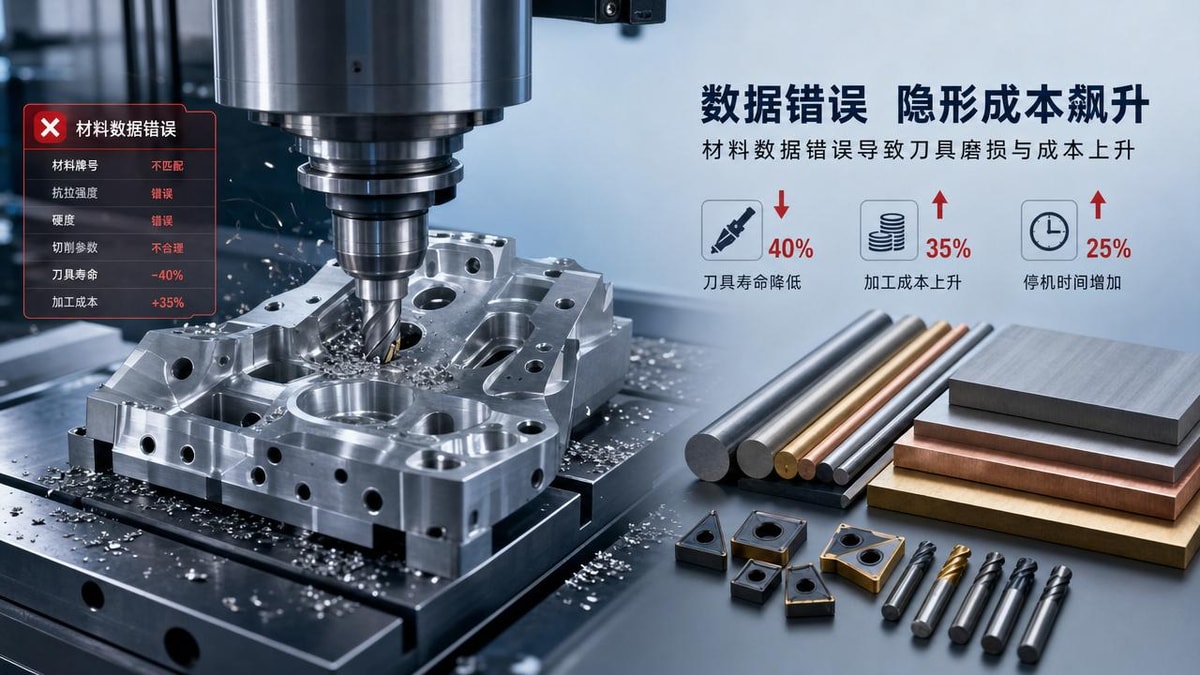
In CNC metal cutting, a small mistake in material data can quickly drive up tooling wear, cycle time, scrap rates, and total project cost. For project managers and engineering leaders, understanding how inaccurate material specifications affect machining decisions is essential to controlling budgets, protecting delivery schedules, and improving production efficiency in increasingly complex manufacturing environments.
Why wrong material data causes CNC metal cutting costs to escalate
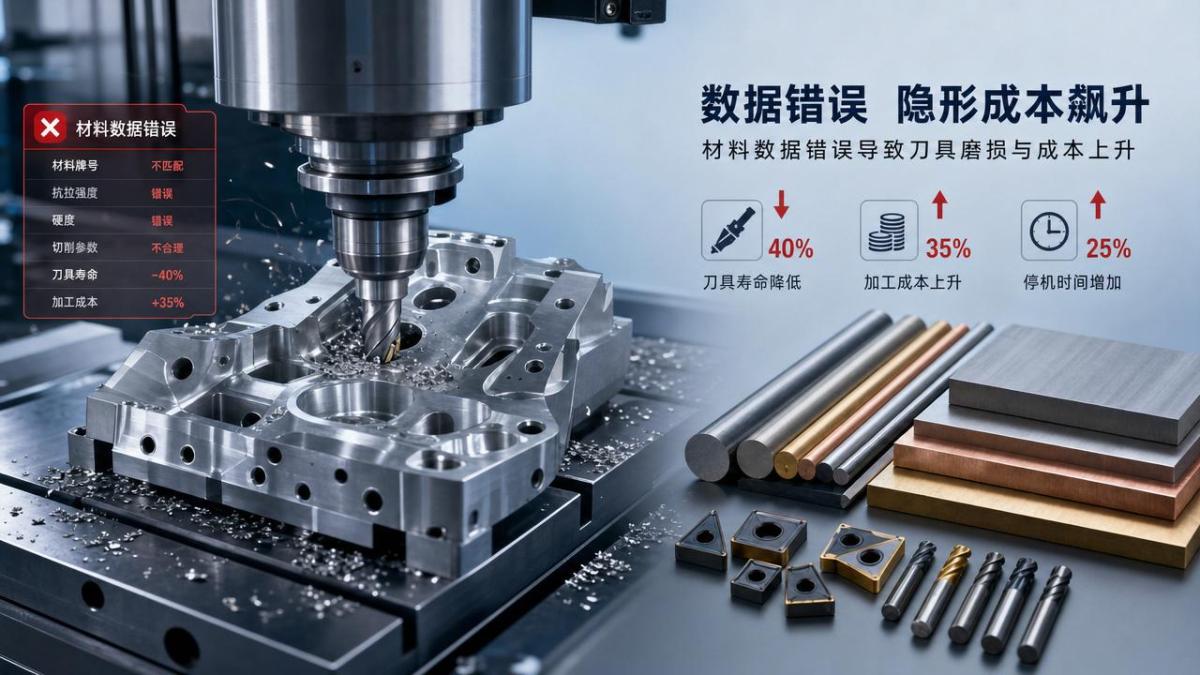
Many teams treat material information as a stable input. In practice, it is often incomplete, copied from an outdated drawing, translated incorrectly across suppliers, or simplified during purchasing. In CNC metal cutting, that gap between nominal material and actual machinability can become a serious commercial problem long before anyone notices it on the shop floor.
For project leaders, the issue is not only technical. It affects quotation accuracy, machine loading, tool consumption, process routing, inspection frequency, and even subcontracting decisions. When a material is harder, more abrasive, less homogeneous, or more work-hardening than expected, every planning assumption behind cycle time and cost starts to fail.
Typical sources of material data errors
- A drawing specifies only a generic alloy family, while the actual batch has a different hardness range or heat treatment condition.
- Procurement substitutes equivalent commercial grades without validating machinability, sulfur content, coating behavior, or residual stress.
- Imported material certificates list chemical composition clearly, but machining teams do not receive updated mechanical property data.
- Project planning assumes bar, forging, plate, and cast stock of the same alloy will machine in a similar way, which is often not true.
This is especially important in automotive, aerospace, energy equipment, and electronics production, where modern CNC machine tools are expected to maintain tight tolerances across mixed materials and complex parts. Digital manufacturing improves traceability, but only when the underlying material data is correct and connected to process planning.
What project managers should track before CNC metal cutting begins
Before approving production, project managers need a short list of material variables that directly affect CNC metal cutting performance. These variables are far more useful than a simple alloy name because they influence feeds, speeds, tool grade selection, coolant strategy, and process stability.
The table below highlights the most common material data fields that should be confirmed before quoting or releasing a job to production.
If even one of these fields is missing, cost models become weaker. In high-mix production or short delivery projects, that weakness often appears as last-minute process changes, higher overtime, and lower confidence in promised lead times.
Minimum validation checklist for cross-functional teams
- Match the drawing grade with the supplier certificate and confirm the delivery condition.
- Review whether previous CNC metal cutting data came from the same stock form and hardness band.
- Ask tooling and process engineers to flag any high-risk assumptions before production scheduling.
- For critical parts, run a small pilot cut before releasing full-batch machining.
How inaccurate material specifications affect cost, delivery, and quality
The fastest way to understand the risk is to follow the cost chain. Wrong material data rarely causes just one problem. It creates a sequence: incorrect cutting parameters lead to tool wear, tool wear changes dimensions and surface finish, quality issues create rework, and rework consumes machine capacity that was already sold to another project.
Direct effects in CNC metal cutting
- Tool life drops sharply when inserts are selected for a softer or cleaner alloy than the actual material being cut.
- Cycle time expands when operators reduce speed and feed manually to protect tools or avoid vibration.
- Surface roughness and dimensional accuracy become inconsistent, especially on thin-wall parts and long overhang features.
- Chip evacuation worsens in stainless, nickel-based, or gummy alloys when the process was built for a freer-cutting material.
Indirect business effects
- Delivery dates slip because one unstable component can block downstream assembly or testing.
- Budget tracking becomes unreliable because actual tooling spend no longer matches the approved estimate.
- Supplier performance reviews become distorted if root cause is material mismatch rather than poor machining discipline.
In an environment shaped by smart factories, multi-axis machining, and automated production lines, these losses multiply faster than in traditional manual workshops. A single wrong parameter can affect several connected assets, from tool presetting to machine utilization reporting.
Comparison analysis: accurate vs inaccurate material data in CNC metal cutting projects
For procurement and engineering planning, a side-by-side comparison helps clarify why material verification deserves time at the start of a project. The cost difference is not only about raw material price. It is mainly about process predictability.
This comparison matters when evaluating suppliers or internal machining cells. A supplier that asks detailed questions about alloy condition, certification, and stock form is often reducing downstream risk rather than slowing the sales process.
Which application scenarios are most sensitive to material data errors?
Not every part reacts the same way to bad inputs. Some applications can absorb modest material variation. Others cannot. Project managers should treat the following scenarios as high sensitivity zones for CNC metal cutting planning.
High-risk application scenarios
These scenarios are common across modern machine tool applications. As manufacturing moves toward flexible production lines and integrated digital systems, material mistakes travel quickly through the value chain. That is why verification should sit upstream of machining, not inside last-minute troubleshooting.
How to build a better procurement and process selection workflow
For many organizations, the best solution is not a more complicated approval system. It is a clearer one. The goal is to create a practical handoff between purchasing, engineering, quality, and production so that CNC metal cutting decisions are based on real data instead of assumptions.
Recommended workflow
- Define the full material requirement on the RFQ, including grade, delivery state, hardness window, stock form, and any required certificates.
- Ask the machining supplier or internal process team to review whether the specified material matches historical cutting data.
- Set a risk level for first article, pilot lot, and volume production based on material complexity and tolerance demand.
- Require documented approval before any substitute material enters the CNC metal cutting process.
- Capture actual tool wear, spindle load, and cycle time data for future quoting and continuous improvement.
This approach supports both cost control and smart manufacturing. It also helps when evaluating global suppliers in different machine tool clusters, where equivalent material naming conventions may vary across regions.
Common misconceptions in CNC metal cutting cost control
Several assumptions repeatedly create avoidable risk. Project managers who challenge them early usually gain better control over quality and budget.
- “Equivalent alloy means equivalent machinability.” Commercial equivalents may satisfy composition rules but still behave differently in tool wear and chip breaking.
- “The machine is powerful enough, so material variation will not matter.” A stronger spindle cannot eliminate chatter, burrs, thermal growth, or dimensional drift caused by unsuitable parameters.
- “We can correct everything by slowing down the program.” Lower cutting speed may protect tools temporarily, but it raises cycle cost and does not fix unstable metallurgy or stock condition.
- “Material certificates are a quality document, not a machining document.” In reality, certificate data can strongly influence process planning and should not be isolated from engineering decisions.
FAQ: what engineering leaders ask about CNC metal cutting and material risk
How detailed should material data be before requesting a machining quote?
At minimum, provide alloy grade, delivery condition, hardness or strength range if available, stock form, part function, tolerance level, and expected batch size. If the part is critical, include certification expectations and any known historical machining issues. Better data leads to a better CNC metal cutting quotation and fewer hidden contingencies.
When is a pilot cut worth the extra time?
A pilot cut is usually justified when the material is difficult to machine, the geometry is complex, the tolerance window is narrow, or the batch value is high enough that scrap would be expensive. It is also useful when changing suppliers, changing stock source, or moving from prototype to production.
What should procurement ask if a supplier proposes a substitute material?
Ask whether the substitute matches not only chemistry but also hardness, delivery state, machinability behavior, corrosion needs, finishing compatibility, and inspection requirements. Then confirm how the change will affect tooling, cycle time, and quality risk in CNC metal cutting.
Do international standards help reduce this problem?
Yes, common standards and traceable certificates can reduce ambiguity, especially in international supply chains. However, standards alone do not remove all machining risk. Teams still need to connect certified material data to real process planning, machine capability, and tooling selection.
Why choose us for CNC metal cutting insight and project support
Our platform focuses on the global CNC machining and precision manufacturing industry, with close attention to machine tools, tooling systems, automated production, and cross-border sourcing trends. That industry view helps project managers compare not only machine capability, but also process risk, supplier communication quality, and the real production impact of material data accuracy.
If you are reviewing a CNC metal cutting project, you can contact us for practical support on parameter confirmation, material data checks, supplier comparison, product and process selection, delivery schedule evaluation, sample planning, certification-related questions, and quotation communication. This is especially useful when your team is balancing tight deadlines, mixed-material parts, and cost pressure across international manufacturing resources.
A strong project outcome often starts with a simple step: verify the material before the machine starts cutting. If you want to reduce tooling surprises, protect your schedule, and make more confident sourcing or process decisions, reach out with your drawings, material notes, target volumes, and delivery expectations.
PREVIOUS ARTICLE
NEXT ARTICLE
Recommended for You
 Industrial Robotics payback depends on more than labor savingsManufacturing Market Research Center
 Shaft Parts machining problems that show up after final inspectionCNC Machining Technology Center
 Which Production Process changes bring the fastest output gains?CNC Machining Technology Center
 Industrial Automation projects fail when integration is underestimatedCNC Machining Technology Center
 CNC metal cutting costs rise fast when material data is wrongCNC Machining Technology Center
 High precision lathe claims to verify before accepting deliveryMachine Tool Industry Editorial Team


Aris Katos
Future of Carbide Coatings
15+ years in precision manufacturing systems. Specialized in high-speed milling and aerospace grade alloy processing.
▶
CNC metal cutting costs rise fast when material data is wrongCNC Machining Technology Center▶
Why CNC cutting accuracy drops on thin metal sheetsCNC Machining Technology Center▶
Why CNC Cutting Costs Rise Faster Than ExpectedCNC Machining Technology Center▶
CNC metal cutting defects that look minor but raise total costCNC Machining Technology Center▶
CNC cutting speed vs edge quality: where production losses startCNC Machining Technology Center
Mastering 5-Axis Workholding Strategies
Join our technical panel on Nov 15th to learn about reducing vibrations in thin-wall components.

Providing you with integrated sanding solutions
Before-sales and after-sales services
Comprehensive technical support