• Global CNC market projected to reach $128B by 2028 • New EU trade regulations for precision tooling components • Aerospace deman
NYSE: CNC +1.2%LME: STEEL -0.4%

CNC cutting speed vs edge quality: where production losses start
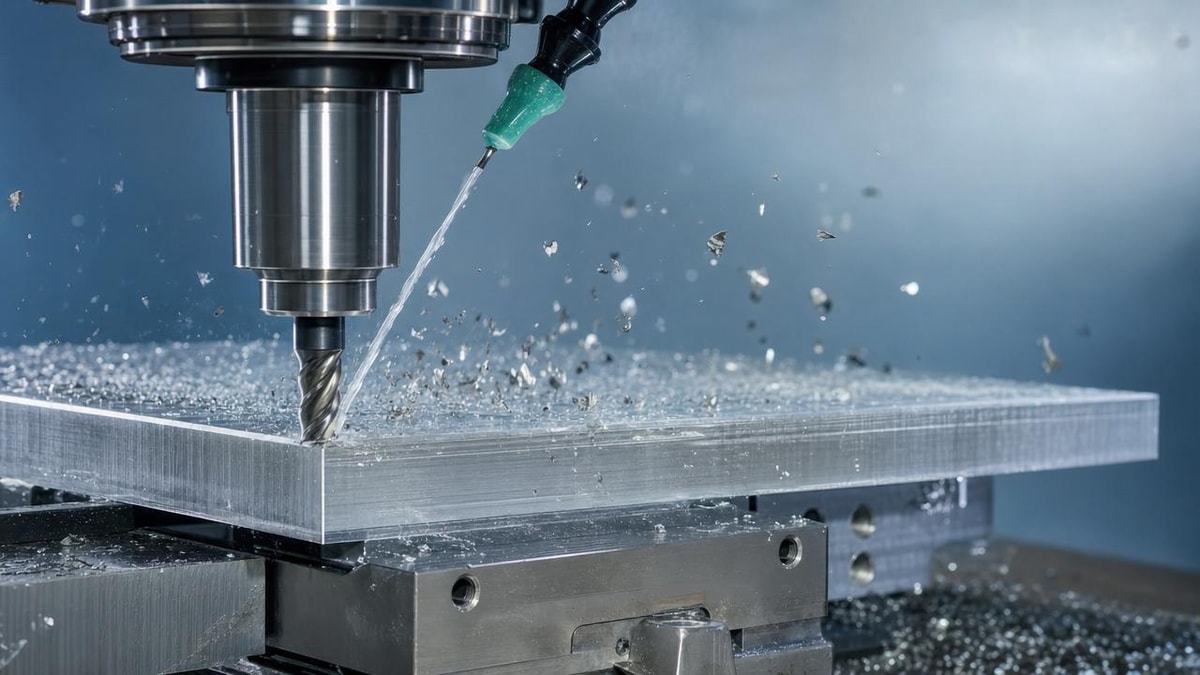
In CNC cutting, pushing speed too far can quickly turn productivity gains into hidden losses through poor edge quality, rework, tool wear, and unstable results. For machine operators and production teams, knowing where that trade-off begins is essential to maintaining both output and part consistency. This article explores how cutting speed affects edge performance and where production efficiency really starts to break down.
Across machining centers, CNC lathes, and multi-axis systems, operators are under constant pressure to increase throughput without compromising dimensional control or surface finish. In real production, the problem is rarely speed alone. Edge quality is shaped by a combination of cutting speed, feed rate, tool geometry, material hardness, spindle stability, coolant delivery, and part fixturing. When one of these variables drifts outside a workable range, the first visible sign is often a damaged or inconsistent edge.
For shops serving automotive, aerospace, electronics, and energy equipment applications, even a small burr, heat-affected edge, or chipped contour can trigger additional deburring, inspection delays, or part rejection. That is why CNC cutting decisions should not be based on headline speed values alone. Operators need practical thresholds, early warning signs, and a repeatable method to balance output with reliable edge performance.
Why Cutting Speed Becomes a Hidden Loss Point in CNC Cutting
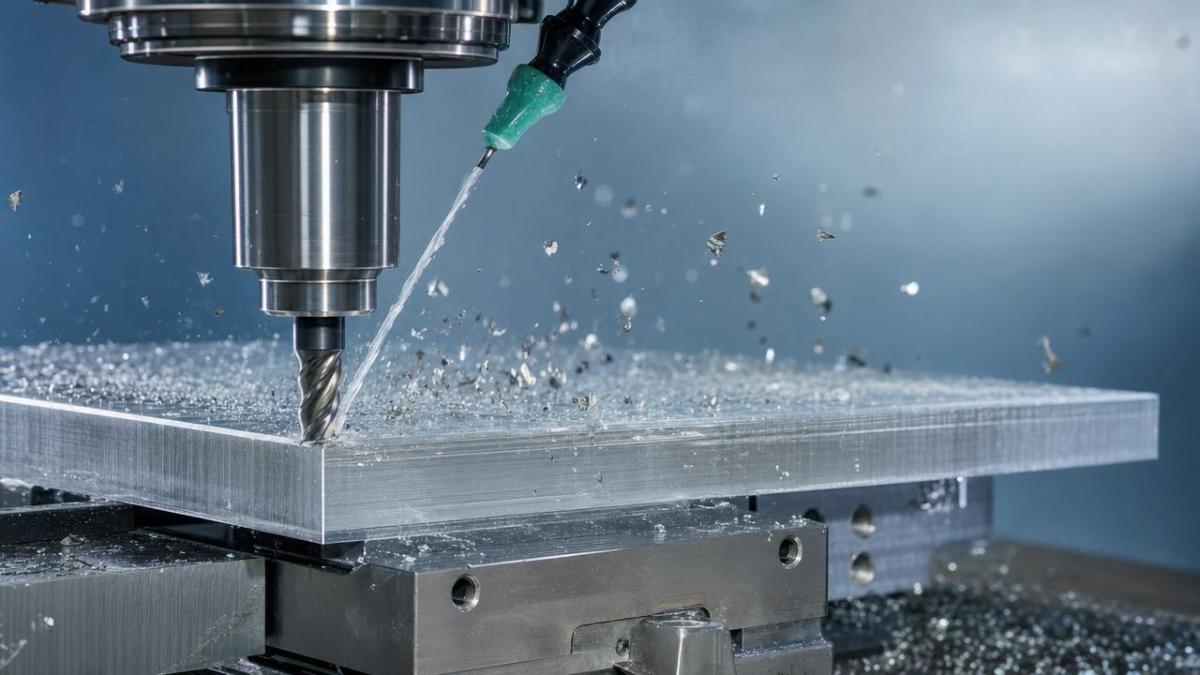
In many workshops, cycle time is the most visible number, but edge quality is often the more expensive one. Saving 8% to 12% in machining time can be wiped out if rework rises by 5 parts per 100, tool life drops from 60 minutes to 35 minutes, or inspection hold time doubles. In CNC cutting, losses typically begin before a complete failure appears. Operators usually see subtle edge changes first: brighter burn marks, micro-burrs, unstable chip shape, or slight breakout at exit points.
The practical relationship between speed and edge condition
Higher cutting speed can improve chip evacuation and reduce built-up edge in some materials, especially when the tool coating and coolant strategy are suitable. However, once the speed exceeds the stable cutting window, heat increases faster than the process can dissipate it. That excess heat affects the tool edge, the workpiece surface, and sometimes the fixture itself. On thin-wall parts or small precision features, the result may appear within the first 10 to 20 pieces of a batch.
For steel, stainless steel, aluminum alloys, and hardened materials, the acceptable speed range varies widely by insert grade, cutter diameter, and machine rigidity. A speed increase of only 10% to 15% may still be safe on one machine, yet produce edge tearing on another machine with weaker spindle damping or inconsistent coolant pressure. That is why operators should think in terms of a process window, not a single speed target.
Common early indicators that losses are starting
- Edge burr height increases from barely visible to clearly measurable within 20 to 50 parts.
- Tool wear pattern shifts from even flank wear to localized chipping or crater wear.
- Surface finish remains acceptable, but edge breakouts start at corners, slots, or exit zones.
- Spindle load fluctuation rises by 5% to 10% even though the programmed path is unchanged.
- Deburring time per part increases from 30 seconds to 2 minutes.
The table below outlines where production teams typically begin to see measurable losses when CNC cutting speed rises beyond a stable operating range.
The key takeaway is that production losses often begin in the middle zone, not at total process collapse. If a shop waits until tools fail dramatically, it has usually already absorbed hidden costs in rework time, extra inspection, and inconsistent edge quality.
What Actually Controls Edge Quality Besides Speed
Operators know that CNC cutting performance cannot be judged by spindle speed or cutting speed in isolation. Edge quality depends on the interaction of at least 6 process variables: cutting speed, feed rate, depth of cut, tool material, machine rigidity, and thermal control. In some applications, coolant concentration and nozzle direction become the seventh and eighth variables that decide whether the edge remains clean.
Feed rate and chip load often explain edge problems
When cutting speed rises but feed does not increase proportionally, the tool may rub instead of cut efficiently. That rubbing creates heat, smearing, and poor edge definition, especially in stainless steel and aluminum. On the other hand, if feed per tooth is pushed too high while speed also increases, the edge may fracture mechanically rather than thermally. In both cases, poor edge quality appears, but the root cause is different.
A useful shop-floor rule is to review chip shape every 15 to 30 minutes during a speed trial. Thin powdery chips may suggest rubbing. Thick blue chips may indicate excessive heat. Long stringy chips may point to poor evacuation or geometry mismatch. These observations are simple, but they help operators correct CNC cutting conditions before defects spread through a full shift.
Tool geometry and wear pattern matter more on precision edges
A sharp positive-rake tool may produce an excellent edge at moderate speed, but its edge strength may not hold at aggressive settings. A stronger geometry may survive higher loads, yet leave a rougher edge on thin sections. For slots, contours, and fine profile cutting, nose radius, edge preparation, and coating all influence whether the workpiece edge stays crisp or develops micro-chipping.
Operators should not wait for complete wear land failure. In many CNC cutting jobs, the edge quality starts deteriorating when the tool is only 60% to 70% through its usable life. If the edge requirement is strict, tool change intervals should be based on quality limits, not maximum survival time.
Machine and fixture stability define the real speed ceiling
A machine with good spindle bearings, tight backlash control, and stable fixturing can hold edge quality at speeds that a less rigid setup cannot sustain. On slender parts, unsupported lengths above 3 to 5 times the diameter often become vibration-sensitive. In plate cutting or thin-wall milling, poor clamping can create edge flutter even when the programmed cutting parameters look conservative on paper.
The following table summarizes major variables that influence edge quality in CNC cutting and how operators can assess them quickly on the shop floor.
This comparison shows why two operators using the same CNC cutting program can still obtain different edge results. Stable output depends on process discipline across all variables, not just on increasing the speed number in the control panel.
Where Operators Should Set Practical Speed Limits
A practical speed limit is not the highest value that cuts one acceptable sample part. It is the highest repeatable value that maintains edge quality over a full batch, under normal shift conditions, with the actual tool life target and inspection standard. For most production teams, that means validating CNC cutting performance across 3 checkpoints: first-off part, mid-tool-life part, and near-tool-change part.
Build a 3-stage validation routine
- Start from a known stable recipe and increase cutting speed by 5% increments.
- Measure edge condition after 10 parts, 50 parts, and at 70% of expected tool life.
- Stop increasing speed once burr growth, heat marks, or corner damage exceed the accepted quality limit.
This method is more useful than one-time trial cutting because it captures wear progression. In many CNC cutting jobs, the first 5 parts look fine, but quality begins drifting after 40 to 80 parts. That delayed instability is exactly where hidden production loss starts.
Set limits by part function, not only by machine capability
A structural bracket with secondary deburring allowance can tolerate a different edge condition than a sealing face, connector profile, or aerospace fit feature. Operators should separate parts into at least 3 categories: general production edges, functional precision edges, and critical assembly or sealing edges. Each category should have its own speed ceiling and inspection frequency.
For example, a general production part might accept minor burrs under 0.05 mm, while a precision assembly feature may require nearly burr-free edges and tighter visual control. The same CNC cutting speed that works for the first category may create unacceptable rework in the second. Matching speed to part function reduces unnecessary scrap and supports more predictable scheduling.
Checklist for setting the shop-floor limit
- Confirm whether the edge is cosmetic, functional, or sealing-related.
- Record current tool life in minutes or parts, not just subjective wear condition.
- Compare deburring time before and after speed changes.
- Review scrap and rework for at least 1 full shift or 1 production lot.
- Adjust coolant direction and clamp support before concluding that speed alone is the problem.
Common CNC Cutting Mistakes That Damage Edge Quality
Some edge quality problems are wrongly blamed on material variation or tool supplier inconsistency when the actual issue is process behavior. The most common mistakes are easy to repeat because they often produce short-term speed gains before they create long-term losses.
Mistake 1: Increasing speed without retuning feed and coolant
Speed changes should be treated as process changes, not isolated edits. If cutting speed goes up by 12% but chip load, coolant aim, and air blast are unchanged, the edge may overheat or smear. This is especially common in aluminum, stainless steel, and thin-section components where chip evacuation quality directly affects the final edge.
Mistake 2: Running tools too long because parts still look acceptable
A part can pass visual inspection while edge degradation is already building. By the time operators see clear burr growth, several dozen parts may already require secondary work. Establishing preventive tool change intervals at 70% to 85% of observed maximum life is often more cost-effective than chasing every last minute from each insert.
Mistake 3: Ignoring exit edge conditions
In many CNC cutting operations, the entry edge looks clean while the exit edge shows breakout or tearing. Operators who inspect only the most visible face may miss the real failure point. Exit-edge review should be part of first-off inspection, especially in profile cutting, slotting, drilling, and contour milling where support changes at the end of the cut.
Mistake 4: Using a stable program on a different setup without revalidation
A CNC cutting recipe validated on one machine, fixture, or material lot should not be copied blindly to another cell. Different spindle condition, clamp layout, or bar overhang can shift the stable speed range by 10% or more. Revalidation does not need to be lengthy, but it should include at least a short batch trial and a targeted edge inspection.
How Production Teams Can Improve Output Without Sacrificing the Edge
The best productivity gains in CNC cutting do not always come from maximum speed. In many cases, higher output is achieved by stabilizing the process so that fewer parts need touch-up, fewer tools fail unexpectedly, and fewer stops occur for quality checks. A line running 6% slower but producing 40% less rework can outperform a faster line over a full week.
Use a balanced improvement model
Production teams should track at least 4 numbers together: cycle time, tool life, rework rate, and edge defect frequency. Looking at only one metric leads to distorted decisions. If cycle time improves but rework doubles, the process has not really improved. Balanced monitoring gives operators and supervisors a more accurate basis for CNC cutting optimization.
Recommended operator actions for stable improvement
- Document baseline cutting speed, feed, coolant condition, and measured tool life before any change.
- Increase speed in controlled steps of 5% to 8%, not large jumps.
- Inspect both entry and exit edges every 20 to 30 parts during trials.
- Use the same deburring and inspection standard across shifts.
- Record why a trial stopped: burr limit, tool heat, chatter, corner chipping, or dimensional drift.
For operations managers and machine users, the practical goal is not to find the fastest theoretical CNC cutting number. It is to find the repeatable production window where edge quality stays within specification, tool changes are predictable, and throughput remains stable across batches. That is the point where modern machining cells deliver real efficiency rather than hidden waste.
If your team is reviewing CNC cutting performance, edge consistency, tooling strategy, or process stability across precision manufacturing applications, now is the right time to assess the full process window instead of speed alone. Contact us to discuss your production scenario, get a more tailored cutting parameter approach, and explore practical solutions that improve output without sacrificing edge quality.
PREVIOUS ARTICLE
Recommended for You
![]() Beijing’s New E-Bike Lock Regulation Spurs CNC Housing DemandGlobal Machine Tool Trade Research Center
Beijing’s New E-Bike Lock Regulation Spurs CNC Housing DemandGlobal Machine Tool Trade Research Center![]() New Drone Standard GB/T 44723–2026 Takes Effect May 2026Manufacturing Policy Research Center
New Drone Standard GB/T 44723–2026 Takes Effect May 2026Manufacturing Policy Research Center![]() New Maritime Code Takes Effect May 1, 2026: CNC Equipment Shipping Rules UpdatedManufacturing Market Research Center
New Maritime Code Takes Effect May 1, 2026: CNC Equipment Shipping Rules UpdatedManufacturing Market Research Center![]() 2026 China Cycle Shanghai: CNC E-Bike Frame Capacity Draws ODM FocusManufacturing Market Research Center
2026 China Cycle Shanghai: CNC E-Bike Frame Capacity Draws ODM FocusManufacturing Market Research Center![]() 2026 Foshan Tanzhou Auto Expo: EV Parts Sourcing FocusGlobal Machine Tool Trade Research Center
2026 Foshan Tanzhou Auto Expo: EV Parts Sourcing FocusGlobal Machine Tool Trade Research Center![]() New Hazardous Chemicals Safety Law Takes Effect May 2026Manufacturing Policy Research Center
New Hazardous Chemicals Safety Law Takes Effect May 2026Manufacturing Policy Research Center


Aris Katos
Future of Carbide Coatings
15+ years in precision manufacturing systems. Specialized in high-speed milling and aerospace grade alloy processing.
▶
CNC metal cutting defects that look minor but raise total costCNC Machining Technology Center▶
CNC cutting speed vs edge quality: where production losses startCNC Machining Technology Center▶
CNC metal cutting heat issues behind poor surface finishCNC Machining Technology Center▶
What affects edge quality in CNC cutting most?CNC Machining Technology Center▶
CNC Metal Cutting Edge Quality Depends on More Than SpeedCNC Machining Technology Center
Mastering 5-Axis Workholding Strategies
Join our technical panel on Nov 15th to learn about reducing vibrations in thin-wall components.

Providing you with integrated sanding solutions
Before-sales and after-sales services
Comprehensive technical support