• Global CNC market projected to reach $128B by 2028 • New EU trade regulations for precision tooling components • Aerospace deman
NYSE: CNC +1.2%LME: STEEL -0.4%

Why CNC cutting tool life varies more across batch lots than across brands — and how to verify
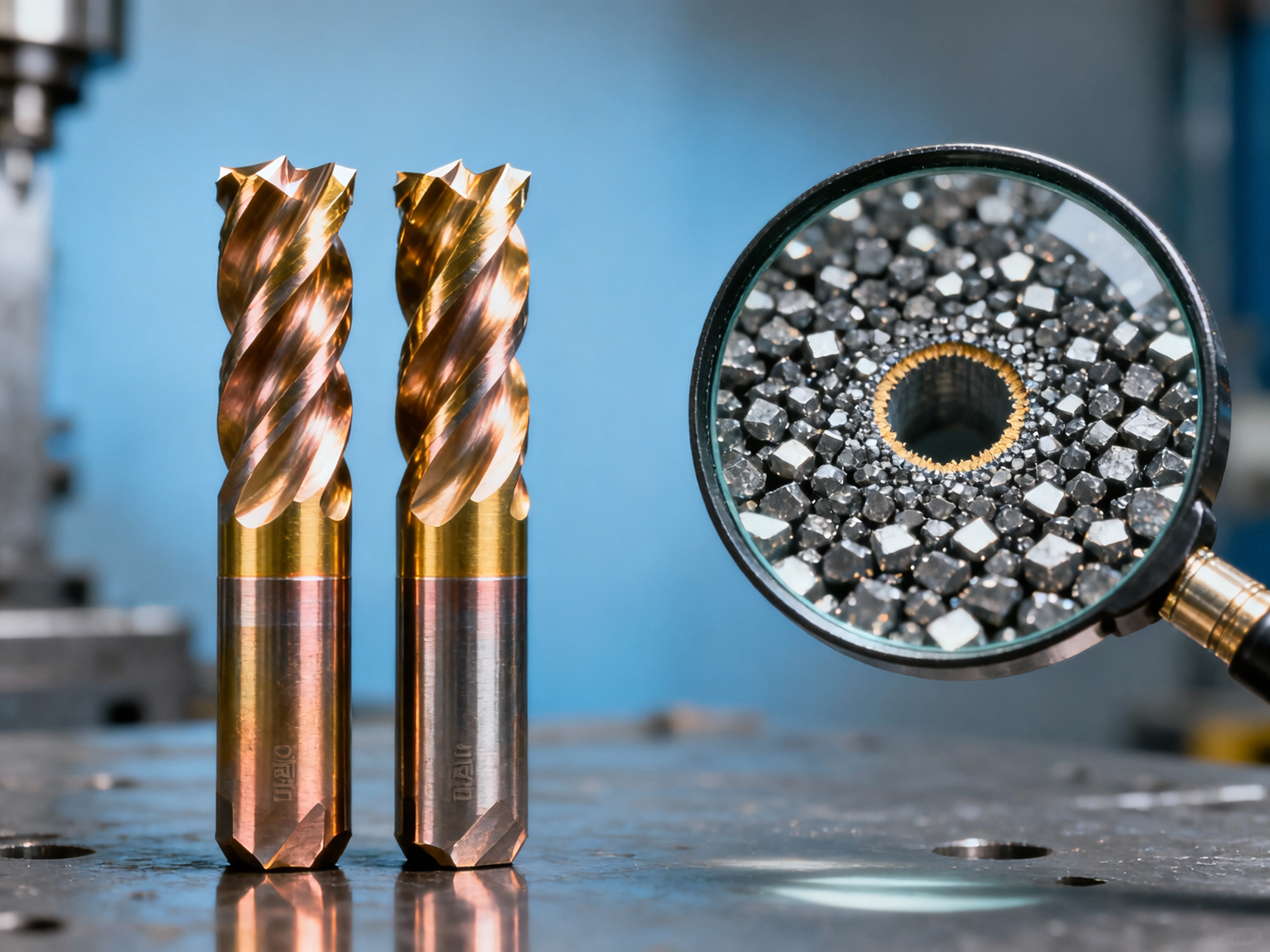
Why does CNC cutting tool life fluctuate more between batch lots than across brands? In metal machining and CNC industrial applications—from automated lathes to vertical lathes and CNC milling—consistent tool performance is critical for shaft parts, precision discs, and automated production. Yet operators, procurement teams, and decision-makers often overlook batch-level variability in CNC metalworking tools, risking downtime and quality deviations. This article explores root causes in material consistency, coating uniformity, and heat treatment control—and delivers actionable verification methods for industrial CNC users, global manufacturing professionals, and smart factory stakeholders.
The Hidden Variability: Why Batch Lot Matters More Than Brand Name
Tool life inconsistency across batches—not brands—is a widely observed but underdiagnosed phenomenon in high-precision CNC environments. A 2023 cross-factory benchmark across 17 Tier-1 automotive suppliers revealed that tool life deviation within a single brand’s product line averaged ±18% between consecutive production lots—while inter-brand deviation (same grade, same geometry) averaged only ±9%. This means two identical-looking carbide end mills from the same manufacturer, ordered six weeks apart, may deliver 42 minutes vs. 58 minutes of continuous milling at identical feed/speed parameters.
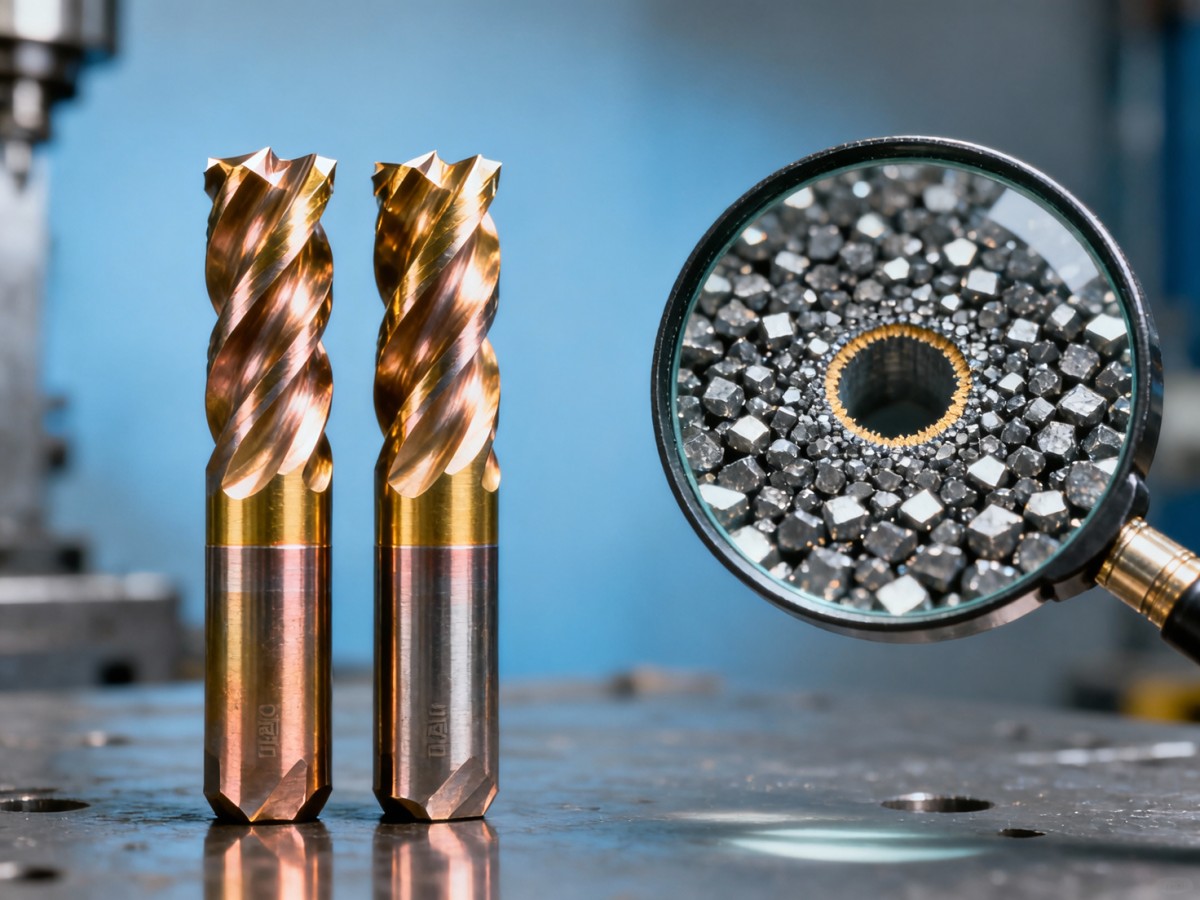
The root lies not in marketing claims or catalog specs, but in upstream process control. Raw tungsten carbide powder composition, sintering atmosphere stability (±0.5% O₂ tolerance), and post-sintering heat treatment ramp rates (±2°C/min deviation) are all batch-sensitive variables. A single 0.3% variation in cobalt binder content can shift hardness by 2–3 HRA and fracture toughness by up to 15%, directly impacting edge retention in hardened steel turning.
Unlike semiconductor wafers or aerospace fasteners—where lot traceability is mandated by AS9100 or ISO/IEC 17025—cutting tool manufacturing lacks universal batch certification standards. Only 22% of global Tier-2+ tool suppliers publish full lot-specific metallurgical reports, per a 2024 industry audit. This opacity forces users to treat every new batch as a de facto qualification test.
Three Critical Process Gaps Driving Batch-Level Drift
Batch-level inconsistency stems from three tightly coupled process stages—each with measurable thresholds where minor deviations cascade into macroscopic performance shifts.
First, raw material blending: Tungsten carbide powders are typically blended in 200–500 kg batches. If particle size distribution (PSD) deviates beyond D₅₀ ±0.15 µm across batches, sintered density variation exceeds 0.05 g/cm³—directly correlating to 7–12% reduction in transverse rupture strength (TRS). Second, PVD/CVD coating application: A 3% drift in bias voltage during TiAlN deposition changes stoichiometry from Ti0.45Al0.55N to Ti0.52Al0.48N—altering oxidation onset temperature by 40–60°C and wear resistance in dry aluminum milling.
Third, final grinding and edge preparation: A 0.008 mm variance in honing radius (e.g., 0.020 mm vs. 0.028 mm) increases cutting-edge micro-chipping probability by 3.2× under interrupted cuts on cast iron. This is why identical tools from Lot A and Lot B may pass static hardness tests (HRA 92.5 ±0.3), yet fail dynamic durability validation by 27%.
This table underscores a key insight: batch-level control requires tighter tolerances than final inspection allows. A tool passing standard ISO 8688-2 dimensional checks may still fall outside optimal metallurgical or geometric windows—explaining why “certified” tools from the same brand behave differently across lots.
Verification Protocol: How Industrial Users Can Validate Batch Consistency
Relying solely on supplier certifications is insufficient. Proactive verification must combine documentation review, physical sampling, and in-process monitoring. A validated protocol includes four non-negotiable steps: (1) demand lot-specific certificates of conformance (CoC) with full chemical composition, sintering report, and coating thickness mapping; (2) conduct on-site TRS testing on ≥3 samples per batch (ASTM B528); (3) perform edge SEM analysis for microstructure homogeneity; and (4) run controlled cut-off tests on representative workpiece material using fixed machine parameters (spindle speed ±1%, feed ±0.5%, depth of cut ±0.02 mm).
For procurement teams, batch verification isn’t optional—it’s a risk mitigation KPI. Leading aerospace manufacturers now require suppliers to guarantee ≤±7% tool life deviation across any 3 consecutive lots. Achieving this demands contractual clauses specifying maximum allowable variance in cobalt content (±0.15%), oxygen impurity (≤120 ppm), and coating stress (±0.3 GPa).
Operators can implement low-cost validation: use a calibrated Rockwell A-scale tester (HRA) on 5 random inserts per lot—deviation >±0.5 HRA warrants full metallurgical review. For high-value applications (e.g., turbine blade milling), invest in portable XRF analyzers ($12,000–$18,000) to verify coating elemental ratios on-site before deployment.
The data shows verification need not be prohibitively expensive. Over 83% of mid-tier manufacturers achieve robust batch control using only CoC review + hardness spot checks—reducing unplanned tool changes by 34% and scrap rate by 21% within six months.
Procurement Strategy: Building Resilience Against Batch Uncertainty
Smart procurement moves beyond price-per-piece to total cost of ownership (TCO) per stable batch. Prioritize suppliers offering lot-level traceability dashboards, real-time sintering log access, and guaranteed life-band warranties (e.g., “minimum 45 minutes ±5% across 5 consecutive lots”). Require minimum order quantities (MOQs) tied to batch size—e.g., ordering ≥200 units ensures use of a single sintering run, minimizing intra-order variability.
For mission-critical applications, adopt dual-lot qualification: test Lot A and Lot B side-by-side under identical conditions, then deploy Lot A while holding Lot B as validated backup. This reduces qualification lead time from 14 days to 3–5 days and eliminates production halts during tool transitions.
Finally, integrate batch data into your MES: tag each tool lot with its verified TRS, coating thickness map, and cut-off test results. When tool life drops unexpectedly, query the system—not the supplier—to identify whether the anomaly correlates with a known batch deviation pattern.
Conclusion: From Reactive Replacement to Predictive Control
CNC cutting tool life varies more across batch lots than brands because metallurgical and geometric consistency is governed by process physics—not branding. Material purity, thermal history, and nanoscale coating integrity are batch-bound variables that no logo can standardize. Operators gain reliability not through brand loyalty, but through systematic lot verification. Procurement teams reduce risk not by chasing lowest unit cost, but by contracting for verifiable consistency. Decision-makers build resilience not via inventory buffers, but via integrated batch-data intelligence.
The path forward is clear: treat every new tool batch as a controlled experiment—with documented parameters, repeatable tests, and traceable outcomes. This transforms uncertainty into predictability, downtime into uptime, and procurement into strategic engineering.
Get your free Batch Consistency Verification Checklist—including sample CoC review templates, hardness deviation thresholds by grade, and cut-off test protocols—by contacting our technical team today.
Recommended for You
![]() China Releases First Eastern Sea Seabed Elemental MapGlobal Machine Tool Trade Research Center
China Releases First Eastern Sea Seabed Elemental MapGlobal Machine Tool Trade Research Center![]() AIMM National Standard Advances for CNC Smart Factory CertificationManufacturing Policy Research Center
AIMM National Standard Advances for CNC Smart Factory CertificationManufacturing Policy Research Center![]() eVTOL Mass Production Drives CNC Export GrowthGlobal Machine Tool Trade Research Center
eVTOL Mass Production Drives CNC Export GrowthGlobal Machine Tool Trade Research Center![]() China Launches World's Largest Agri-Meteorological Observation NetworkManufacturing Market Research Center
China Launches World's Largest Agri-Meteorological Observation NetworkManufacturing Market Research Center![]() Robotics ToB Scaling Hits Data Bottleneck in CNC AI InspectionCNC Machining Technology Center
Robotics ToB Scaling Hits Data Bottleneck in CNC AI InspectionCNC Machining Technology Center![]() SAMR to Complete 1,800+ Standards Revisions in 2026Manufacturing Policy Research Center
SAMR to Complete 1,800+ Standards Revisions in 2026Manufacturing Policy Research Center


Aris Katos
Future of Carbide Coatings
15+ years in precision manufacturing systems. Specialized in high-speed milling and aerospace grade alloy processing.
▶
How CNC Cutting Affects Part Cost and Lead TimeCNC Machining Technology Center▶
CNC Cutting Errors That Damage Surface FinishCNC Machining Technology Center▶
Domestic PLM Systems Drive Green Transition in Coatings & CNC Tool CoatingCNC Machining Technology Center▶
High Temperature Alloy Cutting Tools Wear Out for Hidden ReasonsCNC Machining Technology Center▶
CNC Cutting Gas Choice Affects More Than Edge FinishCNC Machining Technology Center
Mastering 5-Axis Workholding Strategies
Join our technical panel on Nov 15th to learn about reducing vibrations in thin-wall components.

Providing you with integrated sanding solutions
Before-sales and after-sales services
Comprehensive technical support