• Global CNC market projected to reach $128B by 2028 • New EU trade regulations for precision tooling components • Aerospace deman
NYSE: CNC +1.2%LME: STEEL -0.4%

CNC Cutting Gas Choice Affects More Than Edge Finish
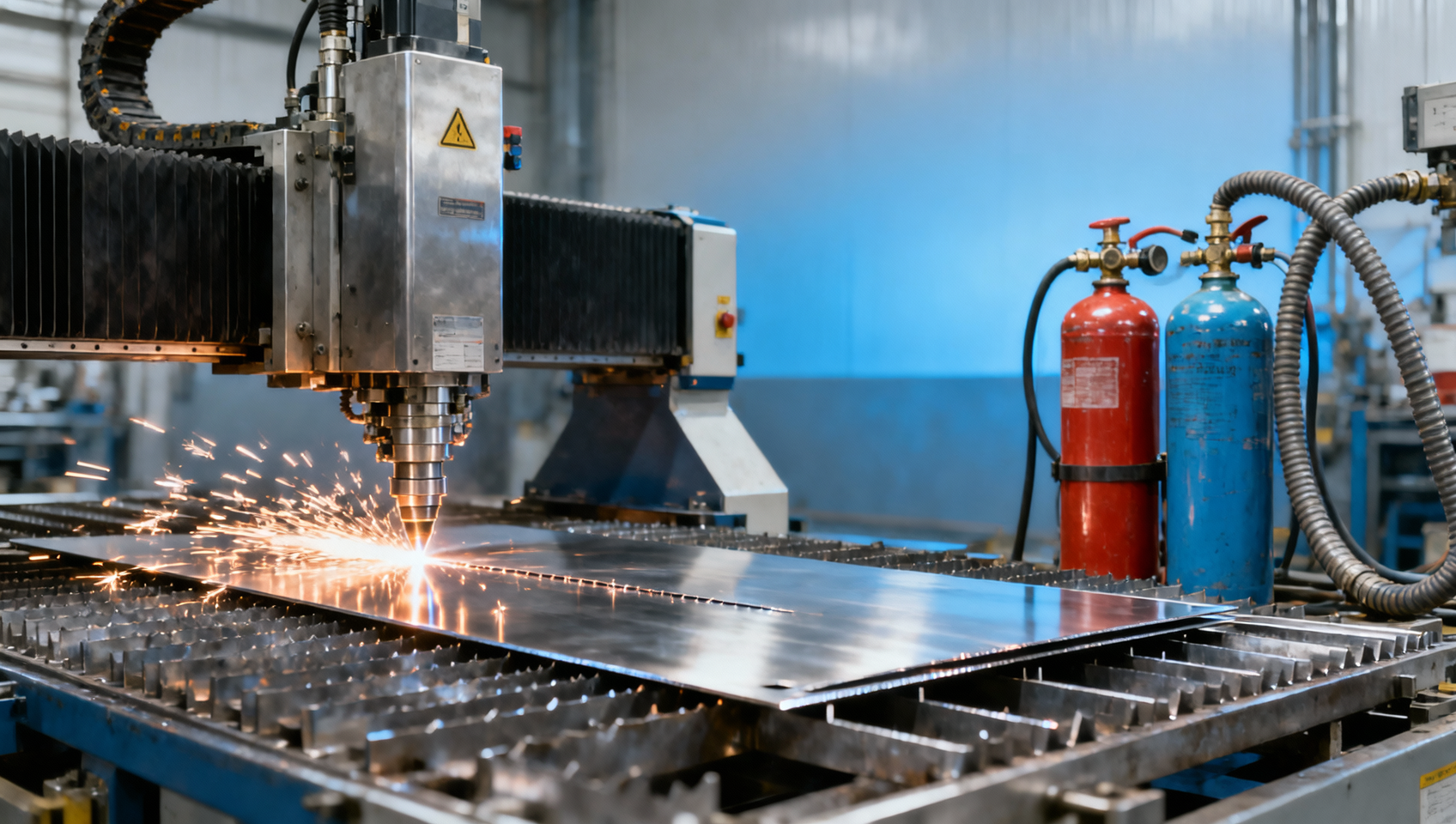
In metal machining, gas selection in CNC cutting shapes far more than edge quality—it influences throughput, tool life, production process stability, and total cost. For professionals in industrial CNC, CNC metalworking, and automated production, understanding how gas choice affects CNC production helps improve performance across the Manufacturing Industry and supports smarter decisions in today’s Global Manufacturing environment.
Why gas choice in CNC cutting directly affects output, consistency, and cost
Many buyers and operators first notice gas choice through visible cut quality, yet the business impact starts earlier and runs deeper. In laser cutting, plasma cutting, and oxy-fuel processes, the selected gas changes oxidation behavior, heat transfer, cutting speed, dross level, nozzle wear, and downstream cleaning requirements. That means one decision can influence 3 core metrics at the same time: part quality, machine utilization, and cost per finished component.
For manufacturers serving automotive, energy equipment, electronics enclosures, and precision fabrication, gas selection is not a minor setup item. It affects whether a shop can hold stable production over 8-hour, 16-hour, or 24-hour schedules. It also affects whether finished parts move directly to welding, coating, or assembly, or require extra deburring, oxide removal, and rework before the next process can begin.
In modern CNC machine tool environments, where digital integration and automated production lines are increasingly common, gas inconsistency can interrupt more than a single machine. It can disrupt nesting plans, shift takt time, and create bottlenecks in a line designed for continuous flow. For this reason, gas decisions should be aligned with material grade, sheet thickness, tolerance needs, and production volume rather than habit alone.
A practical evaluation usually starts with 4 questions: What material is being cut? What finish is acceptable? What cycle time is required? What is the real total cost after secondary processing? Procurement teams often compare gas price only, but operating teams know that lower unit gas cost does not always produce lower total manufacturing cost.
Where gas selection creates hidden gains or losses
- Cutting speed: some gases support faster feed rates on specific thickness ranges, improving machine output per shift.
- Edge chemistry: oxidation or cleaner edges influence welding quality, paint adhesion, and post-cut preparation time.
- Consumable life: nozzle and lens contamination can increase when gas purity or flow control is not matched to the process.
- Production stability: pressure fluctuation, moisture, or mixed supply quality can cause variation across batches of 50, 500, or 5,000 parts.
How different cutting gases compare in real manufacturing scenarios
The most common CNC cutting gases include oxygen, nitrogen, compressed air, and, in certain processes, argon-based mixes. Each gas changes the thermal and chemical behavior of the cut zone. There is no universal best option. The right choice depends on whether the priority is speed, bright edge quality, lower running cost, reduced oxidation, or simplified downstream processing in a broader manufacturing workflow.
Oxygen is frequently selected for carbon steel because it supports exothermic cutting and can improve speed in certain thickness ranges. Nitrogen is often preferred where oxidation-free edges matter, especially when parts go directly to bending, visible assembly, or coating. Compressed air can be attractive for cost control in lighter-gauge work, but its suitability depends heavily on air quality, dryness, and the acceptable finish level.
For procurement teams, comparing gas only by supply price creates risk. A lower-cost gas may increase post-processing time by 10–30 minutes per batch, or shorten consumable replacement intervals from weeks to days under heavy use. For decision-makers evaluating return on investment, it is smarter to compare the full process chain, not only the gas invoice.
The table below summarizes common CNC cutting gas options from a production perspective. It is intended as a practical guide for industrial CNC users, sourcing teams, and factory managers who need a fast but meaningful comparison.
This comparison shows why the “best” gas depends on the production goal. If a shop needs fast carbon steel throughput, oxygen may make sense. If it needs bright, oxidation-free stainless edges ready for immediate downstream operations, nitrogen often delivers better total process value. If the target is lower cost for thin-sheet fabrication, compressed air may be competitive when air treatment systems are properly maintained.
Scenario-based gas matching
When speed matters most
For carbon steel parts in repetitive production, especially medium plate thicknesses, oxygen may shorten cutting time and improve hourly output. This can matter in factories running 2 or 3 shifts where equipment utilization is tightly tracked.
When secondary processing must be reduced
For stainless steel cabinets, food-grade components, decorative panels, or precision enclosures, nitrogen often lowers the burden of cleaning and edge preparation. The gas cost may be higher, but the reduction in rework can offset it across mid-volume and high-volume production.
When budget pressure is high
Compressed air is often considered for thinner sheets, prototypes, and general fabrication jobs where appearance standards are moderate. However, users should verify dew point control, oil removal, and stable pressure before assuming the lowest-cost option is truly economical.
What operators and engineers should check before changing CNC cutting gas
Gas switching should never be treated as a simple settings change. In actual CNC production, it affects focus position, pressure settings, nozzle selection, pierce strategy, and sometimes feed rate windows. A shop that changes gas without adjusting these variables may misjudge the gas itself, when the real issue is incomplete process tuning. This is especially important in automated production where variation spreads quickly across multiple parts and batches.
Operators should evaluate at least 5 checkpoints: material type, thickness range, required edge quality, downstream process sensitivity, and gas supply stability. For example, a line cutting 1 mm to 3 mm stainless parts for visible assemblies has a different decision framework from a heavy fabrication line cutting 10 mm to 20 mm carbon steel for structural applications.
Gas purity and delivery condition matter as much as gas type. Moisture, oil carryover, and pressure drop can cause inconsistent kerf shape, rough edges, and faster consumable contamination. Even where exact purity targets differ by equipment and job, the practical rule is clear: stable supply quality supports repeatable production, while unstable supply increases troubleshooting time and hidden scrap cost.
A structured validation process usually takes 3 stages: trial setup, sample batch verification, and monitored production release. Instead of relying on one test piece, many factories compare a short run of 20–50 parts, then review edge condition, dimensional stability, consumable wear, and downstream acceptance before locking in the gas choice.
A practical evaluation checklist for CNC metalworking teams
- Confirm the material family and thickness band, such as thin sheet, medium plate, or heavier sections, because gas effectiveness changes across ranges.
- Define the next process clearly: welding, powder coating, anodizing, bending, direct assembly, or cosmetic delivery.
- Check machine-side parameters, including nozzle condition, pressure regulation, pierce settings, and focus alignment.
- Run a sample lot and record scrap rate, operator intervention frequency, and cleaning time per batch.
- Review actual cost after production, not just gas consumption, within a 1-week to 4-week evaluation period.
Common mistakes that create false conclusions
One common mistake is comparing gases on different nozzle conditions or different maintenance states. Another is judging quality only by the cut edge while ignoring paint preparation, weld behavior, or post-cut labor. A third mistake is testing at a single thickness and assuming the result applies to all jobs. In diversified manufacturing, gas strategy often needs to be segmented by product family rather than standardized too broadly.
Decision-makers should also resist the assumption that higher gas cost always means higher total cost. In many precision manufacturing settings, a cleaner cut that reduces manual finishing, rejects, and line delays can be the more economical choice over a monthly or quarterly production cycle.
Procurement guide: how to evaluate gas supply, total cost, and implementation risk
For sourcing teams and factory managers, gas choice is not only a technical issue but also a supply and risk management issue. Procurement should compare 4 areas together: gas price, supply method, stability of quality, and impact on production economics. A plant with frequent line stops due to unstable gas pressure will not benefit from a low quoted rate if output losses erase the savings.
Typical supply routes may include cylinders, bulk supply, on-site generation for selected gases, or centralized compressed air systems. The right route depends on consumption level, shift pattern, and plant layout. For example, a low-volume workshop may value flexibility, while a higher-throughput site may focus on continuity across 2-shift or 24/7 operations.
Buyers should also ask how gas choice changes the full production cost structure. If nitrogen reduces oxide cleaning and shortens post-process handling, the labor and time benefit may justify the added gas expense. If compressed air lowers gas spending but increases nozzle maintenance frequency, the savings may be smaller than expected. Total cost should include material yield, consumables, operator time, rework, and line flow.
The table below can help procurement teams and enterprise decision-makers compare gas strategies using practical evaluation dimensions rather than unit price alone.
This framework is especially relevant in global manufacturing environments where supply chains, labor costs, and quality expectations vary by market. Enterprises expanding across regions often need a gas strategy that supports both local practicality and consistent production standards. A structured sourcing review reduces the risk of choosing a gas setup that looks efficient on paper but performs poorly on the shop floor.
Implementation and review cycle
A practical rollout usually follows 4 steps: define target products, run controlled trials, confirm supply readiness, and monitor performance after launch. Many factories review results after the first 2 weeks and again after 1 full month. This allows teams to capture both immediate cut quality changes and slower effects such as nozzle wear, operator intervention, and process drift.
If the site works under customer-specific quality agreements or internal manufacturing control procedures, it is wise to document the gas change, the parameter window, and the approved application range. That supports traceability and helps maintain stable quality across shifts, machines, and product revisions.
FAQ: what buyers, operators, and managers ask most about CNC cutting gas
How do I choose between oxygen and nitrogen in CNC cutting?
Start with the material and the next process. Oxygen is commonly used for carbon steel where cutting speed is important, particularly in certain medium and thicker sections. Nitrogen is usually preferred where oxidation-free edges matter, such as stainless steel, aluminum, visible parts, or components that move directly into welding or coating. The decision should be confirmed through a batch test rather than a single sample.
Is compressed air a good low-cost alternative for CNC metal cutting?
It can be, especially for thinner materials, general fabrication, and jobs with moderate finish requirements. However, compressed air is only a reliable option when the system includes proper drying and filtration. If moisture or oil contamination is present, shops may see unstable cut quality and more frequent maintenance. That is why buyers should assess air system readiness before expecting savings.
What should procurement focus on besides gas price?
At minimum, review 5 items: supply continuity, gas quality control, compatibility with materials and thicknesses, effect on downstream operations, and total cost per accepted part. A low gas price can become expensive if it increases cleaning time, rejects, or delivery delays. Procurement decisions should reflect the entire production chain, not only the monthly gas invoice.
How long does it take to validate a gas change in production?
A useful validation window is often 1 to 4 weeks, depending on product mix and batch frequency. The first few days may confirm basic cut quality, but longer observation helps reveal changes in consumable life, rework rates, and operator intervention. In mixed-product factories, testing across 2 to 3 representative product families gives a more reliable basis for decision-making.
Why work with us when evaluating CNC cutting gas strategy
For companies operating in CNC machining, precision manufacturing, and international industrial supply chains, the challenge is rarely just finding a gas option. The real challenge is linking gas choice to machine capability, material behavior, production targets, and purchasing logic. Our industry focus helps connect technical evaluation with business decisions, which is essential for factories balancing quality, lead time, and cost.
We support practical discussions around parameter confirmation, gas selection by material and thickness range, production line suitability, and sourcing considerations for different manufacturing environments. If your team is comparing oxygen, nitrogen, compressed air, or alternative gas strategies, we can help structure the review around real process outcomes rather than assumptions.
You can contact us to discuss 6 concrete topics: recommended gas routes for your materials, expected downstream impact, trial planning, delivery cycle considerations, quality control checkpoints, and quotation comparison logic. This is useful whether you are an information researcher building a shortlist, an operator solving a production issue, a buyer reviewing supply options, or a decision-maker planning capacity upgrades.
If you are preparing a new CNC cutting project or optimizing an existing one, reach out with your material type, thickness range, required edge condition, production volume, and downstream process. Based on that information, the discussion can move quickly toward a more suitable gas strategy, clearer implementation priorities, and a stronger foundation for cost and quality control.
PREVIOUS ARTICLE
NEXT ARTICLE
Recommended for You
 Global Manufacturing Lead Times Improve but Not EverywhereGlobal Machine Tool Trade Research Center
 Machine Tool Market Inventory Pressure Is Building AgainGlobal Machine Tool Trade Research Center
 Metal Lathe vs CNC Milling for Low Volume Round PartsCNC Machining Technology Center
 CNC Cutting Gas Choice Affects More Than Edge FinishCNC Machining Technology Center
 CNC Metalworking Shops Face New Pressure on TraceabilityManufacturing Policy Research Center
 Automated Lathe Cycle Time Gains Can Hide Quality LossesCNC Machining Technology Center

Aris Katos
Future of Carbide Coatings
15+ years in precision manufacturing systems. Specialized in high-speed milling and aerospace grade alloy processing.
▶
CNC Cutting Gas Choice Affects More Than Edge FinishCNC Machining Technology Center▶
CNC Cutting Edge Wear Patterns That Change Part AccuracyCNC Machining Technology Center▶
Metal Machining Costs Rise Fast With Poor Chip ControlCNC Machining Technology Center▶
CNC cutting quality drops fast when tool wear goes unnoticedCNC Machining Technology Center▶
CNC cutting speed or finish quality: where losses beginCNC Machining Technology Center
Mastering 5-Axis Workholding Strategies
Join our technical panel on Nov 15th to learn about reducing vibrations in thin-wall components.

Providing you with integrated sanding solutions
Before-sales and after-sales services
Comprehensive technical support