• Global CNC market projected to reach $128B by 2028 • New EU trade regulations for precision tooling components • Aerospace deman
NYSE: CNC +1.2%LME: STEEL -0.4%

CNC Programming errors that create scrap without obvious alarms
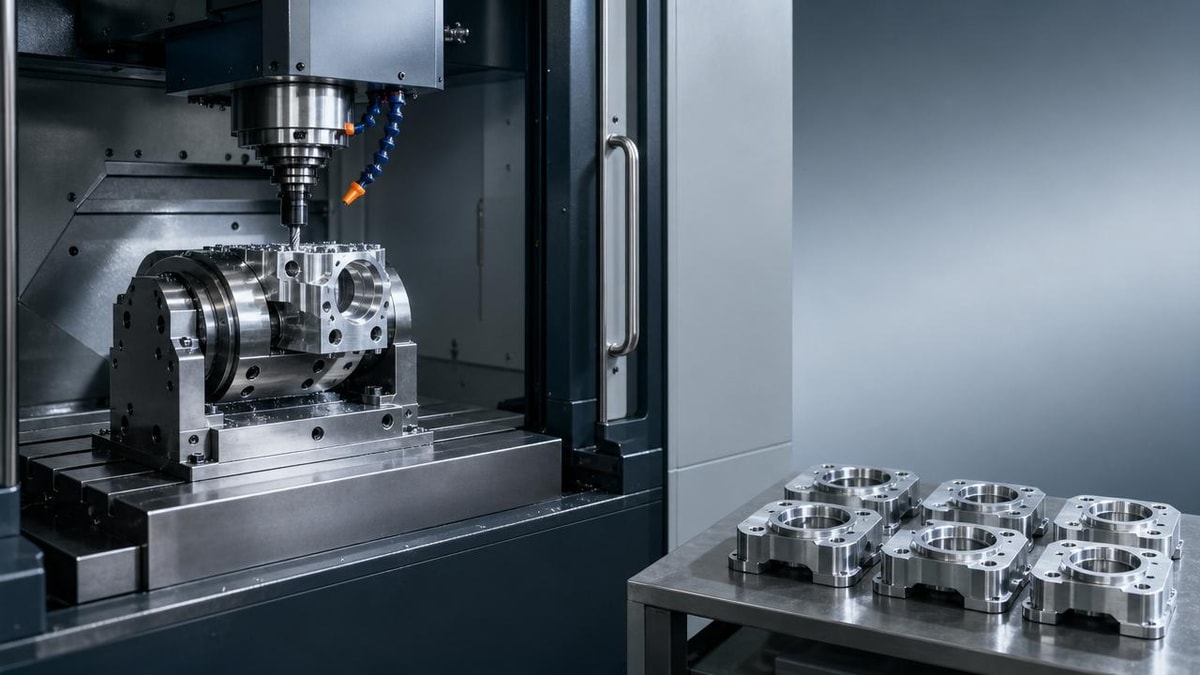
In CNC programming, some of the most costly mistakes do not trigger alarms at all—they quietly create scrap, dimensional drift, or hidden quality risks. For quality control and safety managers, understanding how CNC Programming errors affect machining consistency is essential to preventing batch losses, reducing rework, and strengthening process reliability before defects reach customers or cause wider production issues.
Why scenario differences matter more than the alarm screen
In many factories, CNC Programming risk is still judged by a simple question: did the machine stop and show an alarm? That approach misses a large category of production loss. A machine can complete every cycle normally, yet still produce undersized bores, mirrored features, poor surface location, mismatched thread starts, or unstable tool engagement that pushes parts out of tolerance over time. For quality control personnel, this means the defect is often discovered only at final inspection, customer assembly, or field use. For safety managers, it means the same silent logic error may also create overload, poor chip evacuation, fixture stress, or collision risk that develops gradually rather than instantly.
The impact of CNC Programming errors is not the same in every production environment. A high-mix job shop faces different risks than an automotive line running thousands of near-identical parts. Aerospace suppliers care deeply about traceability and revision control, while electronics component plants may struggle more with burr-sensitive micro features and thermal drift. Understanding these application scenarios helps teams decide where to strengthen program verification, first article controls, in-process inspection, and operator sign-off.
Where silent CNC Programming errors usually appear in real production
Silent errors tend to appear where the process appears stable on the surface. The machine cycles, the spindle load looks reasonable, and no obvious crash occurs. Yet the programmed intent is slightly wrong for the actual manufacturing condition. Common business scenarios include:
- New part introduction, where CAM output, setup sheets, and inspection plans are still being aligned.
- Engineering change orders, where model revision updates are not fully reflected in offsets, probing logic, or post-processed code.
- Multi-machine transfer, where the same CNC Programming file is reused on different controls, tool libraries, or fixture standards.
- Lights-out or unattended machining, where a minor path or wear compensation issue can generate an entire batch of scrap before detection.
- Family-of-parts production, where similar geometries encourage copy-and-modify programming mistakes.
These are not rare edge cases. They are normal operating conditions in modern CNC manufacturing, especially as machine tools, automated cells, and multi-axis systems become more connected and more productive.
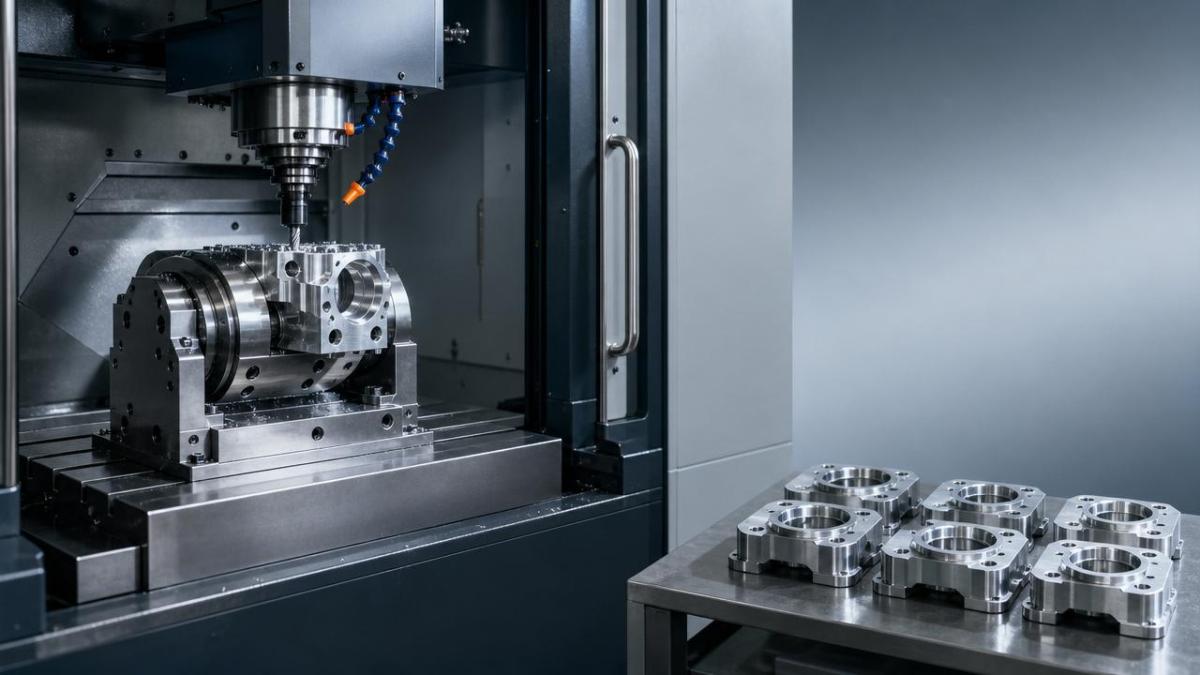
Scenario comparison: the same CNC Programming mistake has different consequences
Quality and safety teams should evaluate CNC Programming based on production context, not only on code correctness in isolation. The table below shows how the risk profile changes by application scenario.
Typical application scenarios and what quality teams should watch
1. High-volume lines: small code errors become expensive fast
In automotive, consumer hardware, and standardized industrial components, cycle stability often creates false confidence. A minor CNC Programming issue such as an incorrect cutter compensation direction, an outdated local coordinate call, or a missing tool wear reset may not stop the machine. Instead, it creates gradual dimensional shift across hundreds of parts. In this scenario, the key risk is scale. The defect is not dramatic, but the batch exposure is massive.
QC teams in this environment should emphasize early trend detection rather than waiting for end-of-lot inspection. Control plans should include tighter first-off approval after any program revision, automatic lot segregation when offsets are adjusted, and clear linkage between CNC Programming version, machine number, and inspection records.
2. High-mix job shops: copy-paste logic is a hidden scrap driver
Job shops often move quickly between part numbers, materials, and fixture setups. Here, CNC Programming errors frequently come from inheritance: an old canned cycle, the wrong work offset family, mirrored geometry from a left-hand part, or a subroutine still calling a previous drill depth. Because each batch may be small, teams sometimes accept informal checks. That is exactly where quiet scrap starts.
For this scenario, suitability depends on discipline in setup verification. Safety and quality managers should require visual simulation, tool list confirmation against the setup sheet, and independent review when a program is derived from an existing part. The business need is flexibility, but the control method must prevent flexibility from becoming inconsistency.
3. Aerospace and medical-style precision work: hidden conformity risks matter most
In tightly regulated precision manufacturing, the greatest danger is not always visible scrap. A CNC Programming error may create a feature that still passes a limited dimensional check while violating design intent, datum relationship, blend condition, or surface integrity expectation. For example, a plane transformation error in 5-axis machining may place a feature within local tolerance but in the wrong true position relative to the assembly model.
This scenario demands stronger digital traceability. Quality teams should verify that the released model, CAM file, posted code, setup instruction, and CMM program all point to the same revision. Safety managers should also assess whether altered cutting direction, engagement angle, or retract motion creates non-obvious machine stress.
4. Unattended and automated cells: detection speed becomes the core issue
As smart manufacturing and automated production lines expand, more plants rely on pallet pools, robotic loading, and lights-out schedules. In these cells, CNC Programming must be judged not only by whether it cuts correctly, but by how quickly any deviation can be detected. A wrong probing update, incorrect broken-tool response, or bad restart logic may allow the cell to keep producing flawed parts through the entire night shift.
This is a scenario where quality, maintenance, and safety must work together. Recommended controls include in-cycle probing with reject logic, load signature monitoring, camera confirmation where practical, and alarm escalation rules that stop the cell when drift exceeds defined limits.
The most common silent CNC Programming mistakes by process stage
Different stages of production introduce different forms of silent error. For application-based risk review, the following categories are especially important:
- Pre-process stage: wrong post processor, wrong machine kinematics, outdated model revision, or stock condition mismatch.
- Setup stage: incorrect work offset reference, mismatch between fixture zero and program zero, or tool length assumptions carried over from another machine.
- Cutting stage: feed and speed values that are safe enough to run but unstable enough to alter size, finish, or tool wear behavior.
- Inspection stage: sampling plan too wide to catch early drift, or CMM routine based on the wrong nominal orientation.
- Change management stage: undocumented edits at the machine control, especially when operators optimize cycle time locally.
These patterns matter across the global CNC machining sector, from precision discs and shaft components to structural parts and automated line output.
How to judge whether your current control method fits your scenario
Not every plant needs the same level of control, but every plant needs a control method that matches its risk exposure. A practical judgment framework for CNC Programming includes four questions:
- How much scrap can be created before the first reliable inspection point?
- How easy is it for local edits, copied code, or revision confusion to enter production?
- Does the part have hidden functional requirements that dimensional checks alone may miss?
- If the machine keeps running without alarm, what secondary safety or equipment stress might still be developing?
If the answer to any of these is “high,” your current approach likely needs stronger program governance. For some companies, that means formal code review and simulation. For others, it means better in-process gauging, locked DNC distribution, or stricter approval for machine-side edits.
Common misjudgments that make CNC Programming risks harder to see
Several assumptions repeatedly lead teams to underestimate silent scrap risk. One is believing that no alarm means no process problem. Another is focusing only on crash prevention while ignoring gradual quality drift. A third is assuming that experienced operators will automatically notice incorrect logic in reused programs. In reality, modern machine tools are efficient enough to execute flawed logic smoothly.
Another common mistake is separating quality from safety too completely. A CNC Programming path that increases engagement unexpectedly may still produce acceptable parts for a while, but it can also accelerate spindle load, fixture fatigue, coolant failure, or chip packing. That makes silent programming issues both a quality concern and a preventive safety concern.
Practical actions for quality and safety managers
If your organization wants to reduce scrap without obvious alarms, the best next step is to map controls to scenario risk instead of applying the same checklist everywhere. High-volume lines need fast detection. High-mix shops need setup discipline. Precision-regulated sectors need revision traceability. Automated cells need autonomous verification and clear stop logic.
A strong action plan for CNC Programming should include program revision control, mandatory first article confirmation after edits, protected handling of offsets and wear data, simulation or digital verification for complex paths, and closed-loop communication between programmers, operators, inspectors, and EHS teams. For companies scaling into smart manufacturing, integrating machine data with inspection records can further shorten the time between defect creation and defect discovery.
FAQ: scenario-based questions teams often ask
Which scenario has the highest silent scrap risk?
Usually high-volume and unattended production, because a small CNC Programming error can continue across many parts before anyone intervenes.
Are small job shops less exposed because batches are smaller?
Not necessarily. Smaller batches reduce volume loss, but frequent setup changes and copied programs often increase the chance of wrong offsets, outdated subroutines, or mismatched fixtures.
What should be checked first after a program revision?
Verify model revision, work offsets, tool mapping, compensation logic, and first article measurements tied directly to the changed features.
Final takeaway
The most damaging CNC Programming errors are often the quiet ones. They do not always stop the machine, but they can still create scrap, hidden nonconformance, equipment stress, and customer risk. For quality control and safety managers, the smartest response is not generic caution but scenario-based control. Review where your production is most exposed, identify which silent errors fit those conditions, and align verification, inspection, and revision discipline accordingly. When CNC Programming is evaluated through the lens of real application scenarios, defect prevention becomes faster, more targeted, and far more effective.
Recommended for You
![]() Beijing’s New E-Bike Lock Regulation Spurs CNC Housing DemandGlobal Machine Tool Trade Research Center
Beijing’s New E-Bike Lock Regulation Spurs CNC Housing DemandGlobal Machine Tool Trade Research Center![]() New Drone Standard GB/T 44723–2026 Takes Effect May 2026Manufacturing Policy Research Center
New Drone Standard GB/T 44723–2026 Takes Effect May 2026Manufacturing Policy Research Center![]() New Maritime Code Takes Effect May 1, 2026: CNC Equipment Shipping Rules UpdatedManufacturing Market Research Center
New Maritime Code Takes Effect May 1, 2026: CNC Equipment Shipping Rules UpdatedManufacturing Market Research Center![]() 2026 China Cycle Shanghai: CNC E-Bike Frame Capacity Draws ODM FocusManufacturing Market Research Center
2026 China Cycle Shanghai: CNC E-Bike Frame Capacity Draws ODM FocusManufacturing Market Research Center![]() 2026 Foshan Tanzhou Auto Expo: EV Parts Sourcing FocusGlobal Machine Tool Trade Research Center
2026 Foshan Tanzhou Auto Expo: EV Parts Sourcing FocusGlobal Machine Tool Trade Research Center![]() New Hazardous Chemicals Safety Law Takes Effect May 2026Manufacturing Policy Research Center
New Hazardous Chemicals Safety Law Takes Effect May 2026Manufacturing Policy Research Center


Aris Katos
Future of Carbide Coatings
15+ years in precision manufacturing systems. Specialized in high-speed milling and aerospace grade alloy processing.
▶
Why production process changes often fail on otherwise stable linesCNC Machining Technology Center▶
CNC Programming errors that create scrap without obvious alarmsCNC Machining Technology Center▶
Production Process Changes That Quietly Increase Defect RatesCNC Machining Technology Center▶
How Cost-Effective CNC Manufacturing Avoids Hidden CostsCNC Machining Technology Center▶
When a Portable Machine Tool Makes More SenseCNC Machining Technology Center
Mastering 5-Axis Workholding Strategies
Join our technical panel on Nov 15th to learn about reducing vibrations in thin-wall components.

Providing you with integrated sanding solutions
Before-sales and after-sales services
Comprehensive technical support