• Global CNC market projected to reach $128B by 2028 • New EU trade regulations for precision tooling components • Aerospace deman
NYSE: CNC +1.2%LME: STEEL -0.4%

Why production process changes often fail on otherwise stable lines
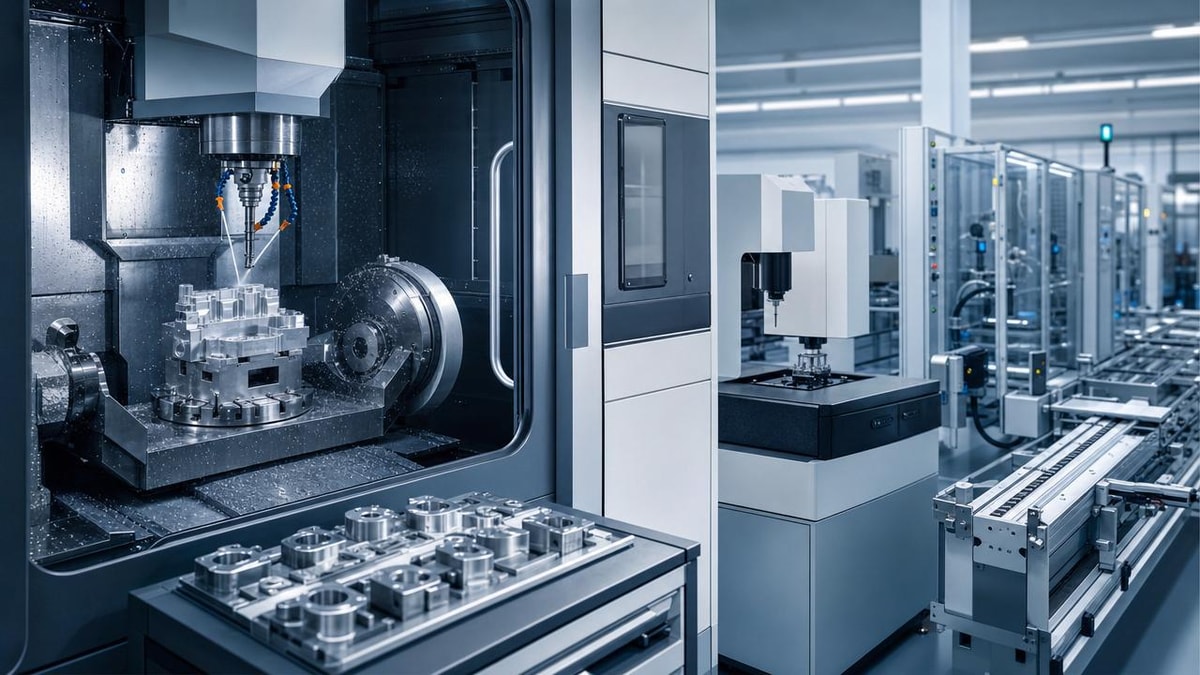
Even on stable manufacturing lines, a Production Process change can trigger unexpected downtime, quality drift, and hidden cost increases. For business decision-makers, understanding why seemingly minor adjustments fail is critical to protecting throughput, compliance, and profitability. This article explores the operational, technical, and organizational factors that often undermine process changes in CNC and precision manufacturing environments.
Why this issue is becoming more visible across modern manufacturing
In CNC machining, precision manufacturing, and automated production, the pressure to modify a Production Process is rising. Companies are being pushed by shorter product cycles, tighter tolerances, labor constraints, digital integration, and customer demands for traceability. At the same time, many production lines appear stable on the surface. They may be meeting output targets, running established programs, and producing within acceptable scrap limits. That perceived stability often creates a false sense of security when leaders approve a process change.
What has changed in recent years is not simply the frequency of process updates, but the degree of interconnectedness inside the factory. A tooling change can affect spindle load. A fixture adjustment can alter clamping repeatability. A program optimization can shift heat generation, chip evacuation, or downstream inspection results. On highly utilized lines, even a small Production Process revision can cascade through machine availability, operator behavior, maintenance timing, and customer delivery performance.
For decision-makers, the key trend is clear: process changes now fail less because of a single technical mistake and more because the production system is tightly coupled. Stable lines are often optimized around a fragile balance, not broad resilience.
The new signals behind Production Process change failure
Several industry signals explain why failures are becoming more common in otherwise mature operations. First, utilization rates are high. Many plants have little buffer time for structured trials, which means a Production Process change is introduced under commercial pressure rather than engineering discipline. Second, precision expectations are rising. In aerospace, automotive, electronics, and energy equipment, a change that once seemed minor may now influence surface finish, geometric accuracy, or assembly fit.
Third, production knowledge is often fragmented. CNC programmers, process engineers, maintenance teams, quality personnel, and operators may each understand only one part of the line’s behavior. Fourth, digital systems have improved visibility but not always decision quality. Data from sensors, MES platforms, or SPC dashboards can reveal variation faster, yet many organizations still lack a disciplined way to translate those signals into robust change control.
The hidden reasons stable lines reject change
A stable line is rarely stable for every reason that matters. It is often stable because people have adapted to its imperfections. Operators compensate for variation with informal adjustments. Inspectors may know which dimensions need closer attention. Maintenance technicians may have learned the machine’s weak points. When a Production Process change is introduced, those human compensations are disrupted before the formal system is ready to replace them.
Another common issue is local optimization. Teams may approve a change to reduce cycle time, improve tool life, or cut setup time, but overlook cross-functional effects. A faster feed strategy may increase vibration and shorten fixture life. A cheaper cutting tool may create more dimensional drift. A revised sequence may improve one machine center while creating queue imbalance for washing, inspection, or assembly.
There is also the problem of baseline blindness. Many factories do not fully understand why the current Production Process works as well as it does. If the original process capability, thermal behavior, tooling wear pattern, and operator interventions are not documented, then the organization is effectively changing an unknown system. In that situation, even a technically sound improvement can fail because the real operating baseline was never captured.
Technical complexity is only part of the story
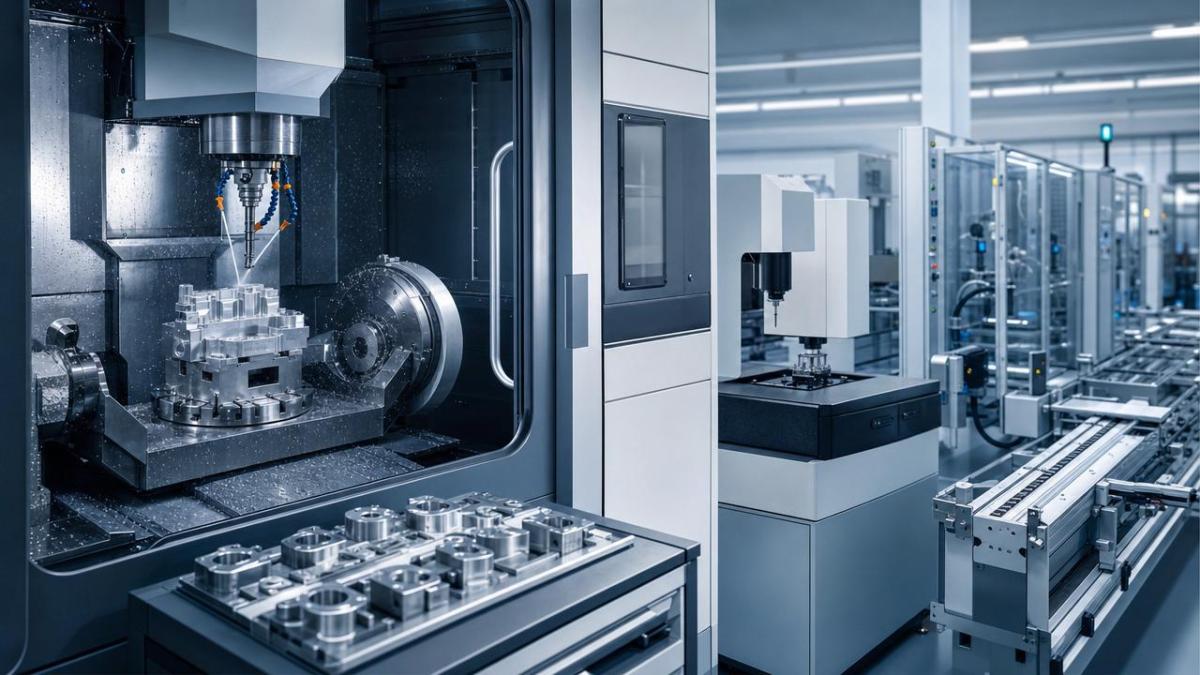
In machine tool environments, leaders often assume failed Production Process changes are primarily engineering failures. In reality, organizational timing is just as important. If the change is launched during a peak shipment period, the line has less room to absorb learning. If operator training happens after release instead of before it, variation is almost guaranteed. If quality plans are updated later than CNC programs, the business creates a mismatch between how parts are made and how they are verified.
Supplier dependence also matters. Precision manufacturing depends on inserts, holders, coolant condition, workholding systems, raw material consistency, and software revisions. A Production Process that was validated using one supplier condition may behave differently after a routine procurement substitution. This is why stable lines can become unexpectedly fragile after process changes: the line itself is not isolated from the broader supply and support ecosystem.
Digitalization adds another layer. Smart factories generate more alarms, trend charts, and parameter histories. Yet more data does not remove the need for engineering judgment. Some plants react to every signal, changing offsets or machine settings too quickly. Others ignore early warning patterns because throughput still looks acceptable. Both extremes can cause a Production Process change to fail: one through overcorrection, the other through delayed response.
Who feels the impact first when a Production Process change goes wrong
The impact is not evenly distributed. Some functions see the consequences immediately, while others experience them later in cost, customer pressure, or strategic delay. For business decision-makers, understanding these impact paths helps prioritize controls before approving changes.
A major shift: from change execution to change governance
One of the most important industry shifts is that successful manufacturers are no longer treating a Production Process change as a narrow engineering event. They are treating it as a governance issue. That means decisions are based not only on whether a change can work, but on whether the organization is prepared to absorb it without disrupting the line.
This shift is especially relevant in CNC and precision machining where process windows can be narrow. Toolpath changes, fixture modifications, spindle parameter adjustments, and automation sequence updates should be reviewed against broader business conditions: current backlog, customer sensitivity, maintenance readiness, spare capacity, metrology capability, and training coverage. Leaders who ask these questions early are less likely to approve changes that look attractive on paper but fail in operation.
The implication for manufacturers is straightforward. Competitive advantage no longer comes only from having advanced machine tools or flexible production lines. It increasingly comes from having disciplined process governance that can convert technical improvements into stable commercial outcomes.
What signals deserve closer attention before the next change
Before approving a Production Process adjustment, leaders should look beyond the immediate improvement target. Several signals deserve more weight than they often receive. One is undocumented operator intervention. If the line depends on experienced staff making manual corrections, the process is less stable than reports suggest. Another is inconsistent measurement behavior between shifts, machines, or inspection stations. This often indicates hidden variation that a change will amplify.
A third signal is maintenance asymmetry. If one machine in a line is consuming more corrective attention than others, a process change may expose that weakness. A fourth is data contradiction. When cycle time looks strong but tool consumption, minor stops, or final inspection disputes are rising, the current Production Process may already be under strain. In such cases, further change should be treated carefully, not as a quick optimization opportunity.
Leaders should also pay attention to timing risk. Changes introduced close to product launches, customer audits, year-end output pushes, or supplier transitions carry higher operational exposure. The technical change may be sound, but the business context may be wrong.
How companies can respond without slowing innovation
The goal is not to avoid every Production Process change. In a competitive manufacturing environment, process evolution is necessary. The challenge is to separate useful change from poorly prepared change. Companies can do this by adopting a staged approach. First, establish the real baseline, including machine condition, tool wear behavior, operator interventions, inspection consistency, and downstream effects. Second, define the expected business outcome of the change in measurable terms, not vague improvement language.
Third, run cross-functional risk review before release. In CNC operations, this should include manufacturing engineering, quality, maintenance, production supervision, and where relevant, suppliers of tooling or automation components. Fourth, pilot under realistic load conditions. A Production Process that works during limited trial hours may behave differently under full shift heat, coolant contamination, material variation, and staffing changes.
Finally, define stop criteria in advance. Too many failed changes continue for too long because nobody wants to reverse a decision. Clear thresholds for scrap, downtime, capability loss, or tool cost escalation make it easier to protect the line before losses grow.
Decision guidance for executives in CNC and precision manufacturing
For executives, the central judgment is whether a Production Process change is being proposed from a position of control or from a position of pressure. If the driver is customer urgency, capacity stress, cost squeeze, or reactive quality correction, the risk of failure is higher. If the driver is supported by baseline data, trial evidence, resource alignment, and a clear rollback path, the odds improve substantially.
This is particularly important as the machine tool industry moves toward higher precision, greater automation, and digital integration. The factories that perform best will not be those that change the fastest at any cost. They will be the ones that understand when line stability is genuine, when it is only apparent, and how to govern Production Process changes without damaging throughput or trust.
Final judgment and next-step questions
The broader trend is that process change risk is increasing because manufacturing systems are becoming more connected, more precise, and less tolerant of informal variation. On stable lines, failure often comes from hidden dependencies, not obvious mistakes. That is why Production Process decisions now deserve strategic attention, not just technical approval.
If a business wants to judge the likely impact of a future Production Process change, it should confirm five questions: Do we know the true operating baseline? Which hidden operator or maintenance behaviors support current stability? What downstream functions will be affected if the change shifts variation? Is the timing commercially sensible? And do we have clear acceptance and rollback criteria? Companies that can answer those questions with confidence are far more likely to turn process change into operational advantage rather than costly disruption.
PREVIOUS ARTICLE
NEXT ARTICLE
Recommended for You
![]() Beijing’s New E-Bike Lock Regulation Spurs CNC Housing DemandGlobal Machine Tool Trade Research Center
Beijing’s New E-Bike Lock Regulation Spurs CNC Housing DemandGlobal Machine Tool Trade Research Center![]() New Drone Standard GB/T 44723–2026 Takes Effect May 2026Manufacturing Policy Research Center
New Drone Standard GB/T 44723–2026 Takes Effect May 2026Manufacturing Policy Research Center![]() New Maritime Code Takes Effect May 1, 2026: CNC Equipment Shipping Rules UpdatedManufacturing Market Research Center
New Maritime Code Takes Effect May 1, 2026: CNC Equipment Shipping Rules UpdatedManufacturing Market Research Center![]() 2026 China Cycle Shanghai: CNC E-Bike Frame Capacity Draws ODM FocusManufacturing Market Research Center
2026 China Cycle Shanghai: CNC E-Bike Frame Capacity Draws ODM FocusManufacturing Market Research Center![]() 2026 Foshan Tanzhou Auto Expo: EV Parts Sourcing FocusGlobal Machine Tool Trade Research Center
2026 Foshan Tanzhou Auto Expo: EV Parts Sourcing FocusGlobal Machine Tool Trade Research Center![]() New Hazardous Chemicals Safety Law Takes Effect May 2026Manufacturing Policy Research Center
New Hazardous Chemicals Safety Law Takes Effect May 2026Manufacturing Policy Research Center


Aris Katos
Future of Carbide Coatings
15+ years in precision manufacturing systems. Specialized in high-speed milling and aerospace grade alloy processing.
▶
Why production process changes often fail on otherwise stable linesCNC Machining Technology Center▶
CNC Programming errors that create scrap without obvious alarmsCNC Machining Technology Center▶
Production Process Changes That Quietly Increase Defect RatesCNC Machining Technology Center▶
How Cost-Effective CNC Manufacturing Avoids Hidden CostsCNC Machining Technology Center▶
When a Portable Machine Tool Makes More SenseCNC Machining Technology Center
Mastering 5-Axis Workholding Strategies
Join our technical panel on Nov 15th to learn about reducing vibrations in thin-wall components.

Providing you with integrated sanding solutions
Before-sales and after-sales services
Comprehensive technical support