• Global CNC market projected to reach $128B by 2028 • New EU trade regulations for precision tooling components • Aerospace deman
NYSE: CNC +1.2%LME: STEEL -0.4%

Production Process Changes That Quietly Increase Defect Rates
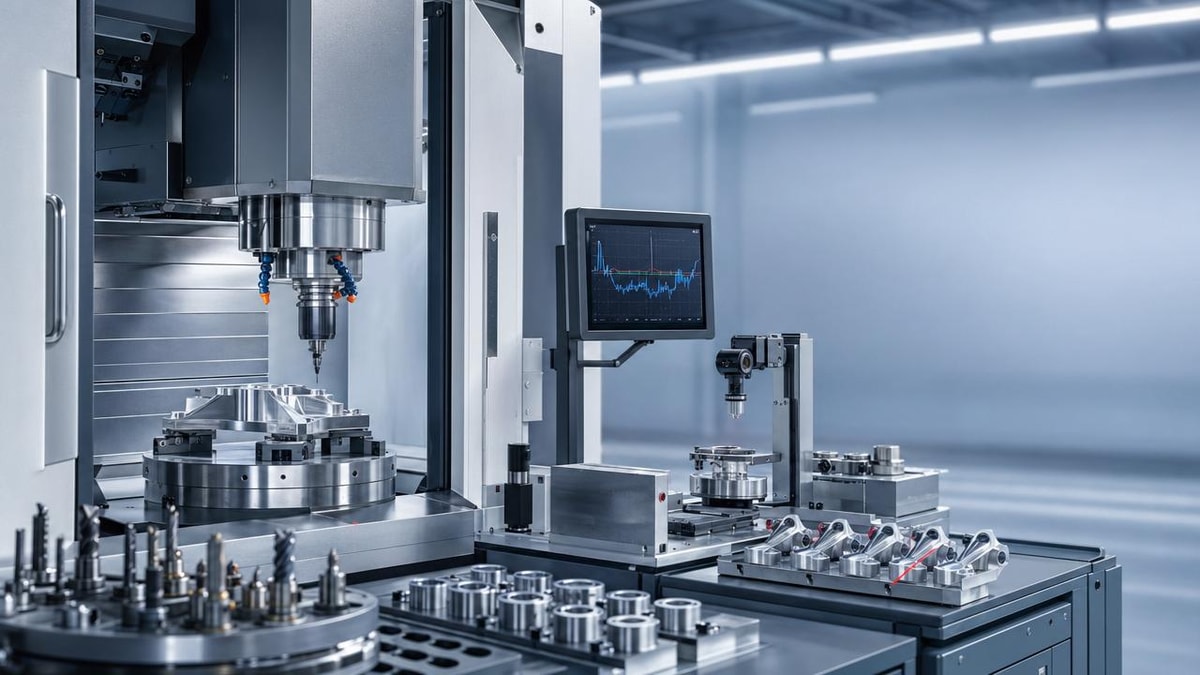
Even small Production Process adjustments can quietly raise defect rates before quality teams notice the pattern. In CNC machining and precision manufacturing, changes in tooling, setup, workflow, or operator routines often appear harmless but may trigger hidden quality and safety risks. For quality control and safety managers, understanding where these shifts occur is essential to preventing scrap, rework, downtime, and compliance issues.
Why this issue is becoming more visible across modern manufacturing
In today’s CNC machining and precision manufacturing environment, the Production Process is changing faster than many control systems were originally designed to handle. Shorter lead times, smaller batch sizes, mixed-product scheduling, digital monitoring, labor shifts, and frequent engineering updates are all increasing process variability. On paper, these changes often look like productivity improvements. On the shop floor, however, they can alter cutting stability, fixture repeatability, part flow, inspection timing, and operator decision-making in ways that gradually push defect rates upward.
This matters because many defects linked to Production Process changes do not appear immediately as dramatic failures. They often begin as subtle trends: dimensions drifting toward tolerance limits, burr formation increasing after a tooling substitution, surface finish degrading after cycle-time optimization, or mixed lots becoming harder to trace after a workflow redesign. For quality and safety managers, the risk is not only higher scrap. It is delayed detection, unstable output, customer complaints, audit exposure, and maintenance incidents caused by process assumptions no longer matching reality.
The strongest trend signals quality teams should not ignore
Several industry signals suggest that hidden defect risks tied to Production Process adjustments are becoming more common. First, production systems are more integrated than before. A small change in a CNC program, tooling offset, robot handoff, or coolant parameter can now affect multiple downstream steps. Second, manufacturers are under pressure to improve utilization, which leads to faster changeovers and reduced setup windows. Third, experienced operators and setup specialists are harder to replace, so process knowledge is not always transferred fully when routines change.
Another important signal is that quality data is growing, but interpretation gaps remain. Companies may install sensors, machine monitoring, and digital traceability tools, yet still miss the relationship between a process revision and a rise in internal nonconformance. Data exists, but the Production Process logic behind the trend is not always reviewed in time. As a result, defect escalation can happen quietly while teams focus on output volume, machine uptime, or delivery speed.
These signals are especially relevant in sectors such as automotive, aerospace, electronics, and energy equipment, where CNC machine tools are expected to deliver both precision and repeatability under changing production demands.
What is driving these quiet increases in defect rates
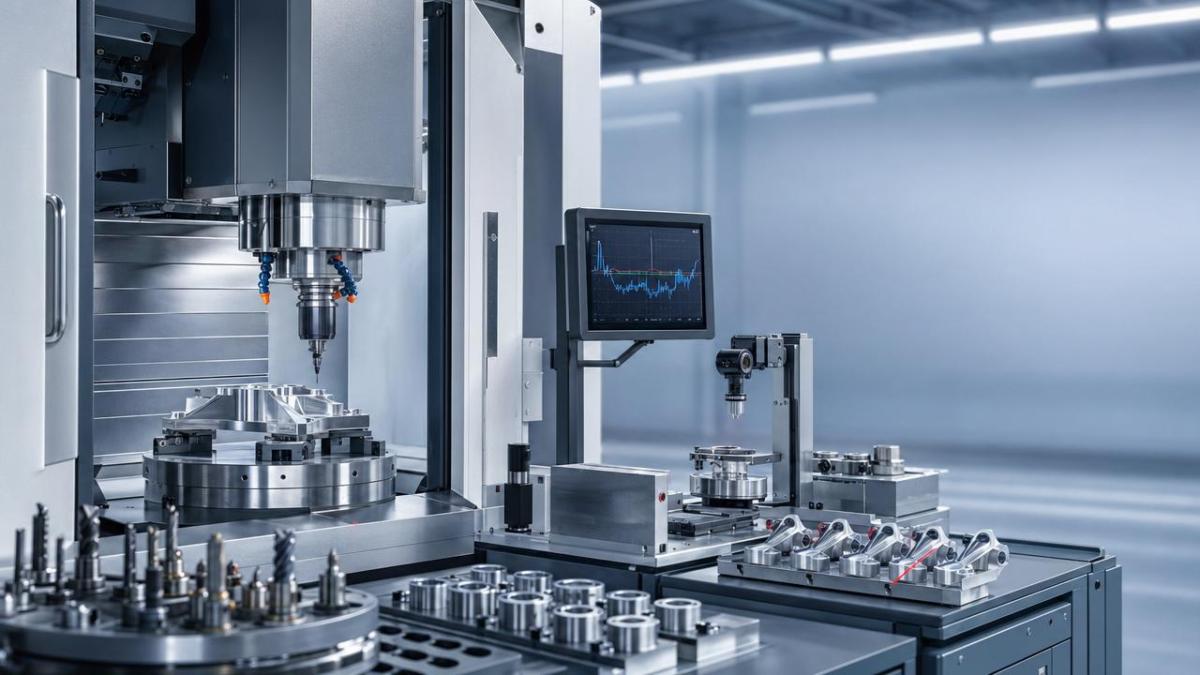
The first driver is operational pressure. Manufacturers want more flexibility without sacrificing output, so the Production Process is constantly being fine-tuned. Tool substitutions are made to reduce cost or improve availability. Setup sheets are simplified to save time. Inspection frequency may be adjusted when production demand spikes. Each change may be reasonable on its own, but the combined effect can weaken process control.
The second driver is technology transition. Smart factory systems, industrial robots, and automated production lines are expanding quickly, especially in global machine tool clusters. Yet automation does not automatically eliminate risk. It changes risk location. Instead of obvious manual handling errors, companies may now face software parameter mismatch, sensor calibration drift, robotic placement variation, or incomplete exception handling. The Production Process becomes more dependent on synchronized settings across equipment, tooling, software, and people.
The third driver is workforce change. In many plants, experienced operators, inspectors, and maintenance technicians are training newer staff while production targets remain high. Informal routines that once compensated for weak documentation may disappear during this transition. A veteran operator may have known exactly when a sound, chip shape, or spindle load trend signaled trouble. If that knowledge is not built into the documented Production Process, defects can increase before formal inspection catches them.
Which Production Process changes most often create hidden quality and safety risks
Not every change creates the same level of exposure. Quality and safety teams should pay closest attention to adjustments that alter process capability without triggering a formal review. Tooling replacements are one of the most common examples. Even when the tool specification appears equivalent, insert geometry, coating behavior, and wear patterns can affect dimensional consistency. Fixture modifications create similar risk, especially when they improve accessibility or speed but change contact points, clamping force, or vibration behavior.
Workflow changes also deserve careful attention. A revised routing sequence, a moved inspection station, or a different lot consolidation rule may seem administrative, yet these changes influence contamination control, part mix-up risk, and response speed when nonconforming parts appear. In automated lines, handoff timing between machines or robots can affect surface damage, positional repeatability, and even operator safety during intervention.
Program edits are another high-risk area. Small modifications to feeds, speeds, dwell time, cutter compensation, or probing logic may not produce immediate alarms. Instead, they shift process behavior gradually. Because the Production Process still appears stable from a machine-uptime perspective, the resulting defects may only become visible through customer returns, final inspection trends, or assembly issues downstream.
How the impact differs across roles and business functions
The impact of Production Process changes is not limited to the quality department. It spreads across operations, maintenance, engineering, purchasing, and safety management. That is why trend monitoring should not rely on isolated metrics alone.
What quality and safety managers should start tracking differently
A key trend in advanced manufacturing is the shift from defect counting to change correlation. Instead of only asking how many nonconforming parts were found, teams should ask what changed in the Production Process before the pattern appeared. This means linking quality events to setup changes, engineering revisions, tooling lots, shift assignments, maintenance actions, and automation parameter updates. The faster this link is made, the lower the cost of containment.
Another important shift is to treat near-miss process signals as leading indicators. Rising spindle load variation, more frequent offset adjustments, repeated first-piece corrections, or sudden operator reliance on manual compensation are not just maintenance details. They may indicate that the Production Process is no longer centered. Safety teams should apply the same thinking to intervention frequency, guarding bypass habits, and recurring line resets after process changes.
For global CNC and precision manufacturing operations, traceability depth is also becoming a strategic issue. If a company cannot clearly see which process revision, tool batch, or machine state produced a suspect lot, it becomes harder to isolate risk and protect delivery commitments. Better traceability is not only a compliance tool; it is a practical defense against quiet defect growth.
A practical judgment framework before approving any process adjustment
Before approving a Production Process change, companies should evaluate more than speed and cost. The stronger approach is to review change impact in three stages: pre-change assumptions, early-run validation, and post-change trend confirmation. This creates a more realistic picture of whether a modification is truly controlled.
How this trend is likely to evolve in the next phase of smart manufacturing
As digital integration expands, the Production Process will become even more dynamic. More decisions will be influenced by live data, automated scheduling, predictive maintenance, remote engineering support, and flexible line balancing. This can improve responsiveness, but it also means process baselines may change more often. The challenge for quality and safety professionals is to make change governance as agile as production itself.
The companies that perform best will not necessarily be those with the most automation. They will be the ones that can distinguish beneficial process evolution from uncontrolled variation. In practical terms, that means stronger revision discipline, better cross-functional communication, tighter launch verification, and clearer escalation rules when early quality signals appear. In machine tool environments where tolerances are tight and throughput matters, this capability becomes a competitive advantage.
Questions worth confirming now
If a business wants to judge how Production Process changes may affect its own defect risk, several questions deserve immediate attention. Which recent adjustments were implemented mainly for speed, cost, or availability reasons? Which of those changes received only limited validation? Can quality data be tied directly to process revisions, tooling changes, operator shifts, and machine interventions? Are safety reviews updated when automation or workflow logic changes? And when defects rise, does the investigation begin with process history or only with final inspection results?
For quality control and safety managers, the most effective action is to build a routine that treats every meaningful Production Process change as a trend event, not just a technical update. That mindset helps organizations spot hidden instability earlier, reduce avoidable losses, and support more reliable growth in CNC machining and precision manufacturing.
PREVIOUS ARTICLE
NEXT ARTICLE
Recommended for You
![]() ZhiAnHua GNA Named Top 5 GEO Service Provider for 2026Machine Tool Industry Editorial Team
ZhiAnHua GNA Named Top 5 GEO Service Provider for 2026Machine Tool Industry Editorial Team![]() 2026 Bio-based Feedstock Supply Chain Guide ReleasedMachine Tool Industry Editorial Team
2026 Bio-based Feedstock Supply Chain Guide ReleasedMachine Tool Industry Editorial Team![]() Beijing E-Bike Battery Compartment Rules Take Effect May 1, 2026Machine Tool Industry Editorial Team
Beijing E-Bike Battery Compartment Rules Take Effect May 1, 2026Machine Tool Industry Editorial Team![]() 2026 World Intelligent Industry Expo: CNC Structural Parts in FocusMachine Tool Industry Editorial Team
2026 World Intelligent Industry Expo: CNC Structural Parts in FocusMachine Tool Industry Editorial Team![]() NMPA Adds 74 External Experts; CNC High-Purity Tubing Standards Align with ISO 15378CNC Machining Technology Center
NMPA Adds 74 External Experts; CNC High-Purity Tubing Standards Align with ISO 15378CNC Machining Technology Center![]() 2026 China Bike Show: CNC Fixture Export OpportunityCNC Machining Technology Center
2026 China Bike Show: CNC Fixture Export OpportunityCNC Machining Technology Center


Aris Katos
Future of Carbide Coatings
15+ years in precision manufacturing systems. Specialized in high-speed milling and aerospace grade alloy processing.
▶
Production Process Changes That Quietly Increase Defect RatesCNC Machining Technology Center▶
How Cost-Effective CNC Manufacturing Avoids Hidden CostsCNC Machining Technology Center▶
When a Portable Machine Tool Makes More SenseCNC Machining Technology Center▶
How to Read Machine Tool Price Quotes Without MistakesCNC Machining Technology Center▶
CNC Industrial Setup Mistakes to Avoid FirstCNC Machining Technology Center
Mastering 5-Axis Workholding Strategies
Join our technical panel on Nov 15th to learn about reducing vibrations in thin-wall components.

Providing you with integrated sanding solutions
Before-sales and after-sales services
Comprehensive technical support