• Global CNC market projected to reach $128B by 2028 • New EU trade regulations for precision tooling components • Aerospace deman
NYSE: CNC +1.2%LME: STEEL -0.4%

When a Portable Machine Tool Makes More Sense
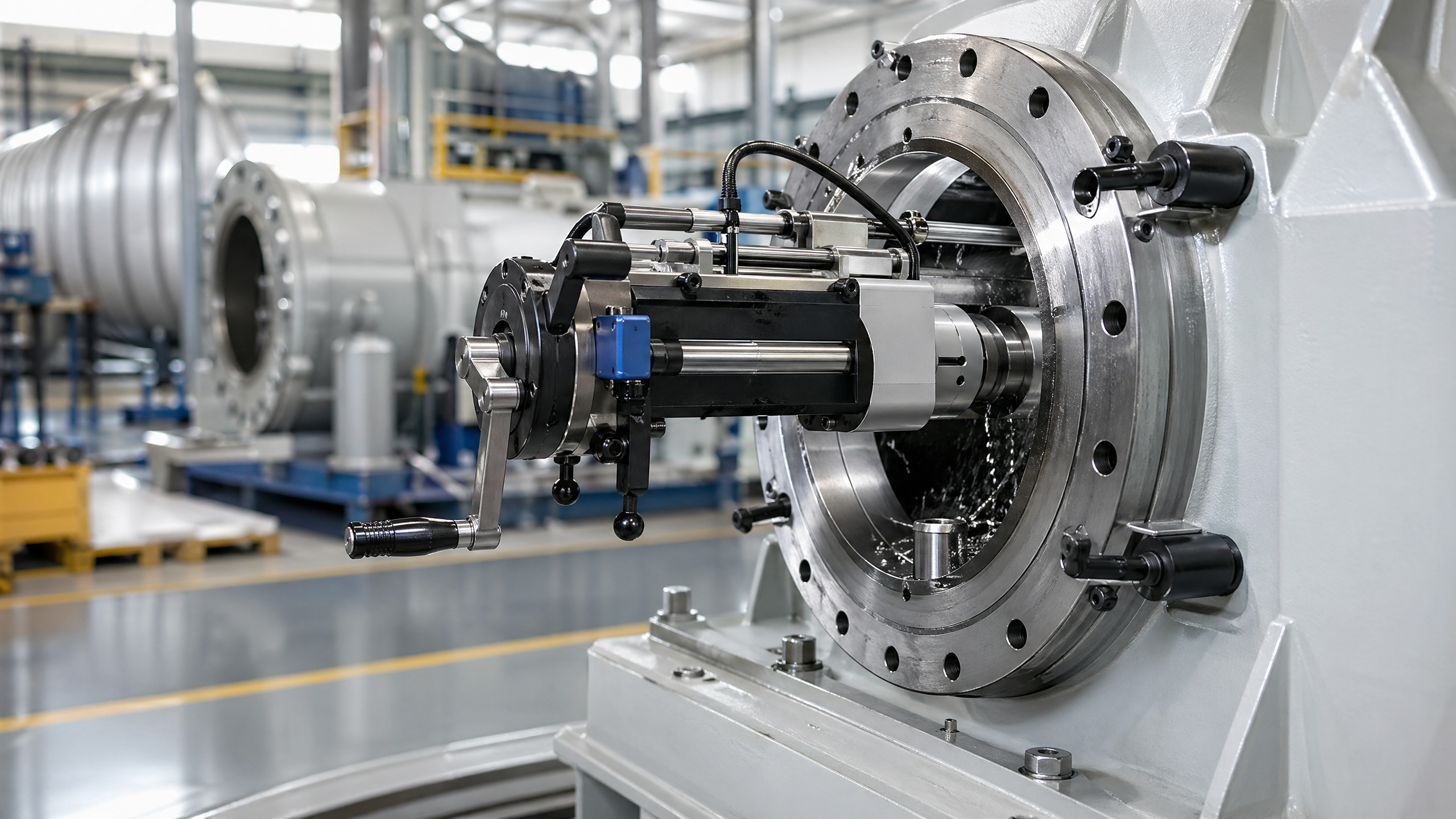
When a portable machine tool makes more sense, manufacturers can gain flexibility without sacrificing accuracy. For buyers, operators, and evaluators comparing a compact machine tool with traditional systems, the real question is how to balance high precision CNC manufacturing, quick setup CNC manufacturing, and cost-effective CNC manufacturing across aerospace, electronics, energy equipment, and automotive applications.
When does a portable machine tool outperform a fixed machine setup?
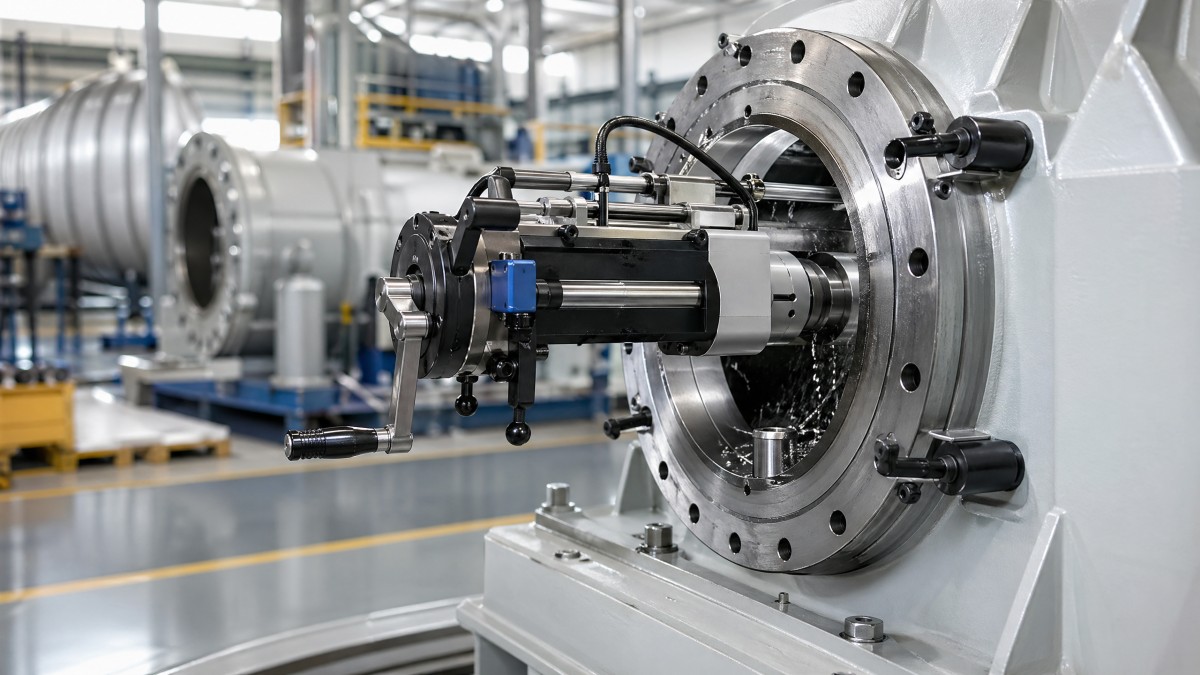
A portable machine tool is not a universal replacement for a full machining center, but in the right operating window it can be the more rational choice. This is especially true when the workpiece is large, difficult to transport, or already installed in a production line, plant system, vessel, or field assembly. In those situations, moving the machine to the part often reduces handling risk, downtime, and setup complexity.
For information researchers and commercial evaluators, the value proposition usually starts with three measurable factors: setup time, logistics burden, and acceptable tolerance range. If a repair, facing, boring, drilling, or flange machining task can be completed on site within 1–3 shifts, a portable machine tool may avoid the 2–7 day disruption associated with disassembly, transport, queuing, and reinstallation in a conventional shop.
For operators, the question is practical rather than theoretical. Can the machine be mounted safely? Can alignment be achieved with repeatable accuracy? Can the tool maintain stable cutting under limited space, variable surface condition, or elevated installation height? A well-selected compact machine tool can answer yes, but only when the application has been screened correctly.
In modern CNC manufacturing, portability is increasingly relevant because industrial assets are becoming larger, more integrated, and more expensive to stop. Energy equipment, aerospace structures, heavy automotive fixtures, and electronics production lines all create cases where in-place machining saves time and protects value, even if the cutting envelope is smaller than that of a stationary CNC machine.
Typical conditions where portability creates an advantage
- The part weighs too much or is too complex to move economically, such as turbine housings, large flanges, structural frames, or oversized fixtures.
- The asset is already installed and downtime is expensive, with shutdown windows limited to 8–24 hours or a single weekend maintenance period.
- The machining task is localized, such as line boring, surface milling, bolt-hole correction, or seal-face refurbishment, rather than full-part production.
- The factory needs quick setup CNC manufacturing support for prototype modification, field correction, or low-volume rework instead of continuous mass production.
Decision logic for different stakeholders
Procurement teams usually compare capital cost, transport cost, and expected utilization over 12–36 months. Operators focus on clamping, alignment, power supply, chip control, and safety access. Business evaluators look at return on downtime reduction, especially when one avoided shutdown can offset a large share of the equipment investment. Each perspective is valid, which is why machine selection should never be based on machine size alone.
A portable machine tool makes more sense when the machining requirement is specific, time-sensitive, and location-dependent. A fixed CNC machine makes more sense when the task demands long production runs, multi-operation automation, or very tight process integration. The best decision often comes from mapping the real production constraint first, then matching the machine architecture to that constraint.
Which applications are the strongest fit for portable machining?
Application fit is the main filter. Portable machining is strongest where on-site correction, maintenance, retrofit, or low-volume precision work matters more than full-cycle automated production. Across the broader CNC machine tool industry, this includes energy equipment maintenance, heavy fixture repair, aerospace assembly support, automotive line recovery, and selected electronics tooling adjustments where dimensional accuracy must be restored quickly.
In aerospace, portable machine tools are often considered when structures are too large or sensitive to move after assembly. In energy equipment, the logic is even clearer because turbines, pump bases, valve seats, and flange interfaces are frequently installed assets. In automotive manufacturing, portable solutions may support line-side rework, fixture restoration, or emergency recovery when waiting for off-line machining would interrupt throughput.
For electronics production, the use case is narrower but still relevant. A compact machine tool can help with precision support structures, custom brackets, enclosure modifications, and rapid engineering changes in pilot production. Here, quick setup CNC manufacturing matters because product iterations may occur in short cycles of 2–4 weeks, and support tooling must keep pace without creating bottlenecks.
The table below helps compare common scenarios by job type, tolerance expectations, and selection logic. It is useful for researchers narrowing initial options and for buyers preparing internal evaluation criteria.
The key takeaway is that portable machining is not defined by industry alone but by production reality. If the work is localized, the asset is hard to move, and the business cost of delay is high, a portable machine tool often becomes the cost-effective CNC manufacturing option even before labor savings are fully counted.
How to screen application fit in 4 questions
- Is the part installed, oversized, or difficult to transport without extra rigging or risk?
- Is the machining operation limited to a specific surface, bore, face, or hole pattern rather than a full production cycle?
- Can required accuracy be achieved with portable alignment and support methods in the actual site environment?
- Would off-line machining extend downtime beyond the acceptable service window?
Portable machine tool vs traditional CNC: what should buyers compare?
Many purchasing mistakes happen because teams compare only machine price and spindle capability. In reality, the right comparison includes total job flow: transport, setup, fixturing, labor, downtime, qualification, and repeat-use value. A compact machine tool may cost less upfront in some categories, but even where capital cost is similar, the real advantage can come from shorter interruption and fewer handling steps.
Traditional CNC machines remain the better option for batch production, unattended operation, and multi-axis complexity. They also provide stronger process stability when the same part family runs repeatedly over weeks or months. Portable machine tools compete best in single-job, low-volume, urgent, or installed-asset tasks where flexibility has direct economic value.
Operators and evaluators should also compare environmental dependency. Fixed CNC systems benefit from stable shop conditions, known power supply, permanent coolant management, and rigid foundations. Portable solutions may work in tighter spaces, at variable temperatures, or around existing equipment. That does not eliminate precision, but it does make job planning, alignment, and support conditions more important.
The comparison table below is designed for B2B selection discussions, especially when teams need to justify whether a portable machine tool or a shop-based CNC route better supports precision manufacturing goals.
This comparison shows why many organizations keep both options in their manufacturing strategy. Portable tools handle exceptions, field work, and installed equipment. Traditional CNC systems handle repeatability, automation, and scale. The decision is not either-or in every case; it is about where each method delivers the best operational return.
Three cost categories buyers often underestimate
- Removal and transport cost, including cranes, fixtures, packaging, and reinstallation labor.
- Lost production value during 2–5 extra days of waiting for shop scheduling, machining, and return logistics.
- Qualification delays caused by re-alignment or re-certification of an asset after it has been disturbed.
What technical and procurement checks matter before you buy?
A good portable machine tool purchase starts with job definition, not catalog reading. Procurement teams should collect at least 5 key inputs before comparing models: operation type, material range, required tolerance, available mounting space, and site power or drive conditions. Without these basics, buyers may over-specify spindle power or under-specify structural rigidity, both of which create cost or performance problems later.
For operators, alignment capability is often more important than maximum speed. A machine that advertises high cutting capacity but lacks practical adjustment for real-world surfaces can add hours of setup. In quick setup CNC manufacturing environments, shaving 60–90 minutes from alignment may matter more than gaining a small increase in theoretical cutting rate.
Business evaluators should also confirm service support and spare availability. Portable machining jobs are frequently urgent, so response quality matters. Ask how quickly wear parts, mounting accessories, or remote technical support can be arranged. In many industrial settings, the difference between a 24-hour response and a 5-day delay changes the entire business case.
The following table can be used as a practical pre-purchase checklist for selecting a compact machine tool in precision manufacturing and industrial repair scenarios.
For cross-border procurement, it is also sensible to ask about documentation, packing method, inspection records, and whether the supplier can support standard industrial communication around acceptance, maintenance, and spare parts. Even when no special certification is required, structured documentation improves internal approval and reduces disputes after delivery.
A practical 4-step procurement workflow
1. Define the real job envelope
Collect drawing dimensions, material type, access constraints, and required finish or tolerance. If possible, include site photos and a shutdown schedule. This first step often takes 1–3 days and prevents weeks of avoidable miscommunication.
2. Compare machine architecture
Do not compare only power or size. Review rigidity, mounting method, alignment adjustment, transport weight, and accessory completeness. A smaller machine with better fixturing may outperform a larger unit in field conditions.
3. Validate service conditions
Confirm delivery timing, operator training, consumables, wear parts, and remote support. For urgent industrial repair, support readiness is often as important as base machine specification.
4. Plan acceptance and first use
Set 3–6 acceptance points, such as spindle operation, alignment repeatability, mounting stability, surface result, and documentation completeness. This makes internal sign-off much smoother for technical and commercial teams.
Common concerns, risks, and buying mistakes to avoid
One common misconception is that a portable machine tool automatically means lower precision. In fact, the precision outcome depends on the application, support method, alignment process, and operator skill. A poor installation will create problems even with good hardware, while a well-matched portable solution can deliver reliable results for many repair and localized machining tasks.
Another mistake is treating portability as the same as convenience. Portable equipment is easier to move, but it still requires disciplined planning. Site safety, lifting method, chip containment, tool access, and measurement verification all need attention. For some jobs, preparation time of 2–6 hours is normal, and skipping that preparation usually costs more than it saves.
Buyers also underestimate the importance of accessories. Mounting kits, extension bars, alignment aids, support frames, and measurement tools can decide whether the machine works efficiently on site. A lower quotation that excludes critical accessories may not be cost-effective CNC manufacturing in real use.
The broader machine tool market is moving toward digital integration, smarter service, and more flexible production support. That trend matters here too. Suppliers who understand both precision manufacturing and field application constraints are usually better positioned to help users bridge the gap between workshop standards and site reality.
FAQ for researchers, operators, and buyers
How do I know whether portable machining can meet my tolerance requirement?
Start with the drawing or repair specification, then evaluate mounting rigidity, alignment method, cutting load, and inspection approach. If the job depends on stable reference points and controlled local geometry, portable machining may be suitable. If the job needs full multi-axis contouring across a complex part, a traditional CNC machine is usually the safer path.
What is a typical delivery and implementation timeline?
For standard configurations, buyers often review technical details and commercial terms within 1–2 weeks. Site preparation may take another several days depending on access and utilities. Custom setups, special mounting solutions, or export arrangements can extend the schedule, so early parameter confirmation is important.
Is a portable machine tool only for maintenance work?
No. Maintenance is a strong use case, but portable tools also support prototype modification, low-volume customization, fixture restoration, and installed-asset correction. In sectors that rely on smart manufacturing and flexible production, these tools help close the gap between design change and production continuity.
What should procurement ask suppliers before requesting a quotation?
Ask about machining scope, mounting requirements, transport weight, power options, accessory list, lead time, spare parts, operator training, and acceptance support. These points are more useful than asking only for maximum spindle speed or a headline price, because they directly affect successful field use.
Why choose us for portable machine tool evaluation and sourcing support?
We focus on the global CNC machining and precision manufacturing industry, which means our perspective is shaped by real production requirements across automotive, aerospace, energy equipment, and electronics manufacturing. We understand the difference between a machine that looks suitable on paper and one that fits the actual shutdown window, site condition, and commercial target of a project.
If you are comparing a portable machine tool with conventional shop-based machining, we can help structure the decision around application fit, technical feasibility, procurement risk, and timeline realism. This is especially useful for teams balancing high precision CNC manufacturing needs with quick setup CNC manufacturing and cost-effective CNC manufacturing goals.
You can contact us to discuss 6 practical topics: parameter confirmation, machining scope, accessory matching, delivery cycle, custom solution planning, and quotation comparison. If your team is still at the early research stage, sharing drawings, material information, site photos, or expected tolerance bands is often enough to begin a useful evaluation.
For urgent projects, we also recommend clarifying three points in the first conversation: whether the part can stay installed, what the available service window is, and what acceptance criteria will be used after machining. That makes it easier to identify whether a compact machine tool is the right answer and how fast a workable proposal can be prepared.
PREVIOUS ARTICLE
Recommended for You
 How to Choose a Space-Saving CNC Manufacturing SetupCNC Machining Technology Center
![]() What to Check Before Using a CNC Manufacturing WholesalerGlobal Machine Tool Trade Research Center
What to Check Before Using a CNC Manufacturing WholesalerGlobal Machine Tool Trade Research Center Why Precision CNC Manufacturing Fails Tolerance GoalsCNC Machining Technology Center
 Is CNC Manufacturing for Energy Equipment Worth the CostManufacturing Market Research Center
![]() How Low Maintenance CNC Manufacturing Cuts DowntimeMachine Tool Industry Editorial Team
How Low Maintenance CNC Manufacturing Cuts DowntimeMachine Tool Industry Editorial Team How to Compare One CNC Manufacturing Factory to AnotherManufacturing Market Research Center


Aris Katos
Future of Carbide Coatings
15+ years in precision manufacturing systems. Specialized in high-speed milling and aerospace grade alloy processing.
▶
How Cost-Effective CNC Manufacturing Avoids Hidden CostsCNC Machining Technology Center▶
When a Portable Machine Tool Makes More SenseCNC Machining Technology Center▶
How to Read Machine Tool Price Quotes Without MistakesCNC Machining Technology Center▶
CNC Industrial Setup Mistakes to Avoid FirstCNC Machining Technology Center▶
Which Metal Lathe Is Best for Repair WorkCNC Machining Technology Center
Mastering 5-Axis Workholding Strategies
Join our technical panel on Nov 15th to learn about reducing vibrations in thin-wall components.

Providing you with integrated sanding solutions
Before-sales and after-sales services
Comprehensive technical support