• Global CNC market projected to reach $128B by 2028 • New EU trade regulations for precision tooling components • Aerospace deman
NYSE: CNC +1.2%LME: STEEL -0.4%

Industrial Automation: Where Should You Start First
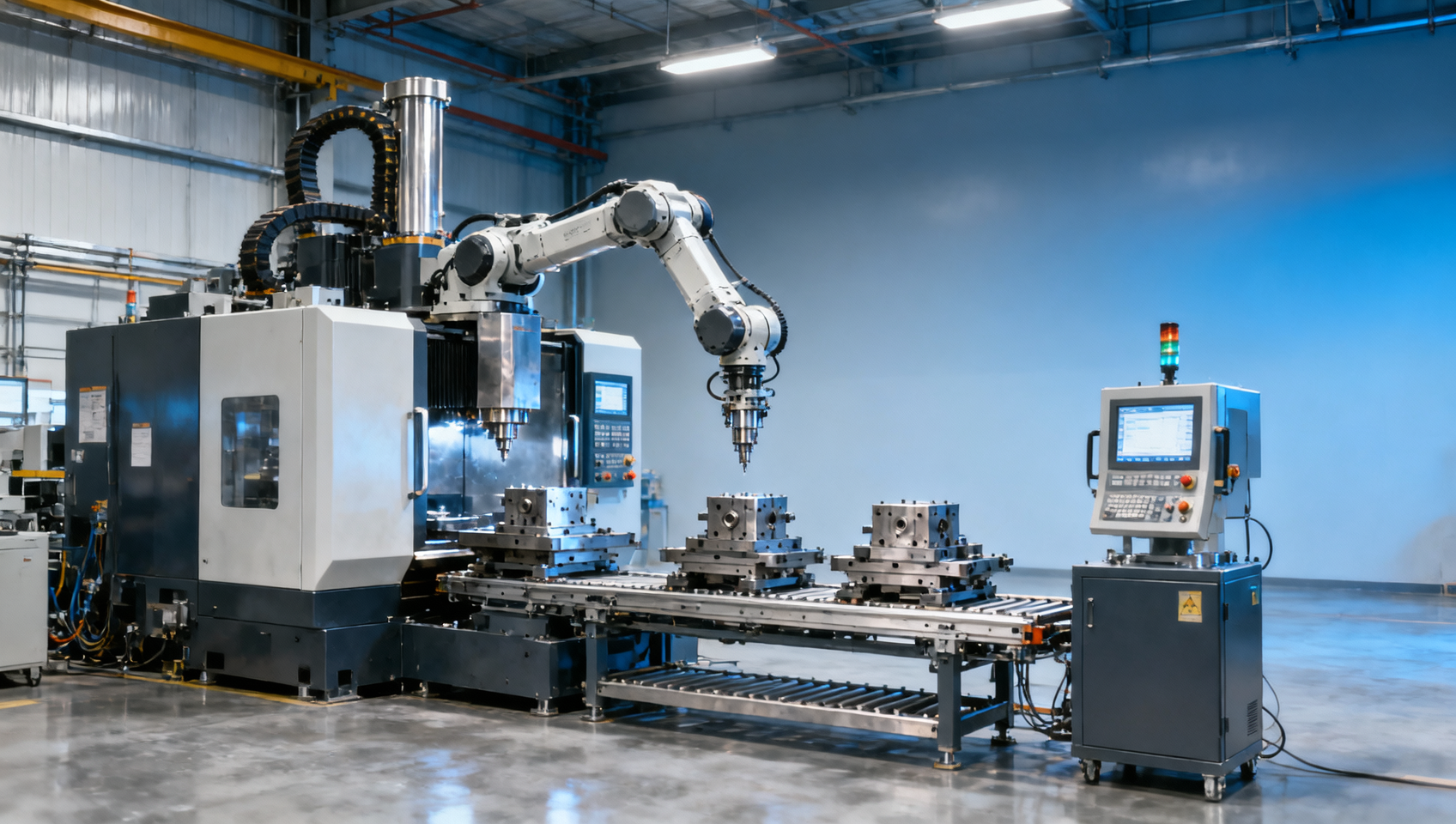
Industrial Automation is reshaping the Global Manufacturing landscape, but where should you begin? From industrial CNC systems and CNC milling to automated production lines and industrial robotics, understanding the right starting point is critical for improving the production process, reducing costs, and staying competitive in the Machine Tool Market and Manufacturing Industry.
For researchers, machine operators, buyers, and business evaluators, the first step is rarely buying the most advanced equipment. A better approach is to identify where automation can solve the most urgent production bottleneck with the lowest operational risk. In CNC machining and precision manufacturing, that often means starting with one process, one line, or one measurable problem rather than attempting a full factory-wide transformation at once.
Industrial automation today covers far more than robots. It includes CNC lathes, machining centers, tool management, workholding systems, material handling, inspection integration, MES connectivity, and predictive maintenance routines. The right starting point depends on cycle time stability, labor intensity, precision requirements, product mix, and return-on-investment targets over 12 to 36 months.
This article explains how manufacturers can define priorities, compare automation entry points, reduce implementation risk, and build a practical roadmap for CNC-based production environments. Whether your focus is cost control, production efficiency, export competitiveness, or capacity expansion, the goal is the same: start where automation delivers visible, repeatable value.
Understand What Problem You Are Trying to Fix First
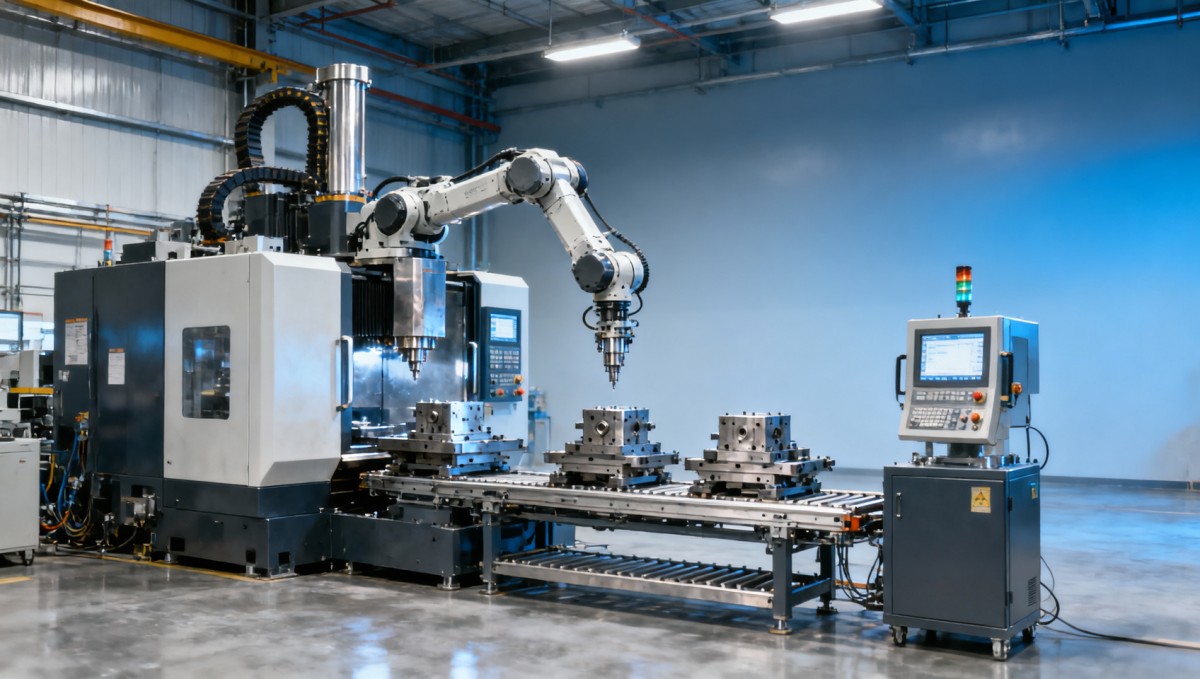
Many automation projects fail because companies start with technology instead of process diagnosis. Before selecting a CNC automation solution, evaluate the current production process across 4 dimensions: throughput, quality consistency, labor dependency, and downtime. If one machining cell creates 25% to 40% of your line delays, that cell is a better starting point than a newer but less critical area.
In the machine tool industry, the most common pain points are not identical. A supplier producing small-batch aerospace parts may struggle with setup time and precision verification, while an automotive component plant may be limited by takt time, tool wear, and loading efficiency. The best starting point for industrial automation is the process where variation is high and improvement can be clearly measured within 3 to 6 months.
For operators, one useful test is to track manual interventions per shift. If a CNC line requires 15 to 30 manual touches per hour for loading, clamping, inspection, or part transfer, it is a strong candidate for automation. For procurement teams, the more useful benchmark is total cost per qualified part, including scrap, labor hours, fixture changeover, and machine idle time.
Another critical factor is product repeatability. High-volume, stable parts are easier to automate than highly variable custom jobs. However, modern flexible automation can also support mixed production if fixture design, tool presetting, and CNC program management are standardized. In many factories, standardization should begin 2 to 8 weeks before hardware investment.
The 4 questions to ask before investing
- Which process has the highest downtime, scrap rate, or labor intensity?
- Can the process be standardized in fixtures, tooling, and CNC programming within 30 to 60 days?
- Is demand stable enough to justify equipment utilization above 65% to 75%?
- Can success be measured using 3 to 5 KPIs such as cycle time, OEE, tool life, and first-pass yield?
If the answers are unclear, the first step is not machine purchase but process mapping. That means documenting current cycle times, average setup duration, rejection causes, and maintenance frequency. In practical terms, one week of reliable shop-floor data often prevents months of wrong investment decisions.
Choose the Right Entry Point: CNC Cell, Robot, or Full Line
Not every manufacturer should begin with a fully automated production line. In many CNC machining environments, the most effective first step is a semi-automated cell built around one machine tool family. A CNC turning cell with automatic loading, for example, is often easier to deploy than a multi-station robotic line because it reduces integration complexity and shortens commissioning time to roughly 4 to 10 weeks.
A common mistake is assuming industrial robots automatically deliver the fastest return. Robots create strong value where part handling is repetitive, cycle times are stable, and safety risks are present. However, if upstream fixtures are unstable or downstream inspection is inconsistent, the robot may only move the bottleneck rather than remove it. In those cases, improving fixturing and tool path consistency may generate better results first.
For procurement and business evaluation teams, the selection logic should compare process complexity, investment size, flexibility, and training needs. A staged path usually works best: first standardize the CNC process, then automate loading and unloading, then connect data and quality monitoring, and only after that consider line-level orchestration.
The table below shows a practical comparison of common industrial automation starting points in precision manufacturing environments.
The key takeaway is simple: start with the level of automation your process can actually support. For many manufacturers, an automated CNC cell delivers a better balance of cost, flexibility, and payback than jumping directly into a full smart factory architecture.
Selection priorities for buyers
When budget discipline matters
- Prioritize machine utilization improvement before adding multiple new stations.
- Check whether existing CNC systems can be retrofitted with loaders, sensors, or monitoring modules.
- Compare expected payback periods, with many practical projects targeting 12 to 24 months.
Evaluate Technical Readiness Before You Automate
Technical readiness is often more important than automation ambition. A machining process with unstable cutting conditions, frequent manual offset changes, or inconsistent fixturing is not truly automation-ready. In CNC milling, turning, and multi-axis machining, repeatability comes first. If your tolerance target is ±0.01 mm but actual variance changes across shifts, automation will expose the problem faster rather than solve it.
Readiness assessment should cover machine condition, tooling strategy, workholding, material flow, and quality control. For example, if tool life fluctuates by 20% to 30% because of poor coolant delivery or inconsistent material batches, cycle time planning becomes unreliable. Similarly, if fixture changeover takes 25 minutes for a 3-minute cycle, the production economics of automation will be weak.
Operators and engineers should also review digital readiness. Does the machine output usable production data? Can alarm logs be captured? Are programs version-controlled? Even a basic monitoring setup for spindle load, cycle count, and downtime causes can help identify whether a process is mature enough for robot loading or unmanned shifts.
The checklist below can help teams decide whether a CNC process is ready for automation deployment.
If two or more readiness items are weak, improve those fundamentals before expanding automation scope. This often saves more money than accelerating a project that later requires frequent manual correction, reprogramming, or fixture redesign.
Common readiness gaps in precision manufacturing
- Machine maintenance is reactive, with no weekly inspection plan for spindle, lubrication, and backlash.
- Tool data is stored manually, causing offset mistakes and inconsistent replacement timing.
- Part families are mixed in one cell without standardized clamping or loading logic.
- Inspection results are disconnected from machine adjustments, delaying corrective action.
Build an Implementation Roadmap That Limits Risk
A successful industrial automation project usually follows a phased rollout, not a single installation event. In CNC and machine tool operations, the most reliable plan has 3 stages: process verification, pilot deployment, and scaling. This structure reduces disruption to production while allowing engineering teams to validate cycle time, part quality, and operator interaction under real conditions.
The pilot stage should be narrow enough to control risk but broad enough to prove value. One machine, one robot, or one automated loading cell is often sufficient. During the first 30 to 90 days, track key metrics such as uptime, first-pass yield, manual intervention count, and output per shift. If those indicators improve consistently, scale to adjacent machines or similar part families.
For procurement teams, implementation planning should include not only equipment cost but also integration labor, operator training, fixture revisions, spare parts strategy, and after-sales response time. In many cases, these surrounding costs account for 15% to 30% of total project value. Ignoring them leads to unrealistic ROI assumptions.
The roadmap below outlines a practical deployment sequence for manufacturers entering industrial automation through CNC-based production.
Recommended 5-step rollout plan
- Baseline the process: collect 2 to 4 weeks of data on cycle time, scrap, downtime, and labor usage.
- Standardize the machining cell: align tooling, fixtures, CNC programs, and inspection method.
- Deploy a pilot solution: choose one high-impact process and define acceptance criteria before installation.
- Train operators and maintenance staff: prepare shift-level troubleshooting and daily inspection routines.
- Scale with evidence: expand only after 8 to 12 weeks of stable performance and documented savings.
Business evaluators should also set a decision gate at each stage. If the pilot fails to achieve predefined targets such as a 10% cycle reduction, a measurable scrap decrease, or lower labor dependency, review process assumptions before approving wider rollout. This prevents overexpansion based on enthusiasm instead of evidence.
A disciplined roadmap is especially important in sectors such as automotive, aerospace, electronics, and energy equipment, where traceability, consistency, and delivery reliability matter as much as raw machine speed.
What Buyers and Decision-Makers Should Compare Before Purchase
When automation decisions move from engineering discussion to purchasing action, comparison criteria need to be practical and measurable. The right solution is not simply the one with the most features. In CNC machining and automated production, buyers should compare compatibility, service response, integration scope, training requirements, and lifecycle cost over at least 3 to 5 years.
One common issue in the machine tool market is underestimating interface compatibility. A highly capable robot or automation module may still require additional PLC work, fixture redesign, or CNC controller adaptation. These hidden requirements can extend delivery by 2 to 6 weeks and increase commissioning cost. That is why technical alignment should happen before commercial negotiation is finalized.
After-sales support matters just as much as hardware. For users and operators, fast troubleshooting and spare parts availability can determine whether automation improves output or creates a new source of downtime. Buyers should ask for service scope, remote support capability, recommended spare parts, and expected response windows such as 24 hours, 48 hours, or next-business-day support.
The following table provides a useful framework for procurement comparison in industrial automation projects.
The most effective purchasing decisions balance immediate production goals with long-term scalability. If your factory plans to add MES, vision inspection, or multi-machine coordination within 12 to 24 months, choose automation platforms that can expand without replacing the original investment.
FAQ for industrial automation beginners
How do I know if automation is worth it for a small or medium-sized factory?
Start by measuring one high-volume or labor-heavy process. If the same part runs daily, changeovers are limited, and labor or downtime costs are rising, even a single automated CNC cell can be justified. Many SMEs begin with one cell and evaluate results over 6 to 12 months before expanding.
Should we automate loading first or inspection first?
If machines are idle because operators cannot load parts fast enough, loading automation usually creates faster returns. If scrap and rework are the bigger cost, inspection integration may be the better first move. The decision should be based on the largest measurable loss in the current production process.
How long does implementation usually take?
For a basic CNC automation cell, planning and integration often take 4 to 10 weeks, depending on machine compatibility, fixture preparation, and programming needs. Larger flexible production lines or multi-station systems can require several months, especially when software integration and process validation are extensive.
What is the most common mistake in first-time automation projects?
The biggest mistake is automating an unstable process. If tool life, fixture accuracy, or cycle consistency are not under control, the project may become expensive troubleshooting rather than real production improvement. Stable fundamentals always come before complex automation layers.
Industrial automation should begin with a production problem that is visible, measurable, and financially relevant. In the CNC machine tool industry, that often means targeting a process with repeatable demand, high manual dependency, or persistent bottlenecks rather than pursuing a full transformation too early.
The most practical path is to assess readiness, choose the right entry point, and deploy in phases. With the right combination of CNC systems, automated handling, tooling discipline, and data visibility, manufacturers can improve output, reduce cost per part, and strengthen competitiveness across the global manufacturing industry.
If you are evaluating industrial automation for CNC machining, precision manufacturing, or automated production lines, now is the right time to review your current process and define a realistic roadmap. Contact us to discuss your application, request a tailored solution, or learn more about practical automation strategies for your factory.
PREVIOUS ARTICLE
NEXT ARTICLE
Recommended for You
![]() China Releases First Eastern Sea Seabed Elemental MapGlobal Machine Tool Trade Research Center
China Releases First Eastern Sea Seabed Elemental MapGlobal Machine Tool Trade Research Center![]() AIMM National Standard Advances for CNC Smart Factory CertificationManufacturing Policy Research Center
AIMM National Standard Advances for CNC Smart Factory CertificationManufacturing Policy Research Center![]() eVTOL Mass Production Drives CNC Export GrowthGlobal Machine Tool Trade Research Center
eVTOL Mass Production Drives CNC Export GrowthGlobal Machine Tool Trade Research Center![]() China Launches World's Largest Agri-Meteorological Observation NetworkManufacturing Market Research Center
China Launches World's Largest Agri-Meteorological Observation NetworkManufacturing Market Research Center![]() Robotics ToB Scaling Hits Data Bottleneck in CNC AI InspectionCNC Machining Technology Center
Robotics ToB Scaling Hits Data Bottleneck in CNC AI InspectionCNC Machining Technology Center![]() SAMR to Complete 1,800+ Standards Revisions in 2026Manufacturing Policy Research Center
SAMR to Complete 1,800+ Standards Revisions in 2026Manufacturing Policy Research Center


Aris Katos
Future of Carbide Coatings
15+ years in precision manufacturing systems. Specialized in high-speed milling and aerospace grade alloy processing.
▶
CNC Industrial Setup Mistakes to Avoid FirstCNC Machining Technology Center▶
Which Metal Lathe Is Best for Repair WorkCNC Machining Technology Center▶
Vertical Lathe Limits You Should Know Before BuyingCNC Machining Technology Center▶
Industrial Automation: Where Should You Start FirstCNC Machining Technology Center▶
What Changes the Price of an Automated Production Line Quote?CNC Machining Technology Center
Mastering 5-Axis Workholding Strategies
Join our technical panel on Nov 15th to learn about reducing vibrations in thin-wall components.

Providing you with integrated sanding solutions
Before-sales and after-sales services
Comprehensive technical support