• Global CNC market projected to reach $128B by 2028 • New EU trade regulations for precision tooling components • Aerospace deman
NYSE: CNC +1.2%LME: STEEL -0.4%

Vertical Lathe Limits You Should Know Before Buying
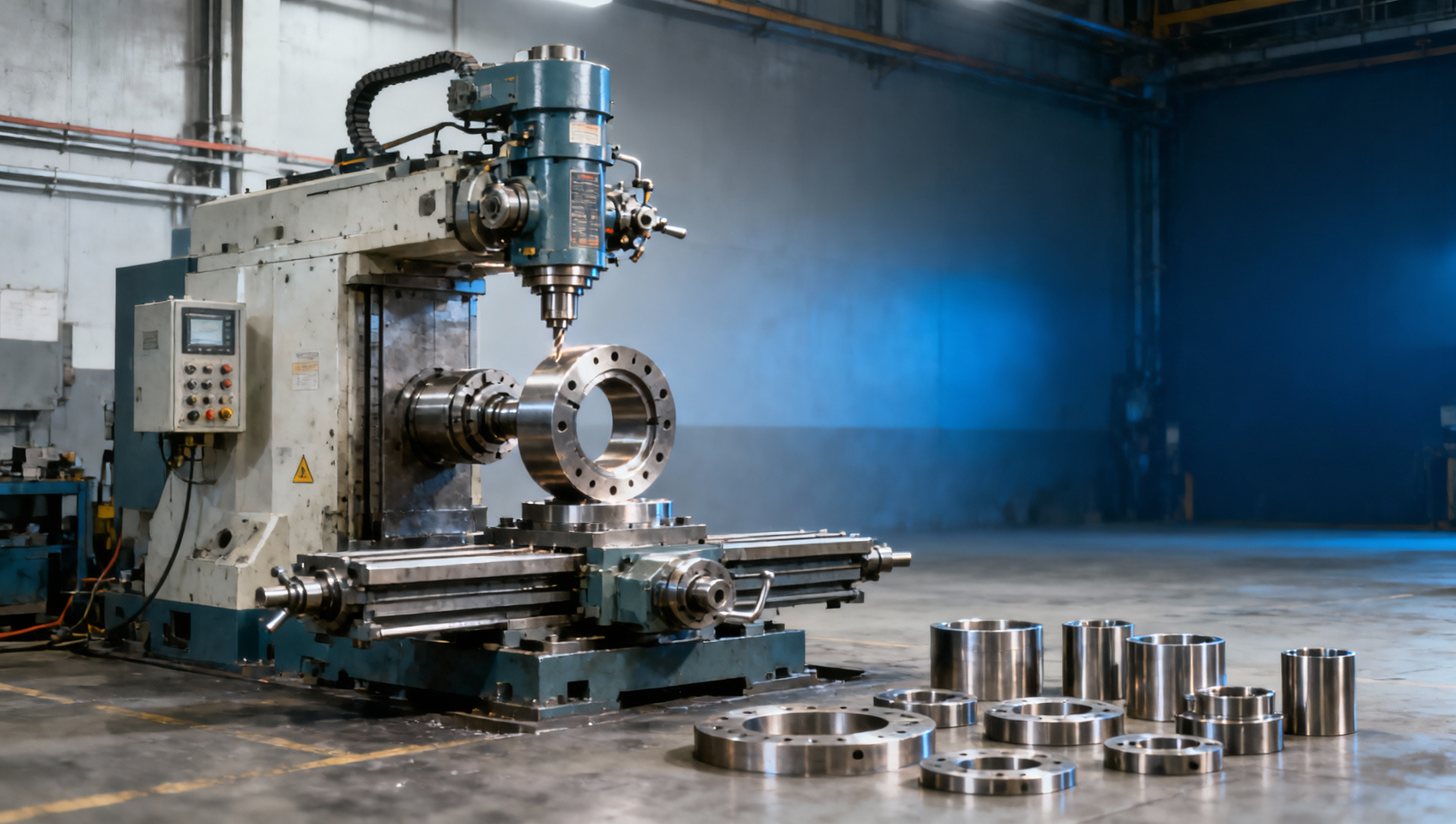
Before investing in a vertical lathe, it is essential to understand its structural and production limits. From metal machining capacity and CNC cutting accuracy to automated production compatibility, these factors directly affect efficiency, cost, and long-term value. This article explores the key constraints buyers, operators, and sourcing teams should evaluate when selecting an industrial lathe for modern CNC industrial applications.
What are the real limits of a vertical lathe in production planning?
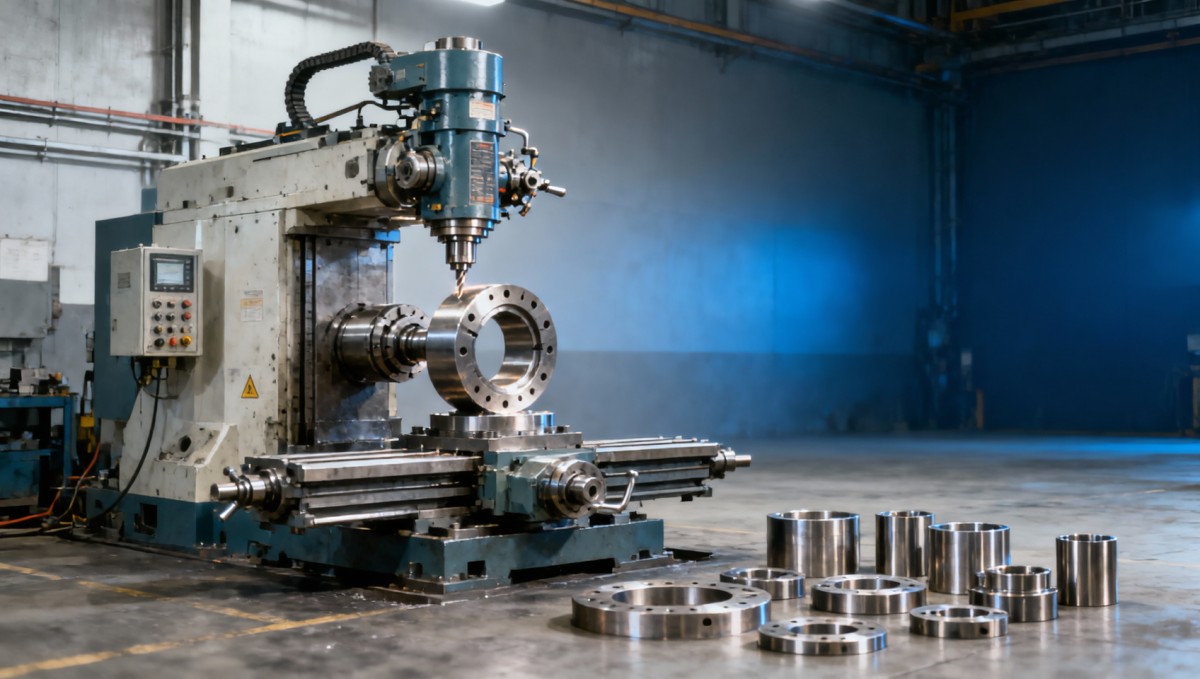
A vertical lathe is often selected for large-diameter workpieces, heavy discs, rings, flanges, valve bodies, and short, bulky parts that are difficult to hold on a horizontal machine. Its vertical spindle arrangement helps gravity stabilize the workpiece, which is a major advantage in sectors such as energy equipment, automotive components, and general precision manufacturing. However, this structural benefit does not mean the machine is suitable for every CNC turning task.
The first limit is part geometry. A vertical lathe performs best when the diameter is large relative to the height. Once parts become long, slender, or shaft-like, machine rigidity, clamping security, and vibration control may no longer support stable cutting. In practical buying decisions, many teams divide workpieces into 3 broad groups: disc-type parts, ring-type parts, and tall cylindrical parts. Only the first 2 categories are usually ideal for a vertical turning platform.
The second limit is not only machine size, but usable machining envelope. Buyers often focus on table diameter, yet the more important numbers include maximum turning diameter, maximum workpiece height, maximum swing, and allowable load on the table. A machine with a 1,250 mm table does not automatically mean every 1,250 mm part can be cut safely. Tool clearance, fixture height, and chuck design can reduce effective capacity by a meaningful margin.
The third limit involves process integration. A standalone vertical lathe may handle rough turning very well, but some factories expect one machine to complete turning, drilling, boring, milling, and probing in a single cycle. That expectation can exceed the intended scope of many standard machines. For modern CNC manufacturing lines, the gap between a basic vertical turning machine and a multifunction turning center can strongly affect labor planning, takt time, and total cost per part.
Three capacity questions every buyer should verify
Before requesting a quotation, procurement teams should confirm 3 core dimensions: part diameter range, part height range, and unit weight range. In many industrial projects, the operating band matters more than the maximum value. If your production mix is typically 400–900 mm in diameter and 150–500 mm in height, a machine optimized for that range will usually outperform an oversized unit that only looks stronger on paper.
- Check the normal workpiece load, not just the peak table load, because continuous heavy-duty operation over 2–3 shifts creates different wear conditions.
- Review the real clamping stack-up, including fixture plate, soft jaws, and special tooling, since these can reduce the usable Z-axis space.
- Ask whether the machine is designed for roughing, semi-finishing, finishing, or mixed cycles, because each duty profile places different demands on rigidity and spindle torque.
For information researchers and business evaluators, this distinction is critical. A vertical lathe should be judged by production fit, not by isolated brochure values. In B2B sourcing, the wrong envelope definition can lead to fixture redesign, repeated setup changes, and underused machine capacity within the first 6–12 months of operation.
Which technical limits affect machining accuracy, stability, and cycle time?
In CNC turning, buyers often ask about accuracy first, but machining accuracy is the result of a system, not a single specification. On a vertical lathe, dimensional repeatability depends on spindle rigidity, thermal behavior, guideway condition, tooling setup, workholding quality, and programming strategy. Even if a supplier lists tight positioning values, actual performance can vary when cutting cast iron, alloy steel, stainless steel, or hard-facing materials under different load conditions.
Cycle time has its own limits. A larger machine may seem more productive, yet a heavier table and stronger spindle do not always produce faster output. Acceleration and deceleration, turret indexing time, tool change frequency, and probing routines all affect the final part takt. In production cells operating 16–24 hours per day, a small difference of 20–40 seconds per cycle can become a major annual capacity issue.
Operators should also pay attention to chatter control and tool access. A vertical lathe can be excellent for interrupted cuts on large castings, but once a part includes deep cavities, narrow shoulders, or complex undercuts, tool overhang may increase and cutting stability may drop. That is often where a machine reaches its process limit before it reaches its size limit.
Another often overlooked point is thermal stability over long shifts. In automated production environments, accuracy after 30 minutes is less important than accuracy after 6–8 hours of continuous machining. If the machine structure, coolant management, and spindle temperature control are not matched to the job, the process window can narrow, especially in finishing operations with tight flatness, concentricity, or surface finish requirements.
Parameter ranges that deserve closer review
The table below highlights common technical checkpoints used in vertical lathe evaluation. These are not universal fixed values, but practical areas buyers should compare when reviewing CNC machine tool options for industrial turning lines.
The table shows why no single metric is enough. For example, a large turning diameter is useful only if the machine also provides sufficient table load and enough vertical travel for the actual fixture package. In procurement review, these parameters should be read together with material type, chip load targets, and expected annual production volume.
How users can reduce process risk
Operators and production engineers can protect accuracy by using a 4-step review method: verify fixture rigidity, shorten tool overhang, optimize roughing-to-finishing allowance, and track dimensional drift over multi-hour runs. This is particularly important when machining large valve components, bearing rings, and power generation parts, where the machine may run one family of parts repeatedly for several days.
For procurement teams, it is equally useful to ask whether acceptance testing will include actual cutting trials, not only no-load movement inspection. A practical trial on representative materials within a 1–2 day test window often reveals far more about spindle behavior, chip evacuation, and CNC response than a static specification sheet.
Vertical lathe vs other machine options: when is it the wrong choice?
A vertical lathe is not always the best answer, even in heavy-duty machining. In some applications, a horizontal lathe, a turn-mill center, a boring mill, or a machining center may offer better flexibility. The wrong machine choice usually appears when buyers try to force one platform to cover too many operations, especially in mixed production environments with both shaft parts and disc parts.
For example, if your factory processes long rotor parts, stepped shafts, and tube-like components above 3–5 times the diameter-to-length ratio, a horizontal machine typically handles support and concentricity more effectively. By contrast, if the workload is dominated by heavy flanges, wheel hubs, brake discs, slewing rings, and pump housings, the vertical lathe often offers more stable loading and easier operator access.
The choice also depends on automation strategy. A simple vertical turning machine can fit manual or semi-automatic production, but if your future plan includes robotic loading, palletized fixture exchange, automatic gauging, and MES connectivity, some machine families are easier to integrate than others. A machine that is economical today may become a bottleneck after 18–24 months if digital expansion is not considered early.
From a business assessment perspective, the wrong choice is not just a technical mismatch. It can increase floor space use, fixture cost, operator training time, spare parts complexity, and work-in-process inventory. That is why machine comparison should be tied to process flow and not limited to purchase price alone.
Comparison table for common machining choices
The following comparison helps buyers evaluate where a vertical lathe fits and where alternative machine tools may perform better in a CNC manufacturing environment.
This comparison makes one point clear: the best machine is the one aligned with the dominant part family and future production path. In mixed manufacturing operations, some companies intentionally separate rough turning and secondary machining into 2 linked stages. That approach may reduce the need for an oversized all-in-one solution and improve line balance.
A practical decision checklist
- Map your top 5–10 part numbers by annual volume and revenue contribution before comparing machine categories.
- Estimate whether 70% or more of the workload is truly vertical-lathe friendly, rather than assuming one current project represents future demand.
- Review secondary operations such as drilling, tapping, or contour milling to decide whether a standard vertical lathe is enough.
- Check floor handling conditions, including crane capacity, loading method, and chip disposal, because these factors influence real operating efficiency.
This checklist is especially relevant for sourcing teams managing cross-border equipment evaluation, where machine tool comparisons often involve suppliers from China, Germany, Japan, and South Korea. Technical fit should come first, followed by service responsiveness, spare parts access, and integration support.
What should procurement teams evaluate beyond the machine itself?
A vertical lathe purchase is rarely just a machine purchase. In industrial projects, the outcome depends on the complete package: machine tool configuration, controller compatibility, fixture strategy, installation conditions, training plan, and after-sales support. Procurement failures often occur when teams compare only quotation totals without matching the quotation scope line by line.
Lead time is one of the first practical limits. For standard configurations, production and delivery may fall within 8–16 weeks, while larger custom machines or automation-ready solutions can require 4–8 months depending on layout, control options, and export arrangements. If your project schedule is tight, missing this point can delay line commissioning and customer delivery commitments.
Another issue is service depth. A machine may be technically suitable, yet still create risk if spare parts, remote diagnostics, software support, or field service response are unclear. For factories operating 2 shifts or 3 shifts, downtime cost can quickly exceed initial purchase savings. That is why business evaluators should review support structure in the same meeting where they review machine parameters.
Compliance and documentation also matter in international machine tool sourcing. While exact requirements vary by market, buyers often need electrical documentation, safety information, operating manuals, installation drawings, and acceptance criteria. For multinational manufacturing groups, a missing document can hold up internal approval even when the machine itself is ready.
Five procurement points that reduce hidden cost
- Confirm the exact CNC control, servo system, and interface options if the machine must connect with plant-level automation or data systems.
- Define the acceptance process in 2 stages: factory acceptance before shipment and site acceptance after installation.
- Review the training scope for operators, programmers, and maintenance staff, because these are 3 different user groups with different needs.
- Ask for the recommended spare parts list for the first 12 months of operation, especially for sensors, wear parts, and key electrical items.
- Check whether special fixtures, chip conveyors, coolant systems, and probing functions are included or quoted separately.
When buyers treat these items as part of the total solution, the purchase becomes easier to evaluate internally. This is particularly important in general industry applications, where one vertical lathe may need to serve energy, transportation, pump, valve, and engineering machinery orders within the same plant.
Implementation flow for smoother commissioning
A reliable project usually follows 4 implementation steps: technical confirmation, pre-shipment review, on-site installation, and process handover. In many factories, installation itself may take 3–7 days, while leveling, electrical hookup, trial cutting, and operator training can extend the full ramp-up period to 2–4 weeks depending on machine complexity and part readiness.
If automation is involved, add extra time for signal debugging, robot path teaching, and safety interlock validation. That small planning detail can prevent the common problem of receiving a CNC machine tool on time but missing the target SOP date because the surrounding process was not prepared.
FAQ: common buying mistakes, limits, and next-step questions
The questions below reflect common search behavior from researchers, machine users, and sourcing managers comparing industrial lathe solutions. They can help narrow your short list before contacting suppliers for detailed technical review.
How do I know if a vertical lathe is too large or too small for my factory?
Start with your actual part mix over the last 12 months and the projected mix for the next 12–24 months. If most jobs cluster in one stable size band, choose a machine optimized for that range rather than a model selected only for occasional oversized parts. An oversized vertical lathe can increase floor cost, energy use, setup time, and tooling reach issues, while an undersized machine limits future business opportunities.
Can one vertical lathe replace several different machine tools?
Sometimes, but not always. A multifunction configuration may combine turning with drilling, boring, or limited milling, which can reduce handling and improve setup accuracy. However, if your shop runs a mix of long shafts, prismatic parts, and high-variety short batches, replacing multiple machine types with one vertical lathe can reduce flexibility and create a scheduling bottleneck.
What are the most common mistakes in vertical lathe procurement?
Three mistakes appear frequently. First, buyers compare table diameter without checking usable cutting space. Second, they underestimate fixture and automation requirements. Third, they evaluate price before service readiness. In industrial CNC applications, these mistakes often show up within the first 3–6 months as unstable machining, delayed commissioning, or expensive retrofits.
What delivery and startup timeline should I expect?
For standard vertical lathe projects, quotation clarification and technical confirmation may take 1–3 weeks, manufacturing and shipping often take several additional weeks, and on-site startup may require 2–4 weeks including installation, leveling, test cutting, and operator training. More complex CNC industrial systems with automation, probing, or special fixtures need longer planning and coordination windows.
Why choose us for vertical lathe evaluation and sourcing support?
In the global CNC machining and precision manufacturing sector, the biggest challenge is rarely access to machine suppliers. The bigger challenge is making a technically sound and commercially practical decision across many variables: machining range, production target, automation path, delivery schedule, and long-term service support. That is where informed industry guidance creates real value.
Our platform focuses on CNC machine tools, precision manufacturing, and international equipment trade. We help industrial buyers and technical teams compare vertical lathe options with a clearer view of machine limits, application fit, and project risk. This is especially useful for companies serving automotive, aerospace-supporting supply chains, energy equipment, electronics production, and broader general manufacturing markets.
You can contact us for practical support on key decision points, including parameter confirmation, workpiece range assessment, machine configuration comparison, delivery cycle discussion, automation compatibility review, and documentation requirements for cross-border procurement. If needed, we can also help structure supplier comparison around production objectives rather than isolated brochure claims.
If you are now evaluating a vertical lathe, send your part drawings, size range, material type, target output, and any known accuracy or fixture requirements. With those 5 inputs, it becomes much easier to discuss suitable machine categories, identify likely limits early, and move toward a more confident quotation and sourcing decision.
PREVIOUS ARTICLE
NEXT ARTICLE
Recommended for You
![]() China Releases First Eastern Sea Seabed Elemental MapGlobal Machine Tool Trade Research Center
China Releases First Eastern Sea Seabed Elemental MapGlobal Machine Tool Trade Research Center![]() AIMM National Standard Advances for CNC Smart Factory CertificationManufacturing Policy Research Center
AIMM National Standard Advances for CNC Smart Factory CertificationManufacturing Policy Research Center![]() eVTOL Mass Production Drives CNC Export GrowthGlobal Machine Tool Trade Research Center
eVTOL Mass Production Drives CNC Export GrowthGlobal Machine Tool Trade Research Center![]() China Launches World's Largest Agri-Meteorological Observation NetworkManufacturing Market Research Center
China Launches World's Largest Agri-Meteorological Observation NetworkManufacturing Market Research Center![]() Robotics ToB Scaling Hits Data Bottleneck in CNC AI InspectionCNC Machining Technology Center
Robotics ToB Scaling Hits Data Bottleneck in CNC AI InspectionCNC Machining Technology Center![]() SAMR to Complete 1,800+ Standards Revisions in 2026Manufacturing Policy Research Center
SAMR to Complete 1,800+ Standards Revisions in 2026Manufacturing Policy Research Center


Aris Katos
Future of Carbide Coatings
15+ years in precision manufacturing systems. Specialized in high-speed milling and aerospace grade alloy processing.
▶
CNC Industrial Setup Mistakes to Avoid FirstCNC Machining Technology Center▶
Which Metal Lathe Is Best for Repair WorkCNC Machining Technology Center▶
Vertical Lathe Limits You Should Know Before BuyingCNC Machining Technology Center▶
Industrial Automation: Where Should You Start FirstCNC Machining Technology Center▶
What Changes the Price of an Automated Production Line Quote?CNC Machining Technology Center
Mastering 5-Axis Workholding Strategies
Join our technical panel on Nov 15th to learn about reducing vibrations in thin-wall components.

Providing you with integrated sanding solutions
Before-sales and after-sales services
Comprehensive technical support