• Global CNC market projected to reach $128B by 2028 • New EU trade regulations for precision tooling components • Aerospace deman
NYSE: CNC +1.2%LME: STEEL -0.4%

Metal machining costs that are easy to miss during quoting
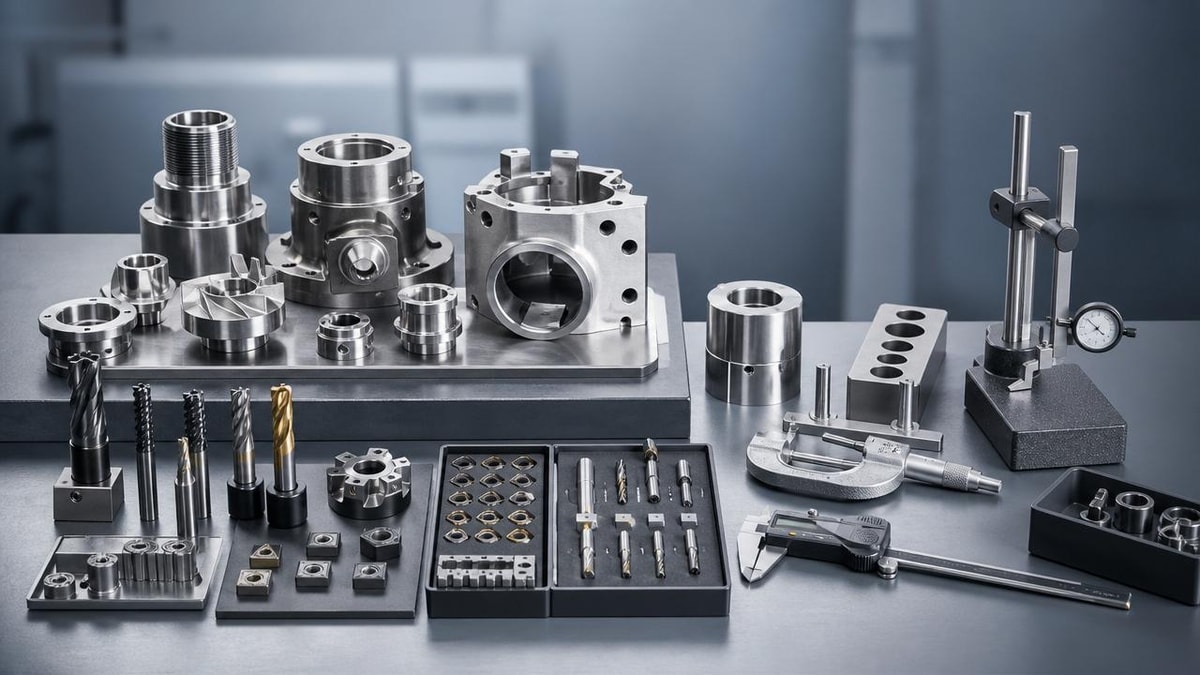
Quoting metal machining work often focuses on cycle time and material price, but many hidden costs can quickly erode margins or distort supplier comparisons. For business evaluators, understanding these easy-to-miss factors—from tooling wear and setup complexity to quality control, scrap risk, and logistics—is essential for making more accurate, profitable sourcing and investment decisions.
Why do metal machining quotes often look simple while the real cost structure is not?
At first glance, a metal machining quote can appear straightforward: raw material, machine hours, labor, and perhaps surface treatment. In practice, however, quoting for metal machining is influenced by many indirect variables that are difficult to see in a spreadsheet summary. This is especially true in CNC turning, milling, multi-axis machining, and precision part production where small technical details can create major commercial consequences.
For business evaluators, the main risk is not simply overpaying. The larger risk is comparing suppliers on incomplete assumptions. One supplier may include setup validation, in-process inspection, and packaging protection, while another may exclude these items and appear cheaper. The result is a distorted comparison that can affect sourcing decisions, supplier performance reviews, and total project profitability.
Metal machining costs are also highly sensitive to volume, tolerance, material behavior, and process stability. A quote for 50 prototype parts can have a very different cost logic than a quote for 10,000 production parts. Even when the drawing is the same, fixture design, scrap exposure, machine utilization, and quality assurance effort may change dramatically.
Which hidden metal machining costs are most commonly missed during quoting?
Several cost elements are repeatedly underestimated in metal machining projects because they sit between engineering and commercial responsibility. They may not be obvious in the first quote review, but they directly affect gross margin and supplier reliability.
- Tooling consumption: Cutting tools, inserts, drills, reamers, and special tools wear faster when materials are hard, abrasive, or inconsistent. Stainless steel, titanium alloys, hardened steel, and cast materials can sharply increase tooling cost per part.
- Setup and changeover time: Complex parts may require multiple offsets, first-article verification, fixture alignment, and operator adjustments before stable production begins.
- Fixture and workholding design: Custom jaws, soft fixtures, vacuum systems, or multi-face locating solutions may be necessary to achieve accuracy and repeatability.
- Inspection effort: Tight tolerances often demand more than final inspection. In-process measurement, CMM time, gauge calibration, and traceability documentation can become significant cost drivers.
- Scrap and rework allowance: The more demanding the geometry or tolerance stack-up, the more likely that some parts will require rework or be rejected entirely.
- Secondary operations: Deburring, heat treatment, coating, marking, cleaning, balancing, assembly, and specialized packaging are often priced separately or underestimated.
- Administrative and logistics burden: Export packing, compliance paperwork, lot separation, urgent shipping, and customer-specific labeling all add cost without changing the part geometry.
In metal machining, these hidden items frequently represent the difference between a healthy quote and a loss-making order. That is why evaluators should ask not only “What is the unit price?” but also “What assumptions are built into this price?”
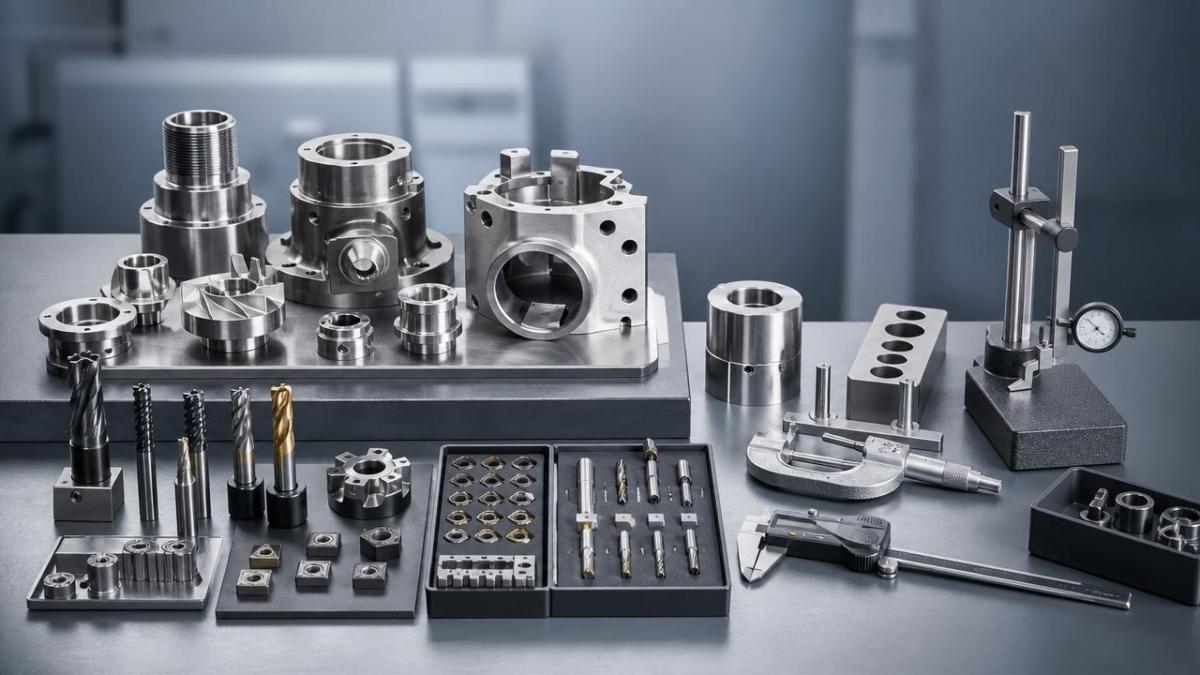
How do tolerance, geometry, and material choice change the quote more than buyers expect?
Many buyers assume that if the part dimensions are small, the machining cost should also be small. In metal machining, this is often untrue. A compact part with deep cavities, thin walls, concentricity requirements, or mirror-surface expectations may be more expensive than a larger, simpler component.
Tighter tolerances usually reduce process freedom. The shop may need slower feeds and speeds, more stable tooling, additional finishing passes, and more frequent measurements. Every extra control step increases machine occupation time and lowers throughput. In high-precision CNC environments, this can have a larger cost effect than raw material itself.
Material choice also changes cost beyond the purchase price of stock. Some alloys create long chips, poor heat dissipation, built-up edge, or rapid tool wear. Others may distort after rough machining or heat treatment, requiring stress relief or extra finishing operations. Even when two metals have similar market price per kilogram, their machinability can produce very different final costs.
Business evaluators should pay attention to whether the drawing specifies unnecessary precision. A tolerance that is tighter than the actual application requires can trigger a chain of higher metal machining costs: slower cycle time, more inspection, more scrap risk, and fewer eligible suppliers.
What should evaluators check when comparing two metal machining quotations?
A good comparison is not about placing two unit prices side by side. It is about understanding scope, assumptions, and production logic. In the CNC machine tool industry, supplier quotations can differ because of process route, machine capability, automation level, quality systems, and commercial boundaries.
This type of structured review helps evaluators distinguish between an efficient supplier and an incomplete quote. It is particularly valuable when assessing global sourcing options across different machine tool clusters and manufacturing regions.
Why are setup, quality control, and scrap risk so important in precision metal machining?
In precision metal machining, setup quality determines whether the entire batch starts in control. If the first setup is unstable, every following operation becomes less predictable. Shops may need to spend more time on tool presetting, datum validation, test cuts, and operator supervision than buyers realize. These tasks are not waste; they are the foundation of repeatable output.
Quality control is another underestimated area. A part with critical dimensions may require in-process probing, manual checks between operations, and final dimensional reporting. If the customer requests PPAP-style documentation, material traceability, or serialized records, the administrative and metrology workload rises further. For industries such as automotive, aerospace supply chains, energy equipment, and electronics hardware, this can be a normal part of doing business.
Scrap risk is often hidden because no one likes to price failure into a quote. Yet real manufacturing always contains yield uncertainty. Thin-wall parts may deform, complex bores may drift, and cosmetic requirements may cause otherwise functional parts to be rejected. A mature supplier usually includes a realistic allowance for this. An immature quote may ignore it and later seek compensation through delays, engineering change requests, or inconsistent quality.
What are the most common quoting mistakes made by buyers and suppliers?
Both sides contribute to quoting errors in metal machining. Buyers may send incomplete drawings, unclear revision status, or missing surface finish requirements. Suppliers may reply too quickly, assuming standard tolerances, standard packaging, or standard inspection without confirmation. The gap between those assumptions becomes the hidden cost.
- Mistake 1: Treating prototype and production quotes the same. Prototype parts usually carry high setup cost per piece, slower processing, and more engineering interaction.
- Mistake 2: Ignoring process capability. A low quote from a shop without the right CNC machine, fixture strategy, or metrology support may create downstream problems.
- Mistake 3: Overlooking material utilization. Buy-to-fly ratio, remnant handling, and bar or plate yield can change cost significantly.
- Mistake 4: Failing to define acceptance criteria. Surface marks, burr limits, edge break conditions, and packaging standards should be explicit.
- Mistake 5: Using only price to rank suppliers. In metal machining, delivery stability, engineering response, and process transparency can be more valuable than a small nominal savings.
For evaluators, the lesson is clear: a quote is not just a price offer. It is a compressed statement of manufacturing assumptions. If those assumptions are weak, the commercial result will also be weak.
How can business evaluators reduce hidden metal machining costs before approving a supplier?
The best way to control hidden metal machining costs is to move key clarifications forward, before the purchase order is issued. Early technical-commercial alignment reduces disputes and improves quote comparability across suppliers.
Start by confirming the full scope: material standard, tolerance logic, surface finish, inspection records, secondary processes, and packaging requirements. Then ask how the supplier plans to machine the part. You do not need every proprietary detail, but you should understand whether the route depends on standard 3-axis equipment, turning centers, multi-axis machining, automation cells, or subcontracted operations.
Next, review the quote by volume scenario. Ask for separate assumptions for prototype, pilot, and serial production. This is essential in the machine tool and precision manufacturing sector because setup burden and tooling strategy evolve as the order size grows. Also verify whether the supplier has included expected tooling replacement, inspection frequency, and realistic delivery terms.
Finally, consider total cost rather than unit price alone. In global CNC and metal machining supply chains, a slightly higher quote may still be economically better if it reduces scrap, shortens qualification time, improves traceability, or lowers logistics risk. That is a stronger basis for business evaluation than comparing headline numbers in isolation.
What questions should be discussed first before moving forward with sourcing, quoting, or cooperation?
If you need to validate a metal machining opportunity more accurately, begin with a short list of practical questions. Ask which drawing features are cost-critical, what tolerance or finish requirements truly affect function, whether any operations are outsourced, what inspection level is included, and how setup cost changes by batch size. Confirm lead time assumptions, scrap responsibility, packaging standard, and whether logistics or export compliance costs are already built in.
These discussions help business evaluators move from surface-level price comparison to informed decision-making. In a market shaped by advanced CNC machine tools, precision manufacturing systems, and increasingly global supply networks, better questions usually lead to better margins. When metal machining quotes are reviewed with this deeper lens, hidden costs become manageable, supplier comparisons become fairer, and sourcing decisions become more commercially reliable.
PREVIOUS ARTICLE
Recommended for You
![]() ANVISA New Rule: Portuguese Biocompatibility Labels for Medical CNC Machines in BrazilManufacturing Policy Research Center
ANVISA New Rule: Portuguese Biocompatibility Labels for Medical CNC Machines in BrazilManufacturing Policy Research Center![]() EMO Hannover 2027 Booth Booking Opens: China AI-Machining Pavilion LaunchesGlobal Machine Tool Trade Research Center
EMO Hannover 2027 Booth Booking Opens: China AI-Machining Pavilion LaunchesGlobal Machine Tool Trade Research Center![]() KATS Updates KC Rules: CNC Cybersecurity Modules Must Meet IEC 62443-4-2Manufacturing Policy Research Center
KATS Updates KC Rules: CNC Cybersecurity Modules Must Meet IEC 62443-4-2Manufacturing Policy Research Center![]() Shanghai Port Launches Green Clearance Channel for CNC EquipmentManufacturing Market Research Center
Shanghai Port Launches Green Clearance Channel for CNC EquipmentManufacturing Market Research Center![]() ISO 23218-3:2026 Published: CNC Digital Twin Interoperability StandardCNC Machining Technology Center
ISO 23218-3:2026 Published: CNC Digital Twin Interoperability StandardCNC Machining Technology Center![]() Vietnam Cuts CNC Equipment Import Tariff to 3.8% from June 2026Global Machine Tool Trade Research Center
Vietnam Cuts CNC Equipment Import Tariff to 3.8% from June 2026Global Machine Tool Trade Research Center


Aris Katos
Future of Carbide Coatings
15+ years in precision manufacturing systems. Specialized in high-speed milling and aerospace grade alloy processing.
▶
Production Process bottlenecks that software alone cannot fixCNC Machining Technology Center▶
Metal machining costs that are easy to miss during quotingCNC Machining Technology Center▶
Production Process Delays Usually Start Before Machining BeginsCNC Machining Technology Center▶
High Precision Lathe Claims That Need Closer VerificationCNC Machining Technology Center▶
CNC Programming errors that keep repeating on similar partsCNC Machining Technology Center
Mastering 5-Axis Workholding Strategies
Join our technical panel on Nov 15th to learn about reducing vibrations in thin-wall components.

Providing you with integrated sanding solutions
Before-sales and after-sales services
Comprehensive technical support