• Global CNC market projected to reach $128B by 2028 • New EU trade regulations for precision tooling components • Aerospace deman
NYSE: CNC +1.2%LME: STEEL -0.4%

Production Process Delays Usually Start Before Machining Begins
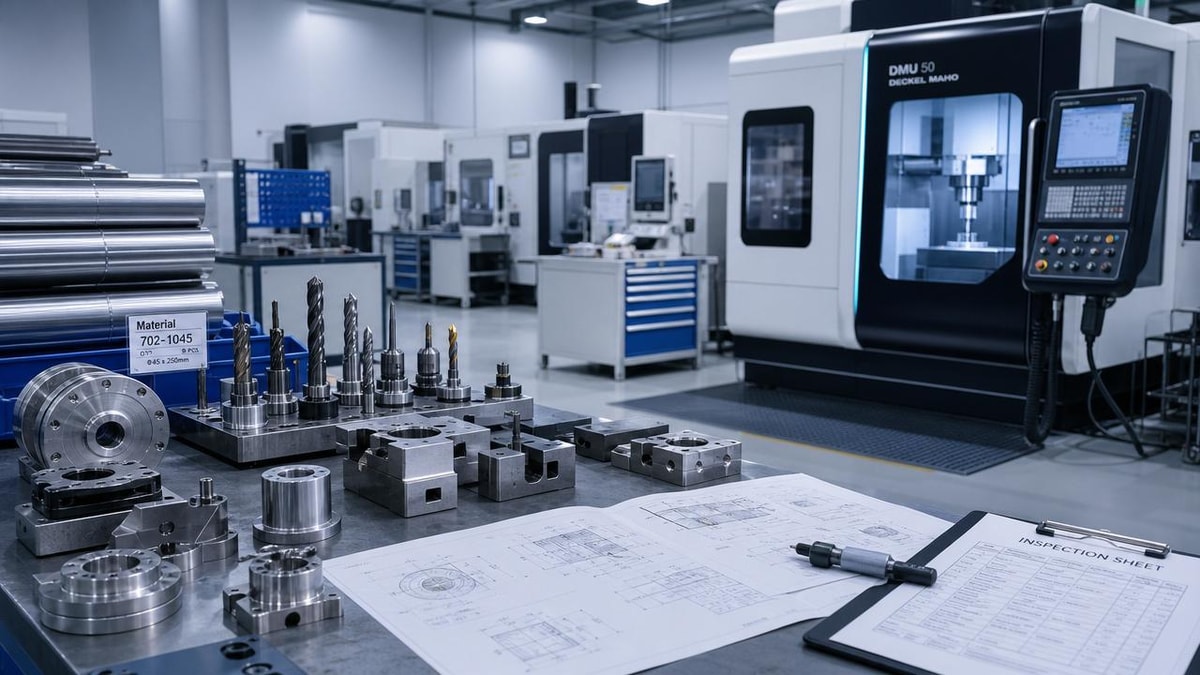
In precision manufacturing, production process delays often begin long before the first cut is made. For business decision-makers, hidden issues in planning, material readiness, tooling coordination, and supplier response can quietly disrupt delivery, raise costs, and reduce operational efficiency. Understanding where these bottlenecks originate is the first step toward building a faster, more reliable, and more competitive machining workflow.
What does it really mean when a Production Process delay starts before machining?
Many executives still associate delay with visible shop-floor events: machine downtime, programming errors, scrap, or labor shortages. In reality, the production process often slips much earlier. The first warning signs may appear in quotation review, drawing clarification, raw material booking, fixture planning, tolerance assessment, supplier confirmation, or inspection planning. By the time a CNC lathe or machining center is finally ready to run, lost days may already be embedded in the schedule.
This matters because pre-machining delays are harder to detect than machine stoppages. They hide inside email chains, approval loops, engineering change notices, incomplete bills of materials, and optimistic lead-time assumptions. In industries such as automotive, aerospace, electronics, and energy equipment, even a small mismatch in these upstream steps can ripple through the entire production process, especially when multiple parts, subcontractors, and inspection standards are involved.
For decision-makers, the key insight is simple: if delivery performance is inconsistent, the root cause is not always cutting speed or spindle utilization. The issue may be that the production process was never fully ready to begin.
Which early-stage bottlenecks most often delay the Production Process?
The most common bottlenecks usually fall into five categories. First is technical ambiguity. If drawings lack complete dimensions, tolerance logic, surface finish expectations, or material substitution rules, the engineering team must pause and seek clarification. That pause can be short, but in international supply chains it often stretches across time zones and departments.
Second is material readiness. A part may look standard on paper, yet require a specific heat lot, forged blank, alloy certification, or custom size that is not immediately available. When material planning is weak, the production process starts with false confidence and then stalls while buyers chase stock, test reports, or alternative sources.
Third is tooling and fixturing preparation. Complex shaft parts, precision discs, and multi-axis components often need dedicated jaws, holders, probes, custom fixtures, or special cutting tools. If these are considered too late, machine availability becomes irrelevant because the setup ecosystem is incomplete.
Fourth is capacity coordination. A supplier may technically own the right CNC machine tools, but that does not mean the right machine, operator, programmer, and inspection resource are all available at the same time. Production process planning fails when businesses assess equipment lists instead of actual scheduling capability.
Fifth is approval dependency. First-article review, process sheets, sample validation, and customer sign-off are essential, yet many firms still treat them as side tasks instead of schedule-critical milestones. When approval timing is not managed, the production process waits in silence.
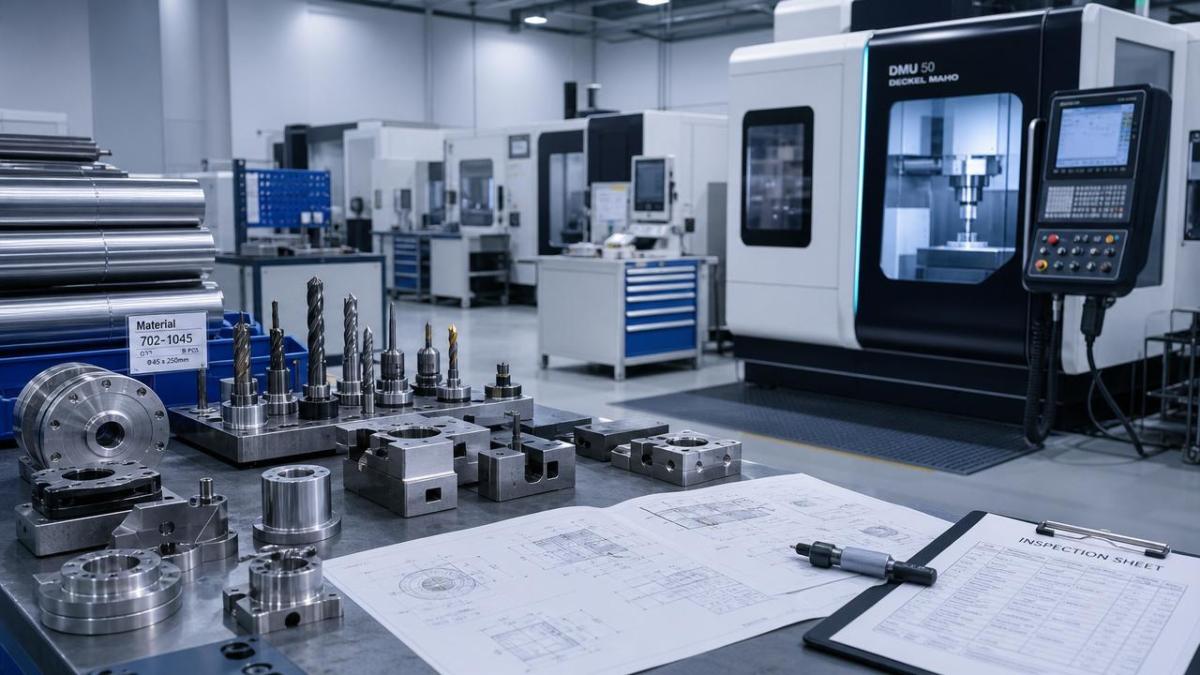
How can business leaders tell whether delays come from planning rather than machining itself?
A useful test is to compare “machine cutting time” with “order release to first setup time.” If actual machining occupies only a small portion of the total lead time, the production process is being constrained upstream. In many precision manufacturing environments, the shop floor is blamed because it is visible, while the true delay sits in pre-production coordination.
Leaders should ask several practical questions. How long does it take to finalize drawings after commercial confirmation? How often are materials ordered after the production slot is already reserved? How many jobs begin programming before tooling availability is confirmed? How frequently do incoming materials fail document review or dimensional expectation? These questions reveal whether the production process is governed by disciplined preparation or by reactive firefighting.
Another indicator is schedule volatility. If due dates shift repeatedly before the first piece is produced, the problem usually lies in readiness control. By contrast, if the plan is stable until machining starts and then slips due to scrap or breakdowns, the main issue is execution. Understanding this distinction helps decision-makers invest in the correct improvement area rather than overbuying equipment to solve a planning problem.
What should companies evaluate before releasing a job into the Production Process?
Before any job is released, companies should validate readiness across engineering, supply, tooling, quality, and scheduling. This is especially important in global CNC machining and automated manufacturing, where the production process may involve multiple sites, outsourced operations, and strict compliance requirements.
A disciplined release review should confirm the following:
- Drawings, revisions, and tolerances are fully approved and internally understood.
- Material grade, dimensions, certifications, and substitute options are confirmed.
- CNC programs, tooling paths, fixtures, and setup logic are feasible for the selected equipment.
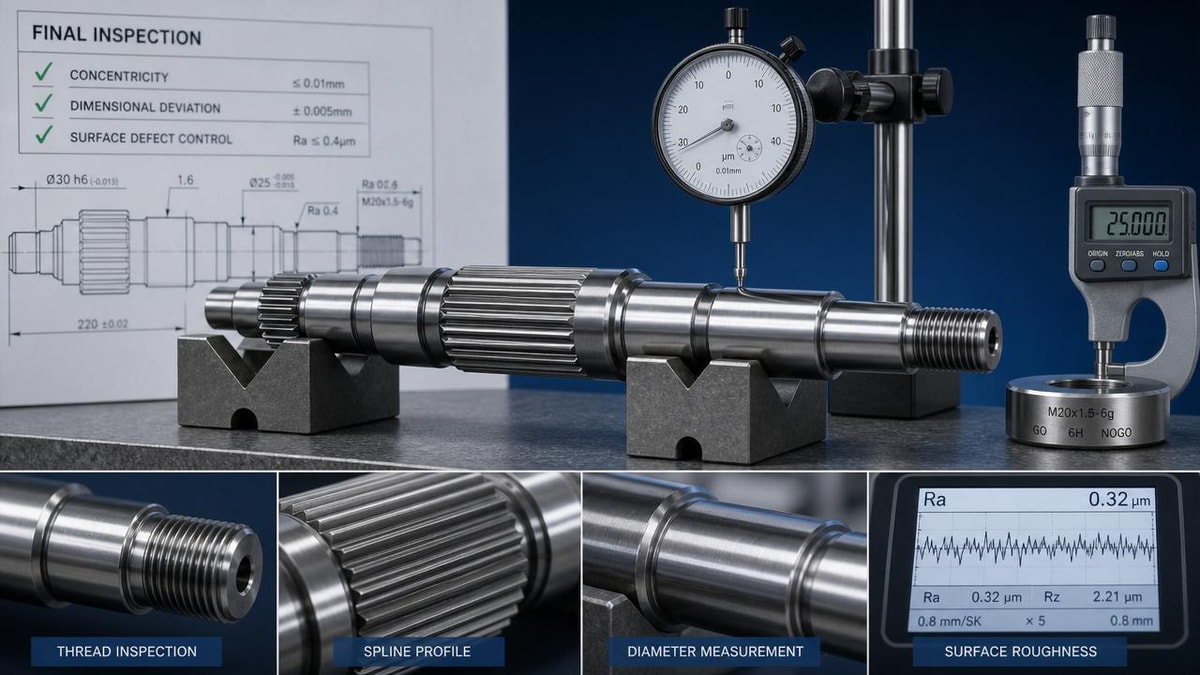
- Inspection gauges, CMM routines, and quality checkpoints are planned in advance.
- Critical subcontract steps such as heat treatment, coating, grinding, or balancing have aligned lead times.
- Internal and external approval points are built into the schedule, not treated as assumptions.
This may sound operational, but it is a strategic issue. A mature production process protects gross margin, customer confidence, and on-time delivery. For decision-makers, readiness discipline is not paperwork; it is risk control.
What does a practical delay-diagnosis table look like?
The table below can help management teams identify where the production process is likely breaking down before machining begins.
Why do companies with advanced CNC equipment still struggle with Production Process delays?
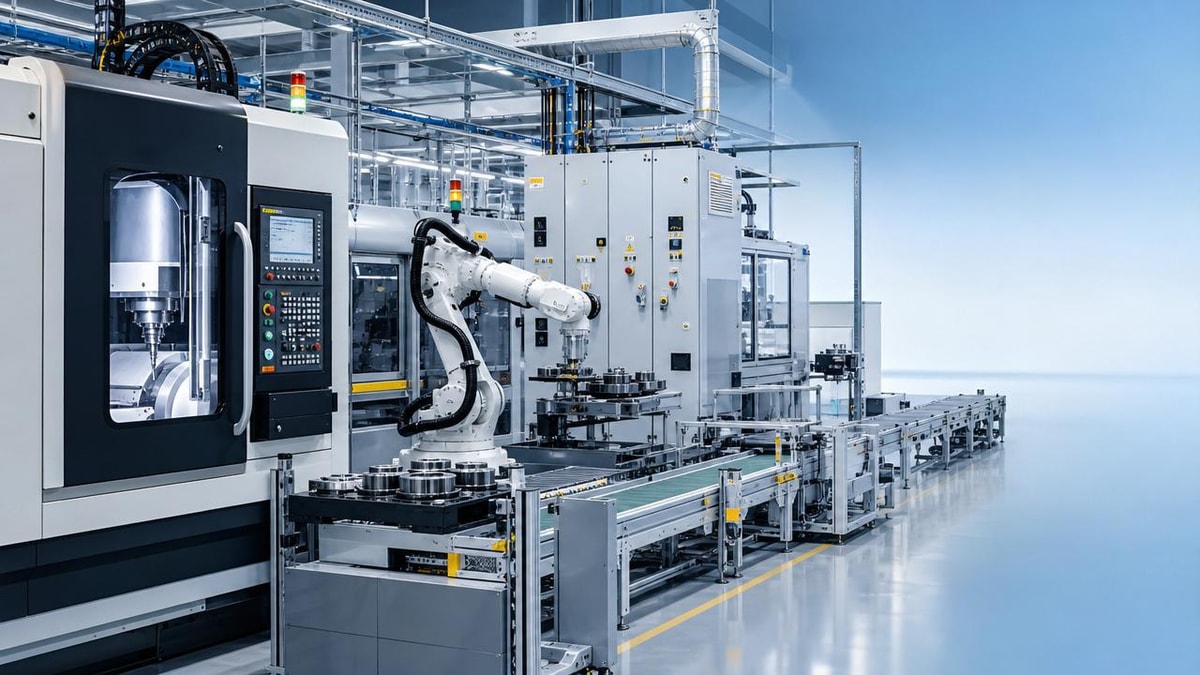
Because advanced hardware does not automatically create an advanced production process. Many manufacturers invest in multi-axis machining centers, automation cells, industrial robots, and digital monitoring, yet still rely on fragmented communication between engineering, procurement, production control, and quality. The result is a modern workshop running on old coordination habits.
This gap is common in fast-growing businesses. Sales volume increases, part complexity rises, and customer expectations tighten, but the handoff system remains informal. Teams assume that because the machine tool capacity is world-class, the process capability is equally mature. It rarely is. Precision manufacturing depends not only on spindle performance, but also on information accuracy, supplier reliability, workflow sequencing, and cross-functional timing.
In other words, digital integration is valuable only when it connects planning data to execution readiness. If the production process starts with incomplete information, even the most advanced CNC environment will spend its time waiting, rechecking, and rescheduling.
What are the most expensive misconceptions about Production Process delays?
One costly misconception is believing that delays are unavoidable in custom machining. While some variability is normal, repeated pre-machining delay is usually a management issue, not an industry law. Another misconception is that expediting solves the problem. In fact, rushing material sourcing, setup preparation, or quality review often increases total cost and raises the likelihood of scrap or customer complaints.
A third misconception is focusing only on purchase price when selecting suppliers. A cheaper quote may hide weak engineering support, slower response cycles, or poor production process discipline. For enterprise buyers, true value comes from dependable launch readiness and predictable execution, not just low unit cost.
A fourth misconception is measuring departments independently rather than managing the end-to-end workflow. Procurement may hit cost targets, engineering may complete drawings, and production may meet utilization goals, yet the overall production process still underperforms because no one owns readiness across the entire chain.
How can decision-makers reduce delay risk without slowing the business down?
The best approach is not more bureaucracy, but better release control. Start with a short, non-negotiable readiness gate for every critical order. Define what must be true before machining is scheduled: approved drawing package, available material, confirmed tooling, planned inspection method, verified subcontract timing, and accountable ownership for every open issue. This creates speed through clarity rather than delay through confusion.
Second, track pre-machining lead time as seriously as machining cycle time. If leadership dashboards only measure output after the job starts, upstream waste remains invisible. Third, segment orders by complexity. High-mix, tight-tolerance, export-oriented, or regulated parts deserve deeper pre-launch control than repeat parts with stable history. Fourth, challenge suppliers and internal teams to provide readiness evidence, not verbal confidence.
Over time, these habits strengthen the entire production process. They also support broader smart manufacturing goals by improving data quality, schedule accuracy, and coordination between CNC machining, quality assurance, and international supply operations.
What should companies discuss first when evaluating suppliers, timelines, or improvement plans?
If you need to confirm a specific solution, timeline, quotation, or cooperation model, begin with the questions that expose production process readiness. Ask how drawing review is handled before order release. Confirm whether material availability is checked against actual certification and size requirements. Review who owns tooling and fixture preparation, how first-article approval affects the schedule, and how outsourced steps are coordinated. Ask what metrics the supplier or plant uses to track pre-machining delay, not just final output.
These questions quickly reveal whether a manufacturer is simply equipped to cut metal or truly prepared to manage a reliable production process. For business leaders in precision manufacturing, that difference often determines delivery performance, cost stability, and long-term competitiveness.
PREVIOUS ARTICLE
NEXT ARTICLE
Recommended for You
 CNC Milling Capacity Gaps Can Hurt Small Batch ProfitabilityManufacturing Market Research Center
 Industrial Robotics Payback Is Changing in Mid-Size PlantsManufacturing Market Research Center
 Shaft Parts Machining Problems That Show Up at Final InspectionCNC Machining Technology Center
 Production Process Delays Usually Start Before Machining BeginsCNC Machining Technology Center
 Industrial Automation Projects Often Miss This Integration StepCNC Machining Technology Center
 CNC Metal Cutting Tool Wear Is Costing More Than You ThinkCNC Machining Technology Center

Aris Katos
Future of Carbide Coatings
15+ years in precision manufacturing systems. Specialized in high-speed milling and aerospace grade alloy processing.
▶
Production Process Delays Usually Start Before Machining BeginsCNC Machining Technology Center▶
High Precision Lathe Claims That Need Closer VerificationCNC Machining Technology Center▶
CNC Programming errors that keep repeating on similar partsCNC Machining Technology Center▶
Production Process Variations That Quietly Raise Scrap RatesCNC Machining Technology Center▶
Why production process changes often fail on otherwise stable linesCNC Machining Technology Center
Mastering 5-Axis Workholding Strategies
Join our technical panel on Nov 15th to learn about reducing vibrations in thin-wall components.

Providing you with integrated sanding solutions
Before-sales and after-sales services
Comprehensive technical support