• Global CNC market projected to reach $128B by 2028 • New EU trade regulations for precision tooling components • Aerospace deman
NYSE: CNC +1.2%LME: STEEL -0.4%

High Precision Lathe Claims That Need Closer Verification
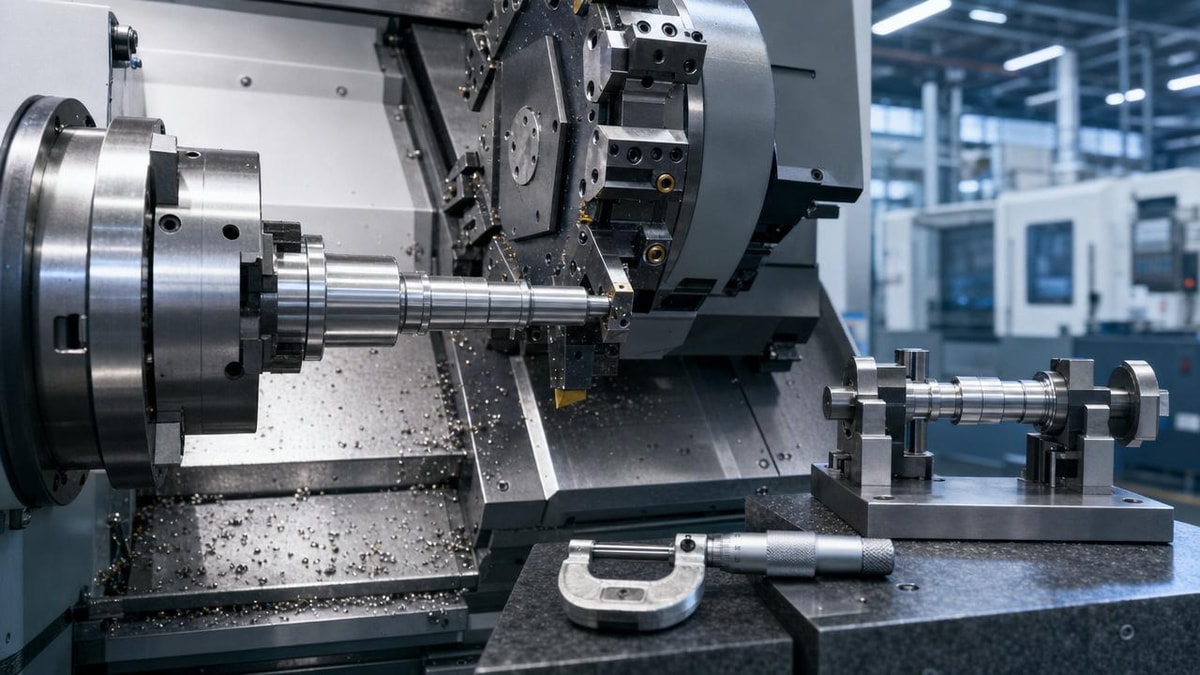
A high precision lathe can promise micron-level accuracy, faster cycle times, and stable repeatability, but not every claim stands up to technical scrutiny. For evaluation teams, verifying machine structure, thermal stability, spindle performance, and control consistency is essential before making procurement decisions that affect quality, cost, and long-term production reliability.
Why technical evaluators should question every high precision lathe claim
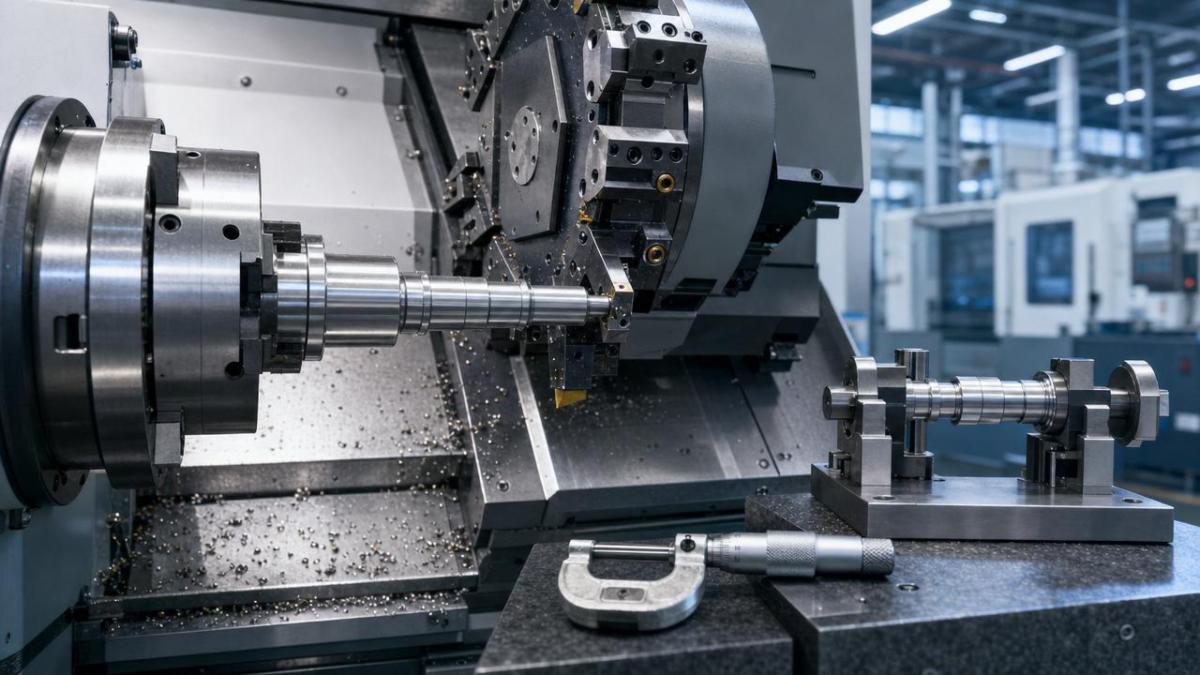
In the CNC machine tool sector, performance claims are often presented through best-case data. A high precision lathe may be described as capable of micron-level machining, but evaluation teams know that nameplate accuracy and production-floor accuracy are not always the same. The gap usually appears when thermal growth, heavy-duty cutting, tool wear, operator variation, and unstable fixturing enter the process.
This matters across automotive, aerospace, electronics, energy equipment, and general precision manufacturing. A machine that performs well during a showroom trial may behave very differently in long-cycle production, multi-shift operation, or mixed-part environments. That is why technical evaluators should treat every high precision lathe claim as a hypothesis to be verified rather than a conclusion to be accepted.
The broader market also raises the stakes. As global machine tool suppliers from China, Germany, Japan, South Korea, and other manufacturing centers compete on automation, precision, and digital integration, buyers face more choices than ever. More options are useful, but they also increase the risk of comparing machines on marketing language instead of measurable machine behavior.
- Quoted positioning accuracy may be based on controlled test conditions rather than real production temperatures.
- Spindle runout values may be excellent at low load, yet less stable during aggressive cutting or long duty cycles.
- Repeatability can look strong on a simple standard part while drifting on thin-wall, long-shaft, or hard-to-machine components.
- Cycle time claims may exclude probing, tool change delays, chip evacuation issues, or in-process correction routines.
For technical assessment personnel, the most practical approach is structured verification: define the target parts, required tolerances, expected material mix, batch size, ambient conditions, automation needs, and maintenance reality before judging whether a high precision lathe is truly suitable.
What should be verified first when a high precision lathe looks impressive?
The first layer of verification is machine architecture. Precision starts with the base, guideway arrangement, spindle support, turret design, servo matching, and feedback system quality. If the structural foundation is weak, software compensation may hide symptoms for a while, but cannot fully replace mechanical rigidity and geometric stability.
Core technical areas to inspect
- Machine bed and casting design: Check damping behavior, rib structure, material consistency, and how the bed resists deformation under load.
- Guideways and ball screws: Verify preload method, lubrication stability, backlash control, and protection against contamination.
- Spindle system: Review bearing class, cooling strategy, speed range, torque curve, and radial as well as axial runout under operating conditions.
- Thermal control: Ask how the machine handles spindle heating, hydraulic temperature variation, coolant influence, and enclosure heat buildup.
- Control system behavior: Examine interpolation smoothness, servo response, compensation logic, alarm history, and data connectivity for production monitoring.
- Workholding and tooling interface: Precision claims lose value if chucking distortion or weak tooling causes process instability.
Evaluators should also distinguish between single-point precision and sustained precision. A machine may produce one excellent sample after warm-up and manual adjustment. The more meaningful question is whether it can maintain dimensional consistency over an entire shift, across different operators, and during tool changes.
The table below helps technical teams assess a high precision lathe beyond brochure language by focusing on measurable verification points.
A high precision lathe should not be judged by one number alone. True qualification comes from linking geometry, thermal behavior, cutting dynamics, and control logic to actual part requirements.
How to compare high precision lathe options for different manufacturing scenarios
Technical evaluators rarely buy a lathe in isolation. They buy a capability for a production environment. That means the right comparison is not simply machine A versus machine B, but machine architecture versus part family, tolerance stack, automation plan, and quality target. A compact precision lathe for electronics shafts is not assessed the same way as a turning platform for aerospace alloys or energy equipment components.
Scenario-based comparison logic
- For small high-value parts, prioritize thermal control, spindle precision, fine surface finish, and micron-level repeatability over raw metal removal rate.
- For medium-batch automotive work, focus on cycle stability, tool life, automation compatibility, and quick setup repeatability.
- For hard materials or aerospace applications, evaluate rigidity, torque at working speeds, compensation effectiveness, and process reliability during long cycles.
- For mixed-job subcontracting, flexibility matters: control openness, tooling capacity, program transfer, and rapid changeover may outweigh absolute top-end precision.
This comparison table shows how a high precision lathe should be judged across common decision scenarios in modern manufacturing.
The key insight is simple: the best high precision lathe is not the one with the most ambitious brochure number. It is the one whose technical profile matches the part family, process capability target, and production rhythm of your facility.
Which test methods reveal whether a high precision lathe is truly production-ready?
A careful evaluation process should combine document review, on-site inspection, trial machining, and data comparison. In many procurement projects, the trial cut determines whether a machine advances or fails. Yet poor trial design can create false confidence. Testing should reflect actual materials, tolerances, surface requirements, tool strategy, and cycle time pressures.
Recommended verification sequence
- Review the machine specification with attention to spindle power curve, guideway type, axis travel, feedback resolution, lubrication method, and cooling strategy.
- Request geometric inspection records and clarify the test standard or internal method used to produce them.
- Run a sample part that resembles your production geometry instead of a generic demonstration component.
- Measure not only final dimensions but also repeatability across multiple parts and after machine warm-up.
- Observe setup time, tool change behavior, chip evacuation, alarm frequency, and operator interaction complexity.
- Check whether the control system can integrate with shop-floor quality records, networked monitoring, or smart factory data collection if required.
In advanced manufacturing environments, digital consistency increasingly matters as much as pure cutting performance. A high precision lathe that supports data visibility, alarm history tracking, and process traceability can reduce hidden quality costs, especially when production must satisfy strict internal audits or customer documentation demands.
Common mistakes when assessing a high precision lathe
Even experienced teams can make evaluation errors when schedules are tight or internal stakeholders focus too heavily on initial price. Precision machine selection involves more than a capital purchase. It affects scrap risk, process capability, maintenance load, and future expansion options.
Frequent evaluation mistakes
- Accepting micron-level claims without asking whether the figures refer to positioning accuracy, repeatability, or actual machined part variation.
- Comparing unloaded machine motion data with loaded cutting results as if they were equivalent.
- Ignoring thermal behavior because the demo part is short or the test run is too brief.
- Overlooking the effect of workholding, tooling quality, coolant delivery, and chip management on final precision.
- Choosing a machine with high technical potential but insufficient local service response, spare parts support, or commissioning expertise.
- Treating automation readiness as optional when future labor constraints or throughput expansion are already visible.
A disciplined technical evaluation avoids these traps by linking machine claims to process evidence. In practice, that means using acceptance criteria written around parts, tolerances, output targets, and maintenance conditions rather than broad adjectives such as stable or advanced.
Procurement guide: what technical evaluators should ask suppliers before approval
Supplier discussions are often the point where a high precision lathe appears either credible or overstated. Good questions force technical clarity. They also reveal whether a supplier understands the difference between catalog selling and process-oriented support.
Practical supplier questions
- Which test conditions were used to define the stated accuracy and repeatability values?
- How does the machine control thermal drift during long shifts or temperature changes?
- What part materials and geometries are most suitable for this high precision lathe?
- Can the supplier support custom fixtures, tool layout optimization, probing integration, or automation interfaces?
- What are the recommended preventive maintenance tasks, spare part lead times, and service response expectations?
- Which common international practices or standards are referenced for machine inspection, electrical safety, or performance validation?
Where compliance is important, evaluators may also ask about general alignment with commonly referenced machine tool and safety frameworks, depending on the destination market and project scope. The right supplier should be able to discuss this realistically, without making vague promises or unsupported claims.
FAQ: closer verification points for a high precision lathe
How should I define precision when comparing one high precision lathe to another?
Do not rely on a single precision figure. Separate positioning accuracy, repeatability, spindle runout, machined-part consistency, and thermal drift. Then match those values to your actual tolerance chain. For many buyers, process capability over time matters more than one-time static accuracy.
What production conditions most often expose weak claims?
Long shifts, hard materials, multi-step finishing, frequent tool changes, and unattended automation are common stress points. These conditions reveal whether the high precision lathe can sustain geometry, surface finish, and cycle consistency beyond a short demonstration window.
Is a more expensive high precision lathe always the safer choice?
Not always. A premium machine may offer excellent structure and controls, but if your part family does not need that level of capability, payback may be slow. On the other hand, an under-specified machine can create scrap, downtime, and secondary inspection costs that erase initial savings. The safer choice is the machine that matches tolerance demands, output goals, and service support requirements.
What is the best way to reduce procurement risk?
Use part-based trials, multi-cycle measurement, and a formal acceptance checklist. Include machine structure, thermal stability, spindle behavior, control response, automation readiness, and support capability. This reduces the chance of approving a high precision lathe on presentation quality rather than production evidence.
Why choose us for high precision lathe evaluation support
For buyers in the global CNC machining and precision manufacturing industry, technical evaluation requires more than collecting brochures. It requires industry context, cross-market comparison, and a practical understanding of how machine tool claims translate into process performance. Our platform focuses on CNC machine tools, precision manufacturing trends, application insights, and international supply dynamics across automotive, aerospace, energy equipment, electronics, and related sectors.
If you are reviewing a high precision lathe, you can consult us on specific issues such as parameter confirmation, machine selection logic, target part suitability, delivery cycle expectations, automation compatibility, common verification risks, and general compliance considerations for international procurement. We can also help structure evaluation points for sample testing, quotation comparison, and supplier communication so that technical teams can make decisions with clearer evidence.
Contact us if you need support with shortlisting machine configurations, comparing precision turning solutions, reviewing application scenarios, discussing custom manufacturing requirements, or preparing a more rigorous procurement checklist before issuing an order or requesting a formal quote.
PREVIOUS ARTICLE
Recommended for You
 CNC Milling Capacity Gaps Can Hurt Small Batch ProfitabilityManufacturing Market Research Center
 Industrial Robotics Payback Is Changing in Mid-Size PlantsManufacturing Market Research Center
 Shaft Parts Machining Problems That Show Up at Final InspectionCNC Machining Technology Center
 Production Process Delays Usually Start Before Machining BeginsCNC Machining Technology Center
 Industrial Automation Projects Often Miss This Integration StepCNC Machining Technology Center
 CNC Metal Cutting Tool Wear Is Costing More Than You ThinkCNC Machining Technology Center


Aris Katos
Future of Carbide Coatings
15+ years in precision manufacturing systems. Specialized in high-speed milling and aerospace grade alloy processing.
▶
Production Process Delays Usually Start Before Machining BeginsCNC Machining Technology Center▶
High Precision Lathe Claims That Need Closer VerificationCNC Machining Technology Center▶
CNC Programming errors that keep repeating on similar partsCNC Machining Technology Center▶
Production Process Variations That Quietly Raise Scrap RatesCNC Machining Technology Center▶
Why production process changes often fail on otherwise stable linesCNC Machining Technology Center
Mastering 5-Axis Workholding Strategies
Join our technical panel on Nov 15th to learn about reducing vibrations in thin-wall components.

Providing you with integrated sanding solutions
Before-sales and after-sales services
Comprehensive technical support