• Global CNC market projected to reach $128B by 2028 • New EU trade regulations for precision tooling components • Aerospace deman
NYSE: CNC +1.2%LME: STEEL -0.4%

How to Read Machine Tool Price Quotes Without Mistakes
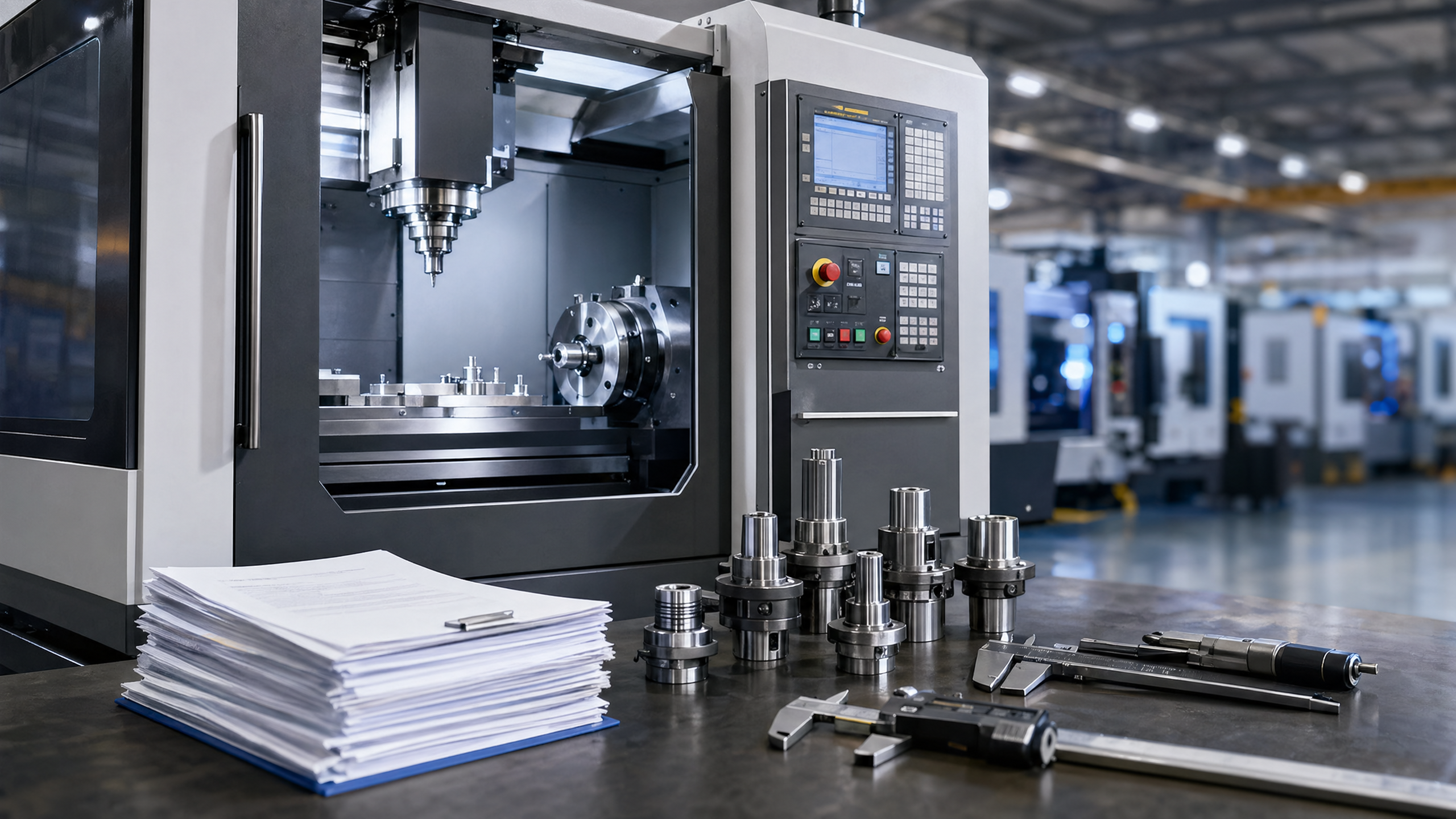
Machine tool price quotes often look simple, but hidden costs can quickly change the real investment. Whether you are comparing a compact machine tool, a high precision machine tool, or solutions from a CNC machine tool manufacturer, this guide explains how to evaluate machine tool price details clearly and avoid costly mistakes in precision CNC manufacturing procurement.
For researchers, operators, purchasing teams, and business evaluators, a quote is not just a price sheet. It is a technical, commercial, and operational document that affects production capability, installation risk, maintenance cost, and return on investment over the next 3 to 10 years. In global CNC procurement, especially when comparing suppliers from China, Germany, Japan, or South Korea, small wording differences in a quotation can lead to major budget gaps.
A machine tool quote should always be read in context: machine configuration, accuracy level, automation scope, training support, delivery terms, and after-sales response. A low upfront machine tool price may still become the more expensive option if it excludes tooling, software, spindle upgrades, or on-site commissioning. The goal is to identify the real landed cost and the real production value.
What a Machine Tool Price Quote Really Includes
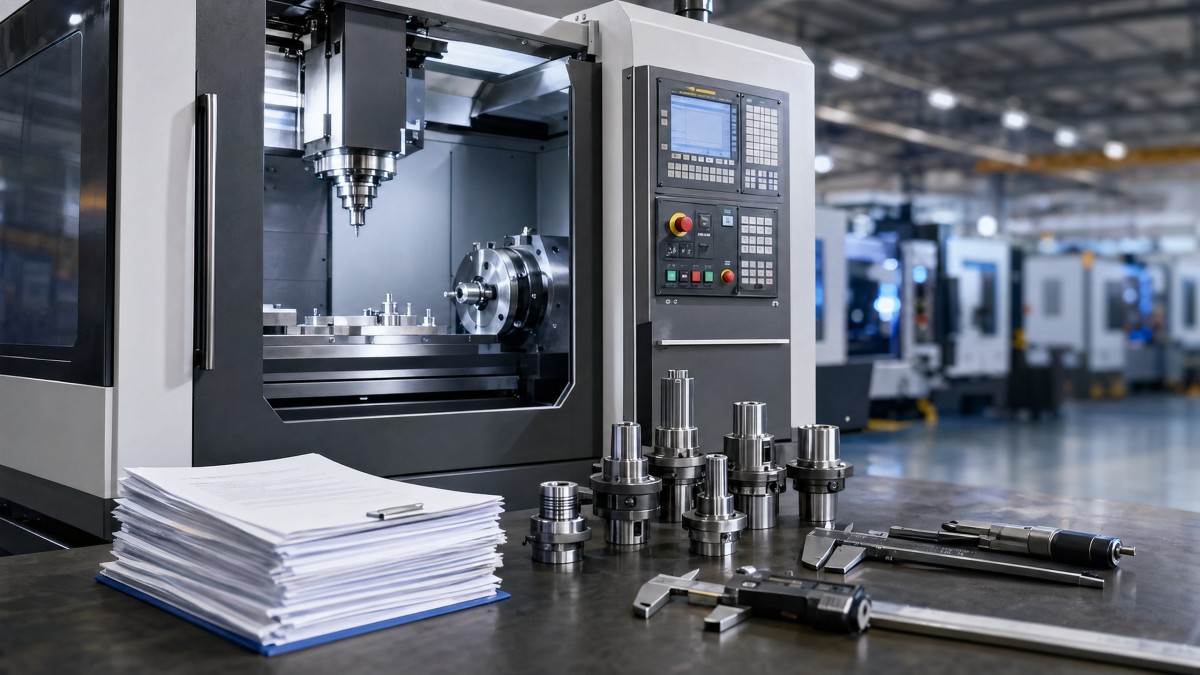
In the CNC machine tool industry, a quotation usually combines hardware, optional functions, service terms, and commercial conditions. The problem is that not every supplier presents these items with the same level of detail. One quote may show a single total number, while another separates the base machine, control system, accessories, freight, and startup support into 8 to 12 line items.
For procurement teams, the first task is to distinguish between the base machine tool price and the complete operating package. A machining center may appear competitively priced, but the quote may exclude tool magazine expansion, chip conveyor, coolant system, probing, rotary table, or voltage adaptation. In precision CNC manufacturing, these omissions directly affect usability from day 1.
Operators and production managers should also review whether the quoted machine matches the intended application. A quote for a 3-axis system may not support the same part complexity as a 4-axis or 5-axis setup. If your production requires tolerances in the range of ±0.005 mm to ±0.01 mm, the machine structure, spindle stability, thermal control, and measuring functions must be clearly stated rather than assumed.
Commercial readers should pay attention to Incoterms, payment schedule, warranty duration, and delivery commitment. A quote with 30% advance payment, 60% before shipment, and 10% after acceptance is different from one requiring 100% prepayment. Delivery lead times can also vary from 4–8 weeks for standard compact machine tools to 12–24 weeks for customized high precision machine tools.
Core sections that should appear in a clear quotation
- Base machine specification, including travel, spindle speed, table load, axis count, and control brand.
- Standard accessories and optional accessories listed separately, not merged into one unclear subtotal.
- Accuracy indicators such as positioning accuracy, repeatability, and test conditions.
- Commercial terms including currency, tax status, Incoterms, payment milestones, and quote validity period.
- Service scope covering installation, commissioning, training hours, spare parts, and warranty response time.
The table below shows how common quote sections should be interpreted when comparing machine tool suppliers.
A complete quote should help you estimate not only purchase cost, but also startup readiness. If key items are not visible in the document, ask for a revised version before comparing suppliers. Good procurement practice starts with quote transparency, not with bargaining alone.
The Most Common Hidden Costs Behind a Low Machine Tool Price
Many buyers focus on the quoted machine tool price and only discover later that the real project cost is 10% to 35% higher. Hidden costs usually appear in five areas: tooling, automation integration, shipping and installation, utility preparation, and post-sale support. These costs are especially important when purchasing for automotive parts, aerospace components, electronics housings, or energy equipment.
Tooling and workholding are frequent blind spots. A CNC lathe or machining center may be quoted without tool holders, cutting tools, vises, chucks, fixtures, or soft jaws. Depending on the process, the first tooling package can range from a modest starter set to a major capital add-on. For multi-part production, fixture design alone may require 2–6 weeks and a separate engineering budget.
Utility and facility preparation are also often excluded. Buyers may need reinforced flooring, compressed air, coolant handling, three-phase electrical conversion, temperature control, or crane access. High precision machine tools often perform best in workshops maintained around 20°C ±2°C. If the site cannot support stable conditions, the machine may not reach the quoted accuracy in actual use.
Software, connectivity, and automation can create another layer of cost. A supplier may quote the machine but not include CAD/CAM postprocessor adaptation, data collection interfaces, robot loading, bar feeder integration, or MES communication. In smart manufacturing projects, digital compatibility can matter as much as mechanical performance, especially when production lines are expected to run in 2 shifts or 3 shifts per day.
Hidden cost checklist before approval
- Confirm whether the quote includes all tooling required for first article production.
- Verify electrical standard, air supply requirement, and foundation condition before shipment.
- Ask whether software licenses are perpetual, annual, or linked to the CNC control package.
- Review installation responsibility, especially for overseas delivery and local subcontractors.
- Estimate preventive maintenance items for the first 12 months, not just warranty coverage.
Examples of cost items that change total investment
A compact machine tool used for prototype work may need only basic tooling and one day of training. A production-grade CNC machine in a precision manufacturing cell may require 20–40 tool holders, probing, chip management, pallet setup, and operator instruction for multiple shifts. The machine tool price quote can therefore look similar at first glance while the installed project value differs substantially.
The next table helps separate visible price from actual deployment cost.
The key lesson is simple: a low machine tool price quote may be acceptable, but only if all excluded items are visible and budgeted. Hidden cost is not always a supplier problem; sometimes it is a buyer assumption problem. Good quote reading removes that gap early.
How to Compare Quotes from Different CNC Machine Tool Manufacturers
Comparing quotes from different CNC machine tool manufacturers is difficult because machines may serve the same part family but use different structures, spindle classes, controllers, and automation paths. A disciplined comparison method helps avoid selecting the wrong machine for the right-looking price. The safest approach is to compare function to function, not brochure to brochure.
Start by building a normalized comparison sheet. Include at least 10 core fields: machine type, axis configuration, work envelope, spindle power, spindle speed, positioning accuracy, repeatability, tool capacity, delivery lead time, and warranty. Add application-specific items such as bar capacity for turning, pallet size for machining centers, or probing requirements for complex parts.
Production teams should test whether each quote supports the same output target. For example, if your goal is 1,200 parts per month with cycle times under 8 minutes, the quote should indicate rapid traverse, tool change time, spindle acceleration, and automation readiness. A cheaper machine that misses production volume by 15% can become more expensive at the business level than a higher-priced but more capable option.
For business evaluators, supplier stability matters too. The quote should identify service contacts, spare parts path, and support language. A strong machine tool quote usually remains valid for 15–30 days and describes what happens if raw material or logistics costs change. This is especially relevant in cross-border procurement where shipping windows and exchange rates can affect project timing.
A practical 4-step comparison method
- Match the quote to the target part, tolerance, material, and expected monthly volume.
- Separate mandatory functions from optional upgrades and list both clearly.
- Convert each quote into total project cost, including freight, tooling, and startup.
- Score suppliers on price, technical fit, delivery risk, and service support.
Suggested quote scoring matrix
A weighted scoring model can improve internal alignment between engineering, operations, and purchasing. In many B2B machine tool projects, price alone should not carry more than 30%–40% of the decision weight, especially when the machine will run for several years under production load.
When evaluating machine tool price quotes, focus on measurable impact rather than generic sales language. A supplier that documents cycle time assumptions, accuracy conditions, and service response windows is usually easier to manage after installation as well.
Key Technical and Commercial Terms Buyers Should Never Ignore
Some of the biggest mistakes in machine tool procurement happen because technical and commercial terms are read separately. In reality, they are linked. A machine quoted with high spindle speed but limited torque may not suit heavy cutting. A machine quoted with attractive warranty language may still leave travel, accommodation, or consumables outside the supplier’s responsibility. Each term affects real operating cost.
Technical readers should examine how accuracy is stated. Positioning accuracy, repeatability, and surface finish capability are not identical metrics. A supplier should define the testing basis and, where relevant, the environmental condition. In precision CNC manufacturing, thermal stability, machine casting design, guideway type, and spindle runout all influence performance over long runs, not only during acceptance testing.
Commercial readers should review warranty start date, parts coverage, and response method. Is the 12-month warranty counted from shipment, arrival, installation, or final acceptance? Does it include only parts, or also labor? Does remote diagnosis happen within 24 hours, and is on-site support available within 48–72 hours in your region? These details matter when downtime affects delivery commitments.
Another critical term is acceptance. Good quotations define factory acceptance test conditions, on-site acceptance criteria, and the documents required for sign-off. For example, the quote may specify trial cutting on one sample part, 2 days of stable operation, and completion of training before final payment. Without such terms, disputes become more likely after delivery.
Terms that should be clarified in writing
- Warranty start point and duration, such as 12 months from commissioning or 15 months from shipment.
- Acceptance standard, including whether trial parts, geometric checks, or process capability tests are required.
- Spare parts availability for critical items such as spindle units, servo drives, encoders, and lubrication components.
- Training scope, including number of operators, days on site, and whether programming instruction is included.
- Penalty, delay, or revision clauses if delivery slips beyond the quoted window.
If these terms are unclear, the quote is incomplete no matter how attractive the machine tool price appears. In industrial procurement, clarity reduces both financial risk and production risk.
A Buyer-Side Workflow for Reading Quotes Without Mistakes
The safest way to read machine tool price quotes is to use a repeatable internal workflow. This is useful for SMEs buying a first CNC machine, as well as larger manufacturers expanding a smart factory line. A structured process helps align engineering, operations, finance, and sourcing before approval is given.
Step 1 is technical validation. Confirm the machine matches your part size, material, tolerance, cycle time, and production volume. Step 2 is quote normalization, where all suppliers are converted into the same comparison format. Step 3 is total cost review, including startup and support. Step 4 is risk review, covering lead time, service access, and installation readiness. Step 5 is final negotiation based on defined scope rather than vague price pressure.
Operators should be included before the purchase order is issued. Their feedback on accessibility, chip evacuation, tool setup, HMI usability, and maintenance access can prevent expensive surprises later. A machine may look technically strong on paper, yet create daily inefficiency if loading height, enclosure access, or alarm diagnostics are not practical for the shop floor team.
For international trade projects, add one more step: logistics and customs readiness. Review packing size, machine weight, container planning, insurance, import documentation, and local installation support. A 2-week paperwork delay can offset the advantage of a faster manufacturing lead time, so the quote should be checked as part of the wider project schedule.
5-point internal review checklist
- Does the quote fit the exact production scenario, including tolerance, material, and output target?
- Are all optional items labeled clearly so no required feature is treated as an afterthought?
- Has the team calculated landed cost, startup cost, and 12-month operating support cost?
- Are acceptance, training, warranty, and response terms defined in measurable language?
- Has the operator or maintenance team reviewed the quote for real-use practicality?
When to request a revised quotation
Request a revised quote if any of the following are missing: machine configuration details, accessory boundaries, utility requirements, lead time definition, service scope, or acceptance terms. It is better to spend 2 extra days clarifying the document than to absorb months of preventable project friction.
In many successful procurement projects, the best quote is not the shortest one. It is the one that makes technical fit, commercial scope, and implementation responsibility visible. That visibility supports faster decisions and better accountability after delivery.
FAQ: Machine Tool Quote Questions Buyers Ask Most Often
How do I know if a machine tool quote is too vague?
If the quotation does not list core specifications, accessory scope, warranty terms, and delivery conditions separately, it is too vague for reliable comparison. A clear quote should let you identify at least 8–10 technical and
PREVIOUS ARTICLE
NEXT ARTICLE
Recommended for You
 How to Choose a Space-Saving CNC Manufacturing SetupCNC Machining Technology Center
![]() What to Check Before Using a CNC Manufacturing WholesalerGlobal Machine Tool Trade Research Center
What to Check Before Using a CNC Manufacturing WholesalerGlobal Machine Tool Trade Research Center Why Precision CNC Manufacturing Fails Tolerance GoalsCNC Machining Technology Center
 Is CNC Manufacturing for Energy Equipment Worth the CostManufacturing Market Research Center
![]() How Low Maintenance CNC Manufacturing Cuts DowntimeMachine Tool Industry Editorial Team
How Low Maintenance CNC Manufacturing Cuts DowntimeMachine Tool Industry Editorial Team How to Compare One CNC Manufacturing Factory to AnotherManufacturing Market Research Center




Aris Katos
Future of Carbide Coatings
15+ years in precision manufacturing systems. Specialized in high-speed milling and aerospace grade alloy processing.
▶
How Cost-Effective CNC Manufacturing Avoids Hidden CostsCNC Machining Technology Center▶
When a Portable Machine Tool Makes More SenseCNC Machining Technology Center▶
How to Read Machine Tool Price Quotes Without MistakesCNC Machining Technology Center▶
CNC Industrial Setup Mistakes to Avoid FirstCNC Machining Technology Center▶
Which Metal Lathe Is Best for Repair WorkCNC Machining Technology Center
Mastering 5-Axis Workholding Strategies
Join our technical panel on Nov 15th to learn about reducing vibrations in thin-wall components.

Providing you with integrated sanding solutions
Before-sales and after-sales services
Comprehensive technical support