• Global CNC market projected to reach $128B by 2028 • New EU trade regulations for precision tooling components • Aerospace deman
NYSE: CNC +1.2%LME: STEEL -0.4%

What causes unstable output in CNC production scheduling?
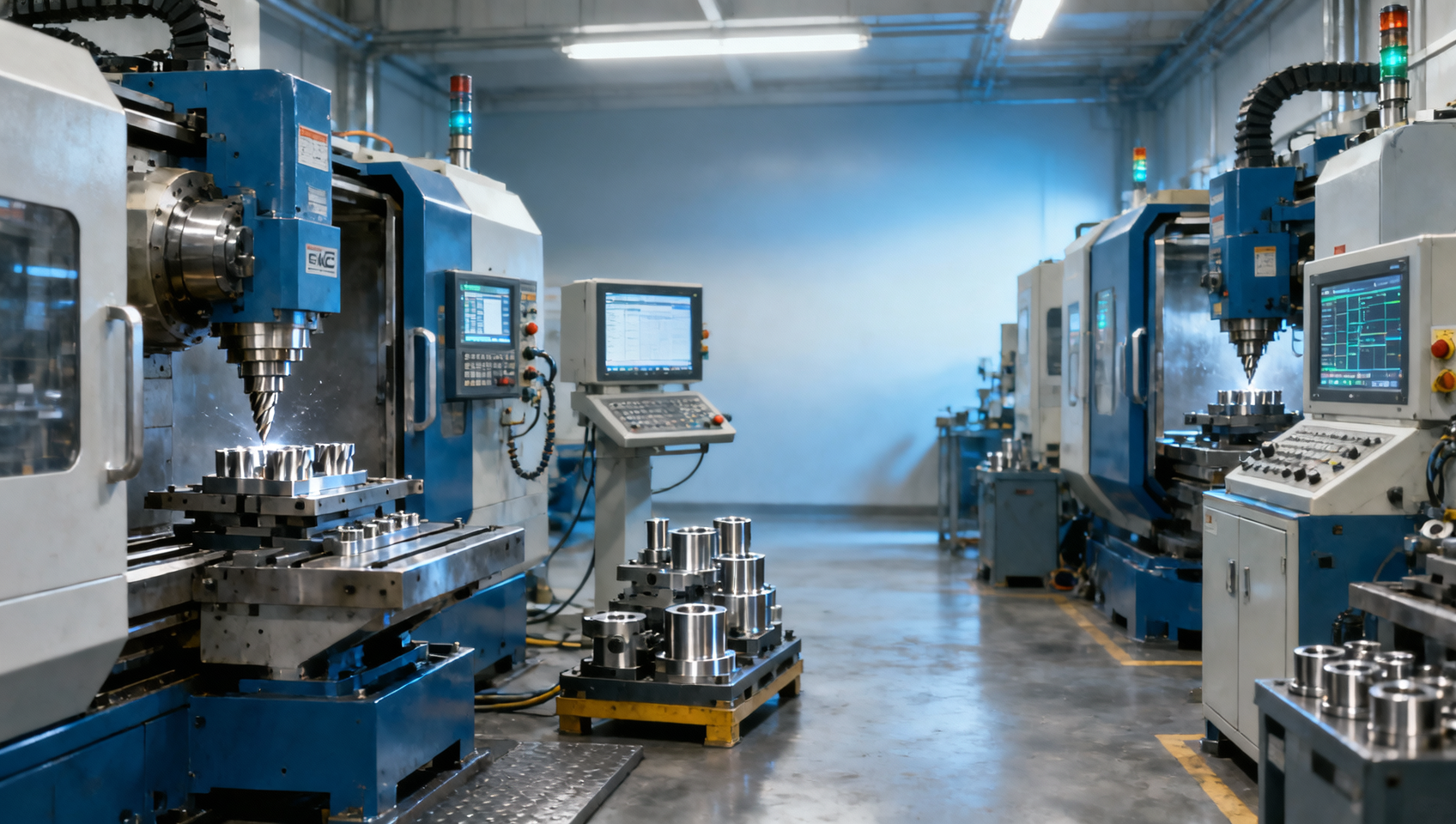
Unstable output in CNC production often stems from gaps in CNC programming, machine condition, tooling consistency, and the overall production process. In today’s metal machining and industrial CNC environment, even small disruptions can affect automated production, CNC milling, CNC cutting, and shaft parts quality. Understanding these causes helps operators, buyers, and decision-makers improve CNC production efficiency, stability, and competitiveness in the global manufacturing industry.
For manufacturers serving automotive, aerospace, electronics, energy equipment, and general industrial markets, output instability is rarely caused by one isolated issue. It usually appears as a chain reaction: cycle time drift, dimensional variation, tool life fluctuation, machine stoppages, delayed inspection feedback, and missed delivery windows. These problems affect workshop operators, sourcing teams, production managers, and executives in different ways, but all of them ultimately face the same risk—lower capacity utilization and weaker delivery performance.
This article examines the practical causes of unstable CNC production scheduling and output, with a focus on programming, equipment condition, tooling, workflow control, and planning decisions. It also outlines how buyers and decision-makers can evaluate suppliers, identify hidden risks, and build more stable machining operations across multi-shift production and mixed-part manufacturing.
How scheduling instability starts on the shop floor
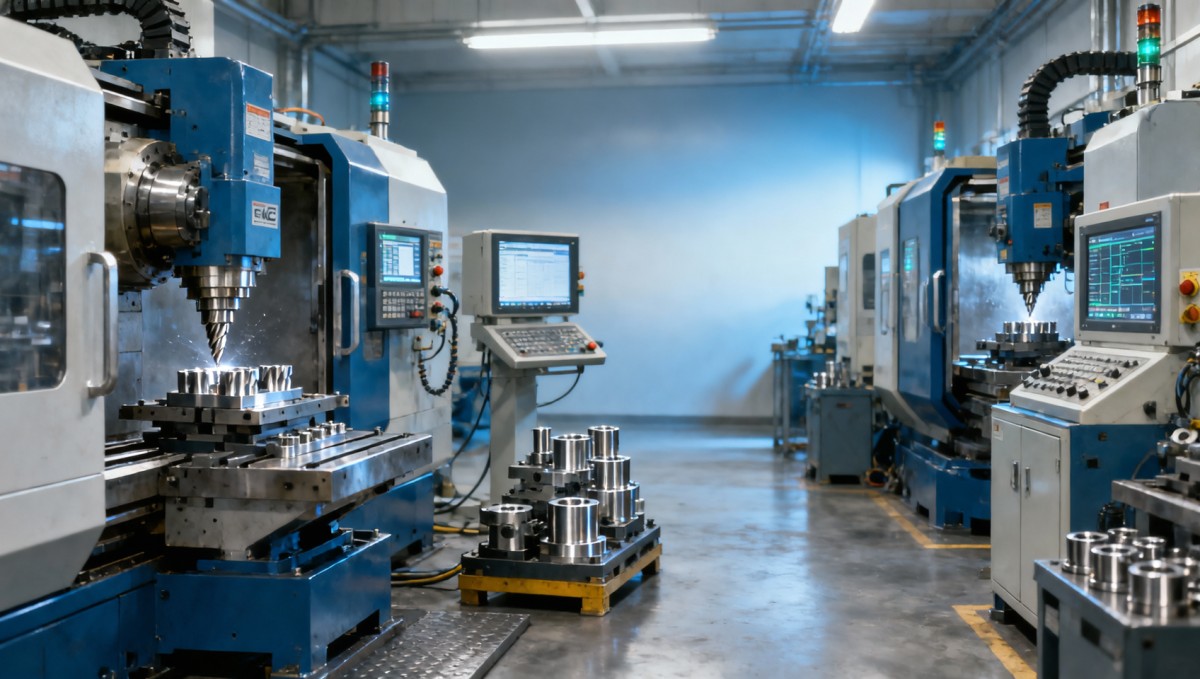
In many CNC workshops, unstable output begins long before a machine alarm appears. A schedule may look feasible on paper, but if setup time, fixture exchange, program verification, first-piece inspection, and material staging are underestimated by even 10%–15%, the actual daily output can fall below target within the first shift. This is especially common in high-mix, low-to-medium volume environments where part switching happens 4–12 times per day.
Another frequent problem is mismatch between the production plan and machine capability. A machining center may be scheduled at 85% capacity, but real available capacity is lower after accounting for warm-up time, tool setting, coolant checks, in-process measurement, and pallet loading. If planners ignore these losses, output appears unstable even when operators are following standard procedures.
CNC production scheduling also becomes fragile when a factory depends too heavily on one bottleneck resource. That could be a 5-axis machining center, a skilled programmer, a critical fixture set, or a CMM inspection station. Once one bottleneck slips by 30–60 minutes, downstream processes can queue up quickly, creating idle time in one area and overload in another.
For buyers and plant managers, the key lesson is that “machine quantity” does not equal “stable capacity.” A plant with 20 machines can still produce less reliable output than a plant with 8 machines if scheduling discipline, changeover control, and process balance are weak. Stable output depends on system coordination, not just installed equipment value.
Typical scheduling losses in CNC production
The table below shows common production scheduling losses that reduce output consistency in machining workshops. These are not extreme failures; they are routine operational gaps that often remain hidden until delivery pressure rises.
These ranges show why output instability is often systemic. Even if each loss looks small on its own, 4 or 5 minor disruptions in one shift can remove 1.5–3.0 productive hours from a machine that was originally scheduled for 8–10 hours of effective cutting time.
Common early warning signs
- Repeated rescheduling of jobs within the same 24-hour window.
- First-piece approval taking longer than the planned setup time.
- Operators relying on manual workarounds instead of standard setup sheets.
- Cycle time variation exceeding 5%–8% for the same part family.
- Inspection release becoming the hidden bottleneck after machining is completed.
Programming, machine condition, and tooling consistency
A major cause of unstable CNC output is inconsistency between the digital process plan and actual machine behavior. Even a well-optimized CNC program can produce unstable results if the spindle has thermal drift, the backlash level has increased, or the tool holder condition is uneven. In precision machining, a dimensional shift of ±0.01 mm to ±0.03 mm can be enough to trigger repeated offset changes, extra inspection, or part segregation.
Programming issues are also more common than many plants admit. Feed rates may be copied from older jobs, tool paths may not be updated after fixture changes, and post-processing settings may differ between machines of the same type. As a result, the planned cycle time might be 6.5 minutes, while the real cycle time varies between 7.1 and 8.0 minutes depending on the machine, operator, and material lot.
Tooling consistency is equally important. If insert grade, tool stick-out, coolant delivery, and preset length are not tightly controlled, tool life becomes unpredictable. One tool may last 120 parts, while another of the same nominal specification fails at 70 parts. That difference disrupts unattended operation, affects surface finish, and introduces additional stoppages for tool replacement and part inspection.
For procurement teams, this means supplier output stability should be evaluated beyond machine brand or axis count. Ask how often machines are calibrated, whether tool life is tracked by part family, how many program revisions occur per month, and whether production uses standardized tool libraries. These details are often more meaningful than a simple equipment list.
Core technical causes behind unstable machining output
The next table organizes the main technical variables that affect scheduling stability, actual output, and finished-part consistency in CNC turning, milling, and multi-axis machining operations.
The critical takeaway is that unstable output often appears in the schedule first, but its root cause is technical. When a machine repeatedly misses its expected cycle or scrap rate target, the scheduling problem is usually a symptom of deeper process variation.
What operators and engineers should standardize
- Maintain a controlled program revision log for every active part number.
- Check spindle warm-up, lubrication, coolant concentration, and air pressure at the start of each shift.
- Use preset tools and fixed holder standards to reduce setup variation.
- Review actual versus planned tool life at least once every 1–2 weeks for high-volume jobs.
- Requalify fixtures after a defined number of cycles or whenever repeatability starts to drift.
Process control gaps that reduce CNC production efficiency
Even when programming and equipment are acceptable, unstable output can persist because the overall production process is not synchronized. CNC machining depends on upstream and downstream control: raw material readiness, fixture availability, tool presetting, inspection release, deburring, washing, marking, and packing. If one of these steps is weak, machines may run irregularly despite having enough orders and enough operators.
A common example is poor first-piece feedback. If dimensional data takes 30–40 minutes to return from quality control, the machine either waits or continues at risk. In both cases, schedule stability suffers. Another issue is batching logic. Some factories group jobs only by due date, while others also consider material type, fixture family, and tooling overlap. Plants that ignore these relationships often increase changeovers by 20%–35% over a weekly schedule.
Shift handover is another weak point. When one shift leaves incomplete setup notes, unconfirmed offsets, or missing tool status records, the next shift can lose 15–30 minutes just restoring process confidence. In a 3-shift operation, that lost time compounds rapidly over 5 or 6 days. Output then appears unstable, but the real issue is information continuity.
Decision-makers should therefore review CNC production efficiency as a cross-functional process, not a machine-only metric. The most stable workshops usually combine standardized setup sheets, visual job sequencing, in-process measurement rules, and clear escalation paths for abnormal events such as tool breakage, fixture wear, or incoming material deviation.
Process controls that improve stability
The following controls are widely used in practical machining environments to reduce output fluctuation and improve schedule reliability across repeated batches and mixed production orders.
- Use a frozen job list for the next 8–12 production hours so operators are not constantly reacting to planning changes.
- Separate setup time, cutting time, inspection time, and handling time in the routing instead of treating them as one total cycle figure.
- Define 3 levels of abnormality response: operator correction, technician support within 15 minutes, and engineering escalation within 60 minutes.
- Track OEE-related loss categories weekly, but also track schedule adherence by part family and shift to reveal hidden instability.
- Pre-stage material, jaws, fixtures, gauges, and preset tools at least 1 job ahead on critical machines.
Typical workflow checkpoints
A stable CNC production line generally uses 5 practical checkpoints: order release, setup readiness, first-piece approval, in-process verification, and end-of-batch confirmation. If any checkpoint is skipped or delayed, output predictability drops. This is particularly important for shaft parts, precision housings, and components with tight concentricity, flatness, or positional tolerance requirements.
In many factories, introducing simple process discipline can recover more usable capacity than purchasing another machine. Reducing setup variation by 10 minutes across 6 daily changeovers creates 60 minutes of extra machine time, which can equal several additional parts in medium-cycle production without new capital investment.
How buyers and managers can evaluate stable CNC supply capacity
For purchasing teams and enterprise decision-makers, unstable output matters not only inside a plant but also across the supply chain. A supplier may quote an attractive lead time of 2–3 weeks, yet still miss delivery if its CNC scheduling is vulnerable to rework, bottleneck loading, or tooling inconsistency. Buyers therefore need a more technical evaluation framework when sourcing precision machining services or CNC production partners.
A good supplier assessment should include machine capacity, but it should also cover process repeatability, inspection discipline, preventive maintenance, staffing structure, and scheduling transparency. Ask how many machines can run your part family, how long a typical changeover takes, how often preventive maintenance is performed, and whether key dimensions are monitored in process or only after batch completion.
If you source shaft components, precision discs, structural parts, or multi-operation machined components, it is useful to compare suppliers on at least 4 dimensions: technical fit, schedule resilience, quality control depth, and communication speed. A plant with slightly higher unit price may deliver lower total risk if its process control prevents batch instability and shipment delay.
For internal managers, the same logic applies to capital planning. Before investing in another CNC lathe or machining center, verify whether the current instability comes from capacity shortage or from poor process balance. In some cases, improving tool presetting, fixture standardization, and shift communication produces a stronger ROI within 4–12 weeks than adding new equipment.
Practical supplier evaluation matrix
This matrix can help buyers, sourcing teams, and production leaders compare CNC suppliers or internal workshops when stable output is a priority.
This type of evaluation helps move procurement beyond price-only comparison. Stable CNC production is a supply capability, and it directly affects lead time reliability, inventory planning, and customer satisfaction in B2B manufacturing chains.
Questions worth asking before placing an order
- How many machines are qualified to run this exact part or a similar geometry?
- What is the usual setup time and first-piece approval time for repeat orders?
- How is tool life monitored for long-running production batches?
- What happens if one critical machine goes down for 4–8 hours?
- How often does the supplier update production status during the order cycle?
Methods to stabilize output and improve scheduling performance
Improving CNC production stability does not always require a complete digital transformation. In many cases, the first gains come from standardization, visibility, and response speed. Shops that reduce variability in setup, programming, tooling, and inspection tend to see more predictable throughput within 2–6 weeks. The goal is not to eliminate every disruption, but to make production recover quickly and consistently when disruption happens.
The first priority is to identify the top 3 causes of lost output by machine family or part family. For one workshop, the main issue may be tool breakage in CNC cutting. For another, it may be fixture inconsistency in shaft part machining. Data should be simple and practical: planned hours, actual hours, stoppage reason, scrap events, and changeover duration. Once this baseline is visible, improvement actions become more targeted.
The second priority is to shorten the loop between problem detection and technical response. If an operator reports chatter, thermal growth, or abnormal wear, waiting half a shift for engineering support is too slow. A workshop with clear response rules can often prevent a 1-hour disturbance from becoming a full-day schedule deviation. This is especially important in automated production cells and night-shift operation.
The third priority is to align scheduling with real process capability. If a machine can theoretically run 500 parts per day but actual stable output is 420 due to setup, gauging, and tool changes, the schedule should reflect 420 until improvement is proven. Planning based on ideal conditions creates chronic instability; planning based on verified capacity creates trust and more reliable delivery.
A practical 5-step stabilization approach
- Step 1: Measure actual output by shift, machine, and part family for at least 2 consecutive weeks.
- Step 2: Separate losses into setup, program adjustment, tool replacement, machine downtime, quality hold, and waiting time.
- Step 3: Standardize the highest-frequency repeat jobs with fixed tools, fixtures, offsets, and setup sheets.
- Step 4: Build backup plans for bottleneck resources, including alternate machines or alternate routing where possible.
- Step 5: Review results every 7 days and reset capacity assumptions only after stable performance is sustained.
FAQ: common questions about unstable CNC output
Why does output become unstable even when machines are running all day? Because machine running time is not the same as effective cutting time. Setup, waiting, offset correction, and quality holds can consume 15%–35% of scheduled hours without appearing as full downtime.
Is unstable output mainly a machine problem? Not always. In many workshops, the primary causes are scheduling logic, process handoff, poor revision control, or tooling inconsistency rather than severe machine failure.
What is a reasonable first target for improvement? Many factories begin by reducing changeover loss, first-piece delay, and unplanned tool stoppage. Recovering even 30–60 minutes per critical machine per shift can create a visible capacity gain.
How should buyers verify supplier stability? Ask about backup capacity, maintenance frequency, inspection flow, tool management, and recent delivery performance by product type rather than relying only on a quotation sheet.
Unstable output in CNC production scheduling is usually the result of connected weaknesses across programming, machine condition, tooling consistency, process control, and planning assumptions. When manufacturers address these factors together, they improve not only part quality and machine utilization, but also delivery reliability, cost control, and customer confidence.
For operators, the priority is standard execution. For buyers, it is supplier transparency. For decision-makers, it is building a production system that matches real capacity instead of ideal capacity. If you are evaluating CNC machining resources, optimizing a production line, or comparing precision manufacturing partners, now is the right time to review your scheduling risks and process stability in detail.
Contact us to discuss your CNC production challenges, request a tailored machining solution, or learn more about stable output strategies for precision manufacturing, automated production, and global industrial supply projects.
PREVIOUS ARTICLE
Recommended for You
 Metal machining costs keep rising. Where is the waste?CNC Machining Technology Center
 What slows metal machining even when machines look busy?CNC Machining Technology Center
 Industrial CNC uptime drops for simple reasons too oftenMachine Tool Industry Editorial Team
 When does industrial CNC need an upgrade, not a repair?Machine Tool Industry Editorial Team
 CNC industrial demand is shifting toward smaller batch runsManufacturing Market Research Center
 Why CNC industrial projects miss deadlines after quotingCNC Machining Technology Center

Aris Katos
Future of Carbide Coatings
15+ years in precision manufacturing systems. Specialized in high-speed milling and aerospace grade alloy processing.
▶
Why CNC industrial projects miss deadlines after quotingCNC Machining Technology Center▶
What causes unstable output in CNC production scheduling?CNC Machining Technology Center▶
Production Process delays often begin before machining startsCNC Machining Technology Center▶
CNC production KPIs can hide losses between shiftsCNC Machining Technology Center▶
Lean Production Process implementation: Where value stream mapping misidentifies non-value stepsCNC Machining Technology Center
Mastering 5-Axis Workholding Strategies
Join our technical panel on Nov 15th to learn about reducing vibrations in thin-wall components.

Providing you with integrated sanding solutions
Before-sales and after-sales services
Comprehensive technical support