• Global CNC market projected to reach $128B by 2028 • New EU trade regulations for precision tooling components • Aerospace deman
NYSE: CNC +1.2%LME: STEEL -0.4%

CNC production KPIs can hide losses between shifts
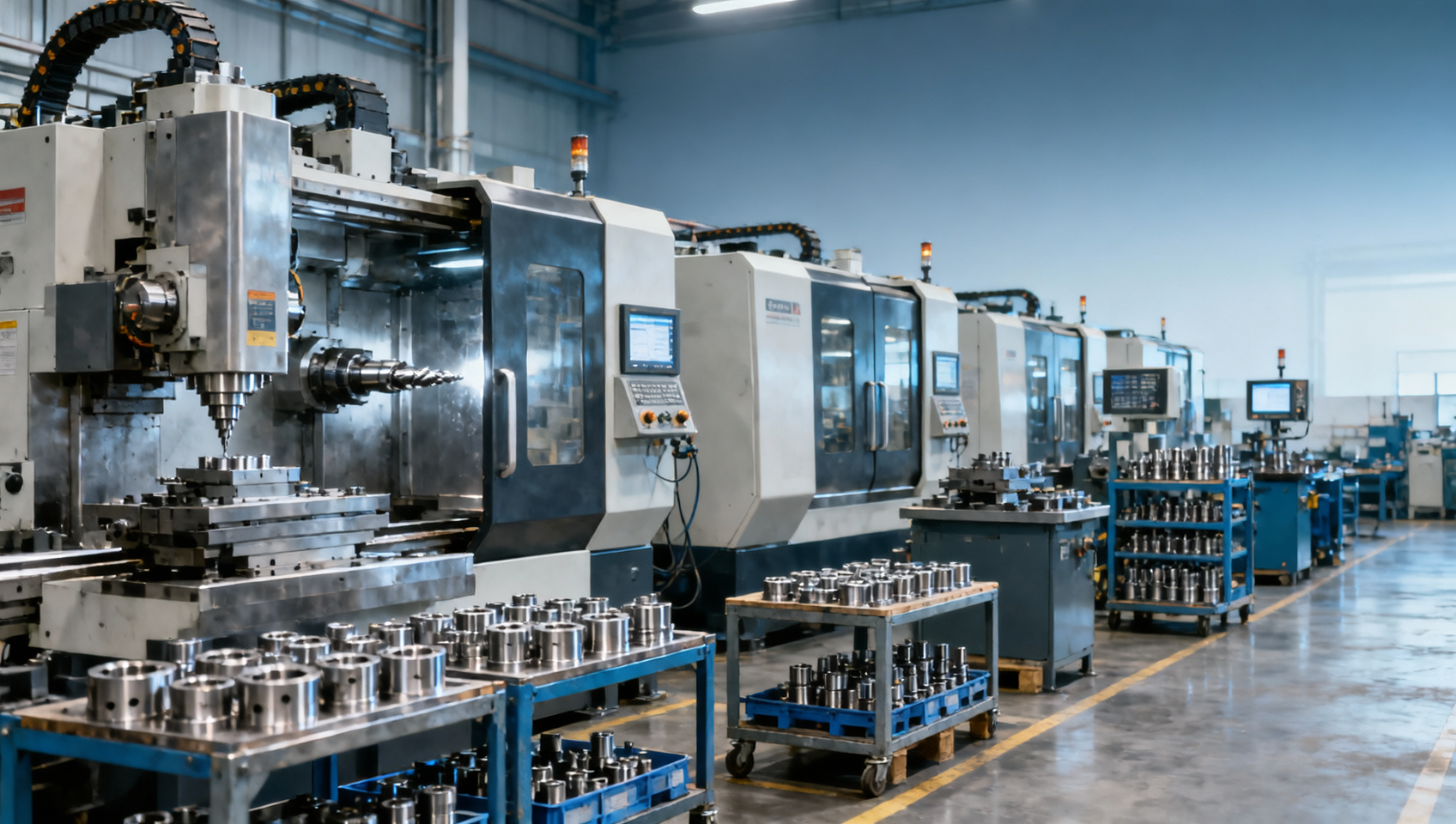
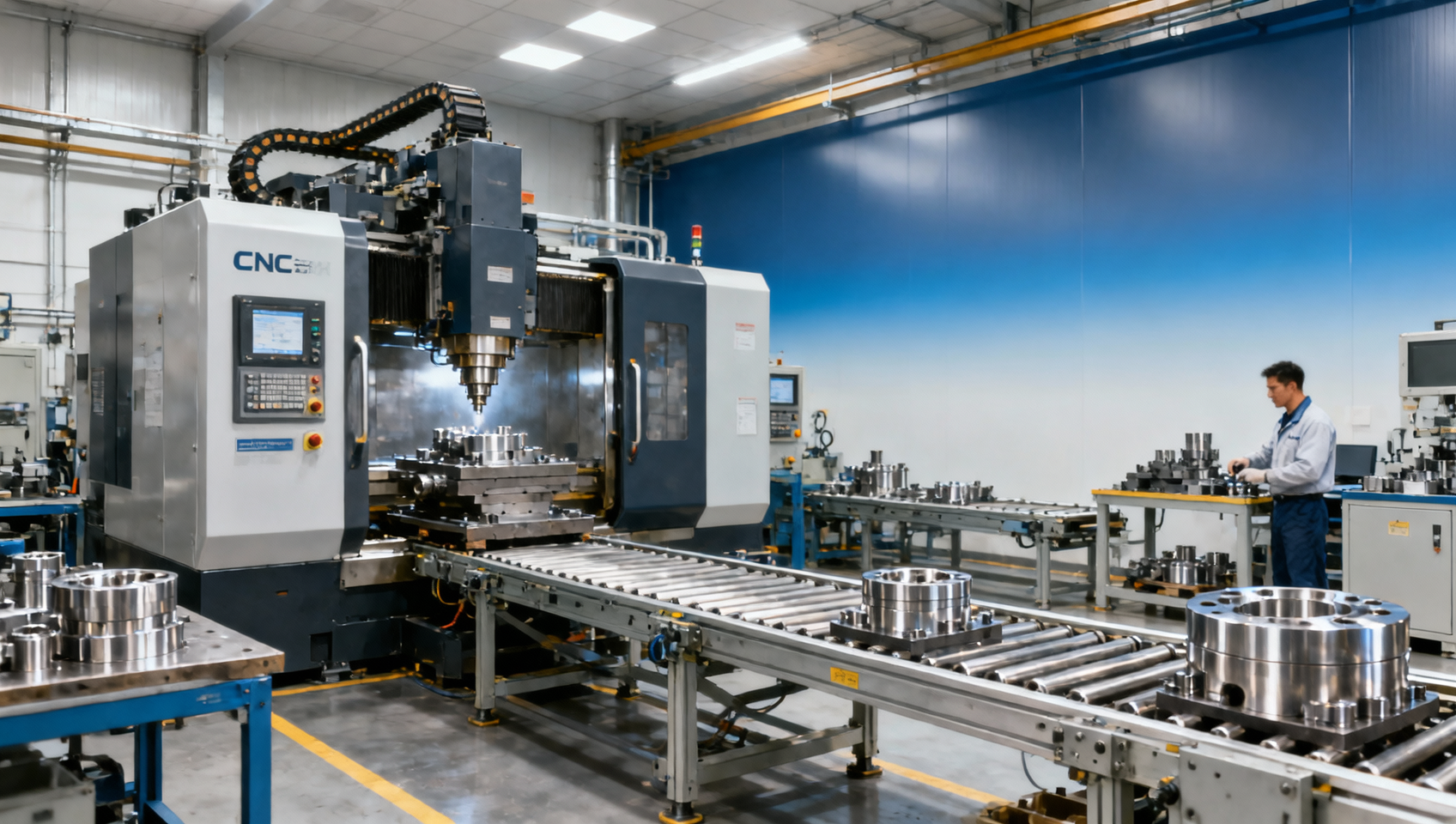
In CNC production, strong KPIs can still mask costly losses between shifts. For teams in metal machining, industrial CNC, and automated production, hidden downtime, setup drift, scrap, and handover gaps can quietly erode output and margins. This article explores how CNC metalworking operations can uncover these blind spots, strengthen the production process, and improve performance across the Manufacturing Industry.
For operators, engineers, buyers, and plant leaders, this issue is practical rather than theoretical. A line may hit its daily spindle-hours target and still lose 5% to 12% of effective capacity during shift changes, warm-up delays, unrecorded stoppages, or inconsistent setup control. In high-mix, medium-volume environments, these losses often spread across multiple machines and become difficult to detect through headline dashboards alone.
In the global CNC machine tool sector, where precision, automation, and digital integration increasingly define competitiveness, between-shift performance has become a strategic management topic. Whether a company runs CNC lathes, vertical machining centers, or multi-axis cells serving automotive, aerospace, energy, or electronics manufacturing, hidden losses affect delivery reliability, cost per part, tool life, and customer confidence.
Why conventional CNC KPIs often miss between-shift losses
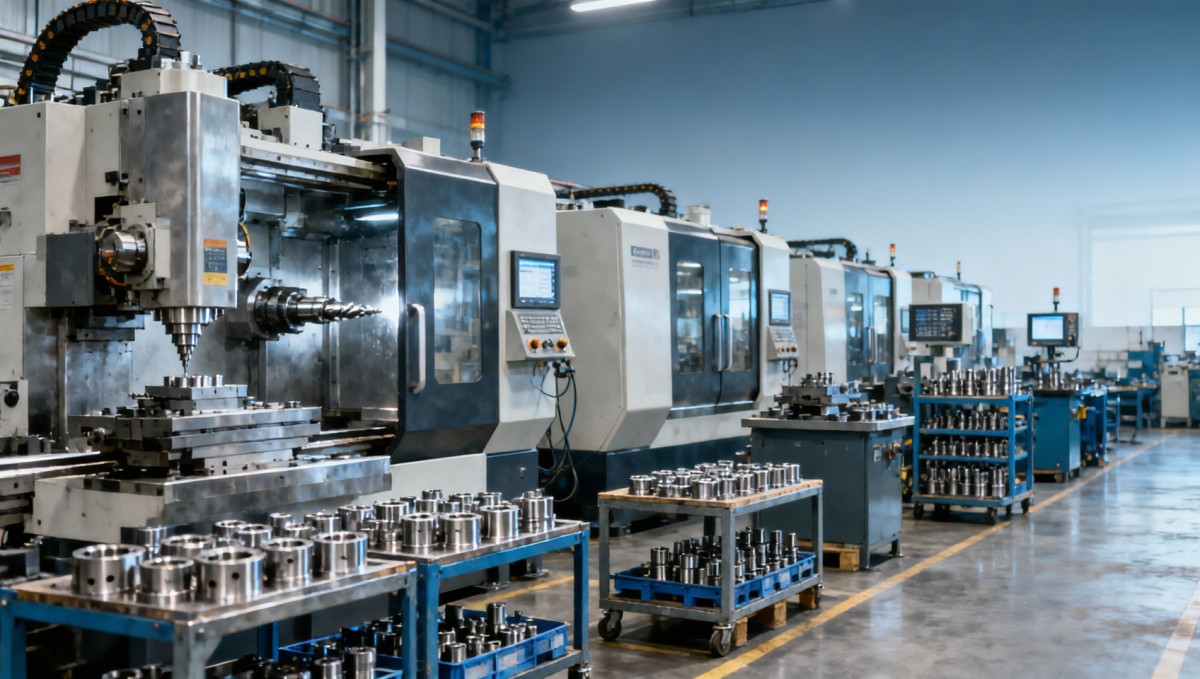
Most CNC factories track familiar indicators such as OEE, output per shift, machine utilization, scrap rate, and on-time completion. These metrics are useful, but they are often aggregated across 8-hour, 10-hour, or 12-hour periods. When data is rolled up too broadly, a 22-minute handover delay, a 0.08 mm setup drift, or three undocumented restarts can disappear inside an otherwise acceptable daily report.
This problem is common in both manual-supervised and automated production lines. A machining cell may show 78% utilization on paper, yet the real productive cutting time during the first 45 minutes of each shift may be far lower. If this pattern repeats across 15 machines over 25 working days, the annual loss can equal hundreds of machine-hours without triggering alarms in standard KPI reviews.
Another blind spot appears when teams measure only end results rather than transition quality. For example, one shift may complete its planned batch but leave the next shift with low coolant concentration, worn tools near life limit, or incomplete first-piece records. The downstream team then spends 10 to 30 minutes stabilizing the process. The KPI for the first shift looks healthy, while the cost is transferred to the next one.
For procurement and senior decision-makers, this matters because machine investment alone does not guarantee throughput. A new 5-axis machining center, robotic loading system, or flexible line may not deliver the expected ROI if the production process between shifts remains inconsistent. In many plants, the hidden issue is not machine capability but management visibility at transition points.
Typical KPI gaps in CNC metalworking operations
The most common reporting gap is that downtime is coded too generally. Categories such as “setup,” “maintenance,” or “waiting” may cover very different events. A 6-minute offset check and a 40-minute fixture correction are both logged as setup, even though they reflect completely different process risks and improvement priorities.
A second gap is the delay between event occurrence and event recording. If operators enter causes manually at the end of a shift, many micro-stoppages under 3 minutes are either forgotten or grouped into one broad note. In high-precision machining, repeated short interruptions can reduce spindle efficiency, extend cycle times, and increase dimensional instability.
Signals that headline KPIs may be hiding losses
- Daily output appears stable, but first-hour output differs by more than 15% between shifts.
- Scrap stays below 2%, yet rework and offset corrections rise during shift starts.
- Average setup time seems acceptable, but actual handover quality varies by operator and machine.
- Tool life plans exist, while emergency tool changes still cluster around shift transitions.
The table below shows how common KPI views can overlook transition-stage losses in CNC production and what teams should measure instead.
The key lesson is that factories should not abandon high-level KPIs. Instead, they should add transition-sensitive metrics that reveal where output and quality degrade between one team and the next. This is especially important in plants running mixed part families, tight tolerances, or automated loading systems with limited supervision.
Where hidden losses occur between shifts in CNC machining
Between-shift losses usually come from a small number of repeatable causes. The first is startup instability. CNC machines, particularly those handling precision discs, shaft components, or tight-tolerance structural parts, may require thermal stabilization, fixture verification, and first-off checks. If the incoming shift does not receive a stable machine state, 15 to 40 minutes may be lost before consistent production begins.
The second source is setup drift. This includes tool wear compensation not updated, fixture surfaces not cleaned, clamping force inconsistency, and offset data not transferred clearly. On 3-axis and 4-axis equipment, setup drift may appear as dimensional spread. On multi-axis systems, it can also affect surface finish, positional accuracy, and collision risk, especially when programs and tooling are changed under time pressure.
A third loss point is information handover. Operators may verbally explain machine status, but verbal transfer is weak when one team is leaving quickly and the next is focused on starting the line. Missing information often includes remaining tool life, parts in quarantine, gauge calibration status, unverified alarms, or known vibration issues at a certain spindle speed range such as 6,000 to 8,000 rpm.
The fourth source is hidden material and quality loss. Scrap is not the only problem. If 8 parts require rechecking, 3 parts need deburring correction, or 1 fixture pocket causes repeated loading hesitation, the shift may still report “completed.” Yet the real cost appears later in inspection queues, delayed packing, extra overtime, or customer complaints related to process consistency.
Common transition losses by production environment
Not every shop loses time in the same way. Job shops with high product variation often struggle with setup carryover and documentation gaps. Mass production lines tend to lose more through repetitive micro-stops and undetected process drift. Automated cells usually reduce direct labor variation but can still suffer if robot gripper checks, feeder alignment, or sensor cleaning are skipped during handover.
The following comparison helps buyers and production teams identify where to focus first based on manufacturing model.
This comparison shows why a single KPI framework is rarely enough. A factory serving aerospace hardware with ±0.01 mm tolerance controls will not manage transitions the same way as a line producing automotive components at 1,000 parts per day. The loss pattern depends on part complexity, automation level, and process discipline.
Loss points that deserve routine review
- Machine ready-to-run status within the first 10 minutes of the next shift.
- Tool life remaining below a set threshold, often 10% to 15%, at handover time.
- Open alarms, gauge availability, and incomplete quality checks.
- Material staging accuracy for the next batch or work order.
- Cooling, lubrication, chip evacuation, and fixture cleanliness conditions.
When these issues are standardized into routine checks, plants often recover capacity faster than by chasing large capital projects. In many cases, a better handover system produces measurable gains within 2 to 6 weeks, while also reducing operator stress and quality volatility.
How to build a shift-to-shift control system that improves output
The most effective way to reduce hidden CNC losses is to create a simple control system focused on the last 20 minutes of one shift and the first 20 minutes of the next. This system should combine machine condition, tooling status, part quality, documentation, and production sequence. It does not need to be complex, but it must be consistent across machines, operators, and supervisors.
Start with a structured handover checklist. The checklist should record at least 6 items: current job number, remaining quantity, approved offsets, tool life by critical tool, quality status of the last 3 to 5 parts, open issues, and startup advice for the next shift. In precision machining, attaching actual measurement values is more useful than comments such as “machine OK” or “quality stable.”
Next, define startup verification rules by machine type. A CNC lathe handling shaft parts may require chuck pressure confirmation, insert wear review, and runout check. A machining center may need fixture cleaning, datum recheck, and coolant concentration confirmation in the 6% to 10% range depending on process. Automated cells should include robot path confirmation, feeder status, and sensor cleanliness before automatic mode resumes.
A good control system also separates production losses into actionable categories. Instead of one broad “setup” code, use clear categories such as tool replacement, offset correction, fixture issue, material wait, quality hold, and automation reset. Once losses are coded with enough detail, engineering and management can see whether they need training, maintenance, process redesign, or procurement changes.
A practical 5-step handover framework
- Close the current batch status 15 to 20 minutes before shift end, not at the final minute.
- Verify tooling, fixture, coolant, alarms, and quality records against standard checks.
- Record measurable values such as offset changes, tool life remaining, and last-piece dimensions.
- Transfer verbal information only after written or digital records are complete.
- Confirm next-shift startup responsibility, including first-piece approval owner and escalation path.
For companies investing in digital manufacturing, a lightweight MES, machine monitoring platform, or tablet-based checklist can reduce reporting gaps. However, software alone does not solve the issue. Plants need operating discipline, role clarity, and a review cadence such as daily 10-minute stand-ups and weekly exception analysis for repeated transition losses.
Implementation priorities for different roles
Operators should focus on complete records, stable startup routines, and fast issue escalation. Process engineers should define tolerances, offset rules, and tooling thresholds. Buyers and decision-makers should evaluate whether current equipment, software connectivity, tool management, and support services are strong enough to sustain shift discipline across 2 or 3 shifts per day.
If resources are limited, begin with the 20% of machines causing 80% of transition loss. In many shops, that means critical bottleneck machines, tight-tolerance parts, or automated cells where one disruption can stop upstream and downstream flow. Focused correction on these assets can produce more value than broad but shallow improvement programs.
What buyers and decision-makers should evaluate before investing in new CNC capacity
When production KPIs hide losses, many companies assume the solution is to buy another machine. Sometimes new capacity is justified, but not always. Before approving a CNC lathe, machining center, multi-axis platform, or automated production line, buyers should examine whether current shift-to-shift control is weak enough to suppress the actual output of existing assets. Recovering 8% effective capacity may postpone a large capital purchase.
A strong procurement review should compare machine specifications with management capability. Features such as automatic tool measurement, tool-life monitoring, pallet change systems, probe-based part verification, and remote diagnostics can help reduce transition losses. Yet their value depends on whether the plant can integrate data into daily routines, maintenance standards, and quality signoff.
Decision-makers should also consider support factors beyond the machine itself. These include spare parts availability in 24 to 72 hours, training coverage for at least 2 shifts, commissioning support, software compatibility, and service response time. In global manufacturing environments, after-sales support quality can determine whether a production line remains stable after startup or becomes dependent on informal operator workarounds.
For multinational sourcing teams, the issue is even broader. Suppliers in China, Germany, Japan, South Korea, and other machine tool centers may offer strong hardware, but transition performance also depends on documentation clarity, HMI usability, local service networks, and integration with existing cutting tools, fixtures, and automation interfaces. Procurement should not evaluate price and spindle speed in isolation.
Procurement checklist for reducing hidden shift losses
The table below outlines practical factors buyers should review when machine investment is intended to improve real production performance, not just theoretical capacity.
This review helps prevent a common mistake: buying advanced equipment while leaving transition management unchanged. In that scenario, a factory may gain nominal capacity but still lose 20 to 30 minutes per shift in recoverable waste. Procurement decisions should support process control, not just machine ownership.
Questions leaders should ask before approving investment
- Do we know our first-hour effective output by machine and by shift?
- How many stoppages under 5 minutes occur each day, and are they coded accurately?
- Are startup quality checks standardized for every part family and fixture combination?
- Can our current staff support 2-shift or 3-shift operation without undocumented workarounds?
If the answer to these questions is unclear, a process audit may offer a better near-term return than immediate equipment expansion. For many plants, combining modest digital tools with better standard work is the fastest path to stronger CNC production results.
FAQ: practical questions about between-shift CNC performance
How can a factory measure between-shift losses without a full MES?
Start with a manual or tablet-based handover sheet used on the top 5 to 10 critical machines. Track ready-to-run time, first-piece approval time, tool changes, offset corrections, and open alarms. Even a 4-week data set can reveal recurring patterns if entries are disciplined and reviewed daily.
What is a reasonable target for handover duration?
There is no single standard, because part complexity and automation level matter. However, many plants aim for a controlled handover process of 10 to 20 minutes and a stable startup within the first 15 to 30 minutes of the next shift. The goal is not speed alone, but predictable readiness and low rework risk.
Which machines should be reviewed first?
Prioritize bottleneck assets, machines producing high-value parts, and equipment with frequent first-hour instability. This often includes multi-axis machining centers, critical CNC lathes for precision shafts, or automated cells where one unresolved issue can stop several linked operations.
Can better shift control really reduce cost without new equipment?
Yes, in many cases. If a plant recovers 15 minutes per shift across 12 machines running 2 shifts per day, that equals 6 machine-hours daily. Over 22 working days, the gain becomes 132 machine-hours per month, often enough to improve delivery, reduce overtime, and delay unnecessary capital spending.
CNC production does not lose value only through major breakdowns or visible scrap. A significant share of margin erosion happens quietly between shifts, where incomplete handovers, startup instability, setup drift, and weak data coding undermine the real performance of machine tools and automated lines. For manufacturers across metalworking, precision machining, and industrial automation, the fastest improvement often comes from making these hidden losses measurable and manageable.
If your team is evaluating CNC equipment, production optimization, or digital monitoring solutions, a clearer view of shift-to-shift performance can support better purchasing, stronger operations, and more reliable delivery. Contact us to discuss your production scenario, request a tailored improvement plan, or learn more about practical solutions for CNC machining and smart manufacturing.
Recommended for You
 What causes chatter in metal machining and how to stop itCNC Machining Technology Center
 Industrial CNC lead times are shifting in 2026Manufacturing Market Research Center
 When CNC industrial upgrades cut output instead of raising itMachine Tool Industry Editorial Team
 Automated lathe errors that often start with bar feedingMachine Tool Industry Editorial Team
 Why CNC metalworking scrap rates rise on thin wall partsCNC Machining Technology Center
 CNC cutting speed or finish quality: where losses beginCNC Machining Technology Center



Aris Katos
Future of Carbide Coatings
15+ years in precision manufacturing systems. Specialized in high-speed milling and aerospace grade alloy processing.
▶
Production Process delays often begin before machining startsCNC Machining Technology Center▶
CNC production KPIs can hide losses between shiftsCNC Machining Technology Center▶
Lean Production Process implementation: Where value stream mapping misidentifies non-value stepsCNC Machining Technology Center
Mastering 5-Axis Workholding Strategies
Join our technical panel on Nov 15th to learn about reducing vibrations in thin-wall components.

Providing you with integrated sanding solutions
Before-sales and after-sales services
Comprehensive technical support