• Global CNC market projected to reach $128B by 2028 • New EU trade regulations for precision tooling components • Aerospace deman
NYSE: CNC +1.2%LME: STEEL -0.4%

Production Process delays often begin before machining starts
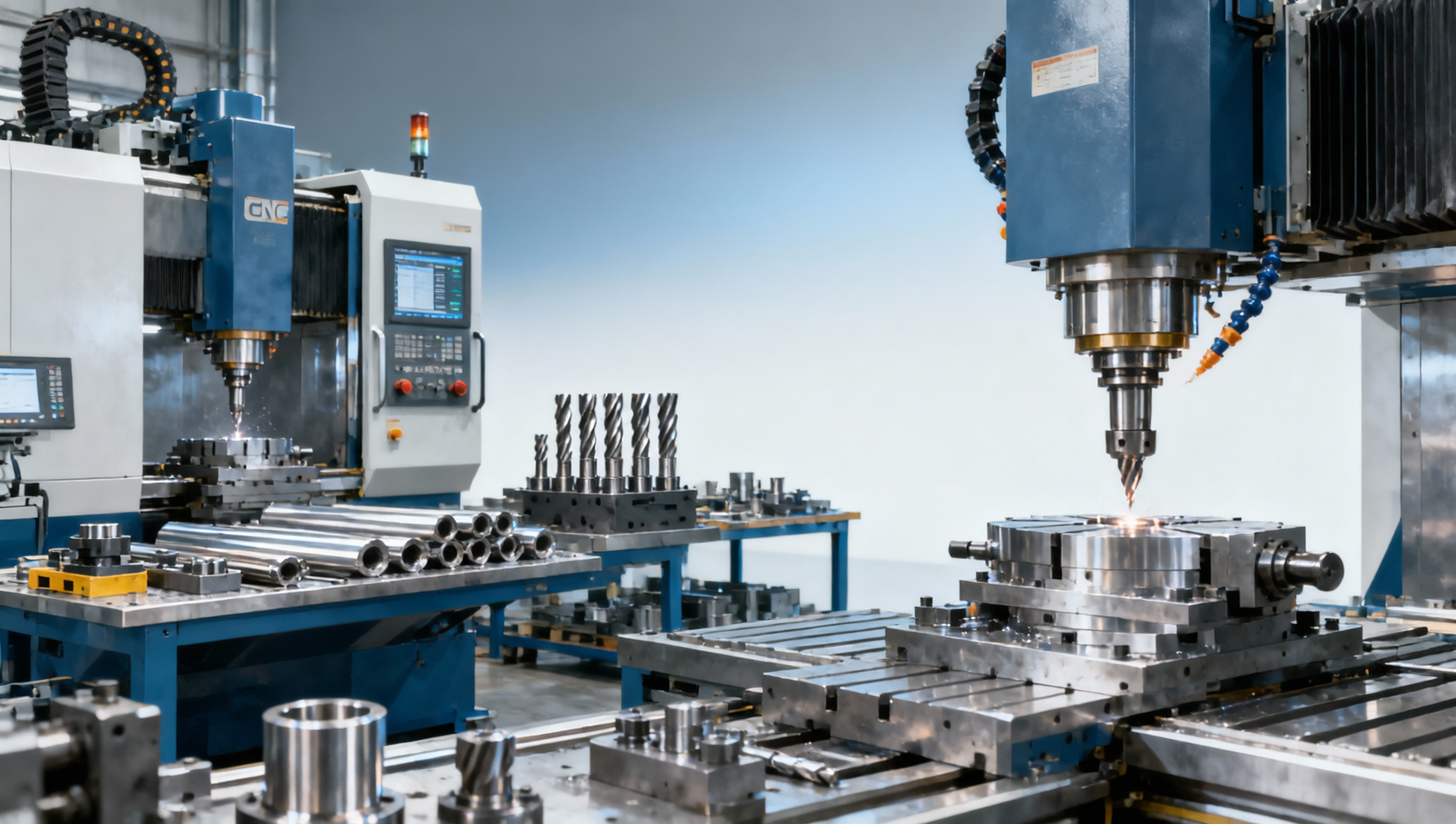
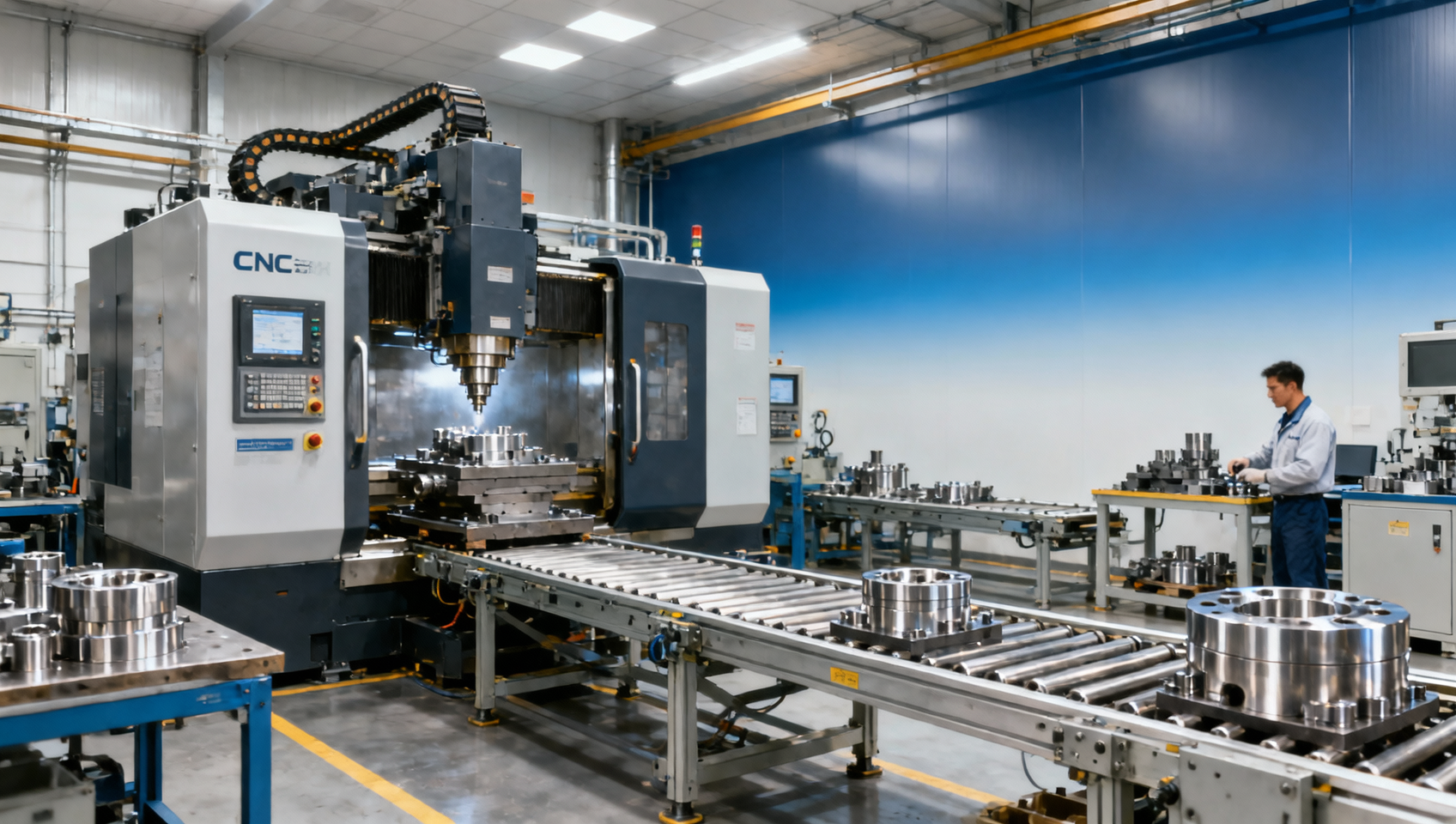
Production Process delays in metal machining often start long before an industrial CNC, automated lathe, or CNC milling system begins cutting. From material planning and CNC Programming to tooling, staffing, and Automated Production Line coordination, hidden gaps can slow CNC production, raise costs, and disrupt Global Manufacturing performance. Understanding these early risks is essential for operators, buyers, and decision-makers across the Manufacturing Industry.
In precision manufacturing, late deliveries are often blamed on spindle time, machine breakdowns, or inspection bottlenecks. In reality, many delays originate 3 to 15 days earlier in quoting, BOM review, fixture preparation, material release, or program validation. When those upstream tasks are fragmented, even a high-performance machining center cannot maintain schedule stability.
For shop-floor users, the issue appears as waiting time and rescheduling. For procurement teams, it shows up as uncertain lead times and higher unit cost. For business leaders, it affects on-time delivery, capacity planning, and customer retention. This article explains where delays begin, how to identify early warning signs, and what practical controls can reduce risk before machining starts.
Why upstream preparation drives machining performance
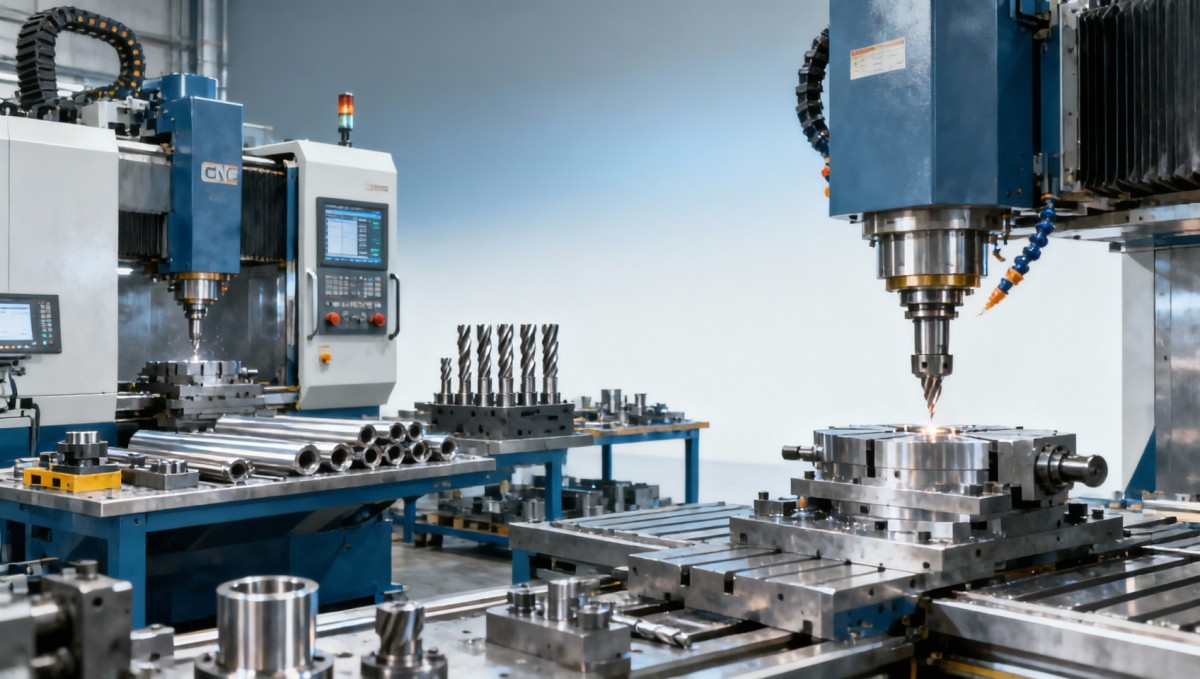
A CNC production schedule depends on more than machine availability. Before the first workpiece enters a chuck or fixture, the job must pass through material confirmation, drawing review, process planning, tool list preparation, CNC Programming, and setup coordination. If one of these steps slips by 24 to 48 hours, the entire production window may move.
In multi-part or mixed-batch manufacturing, the effect is even larger. A shop running 20 to 50 part numbers per week may lose capacity not because of cutting limits, but because operators are waiting for fixtures, revised drawings, or approved first-article samples. These hidden losses often reduce effective equipment utilization by 8% to 20%.
This is especially relevant in sectors such as automotive, aerospace support supply, energy equipment, and electronics manufacturing, where tolerance bands, traceability, and delivery windows are tighter than before. A machine tool can hold microns, but the process around it still fails if planning discipline is weak.
The most common pre-machining delay points
Teams often focus on machine uptime while underestimating administrative and technical preparation. Yet these early-stage tasks determine whether the shop starts on time, with the correct tools and a stable process route.
- Material release is late because raw stock, heat-treatment status, or grade substitution has not been confirmed 2 to 5 days before production.
- CNC programs are incomplete, unverified, or based on revision-old drawings, creating setup holds and rework risk.
- Cutting tools, inserts, collets, and holders are unavailable or not preset, adding 30 to 120 minutes per setup.
- Fixtures are not standardized, causing alignment variation and delayed first-piece approval.
- Operators receive routing changes too late, which disrupts shift planning and machine sequencing.
These issues are not isolated. In an automated production line, one missing tool assembly or one unapproved NC file can hold several machines at once. That is why upstream preparation should be treated as a production asset, not as support paperwork.
A practical view of delay propagation
The table below shows how small upstream gaps can create larger production losses. The percentages are common operational ranges rather than universal benchmarks, but they help teams prioritize where to act first.
The key lesson is simple: a shop does not need a catastrophic failure to miss delivery. Several small pre-production gaps, each appearing manageable, can combine into one major schedule slip. Controlling them early usually costs less than recovering after production is already behind.
Where delays usually begin before the machine turns on
Most metal machining delays fall into five categories: planning, engineering, material, tooling, and labor coordination. These categories matter because they often sit in different departments. When data is not shared quickly, the production process becomes reactive rather than controlled.
For example, a buyer may secure material in 7 days, but engineering may still need 2 days to review revised tolerances and update the CNC program. If fixture preparation takes another day and the assigned operator is moved to another urgent order, the original schedule becomes unrealistic even though no machine has failed.
The problem is magnified in global manufacturing supply chains, where imported material, outsourced heat treatment, or cross-border logistics can add 5 to 20 days of uncertainty. In such environments, upstream planning discipline is often more valuable than adding one more machine tool.
Five root causes that deserve early control
- Incomplete RFQ or drawing package: missing tolerance notes, unclear surface requirements, and undefined material conditions lead to repeated clarification cycles.
- Weak process routing: no clear sequence for roughing, semi-finishing, finishing, deburring, and inspection creates confusion at setup stage.
- Unprepared tooling inventory: insert grades, drill sizes, or holders are available on paper but not physically staged at the machine.
- Labor mismatch: a 5-axis job may be assigned to a less experienced shift, raising prove-out time and quality risk.
- Disconnected planning systems: ERP, MES, and CAM data are not synchronized, so priorities change faster than teams can respond.
These root causes are common in both high-mix/low-volume shops and larger automated production environments. The difference is scale. In a flexible production line, one weak handoff can affect multiple operations, including machining, washing, inspection, and packing.
How different roles experience the same delay
The same upstream problem can look very different depending on who is involved. Aligning viewpoints helps reduce blame-driven decisions and supports better purchasing and production planning.
When these indicators are tracked together, teams can move from reactive firefighting to prevention. That is particularly important for procurement and plant leadership, who need visibility earlier than the shop-floor delay itself.
How to reduce pre-machining delays in CNC production
Reducing delay does not always require a large capital project. Many improvements come from standardizing the handoff process before cutting begins. In practical terms, shops that establish a 4-step release gate often shorten setup-related delay by 10% to 25% within one or two production cycles.
The release gate should confirm drawing revision, material status, tooling readiness, and program validation before a job is loaded on the machine schedule. This is valuable for standalone CNC lathes, horizontal machining centers, and integrated automated production lines alike.
A disciplined approach is especially useful where batch sizes vary. A shop producing both 10-piece prototypes and 1,000-piece repeat orders needs different control intensity, but both environments benefit from visible readiness criteria.
A workable release checklist before machining starts
- Confirm drawing revision, GD&T notes, and critical dimensions at least 24 hours before scheduled setup.
- Verify raw material quantity, material certificate status, and heat-treatment condition against job traveler.
- Prepare and preset core tools, spare inserts, holders, and wear offsets for the planned batch size.
- Validate CNC Programming with simulation, collision check, and first-run strategy for complex geometry.
- Assign operator, setup technician, and inspection support by shift and machine family.
This checklist is not administrative overhead. It converts uncertainty into measurable readiness. In many shops, a 15-minute pre-release review prevents several hours of machine-side troubleshooting later.
Recommended control points by production model
Different production models require different levels of discipline. The table below outlines practical controls that align with common machining environments.
The main takeaway is that prevention must match production complexity. A small workshop may only need a manual release board, while a larger smart factory may need integrated MES-CAM visibility. Both can reduce delay if the controls are used consistently.
What buyers and decision-makers should evaluate before placing orders
For buyers, delayed production process performance is not only a supplier issue. It is also a sourcing issue. If a supplier quotation looks competitive but lacks material lead-time clarity, fixture ownership terms, program approval process, or inspection timing, the final delivery date may be less reliable than expected.
Decision-makers should evaluate whether a machining partner can control upstream readiness, not just machining capability. A supplier with advanced CNC equipment but weak planning discipline may still struggle with schedule adherence, especially for mixed materials, tolerance-critical parts, or 2-stage outsourced operations.
In practical B2B purchasing, four questions usually matter most: How early is material secured? How are drawing revisions controlled? What is the standard setup and first-article process? And how quickly are risks escalated if one stage slips? These questions often reveal more than brochure-level equipment lists.
Supplier review points that improve delivery confidence
- Ask for standard lead-time ranges by material type, such as 3–7 days for common stock and 2–4 weeks for special alloys or imported bars.
- Confirm whether fixture design, program proving, and first-piece inspection are included in the quoted timeline.
- Review how engineering changes are handled after PO release, including response time and document traceability.
- Check whether the supplier has backup tooling, spare machine capacity, or alternative routing for urgent orders.
- Request visible milestones instead of only one final delivery promise.
This is especially important in global sourcing, where logistics, customs, and sub-supplier timing can introduce another layer of uncertainty. A realistic production plan is usually better than an aggressive promise that cannot absorb disruption.
A simple procurement decision framework
The table below can help procurement teams compare machining suppliers beyond unit price. It supports more balanced sourcing decisions for both ongoing and project-based purchasing.
A procurement process that includes these checks can reduce surprises later. For high-value parts or repeat-volume programs, the benefit is often seen in fewer schedule escalations and better cost stability over 3 to 6 months.
FAQ: practical questions about pre-machining delay control
Many companies understand that delays happen before cutting starts, but they are unsure where to begin. The questions below reflect common concerns from operators, purchasers, and manufacturing managers working across CNC machining and precision production environments.
How early should material and tooling be confirmed?
For common steel, aluminum, and standard tooling, confirmation 3 to 5 working days before setup is a practical baseline. For special alloys, imported stock, custom fixtures, or long-reach tools, 2 to 4 weeks is often more realistic. The key is to lock critical items early enough that the machine schedule remains credible.
What is the most overlooked cause of CNC production delay?
Program readiness is frequently underestimated. Shops may have the machine, material, and operator available, yet still lose half a shift because the NC file has not been validated against the latest drawing revision. For complex 4-axis or 5-axis parts, simulation and setup review should be treated as mandatory, not optional.
Is automation enough to solve production process delays?
No. Automation can reduce manual handling and improve consistency, but it also increases the importance of upstream discipline. A robot cell or automated production line still depends on correct fixtures, stable part flow, verified programs, and synchronized inspection. Without those, automation may simply expose planning weakness faster.
Which KPI should management track first?
A useful starting set includes on-time job release, setup delay hours, first-piece approval lead time, and schedule adherence by week. Even 4 KPIs can provide enough visibility to identify whether the main issue is engineering readiness, material flow, or labor coordination.
How can a buyer improve delivery reliability without overpaying?
Share complete drawings, forecast realistic demand, and confirm milestone dates instead of only final shipment dates. Buyers who provide stable information early often receive more reliable scheduling in return. This is usually more cost-effective than paying for repeated expediting after delays have already formed.
Production process delays in machining are rarely random. They often begin in the quiet stages of planning, engineering, material preparation, and resource coordination. Companies that manage those stages well improve machine utilization, protect delivery performance, and create more reliable cost control across CNC production.
For operators, the benefit is smoother setup and fewer interruptions. For procurement teams, it means clearer lead times and better supplier evaluation. For business leaders, it supports stronger schedule predictability in an increasingly competitive global manufacturing environment.
If you are reviewing machining capacity, supplier reliability, or automated production planning, now is the right time to examine the steps before cutting starts. Contact us to discuss your production scenario, get a tailored process review, or learn more about practical solutions for CNC machining and precision manufacturing performance.
PREVIOUS ARTICLE
NEXT ARTICLE
Recommended for You
 What causes chatter in metal machining and how to stop itCNC Machining Technology Center
 Industrial CNC lead times are shifting in 2026Manufacturing Market Research Center
 When CNC industrial upgrades cut output instead of raising itMachine Tool Industry Editorial Team
 Automated lathe errors that often start with bar feedingMachine Tool Industry Editorial Team
 Why CNC metalworking scrap rates rise on thin wall partsCNC Machining Technology Center
 CNC cutting speed or finish quality: where losses beginCNC Machining Technology Center

Aris Katos
Future of Carbide Coatings
15+ years in precision manufacturing systems. Specialized in high-speed milling and aerospace grade alloy processing.
▶
Production Process delays often begin before machining startsCNC Machining Technology Center▶
CNC production KPIs can hide losses between shiftsCNC Machining Technology Center▶
Lean Production Process implementation: Where value stream mapping misidentifies non-value stepsCNC Machining Technology Center
Mastering 5-Axis Workholding Strategies
Join our technical panel on Nov 15th to learn about reducing vibrations in thin-wall components.

Providing you with integrated sanding solutions
Before-sales and after-sales services
Comprehensive technical support