• Global CNC market projected to reach $128B by 2028 • New EU trade regulations for precision tooling components • Aerospace deman
NYSE: CNC +1.2%LME: STEEL -0.4%

CNC Milling or Turning: Which Saves More Time
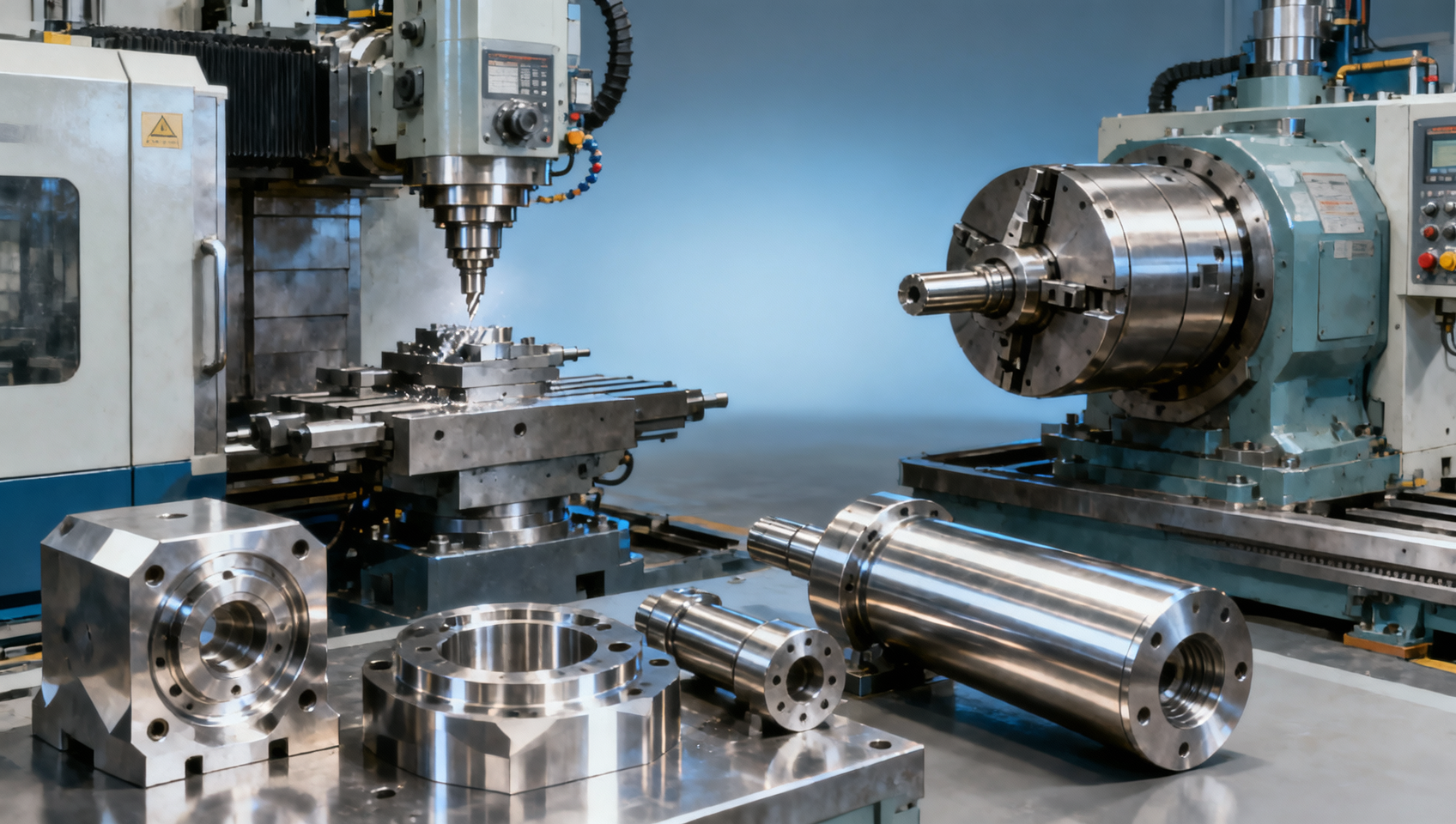
In metal machining, choosing between CNC milling and an automated lathe can directly affect cycle time, cost, and production efficiency. The short answer is this: turning usually saves more time for round or shaft-type parts, while CNC milling is often faster for prismatic, flat, pocketed, or multi-face components. For manufacturers working in industrial CNC, CNC metalworking, and automated production, the best choice depends less on machine preference and more on part geometry, tolerances, setup strategy, and batch size. This guide explains where each process saves time, where hidden delays appear, and how buyers, operators, and decision-makers can choose the right path for better CNC production results in today’s manufacturing industry.
What is the real answer: when does CNC milling or turning save more time?
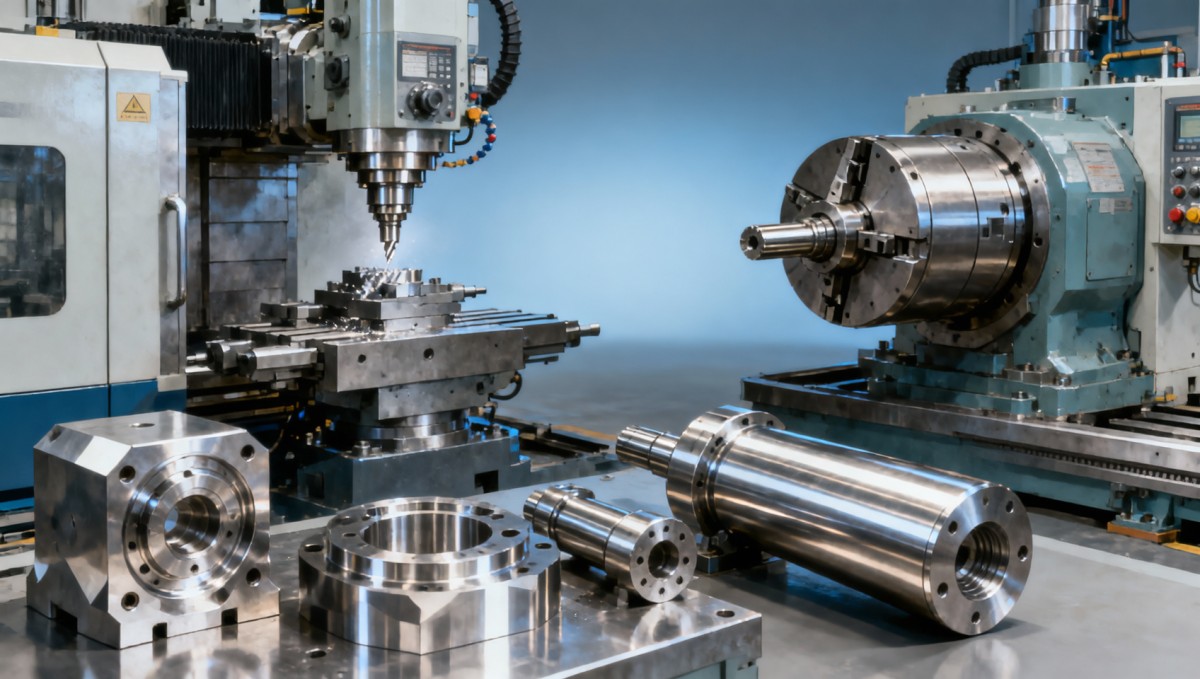
For most real-world jobs, there is no universal winner. If a part is primarily cylindrical and most features are concentric to the centerline, CNC turning is usually the faster process. A CNC lathe removes material efficiently because the workpiece rotates continuously, allowing rapid machining of outer diameters, bores, tapers, grooves, and threads in fewer motions.
CNC milling tends to save more time when the part has flat surfaces, slots, pockets, holes on multiple faces, contours, or irregular 3D geometry. A machining center can access those features more directly than a lathe, especially when the part is not rotationally symmetric.
In practical production planning, the fastest route is often determined by these questions:
- Is the part round or prismatic?
- How much material must be removed?
- How many setups are needed?
- Are tolerances tight?
- Is the batch small, medium, or high volume?
- Can one machine complete the part, or will a second operation be required?
If the part fits naturally on a lathe, turning often wins on cycle time. If the part needs many non-axisymmetric features, milling often becomes the better time-saving choice overall.
Why turning is often faster for shafts, pins, bushings, and other round parts
Turning is built for rotational parts. That basic match between machine motion and part geometry is the main reason it can save time.
On a CNC lathe, the material spins at controlled speed while the cutting tool moves along predictable paths. This makes roughing and finishing highly efficient for diameters and bores. Features such as shoulders, chamfers, threads, radii, and grooves can often be completed in a single setup or with minimal repositioning.
Turning usually saves time in these situations:
- Shafts, rollers, bushings, sleeves, spacers, and threaded pins
- High-volume production of rotational components
- Parts requiring concentricity and roundness control
- Bar-fed operations where automation reduces loading time
- Jobs where multiple turned features are completed in one chucking
For procurement and production teams, one of the biggest advantages of automated lathes is repeatability with low manual handling. A bar feeder, parts catcher, and stable tool layout can dramatically shorten total production time, not just spindle time. That matters in lights-out machining and unattended production environments.
However, turning loses its time advantage when the part requires many off-center holes, flats, side pockets, or complex non-round geometry. In that case, secondary milling operations may erase the time saved during lathe work.
Why CNC milling can be faster for complex parts even if cutting looks slower
At first glance, milling may seem slower because the cutter engages the workpiece in a more segmented way than turning. But for many parts, milling is faster in total process time because it avoids awkward workholding, multiple transfers, and extra operations.
CNC milling is often the better time-saving option for:
- Blocks, plates, housings, brackets, and manifolds
- Parts with pockets, slots, keyways, and complex contours
- Components requiring machining on several faces
- Prototypes and small batches with frequent design changes
- Jobs where one machining center can combine drilling, tapping, boring, and contouring
Modern multi-axis machining centers can reduce cycle time significantly by minimizing manual repositioning. A 4-axis or 5-axis CNC milling machine may complete what would otherwise need multiple setups on simpler equipment. Even if the pure cutting time is not always lower than turning, the overall job time can be shorter because setup consolidation is often the biggest hidden efficiency gain.
For operators and manufacturing engineers, this is an important distinction: the fastest process is not always the one with the highest metal removal rate. It is the one that gets the finished part out the door with the fewest interruptions.
What actually affects time most: cycle time is only part of the story
Many buyers compare CNC milling and turning based only on quoted machining time, but that can be misleading. In production, total lead time and total shop time are shaped by several factors beyond cutting speed.
The biggest time drivers usually include:
- Setup time: Fixture preparation, tool presetting, workholding alignment, and first-piece inspection
- Number of setups: Every rechucking or transfer adds labor and risk
- Tool changes: More tools can increase non-cutting time
- Material type: Stainless steel, titanium, hardened alloys, and aluminum all behave differently
- Tolerance and surface finish requirements: Tighter specs may require slower finishing passes
- Automation level: Bar feeders, pallet changers, robot loading, and in-process measurement can greatly reduce downtime
- Programming complexity: Advanced milling strategies may take longer to program, but save machine time later
For business evaluation teams, this means the “faster” process should be judged by total manufacturing efficiency, not just by spindle utilization. A process with a slightly longer cycle time may still be better if it reduces labor, inspection burden, and queue time between machines.
How to choose the faster option for your specific part
A simple decision framework can help manufacturers, sourcing teams, and operators choose between CNC milling and turning more accurately.
- Start with part geometry. If the part is mainly round, start with turning. If it is mainly flat or shaped across multiple faces, start with milling.
- Map every required feature. Note whether features are concentric, radial, axial, side-facing, or off-center.
- Count setups. The process with fewer setups often saves more time overall.
- Review batch size. Turning often excels in high-volume production of round parts. Milling is often more flexible for mixed-product runs and changing designs.
- Check combination-machine options. Mill-turn centers or live-tool lathes may eliminate transfers and save substantial time.
- Include inspection and handling time. Fast cutting is less valuable if metrology and movement between stations create delays.
This approach is especially useful for RFQ evaluation. Instead of asking only “Which process is faster?”, ask “Which route finishes the complete part faster with acceptable cost, quality, and production stability?”
When a mill-turn or live-tool lathe saves even more time
In many modern CNC metalworking environments, the real comparison is no longer just milling versus turning. It is whether a combined process can outperform both standalone options.
Mill-turn machines and live-tool CNC lathes can perform turning, drilling, tapping, and light milling operations in one platform. For parts that are mostly round but also need flats, cross holes, slots, or polygon features, these machines can reduce handling time dramatically.
They are especially useful for:
- Precision shaft parts with side features
- Medical, automotive, and aerospace components
- Medium-to-high volume production where transfer time matters
- Jobs requiring concentricity plus secondary milled features
The trade-off is that these systems may involve higher capital investment, more complex programming, and stricter process planning. Still, for many manufacturers pursuing automated production and smart factory goals, process integration is one of the most effective ways to save time.
Common mistakes that lead to wrong process decisions
Several avoidable mistakes cause companies to choose the slower route.
- Choosing based on available equipment rather than ideal process fit
- Comparing machine rates without considering setup and transfer time
- Ignoring part-family strategy for repeat production
- Overlooking automation potential on lathes or palletized milling systems
- Sending round parts to milling because of one minor side feature that a live-tool lathe could handle faster
- Sending complex prismatic parts to turning first, then adding multiple secondary operations
For sourcing and management teams, these errors often show up as longer lead times, unstable quality, and higher per-part cost. For operators, they show up as unnecessary setups, difficult fixturing, and avoidable bottlenecks on the shop floor.
Conclusion: which one saves more time?
CNC turning usually saves more time for cylindrical parts because it matches the geometry, uses fewer motions, and supports highly efficient automated production. CNC milling usually saves more time for prismatic or complex multi-face parts because it handles diverse features in fewer secondary operations. In other words, the faster process is the one that best fits the part and reduces the total number of steps from raw material to finished component.
For buyers, operators, and business decision-makers in the manufacturing industry, the smartest choice is to evaluate part shape, setups, automation options, tolerance requirements, and batch size together. If the job is mostly round, turning is often the time-saving answer. If the job is feature-rich and non-rotational, milling is usually the better path. And when both feature types matter, a mill-turn strategy may deliver the greatest efficiency of all.
PREVIOUS ARTICLE
NEXT ARTICLE
Recommended for You
![]() China Releases First Eastern Sea Seabed Elemental MapGlobal Machine Tool Trade Research Center
China Releases First Eastern Sea Seabed Elemental MapGlobal Machine Tool Trade Research Center![]() AIMM National Standard Advances for CNC Smart Factory CertificationManufacturing Policy Research Center
AIMM National Standard Advances for CNC Smart Factory CertificationManufacturing Policy Research Center![]() eVTOL Mass Production Drives CNC Export GrowthGlobal Machine Tool Trade Research Center
eVTOL Mass Production Drives CNC Export GrowthGlobal Machine Tool Trade Research Center![]() China Launches World's Largest Agri-Meteorological Observation NetworkManufacturing Market Research Center
China Launches World's Largest Agri-Meteorological Observation NetworkManufacturing Market Research Center![]() Robotics ToB Scaling Hits Data Bottleneck in CNC AI InspectionCNC Machining Technology Center
Robotics ToB Scaling Hits Data Bottleneck in CNC AI InspectionCNC Machining Technology Center![]() SAMR to Complete 1,800+ Standards Revisions in 2026Manufacturing Policy Research Center
SAMR to Complete 1,800+ Standards Revisions in 2026Manufacturing Policy Research Center


Aris Katos
Future of Carbide Coatings
15+ years in precision manufacturing systems. Specialized in high-speed milling and aerospace grade alloy processing.
▶
Metal Machining vs CNC Metalworking: What MattersCNC Machining Technology Center▶
How to Reduce Scrap in CNC Metalworking JobsCNC Machining Technology Center▶
CNC Milling or Turning: Which Saves More TimeCNC Machining Technology Center▶
How to Fix Bottlenecks in the Production ProcessCNC Machining Technology Center▶
Production Process Changes That Improve Output FastCNC Machining Technology Center
Mastering 5-Axis Workholding Strategies
Join our technical panel on Nov 15th to learn about reducing vibrations in thin-wall components.

Providing you with integrated sanding solutions
Before-sales and after-sales services
Comprehensive technical support