• Global CNC market projected to reach $128B by 2028 • New EU trade regulations for precision tooling components • Aerospace deman
NYSE: CNC +1.2%LME: STEEL -0.4%

Production Process Changes That Improve Output Fast
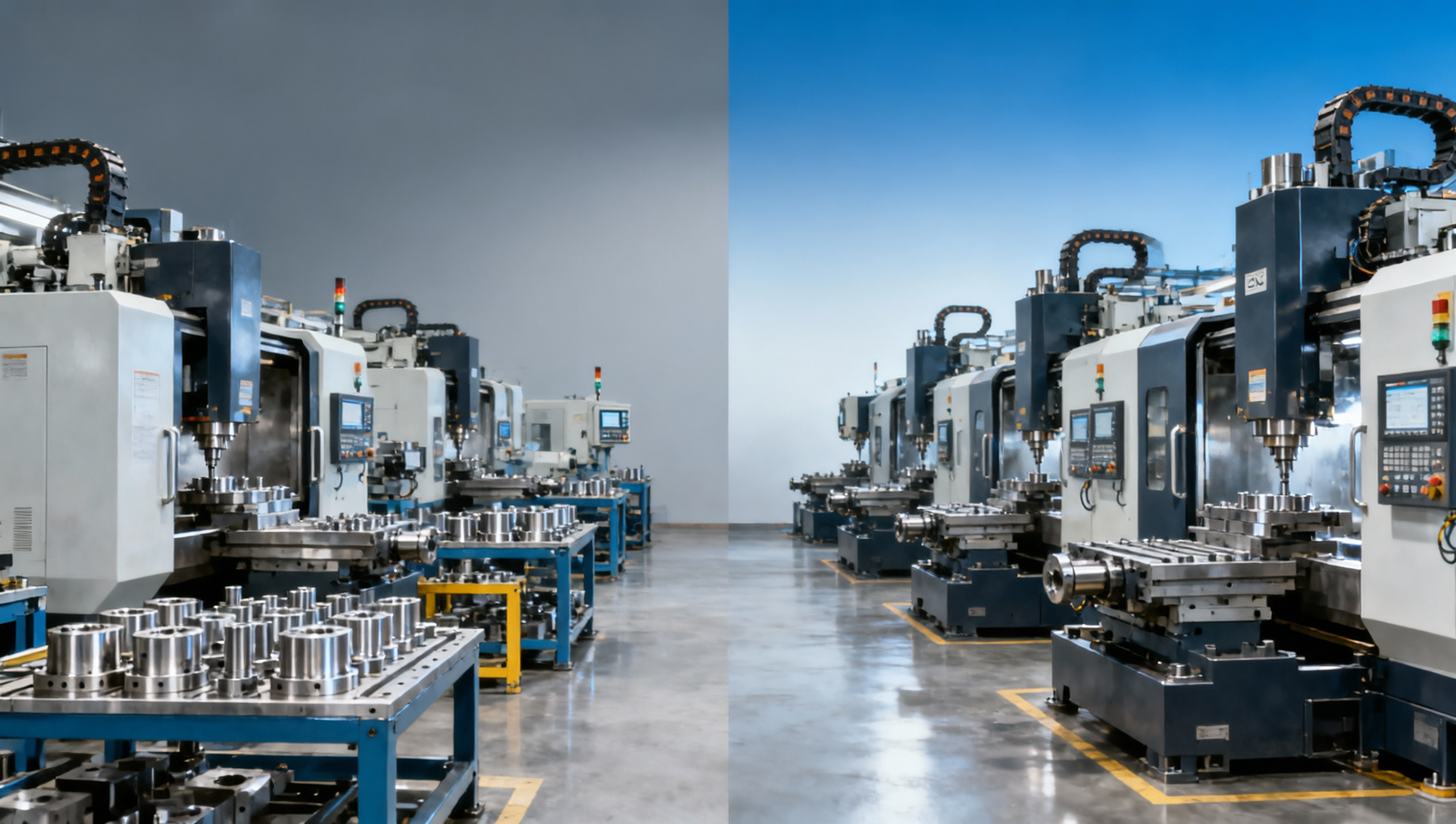
In today’s Global Manufacturing landscape, fast output gains often come from smart Production Process changes rather than major capital investment. From industrial CNC upgrades and CNC milling optimization to automated production line improvements and better CNC Programming, manufacturers can boost precision, reduce downtime, and scale CNC production faster across metal machining operations.
Where fast output improvements really come from in CNC production
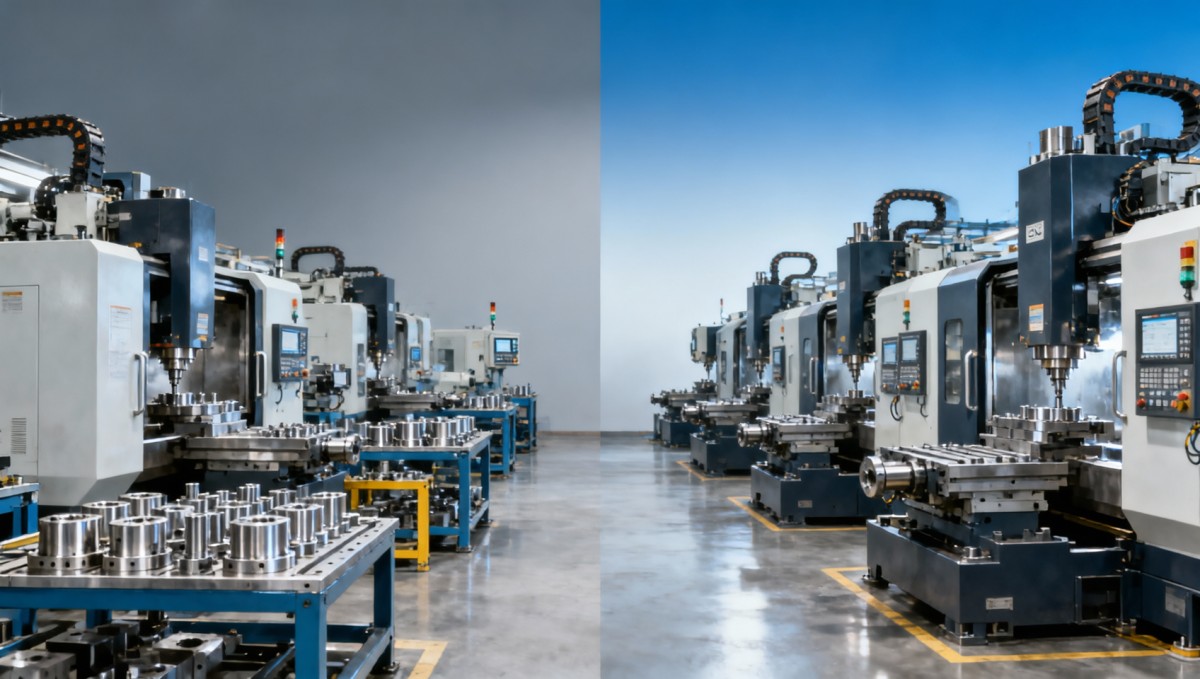
Many factories assume higher output requires a new machining center, a new line, or a larger automation budget. In practice, the first 3–6 months of improvement often come from Production Process changes that remove bottlenecks already present in CNC machining, tool handling, fixture setup, part transfer, and program verification. For information researchers and business evaluators, this matters because return on change is usually faster when process waste is addressed before equipment expansion.
In the CNC machine tool industry, output is not only a function of spindle speed or machine count. It is shaped by setup time, tool life consistency, first-piece approval speed, operator handoff quality, and the stability of upstream and downstream steps. A line with 8 machines can underperform a line with 5 machines if scheduling, workholding, and CNC Programming are not aligned with actual batch size and tolerance demands.
This is especially relevant across automotive, aerospace, electronics, and energy equipment production, where part complexity can range from simple shafts to multi-surface structural components. A small change such as offline programming, preset tool offset management, or fixture standardization may reduce non-cutting time by 10–30 minutes per shift. Across 2 shifts per day and 20–26 working days per month, the cumulative capacity gain can be meaningful without adding floor space.
For operators, the main pain point is often unstable rhythm rather than pure machine limitation. For procurement teams, the challenge is deciding whether to invest in software, tooling, workholding, training, or a full line retrofit. For commercial decision-makers, the right question is not “Which machine is faster?” but “Which Production Process change removes the highest-cost delay first?”
What usually slows output before machine capacity is reached
Before a factory reaches true machine saturation, four common barriers appear. First, setup variation creates inconsistent cycle start conditions. Second, tool management causes unexpected stoppages. Third, inspection approval delays hold work-in-progress between operations. Fourth, manual material flow creates idle time that does not appear in programmed cycle time. These issues are common in both standalone CNC lathes and automated production lines.
- Setup delays: changeover may take 20–90 minutes depending on fixture complexity, datum confirmation, and offset verification.
- Tool instability: unmanaged wear can shift quality results after a few dozen parts or after several hours of continuous cutting.
- Material handling gaps: pallets, trays, and loading devices may create hidden waiting time between machine-ready signals.
- Program mismatch: a safe but conservative CNC program can add seconds to each part, which becomes significant in medium and large batch production.
When these barriers are measured correctly, fast output gains become easier to predict. That is why production leaders increasingly combine CNC milling optimization, tool path review, fixture redesign, and simple automation upgrades rather than focusing on machine replacement alone.
Which Production Process changes deliver the fastest output gains?
The most effective changes are usually not the most dramatic ones. In metal machining operations, fast gains often come from reducing non-cutting time, stabilizing quality at the first pass, and improving repeatability between shifts. These changes can often be implemented in 2–8 weeks, depending on whether the factory is adjusting programs, fixtures, tool libraries, or line coordination logic.
For buyers and users comparing options, it is useful to separate quick process changes from deeper structural changes. Quick changes affect setup discipline, programming, tooling control, and scheduling. Structural changes involve robotics, pallet systems, automatic loading, digital monitoring, and integrated flexible production lines. Both matter, but they serve different time horizons and budget expectations.
The table below summarizes common improvement directions used in CNC production environments. It is designed for teams evaluating process optimization before launching larger capital projects.
The practical lesson is simple: start where delay is most frequent, not where hardware looks most outdated. If setup consumes 15% of shift time, a fixture and tool management project may outperform a machine replacement. If labor handoff causes stop-start production, automated loading may have stronger payback than a spindle upgrade.
Quick-win changes vs system-level changes
Quick wins for the next 30–60 days
Quick wins are usually low-disruption changes. They include standard tool assemblies, revised setup sheets, first-piece inspection checklists, program simulation before machine upload, and smarter production sequencing by material, chuck type, or tooling family. In many workshops, these changes improve output without interrupting delivery commitments.
System-level upgrades for the next 3–12 months
System-level upgrades include pallet automation, robot tending, machine connectivity, tool life monitoring, and production data integration. These are more suitable when repeat volumes justify investment, when labor availability is unstable, or when output targets require more than manual coordination can reliably support.
The strongest operations often combine both. They first reduce avoidable process waste, then scale with automation after baseline stability is confirmed. That sequence lowers implementation risk and gives procurement teams clearer evidence for budget approval.
How to evaluate process changes before purchase or rollout
Not every Production Process change should be purchased as a technology package. Some should be solved by workflow redesign, some by engineering support, and some by equipment or software. For procurement personnel and commercial evaluators, the key is using a structured decision model that balances output, quality risk, training load, and implementation speed.
A useful evaluation method is to review 5 core checkpoints: current bottleneck location, batch profile, tolerance sensitivity, labor dependency, and integration complexity. These checkpoints help determine whether the right answer is a programming revision, a tooling package, an automated production line module, or a broader smart manufacturing upgrade.
The next table can support internal reviews, supplier comparison, and pre-purchase discussions. It is particularly useful when several departments are involved, including production, process engineering, quality, and sourcing.
This comparison shows why fast output improvement is a cross-functional issue. A sourcing decision based only on machine specification can miss the real cost driver. The best purchasing outcome usually comes when process data, operator feedback, and quality checkpoints are reviewed together during supplier evaluation.
A practical 4-step assessment process
- Measure current performance for 2–4 weeks, including actual cycle, setup, waiting, tool change, and rework time.
- Identify one primary bottleneck and one secondary bottleneck instead of trying to fix every issue at once.
- Test one change on a representative part family, such as a shaft, disc, or structural component with repeat demand.
- Confirm output, scrap, and operator workload before scaling across additional machines or shifts.
This staged method reduces implementation risk. It also helps commercial teams justify investment with operational evidence rather than assumptions, which is especially important when comparing domestic and international equipment or process support suppliers.
Where these changes work best across real manufacturing scenarios
Different sectors respond differently to the same Production Process change. In automotive supply chains, repeat volume and takt discipline often make cycle-time optimization and automated loading highly effective. In aerospace and energy equipment machining, setup quality, traceability, and first-pass yield often matter more than shaving a few seconds off a cycle. In electronics and precision component production, fixture stability and tool-path accuracy can influence both throughput and dimensional consistency.
For operators, the best-fit solution is the one that reduces manual correction and uncertainty. For buyers, it is the one that aligns with actual order mix. A factory running 50-piece, 200-piece, and 2,000-piece batches should not use the same improvement logic for every product family. Small-batch work benefits from setup reduction and programming efficiency, while larger batches often justify automation and process integration.
The manufacturing context also matters geographically. Global suppliers in China, Germany, Japan, and South Korea often offer different strengths across machine tool integration, precision workholding, control systems, and production line engineering. A sound evaluation should compare not only purchase price, but also engineering response speed, spare parts access, training depth, and communication quality during rollout.
Scenario-based guidance
High-mix, medium-volume machining
Focus on modular fixtures, preset tooling, program library control, and faster setup approval. In this scenario, even a 15–20 minute setup reduction repeated several times per day can release significant machine availability without new hardware.
Repeat production with stable part geometry
Focus on robotic tending, pallet handling, in-process measurement, and tool life monitoring. These changes support stable output over 2-shift or 3-shift schedules and reduce dependence on continuous manual attention.
Tight tolerance and high-value components
Prioritize process stability first. That means clamping repeatability, thermal control awareness, controlled offsets, and inspection feedback loops. In such environments, the fastest output improvement often comes from reducing rework and inspection delay rather than pushing aggressive feeds and speeds.
Across all scenarios, the best results come when CNC Programming, tooling, fixturing, machine capability, and production planning are treated as one system rather than separate purchases. That systems view is what allows output to rise without creating quality or delivery instability elsewhere in the line.
Common mistakes, risk controls, and FAQ for faster implementation
Factories often lose time because they apply the wrong improvement sequence. They buy automation before stabilizing the process, optimize programs before validating tool consistency, or expand capacity before understanding whether quality hold points are the real bottleneck. These mistakes increase cost and delay benefits. A more disciplined rollout usually starts with measurement, then standardization, then scaling.
Risk control should also include operator training and acceptance. If a new process adds complexity without clear work instructions, output can drop during the first 2–6 weeks. That is why implementation plans should define setup documents, inspection logic, maintenance checkpoints, and escalation rules before the new process goes live.
- Do not evaluate improvement only by machine cycle time; include queue time, setup time, and first-pass quality.
- Do not copy one production line’s process change to another without checking part mix, material, and tolerance range.
- Do not approve equipment integration without confirming training scope, spare parts planning, and commissioning support.
How should buyers prioritize process improvements?
Start with the highest-frequency bottleneck that affects output every shift. If setup loss appears 3–5 times per day, address fixtures, tool presetting, or setup workflow first. If labor handoff causes stoppage at night or during peak scheduling, review automated loading or part transfer next. Prioritization should be based on repeated time loss, not on what looks most technologically advanced.
How long does implementation usually take?
Simple process improvements such as setup sheets, tool standardization, and program refinement may be introduced within 1–4 weeks. Fixture redesign often takes 2–6 weeks depending on complexity. Automated loading, robotics, or digital monitoring integration can take 4–12 weeks or longer depending on safety review, line layout, interface requirements, and validation scope.
What should operators watch during rollout?
Operators should watch for offset drift, clamp repeatability, chip evacuation changes, and work instruction gaps. During the first production runs, it is useful to check output rhythm every 1–2 hours and compare planned versus actual stops. Early detection prevents a small programming or fixture issue from becoming a batch-level delay.
When is automation not the first answer?
Automation should not be the first answer when cycle variation is high, setups are unstable, or part families change too frequently without modular tooling. In those cases, standardization and process control usually need to come first. Once the process is stable, automation can scale output more reliably and with lower integration risk.
Why choose us for CNC process evaluation and sourcing support
We focus on the global CNC machining and precision manufacturing industry, with attention to machine tools, automated production lines, machining applications, and international supply trends. That means we can help different decision-makers look beyond surface-level specification and review the real factors behind output, quality stability, delivery speed, and sourcing feasibility.
If you are researching Production Process changes that improve output fast, we can support practical evaluation across several areas: CNC machine configuration review, CNC milling optimization direction, tooling and fixture matching, automation suitability, common delivery windows, and supplier comparison logic for different manufacturing scenarios. This is useful whether you are still studying options or already preparing a procurement plan.
You can contact us to discuss specific topics such as parameter confirmation, part-family based process selection, expected lead time ranges, sample or trial feasibility, automation integration scope, and quotation communication for complete or phased solutions. If your team is balancing budget limits, urgent output targets, and quality requirements, we can help you narrow the options to the most practical next step.
A useful starting point is to share 3 pieces of information: your typical part type, your current bottleneck, and your target output window for the next 30, 60, or 90 days. With that, it becomes much easier to identify whether the right move is process optimization, fixture redesign, CNC Programming support, or a larger automated production line upgrade.
NEXT ARTICLE
Recommended for You
![]() China Releases First Eastern Sea Seabed Elemental MapGlobal Machine Tool Trade Research Center
China Releases First Eastern Sea Seabed Elemental MapGlobal Machine Tool Trade Research Center![]() AIMM National Standard Advances for CNC Smart Factory CertificationManufacturing Policy Research Center
AIMM National Standard Advances for CNC Smart Factory CertificationManufacturing Policy Research Center![]() eVTOL Mass Production Drives CNC Export GrowthGlobal Machine Tool Trade Research Center
eVTOL Mass Production Drives CNC Export GrowthGlobal Machine Tool Trade Research Center![]() China Launches World's Largest Agri-Meteorological Observation NetworkManufacturing Market Research Center
China Launches World's Largest Agri-Meteorological Observation NetworkManufacturing Market Research Center![]() Robotics ToB Scaling Hits Data Bottleneck in CNC AI InspectionCNC Machining Technology Center
Robotics ToB Scaling Hits Data Bottleneck in CNC AI InspectionCNC Machining Technology Center![]() SAMR to Complete 1,800+ Standards Revisions in 2026Manufacturing Policy Research Center
SAMR to Complete 1,800+ Standards Revisions in 2026Manufacturing Policy Research Center


Aris Katos
Future of Carbide Coatings
15+ years in precision manufacturing systems. Specialized in high-speed milling and aerospace grade alloy processing.
▶
Metal Machining vs CNC Metalworking: What MattersCNC Machining Technology Center▶
How to Reduce Scrap in CNC Metalworking JobsCNC Machining Technology Center▶
CNC Milling or Turning: Which Saves More TimeCNC Machining Technology Center▶
How to Fix Bottlenecks in the Production ProcessCNC Machining Technology Center▶
Production Process Changes That Improve Output FastCNC Machining Technology Center
Mastering 5-Axis Workholding Strategies
Join our technical panel on Nov 15th to learn about reducing vibrations in thin-wall components.

Providing you with integrated sanding solutions
Before-sales and after-sales services
Comprehensive technical support