• Global CNC market projected to reach $128B by 2028 • New EU trade regulations for precision tooling components • Aerospace deman
NYSE: CNC +1.2%LME: STEEL -0.4%

CNC milling issues that show up only in thin wall parts
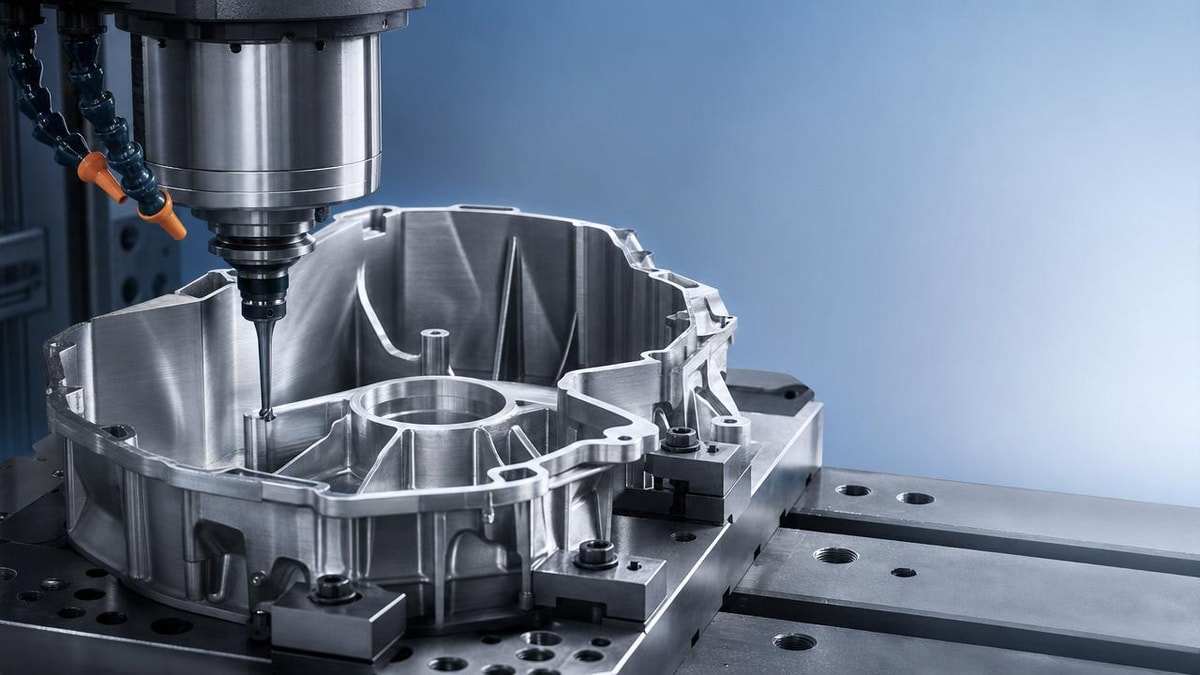
Thin wall parts often expose CNC milling problems that stay hidden in standard components. From chatter and deflection to heat buildup and dimensional drift, these issues can quickly affect surface finish, accuracy, and scrap rates. This article explains why thin wall machining is so demanding and what operators can do to improve stability, tool life, and part quality in real production.
Why thin wall CNC milling needs a scenario-based approach
In everyday production, operators often discover that a process proven on solid blocks becomes unreliable as soon as the geometry changes to ribs, shells, pockets, covers, or lightweight structural frames. That is why CNC milling for thin wall parts should not be judged only by spindle speed, feed rate, or machine power. The real challenge comes from the interaction between part stiffness, workholding strategy, tool engagement, heat generation, and the order in which material is removed.
Different business scenarios make these factors more or less critical. In aerospace, wall distortion may threaten assembly fit. In electronics housings, a small surface ripple can ruin appearance. In energy equipment, larger thin sections may stay dimensionally correct during machining but move after unclamping. For operators, this means the same CNC milling issue can have very different root causes depending on the application, tolerance target, material, and batch size.
A practical way to control risk is to evaluate thin wall parts by scenario: what kind of geometry is being machined, what quality matters most, what support is available during cutting, and at which operation the wall becomes weak. This approach improves process decisions far more than applying generic cutting data.
Where CNC milling issues appear most often in thin wall part production
Thin wall machining appears across many sectors, but the failure pattern changes with the use case. Operators who recognize the application context early can choose better machining strategies and avoid hidden instability.
Aerospace brackets, frames, and lightweight cavities
These parts often use aluminum or titanium and include deep pockets with tall, thin walls. The main CNC milling risks are wall spring-back, vibration at the top edge, and dimensional movement after material removal. The process may look stable at roughing stage but fail near final finishing because the remaining material no longer supports the wall.
Electronics enclosures and cosmetic housings
Here, appearance is often as important as size. Even if tolerance is moderate, chatter marks, cutter push-off, and heat-related smearing can create visible defects. Thin wall CNC milling in these jobs must protect both dimensional consistency and surface finish, especially when anodizing or coating will reveal every tool mark.
Automotive covers, fluid components, and lightweight supports
Automotive production often balances speed and repeatability. Operators may face high-volume runs where a small process weakness causes large scrap numbers. Thin wall sections can shift due to fixture wear, thermal accumulation over long batches, or inconsistent stock allowance from upstream operations.
General industrial panels, machine covers, and custom low-volume parts
In mixed-job shops, the biggest problem is often process transfer. A programmer or operator uses familiar CNC milling settings from standard parts, but thin wall geometry demands lower radial engagement, better support, and more controlled finishing passes. Low-volume work is especially exposed because there is less time to optimize through repeated trials.
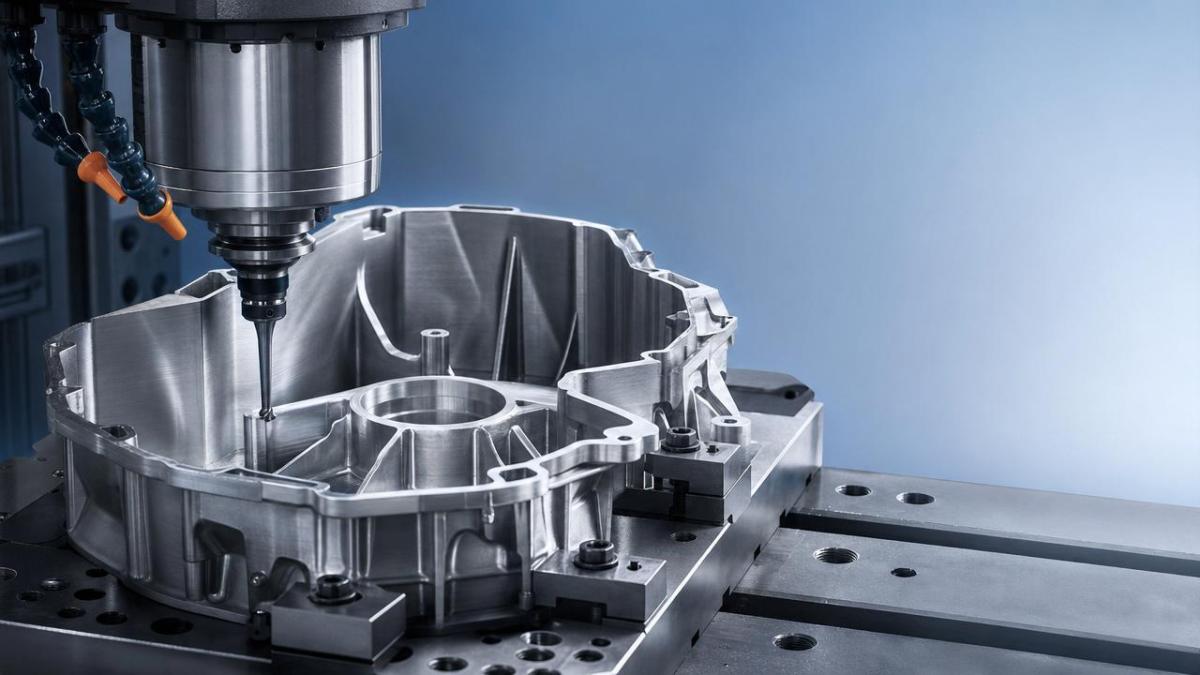
Scenario comparison: what changes from one thin wall application to another
The table below helps operators compare common thin wall CNC milling scenarios and identify which problem deserves attention first.
The CNC milling problems that show up only when walls get thin
Deflection that changes the real cutter path
On solid parts, cutting force is absorbed mainly by the machine, tool, and fixture. In thin wall CNC milling, the part itself becomes elastic. The tool pushes the wall away during cutting, then the wall springs back after the cutter passes. The result is undercut, tapered walls, inconsistent thickness, or features that measure differently depending on where the probe touches. This is common when finishing a tall wall in one pass with too much side load.
Chatter that appears only near the final passes
Many operators report that roughing sounds stable, but finishing starts to sing. This happens because the part loses stiffness as material is removed. The natural frequency changes, and the same spindle speed that was safe earlier becomes unstable later. In thin wall CNC milling, chatter is often a stage-specific issue rather than a machine-wide problem.
Heat buildup and local distortion
Thin sections cannot absorb heat like heavy stock. If chips are not evacuated well, heat stays close to the wall and can create temporary expansion or permanent stress effects. The operator may see dimensions drift during the cut, then partially recover after cooling. On appearance parts, heat can also degrade edge quality.
Movement after unclamping
A part may measure correctly in the fixture and fail on the inspection table. This is especially common when workholding force bends the wall slightly during CNC milling. Once the clamps release, the true shape appears. Thin wall parts are more sensitive to this than standard blocks, so setup pressure and support placement matter as much as cutting data.
How operators should adapt CNC milling strategy by scenario
For high-accuracy structural parts
Use staged stock removal and preserve support as long as possible. Instead of fully opening one cavity and then moving on, keep the process balanced across both sides or across similar regions. Semi-finish before final release of critical walls. If possible, finish opposing walls in a sequence that reduces residual stress imbalance.
For appearance-sensitive housings
Prioritize quiet cutting over maximum metal removal rate. A smaller radial step, sharper tool, shorter overhang, and cleaner chip evacuation usually improve results more than simply lowering feed. Consider a dedicated finish pass with constant engagement to avoid visible transition marks. In this CNC milling scenario, a stable sound is often a better signal than raw cycle time.
For batch production with repeat setups
Build control around consistency. Track clamp force, tool life, spindle warm-up condition, and stock variation from previous processes. Thin wall CNC milling in production cells often fails because the first few parts are tuned well, but later parts experience tool wear or thermal drift. In-process probing and periodic wall-thickness checks can prevent large scrap events.
For prototypes and mixed-job shops
Do not assume that a familiar strategy will transfer. Run an early validation pass on a non-critical wall or leave extra stock for a process check. If the part is expensive, add a planned pause for measurement before the last finishing cycle. This gives the operator room to adjust offsets, support, or finishing conditions before the wall becomes too weak.
What to confirm before machining a thin wall part
Before starting CNC milling, operators and production teams should verify a few conditions that strongly affect success:
- Where does the wall lose support during the sequence?
- Is the fixture supporting the wall or bending it?
- How much tool overhang is truly necessary?
- Will heat accumulate because of poor chip flow or enclosed cavities?
- Is the final pass removing a uniform amount of stock?
- Will measurement be done in-clamp, out-of-clamp, or both?
These checks are especially important in global manufacturing environments where the same part may run on different CNC milling machines, with different operators, fixtures, and local process habits. Standardizing these decision points improves transferability across plants and suppliers.
Common misjudgments in thin wall CNC milling
One frequent mistake is treating chatter as only a spindle-speed issue. In thin wall parts, the instability may come from wall flexibility, not from a simple speed mismatch. Another mistake is trying to solve dimensional error only with compensation. If the wall is moving under load, offset correction may help one location and worsen another.
A third misjudgment is assuming that stronger clamping always improves accuracy. For thin wall CNC milling, excessive clamping may create a false geometry that disappears after release. Finally, some teams focus heavily on tool brand or coating while ignoring process sequence. In many real cases, sequence design has a bigger influence than the cutting tool itself.
FAQ for operators dealing with thin wall CNC milling
Why does the wall measure correctly at the base but fail at the top?
The top usually has less support and more vibration. Tool deflection and wall bending increase with height, so taper or waviness appears near the free edge first.
Should feed rate always be reduced for thin wall CNC milling?
Not always. Lower feed may reduce force, but it can also increase rubbing and heat. The better solution is often to reduce radial engagement, improve support, shorten tool overhang, and use a cleaner finishing strategy.
Why do problems appear only on the second or third setup?
Because earlier operations may remove material that was providing stiffness. A part that is stable in setup one can become highly flexible later, even with the same CNC milling parameters.
Final takeaway for real production
Thin wall parts reveal the limits of CNC milling more clearly than standard components. The key is not to ask for one universal parameter set, but to judge the job by application scenario: structural accuracy, cosmetic finish, batch repeatability, or prototype flexibility. Once operators match the cutting approach to the real production context, many hidden issues become predictable.
If your team is seeing chatter, wall movement, or unstable quality only on thin sections, review the process sequence, support condition, measurement method, and heat control before changing everything else. In thin wall CNC milling, the best improvements usually come from smarter scenario matching rather than more aggressive trial and error.
PREVIOUS ARTICLE
Recommended for You
![]() ANVISA New Rule: Portuguese Biocompatibility Labels for Medical CNC Machines in BrazilManufacturing Policy Research Center
ANVISA New Rule: Portuguese Biocompatibility Labels for Medical CNC Machines in BrazilManufacturing Policy Research Center![]() EMO Hannover 2027 Booth Booking Opens: China AI-Machining Pavilion LaunchesGlobal Machine Tool Trade Research Center
EMO Hannover 2027 Booth Booking Opens: China AI-Machining Pavilion LaunchesGlobal Machine Tool Trade Research Center![]() KATS Updates KC Rules: CNC Cybersecurity Modules Must Meet IEC 62443-4-2Manufacturing Policy Research Center
KATS Updates KC Rules: CNC Cybersecurity Modules Must Meet IEC 62443-4-2Manufacturing Policy Research Center![]() Shanghai Port Launches Green Clearance Channel for CNC EquipmentManufacturing Market Research Center
Shanghai Port Launches Green Clearance Channel for CNC EquipmentManufacturing Market Research Center![]() ISO 23218-3:2026 Published: CNC Digital Twin Interoperability StandardCNC Machining Technology Center
ISO 23218-3:2026 Published: CNC Digital Twin Interoperability StandardCNC Machining Technology Center![]() Vietnam Cuts CNC Equipment Import Tariff to 3.8% from June 2026Global Machine Tool Trade Research Center
Vietnam Cuts CNC Equipment Import Tariff to 3.8% from June 2026Global Machine Tool Trade Research Center


Aris Katos
Future of Carbide Coatings
15+ years in precision manufacturing systems. Specialized in high-speed milling and aerospace grade alloy processing.
▶
Why Shaft Parts often fail tolerance checks after finishingCNC Machining Technology Center▶
CNC milling issues that show up only in thin wall partsCNC Machining Technology Center▶
CNC metalworking mistakes that often hurt part consistencyCNC Machining Technology Center▶
Shaft Parts Machining Problems That Show Up at Final InspectionCNC Machining Technology Center▶
Industrial Turning Accuracy Can Drift for Hidden ReasonsCNC Machining Technology Center
Mastering 5-Axis Workholding Strategies
Join our technical panel on Nov 15th to learn about reducing vibrations in thin-wall components.

Providing you with integrated sanding solutions
Before-sales and after-sales services
Comprehensive technical support