• Global CNC market projected to reach $128B by 2028 • New EU trade regulations for precision tooling components • Aerospace deman
NYSE: CNC +1.2%LME: STEEL -0.4%

Why Shaft Parts often fail tolerance checks after finishing
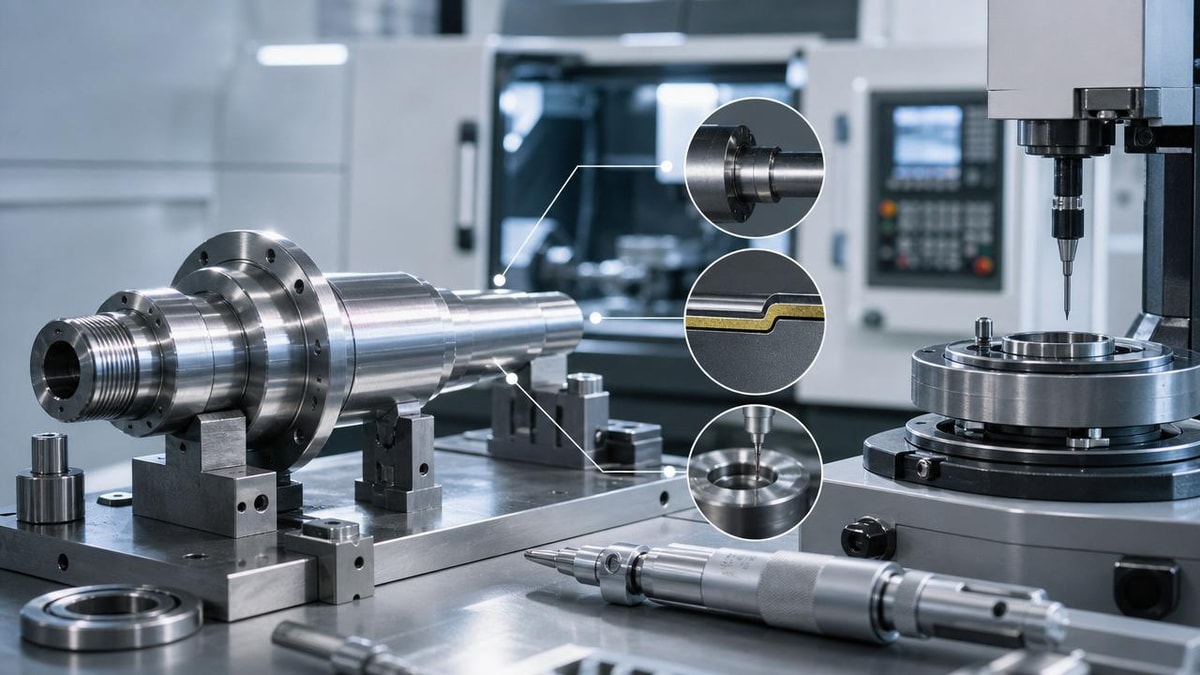
Why do Shaft Parts pass machining yet fail tolerance checks after finishing? For quality control and safety teams, the answer often lies in hidden process variables such as heat treatment distortion, coating buildup, grinding stress, or improper inspection timing. Understanding these post-process risks is essential to preventing dimensional drift, reducing rework, and maintaining consistent compliance in precision manufacturing.
Understanding why Shaft Parts fail after finishing
In the CNC machining and precision manufacturing industry, Shaft Parts are among the most common and most sensitive components. They are used in motors, gearboxes, pumps, machine tools, aerospace subassemblies, energy systems, and automated production equipment. Because these parts often carry rotational loads, fit into bearings or seals, and interact with multiple mating components, even small dimensional changes can create vibration, noise, leakage, friction, premature wear, or safety risks.
A frequent quality issue is that Shaft Parts meet tolerance during turning or milling, but then fail inspection after finishing operations. This can be confusing for production teams because machining records may look stable and in-process measurements may appear acceptable. However, finishing is not just a cosmetic step. It can change geometry, surface condition, stress distribution, and even measurement results. For quality control personnel and safety managers, this makes post-process verification a critical control point rather than a routine checkpoint.
The topic matters across the broader manufacturing sector because modern CNC production increasingly demands tighter tolerances, higher traceability, and lower defect rates. As automation expands and machine tools become more precise, the acceptable variation window becomes smaller. In this environment, hidden finishing-related deviations in Shaft Parts can quickly affect product conformity, delivery schedules, and operational reliability.
Why the industry pays close attention to this issue
The global machine tool industry has moved toward higher precision, digital process control, and integrated quality systems. CNC lathes, machining centers, grinding systems, and automated measurement cells now support complex production at scale. Yet the more advanced the process chain becomes, the more important it is to understand how one step affects the next. Shaft Parts are especially vulnerable because their functional dimensions often depend on roundness, cylindricity, concentricity, straightness, and surface integrity at the same time.
In industries such as automotive, aerospace, electronics, and energy equipment, tolerance failure after finishing is not only a cost issue. It can also become a safety and compliance issue. A shaft that is slightly oversized after coating may seize during assembly. A heat-treated shaft with distortion may overload bearings. A ground surface with residual stress may distort later in service. For quality teams, these are not isolated defects; they are process interactions that must be anticipated and controlled.
What finishing changes in Shaft Parts
Finishing includes a wide range of processes such as heat treatment, grinding, polishing, hard turning, superfinishing, coating, plating, painting, deburring, shot peening, cleaning, and even washing and drying under thermal conditions. Each of these can influence final tolerance in different ways. Some processes remove material. Others add material. Some change internal stress. Others affect measurement stability by altering temperature, roughness, or surface reflectivity.
This is why a Shaft Parts drawing should never be interpreted only from the machining stage. The real requirement is the final delivered condition. If the quality plan does not link machining allowance, finishing allowance, and final inspection criteria, a part may appear compliant too early in the process and fail only when all downstream steps are complete.
For quality professionals, this overview is useful because it shows that failure is often not caused by one bad operation alone. It is usually the result of a process chain that was not balanced around final tolerance requirements.
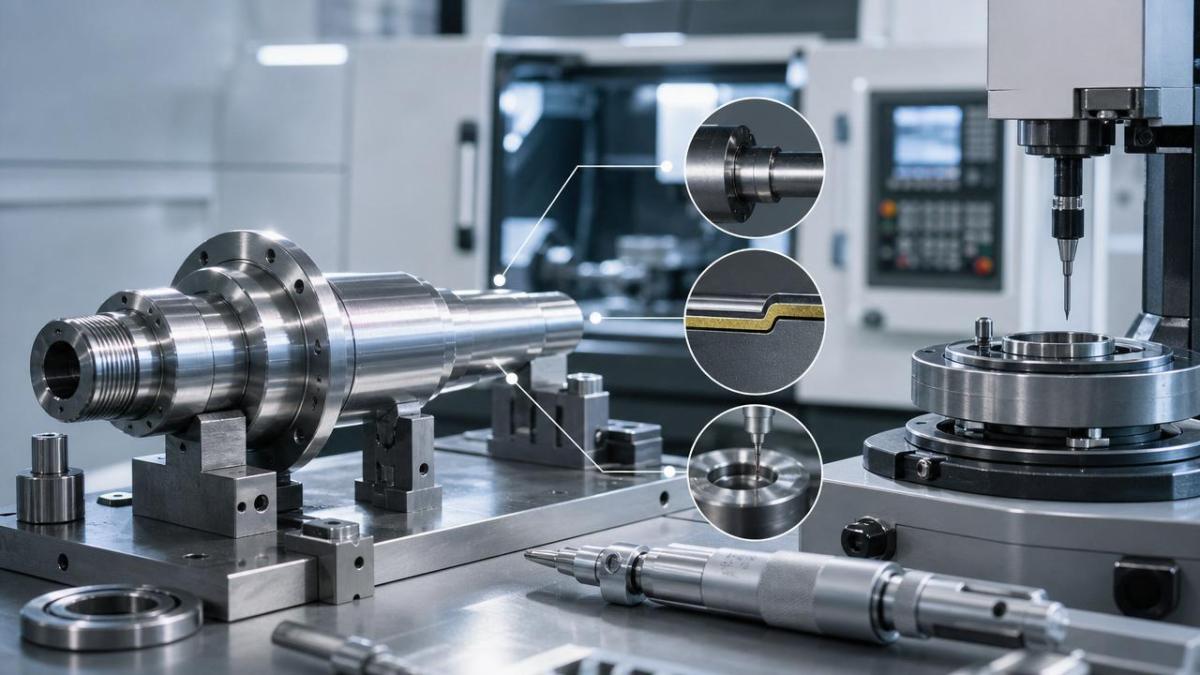
The most common causes of post-finishing tolerance failure
Heat treatment distortion
Heat treatment is one of the leading reasons Shaft Parts fail after finishing. Changes in microstructure and thermal cycling can cause growth, shrinkage, bending, or localized distortion. Slender shafts, stepped shafts, and parts with asymmetrical geometry are particularly sensitive. If stock allowance before hard finishing is too small, there may not be enough material left to correct distortion.
Coating and plating buildup
Protective coatings, hard chrome, nickel plating, thermal spray layers, and similar finishes can push Shaft Parts beyond diameter limits. The risk increases when coating thickness varies by feature, edge condition, or fixture orientation. In some cases, a shaft may meet average thickness requirements yet still fail functional fit because buildup is non-uniform on critical bearing seats or sealing surfaces.
Grinding stress and thermal damage
Grinding is often used to restore dimensional accuracy after heat treatment, but it can also introduce new variation. Wheel wear, poor dressing, incorrect feed, insufficient coolant, or excessive contact pressure may create taper, lobing, burn, or residual tensile stress. Some Shaft Parts pass immediate measurement after grinding but drift later as residual stress relaxes. This is one reason why inspection timing matters.
Improper measurement timing and environment
A shaft measured while still warm from grinding, washing, or coating cure may not represent its final stable condition. Temperature, support method, probe force, and fixture cleanliness all influence results. Long Shaft Parts can sag under their own weight if inspection support points are wrong. Highly polished surfaces can also challenge some non-contact systems. Many apparent tolerance failures are real, but some are measurement system failures that must be separated from product defects.
Stacked variation from multiple acceptable steps
Another common pattern is cumulative drift. Turning may be near the high side of tolerance, heat treatment may cause slight growth, grinding may remove less than expected, and coating may add just enough thickness to exceed the limit. Each step may seem acceptable on its own, but the final Shaft Parts still fail. This is why process capability should be evaluated across the entire route, not station by station in isolation.
Where the risk is highest
Not all Shaft Parts have the same vulnerability. Risk tends to rise when the design includes thin sections, long unsupported lengths, multiple critical diameters, hardened surfaces, coating requirements, or tight geometric tolerances. Parts used in rotating systems are especially sensitive because dimensional error can become dynamic error during operation.
Business value for quality and safety teams
For quality control teams, understanding why Shaft Parts fail after finishing improves root-cause analysis, process capability planning, and containment decisions. It reduces the chance of blaming the wrong machine or operator when the actual source is a downstream process interaction. It also helps define better control plans, inspection hold points, and release criteria.
For safety managers, the value is equally clear. Tolerance failures in Shaft Parts may translate into unsafe machine behavior, early field failure, overheating, seal damage, or rotating imbalance. In high-speed or high-load applications, even small deviations can increase risk. A stronger finishing-control strategy therefore supports both compliance and operational safety.
Practical recommendations for preventing failure
The most effective approach is to manage Shaft Parts by final-condition logic. Start with the delivered tolerance, then work backward through every process that changes size, form, or stress. This shifts attention from isolated machining results to true end-state conformity.
- Define process allowances for heat treatment, grinding, and coating instead of relying only on nominal machining size.
- Use risk-based inspection timing, including cooling or stabilization periods before final measurement.
- Validate measurement systems for long, polished, coated, or thin-wall Shaft Parts under realistic support conditions.
- Monitor geometric characteristics such as runout, cylindricity, and straightness, not just diameter.
- Review fixturing and handling methods to reduce distortion during heat treatment, grinding, transport, and storage.
- Link shop-floor data across CNC machining, finishing, and final inspection to detect cumulative drift trends.
In advanced CNC environments, digital traceability can make these controls much stronger. When machine parameters, batch conditions, finishing records, and measurement results are connected, recurring failure modes in Shaft Parts become easier to predict and prevent. This is especially valuable in automated production lines where a small process shift can quickly multiply into a large quantity problem.
FAQ for control planning and evaluation
Should final inspection happen after every finishing step?
Not always, but critical Shaft Parts usually need staged verification. High-risk features should be checked after any process that can change form, size, or stress condition.
Is diameter the main issue in tolerance failure?
No. Many Shaft Parts fail because of roundness, runout, straightness, concentricity, or surface integrity, even when diameter looks acceptable.
Can finishing defects be designed out?
Partly. Better geometry balance, suitable stock allowance, realistic tolerance allocation, and finish-aware process planning can significantly reduce risk.
A practical direction for continuous improvement
When Shaft Parts pass machining but fail after finishing, the message is clear: the process is being judged too early. In modern precision manufacturing, final quality is created across the full chain of CNC machining, thermal treatment, surface finishing, handling, and inspection. Companies that understand this can reduce rework, improve consistency, and protect downstream safety performance.
For teams responsible for quality and safety, the next step is to review current Shaft Parts by finishing risk category, confirm whether inspection timing matches material behavior, and verify that final tolerances are supported by realistic process allowances. This kind of disciplined review turns hidden finishing variation into visible, manageable process knowledge—and that is what drives stable compliance in precision production.
PREVIOUS ARTICLE
NEXT ARTICLE
Recommended for You
![]() ANVISA New Rule: Portuguese Biocompatibility Labels for Medical CNC Machines in BrazilManufacturing Policy Research Center
ANVISA New Rule: Portuguese Biocompatibility Labels for Medical CNC Machines in BrazilManufacturing Policy Research Center![]() EMO Hannover 2027 Booth Booking Opens: China AI-Machining Pavilion LaunchesGlobal Machine Tool Trade Research Center
EMO Hannover 2027 Booth Booking Opens: China AI-Machining Pavilion LaunchesGlobal Machine Tool Trade Research Center![]() KATS Updates KC Rules: CNC Cybersecurity Modules Must Meet IEC 62443-4-2Manufacturing Policy Research Center
KATS Updates KC Rules: CNC Cybersecurity Modules Must Meet IEC 62443-4-2Manufacturing Policy Research Center![]() Shanghai Port Launches Green Clearance Channel for CNC EquipmentManufacturing Market Research Center
Shanghai Port Launches Green Clearance Channel for CNC EquipmentManufacturing Market Research Center![]() ISO 23218-3:2026 Published: CNC Digital Twin Interoperability StandardCNC Machining Technology Center
ISO 23218-3:2026 Published: CNC Digital Twin Interoperability StandardCNC Machining Technology Center![]() Vietnam Cuts CNC Equipment Import Tariff to 3.8% from June 2026Global Machine Tool Trade Research Center
Vietnam Cuts CNC Equipment Import Tariff to 3.8% from June 2026Global Machine Tool Trade Research Center


Aris Katos
Future of Carbide Coatings
15+ years in precision manufacturing systems. Specialized in high-speed milling and aerospace grade alloy processing.
▶
Why Shaft Parts often fail tolerance checks after finishingCNC Machining Technology Center▶
CNC milling issues that show up only in thin wall partsCNC Machining Technology Center▶
CNC metalworking mistakes that often hurt part consistencyCNC Machining Technology Center▶
Shaft Parts Machining Problems That Show Up at Final InspectionCNC Machining Technology Center▶
Industrial Turning Accuracy Can Drift for Hidden ReasonsCNC Machining Technology Center
Mastering 5-Axis Workholding Strategies
Join our technical panel on Nov 15th to learn about reducing vibrations in thin-wall components.

Providing you with integrated sanding solutions
Before-sales and after-sales services
Comprehensive technical support