• Global CNC market projected to reach $128B by 2028 • New EU trade regulations for precision tooling components • Aerospace deman
NYSE: CNC +1.2%LME: STEEL -0.4%

Defense Precision Machining Faces Tighter Tolerance Risks in 2026
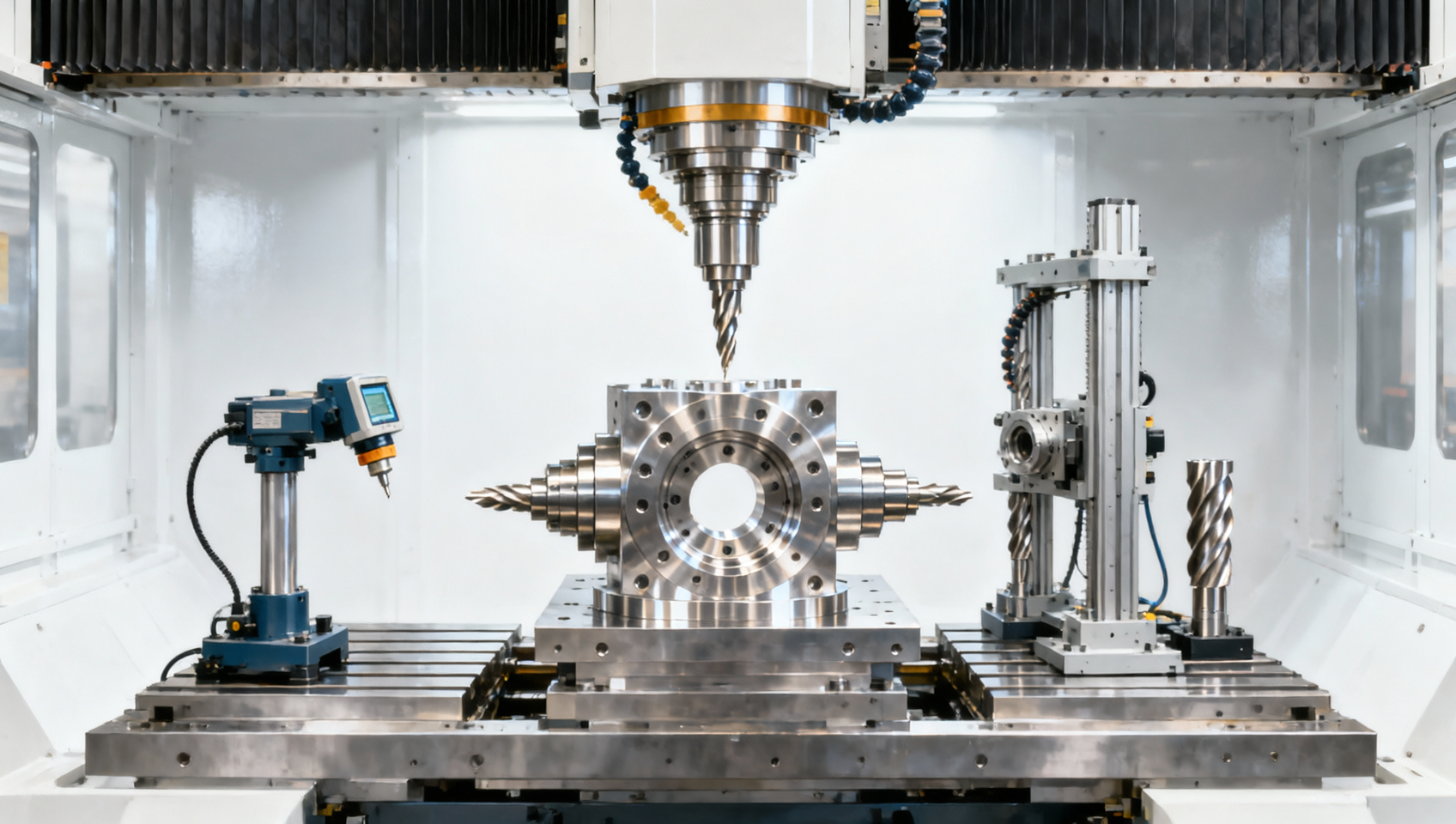
As defense manufacturers prepare for 2026, tighter tolerance demands are reshaping Precision Machining for Defense Industry operations. From CNC Tooling System for titanium machining to Multi-axis Machining Process for complex components and Industrial Automation integration for production line, every step now affects quality, compliance, and cost. This article explores the rising risks, process bottlenecks, and practical strategies manufacturers can use to stay competitive.
Why are tighter tolerance risks becoming a 2026 priority?
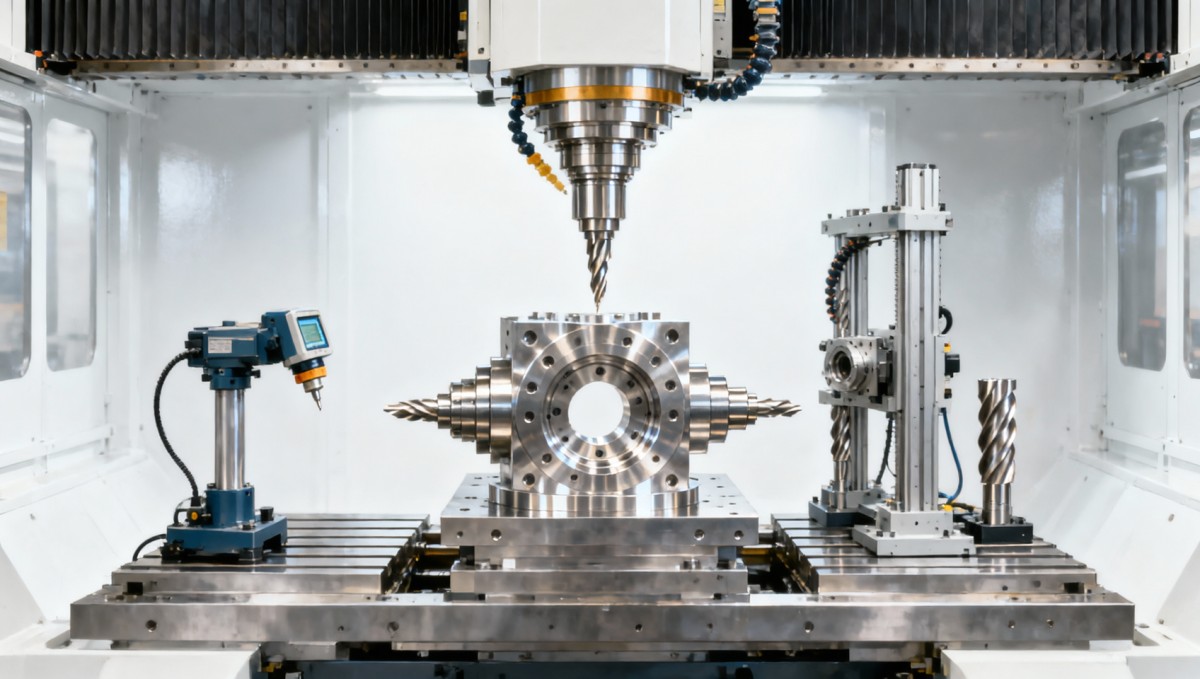
Defense precision machining is entering a more demanding phase because part complexity, material difficulty, and verification pressure are rising at the same time. In many programs, tolerance bands that were once manageable on conventional 3-axis setups now require stable 5-axis machining, better thermal control, and more disciplined process validation. For procurement teams and plant managers, the issue is no longer only whether a shop can machine a part, but whether it can repeat that result over 3 shifts, 5 days a week, and across multiple production lots.
The pressure is strongest in titanium, nickel alloys, hardened steels, and thin-wall structural parts used in defense platforms. These materials react differently to tool wear, spindle heat, fixture force, and coolant delivery. A deviation of only a few microns can change fit, fatigue life, or downstream assembly behavior. That is why Precision Machining for Defense Industry now depends on machine capability, toolpath discipline, metrology planning, and operator consistency as a connected system rather than isolated steps.
For information researchers, the key question is where risk accumulates first. In practice, it often begins before cutting starts. Unclear drawings, unstable stock condition, incomplete datum strategy, or unrealistic cycle time targets can undermine tolerance control long before inspection. By 2026, manufacturers that still evaluate suppliers only by piece price may face higher hidden costs in scrap, rework, delayed approval, and slow first article acceptance.
A useful way to assess the 2026 risk profile is to break it into 4 layers: machine capability, process capability, measurement capability, and supply chain responsiveness. If one layer is weak, the whole production chain becomes exposed. This is especially true when delivery windows are commonly compressed into 2–6 weeks for prototype work or 6–12 weeks for repeat production batches.
- Machine capability risk: spindle growth, axis interpolation error, backlash, vibration, and insufficient rigidity during heavy or deep feature cutting.
- Process capability risk: unstable tool life, weak fixture repeatability, and inconsistent offsets between shifts or operators.
- Measurement capability risk: probing drift, fixture-induced distortion during inspection, and mismatch between shop-floor checks and final CMM results.
- Supply chain risk: delays in tooling, special materials, heat treatment, coating, or outsourced secondary processing that change process timing.
Which tolerance-related failures matter most?
Not every deviation carries the same business impact. Some failures create immediate assembly rejection, while others quietly reduce yield over time. For defense machining programs, the most costly issues usually combine geometric error with process instability. A part may pass initial inspection yet fail later when another batch is produced under slightly different thermal or tooling conditions.
The table below summarizes common risk points that buyers, operators, and decision-makers should monitor when reviewing CNC machine tool capacity for defense components.
This comparison shows why tolerance risk should be reviewed as a process chain. A supplier with modern CNC equipment but weak fixture discipline or limited inspection planning may still create high delivery risk. For purchasing teams, the most reliable indicator is not a generic claim of precision, but evidence of repeatability across multiple batches and documented control points.
Where do defense machining bottlenecks appear in real production?
Production bottlenecks usually appear where high-accuracy machining meets unstable execution conditions. In defense programs, three areas repeatedly cause delay: difficult material removal, fixture transfer between operations, and inspection queue time. Titanium and heat-resistant alloys may require lower material removal rates, specialized tool coatings, and tighter chip evacuation control. When this is combined with long cycle times of 40–120 minutes per part, even small deviations can reduce output sharply.
Multi-axis Machining Process adds another challenge. It improves access to complex surfaces and reduces setup count, but it also increases dependence on CAM quality, post-processing accuracy, machine kinematics, and collision-safe tool length strategy. If a shop lacks strong simulation and setup validation, it may spend extra hours proving out each revision. For decision-makers, this means machine count alone does not equal throughput capacity.
Industrial Automation can relieve some bottlenecks, especially in pallet handling, tool management, and unattended running. Yet automation also exposes weak upstream discipline. If tools are not life-managed, or if chips accumulate in deep cavities, lights-out operation can increase scrap instead of reducing labor cost. A realistic automation plan therefore starts with process stability, not only robot integration.
Another bottleneck is metrology flow. A shop may complete machining in 3 days but spend another 2–5 days waiting for full dimensional validation, report review, and customer approval feedback. This matters in defense procurement because first article schedules often determine whether pilot production starts on time. Buyers should ask how in-process checks, final CMM inspection, and report release are sequenced, not just whether the supplier owns a CMM.
Bottlenecks by process stage
The most practical review method is to inspect each stage from raw material to release. The following list highlights common bottlenecks that often stay hidden until lead time becomes critical.
- Pre-machining stage: stock condition variation, unclear heat lot documentation, and delayed tooling preparation can consume 2–7 days before the first cut.
- Roughing stage: chatter, work hardening, and insert wear can alter the stock left for finishing, making later tolerance correction difficult.
- Semi-finishing and finishing: thermal drift becomes more visible, especially when thin-wall parts relax after unclamping or after coolant temperature changes.
- Inspection and release: inconsistent datum interpretation or incomplete report formatting can slow customer acceptance even when the part is dimensionally acceptable.
What operators and buyers should check together
Operators often focus on feeds, speeds, vibration, and setup behavior, while buyers focus on price and delivery. In defense precision machining, these two views need to be connected. A lower quote may reflect fewer in-process checks, a shorter prove-out period, or reduced tooling redundancy. Those decisions can increase risk when the tolerance window is narrow and the part geometry is unforgiving.
A practical cross-functional review should include 5 checks: estimated tool life range, fixture repeatability between setups, in-process probing frequency, final inspection path, and contingency for tool or spindle interruption. This approach gives both technical and commercial teams a shared basis for supplier evaluation.
How should procurement teams evaluate machine tools, process plans, and suppliers?
Procurement in the CNC machine tool industry is no longer only about buying capacity. For defense components, the better question is whether the proposed machine, tooling, fixture strategy, and inspection plan can hold tolerance repeatedly under actual production conditions. That means vendor evaluation should combine equipment review, process capability review, and supply reliability review. A machine with suitable travel and spindle power may still be a poor fit if the supplier cannot control tool wear on titanium or cannot document process revisions clearly.
For many buyers, supplier selection becomes difficult because quotations may look similar on the surface. Cycle time, setup count, tooling package, inspection scope, and subcontracted processes are often presented differently. The goal is to normalize evaluation. Comparing suppliers across the same 6–8 decision points creates a more reliable shortlist than comparing only unit price and nominal lead time.
The table below can be used as a procurement guide for Precision Machining for Defense Industry projects where tolerance, delivery, and documentation all matter.
This table helps procurement teams move from generic capability claims to verifiable decision points. It is especially useful when comparing suppliers from different manufacturing regions such as China, Germany, Japan, and South Korea, where machine availability may be strong but process transparency and documentation style can differ. In B2B sourcing, clarity often lowers risk more effectively than aggressive pricing.
A practical 4-step supplier screening model
A structured screening model shortens evaluation time and reduces internal debate. It also helps researchers turn technical findings into commercial decisions that management can approve quickly.
- Step 1: Confirm part family fit, including size, material, batch volume, and tolerance risk level.
- Step 2: Review process plan, including setup count, Multi-axis Machining Process, tooling stages, and inspection points.
- Step 3: Compare commercial terms, such as prototype lead time, repeat-order lead time, documentation scope, and change management approach.
- Step 4: Validate readiness through a sample part, pilot batch, or first-article style review before long-term release.
In many cases, this 4-step model reveals whether a supplier is prepared for defense precision machining or only comfortable with general industrial work. That distinction matters when compliance pressure, traceability, and repeatability become more demanding in 2026.
What standards, controls, and implementation steps reduce tolerance risk?
Reducing tolerance risk requires process discipline more than marketing language. In practical terms, manufacturers should align machining, inspection, and documentation around a controlled workflow. Common reference frameworks include dimensional tolerancing practices, inspection reporting requirements, material traceability routines, and documented process changes. The exact standard set depends on the program, but the principle is consistent: the tighter the tolerance, the more important it becomes to control every transfer point.
For implementation, many successful shops use a 3-stage control model. Stage one covers pre-production review, including drawing clarification, material lot check, fixture verification, and CAM simulation. Stage two controls execution through first-piece validation, in-process probing, tool wear monitoring, and setup correction. Stage three handles release through CMM verification, report completion, and lot traceability retention. This staged method is simple, but it prevents many expensive late discoveries.
Industrial Automation can support this model when used carefully. Tool life management, pallet identity tracking, and digital inspection records help stabilize repeat production, especially for medium-batch programs. However, automation should not bypass human review of critical dimensions, thermal effects, or fixture load behavior. In defense precision machining, digital integration works best when it reinforces accountability rather than replacing it blindly.
Environmental control also deserves more attention. Even in a capable shop, ambient changes between 20°C and 25°C, long machine warm-up times, or coolant instability can affect final dimensions. Operators should follow consistent start-up routines, and quality teams should define when revalidation is required after machine stoppage, setup change, or tool replacement. These are small operational habits, but they often decide whether a process remains capable after 8–10 hours of production.
Recommended control checklist before release
Before approving a supplier or launching a new defense part, the following checklist provides a practical control baseline:
- Drawing and datum review completed, including critical-to-function dimensions and geometric relationships.
- Machine and fixture suitability verified for the full part envelope and projected cycle time.
- CNC Tooling System selected for material condition, chip load stability, and expected wear window.
- In-process inspection points defined at least at first piece, mid-run, and final piece for longer cycles.
- Release documentation aligned with customer expectations for dimensional reports, traceability, and revision control.
Common misconceptions that increase cost
One common mistake is assuming that tighter tolerance automatically means a slower but otherwise normal process. In reality, it may require a different machine platform, fewer setups, a revised fixture concept, or extra inspection stages. Another mistake is believing that an experienced operator alone can compensate for weak process design. Skilled operators matter, but repeatability comes from controlled systems, not heroics.
A third misconception is that quality cost only appears in inspection. In defense machining, quality cost also appears in scrap material, interrupted machine time, delayed shipment, additional approvals, and engineering rework. That is why a slightly higher machining quote can sometimes lower total program cost if it includes stronger process validation and more stable delivery control.
FAQ: what do buyers and operators ask most often?
How do we know if a supplier can really handle defense precision machining?
Look beyond machine lists. Ask for the process logic: material experience, setup count, tooling stages, in-process checks, and final inspection flow. A capable supplier should explain how it controls thermal drift, fixture repeatability, and lot-to-lot consistency. If the answer stays at a generic equipment level, the real capability may be uncertain.
Is Multi-axis Machining Process always the best choice for complex defense parts?
Not always. Multi-axis machining often reduces setup count and improves access to complex surfaces, but it is only better when CAM programming, fixturing, and machine accuracy are properly aligned. For some parts, a mixed route using turning, 3-axis milling, and selective 5-axis finishing provides lower risk and better cost control. The right choice depends on geometry, batch size, and tolerance stack-up.
What lead times are typical for prototype and production work?
Typical prototype lead times may fall in the 2–6 week range depending on material availability, tooling preparation, and inspection scope. Repeat production may run 6–12 weeks when outside processes, documentation release, and batch scheduling are included. Urgent schedules are possible, but only if the supplier already has machine capacity, material planning, and a proven process route.
What should purchasing teams compare besides price?
Compare at least 6 items: machine-process fit, tooling strategy, setup count, inspection scope, delivery resilience, and change control. These dimensions affect total cost more than a small difference in quoted piece price. In defense precision machining, cheaper pricing without process clarity often leads to longer approval cycles and more supply risk.
Why work with a platform focused on global CNC machining and precision manufacturing?
When defense manufacturers face tighter tolerance risks in 2026, they need more than general market information. They need practical insight into CNC machine tools, precision machining workflows, tooling systems, automation integration, and international supply conditions. A platform focused on global CNC machining and precision manufacturing helps shorten this learning curve by connecting technical understanding with sourcing and decision support.
Our focus is built around the real needs of researchers, operators, buyers, and decision-makers across automotive, aerospace, energy equipment, electronics, and broader precision manufacturing sectors. That means the discussion is not limited to machine specifications. It also includes process bottlenecks, supplier comparison logic, delivery planning, and how digital manufacturing trends affect procurement choices across global industrial clusters.
If you are evaluating Precision Machining for Defense Industry projects, you can contact us for support on parameter confirmation, machine and process selection, CNC Tooling System planning, Multi-axis Machining Process assessment, delivery cycle review, documentation expectations, sample part discussion, and quotation comparison. We can also help you organize supplier evaluation points into a clearer decision framework for prototype, pilot batch, or repeat production sourcing.
For teams under time pressure, a focused technical-commercial review can reduce trial-and-error. Share your drawing complexity, material type, batch volume, tolerance priorities, and target lead time. Based on that, the discussion can move quickly toward feasible process routes, risk checkpoints, and practical sourcing options instead of vague capability claims.
Recommended for You
![]() Iranian LNG Vessels Breach U.S. Strait Blockade; Shanghai Crude Surges 4%Manufacturing Market Research Center
Iranian LNG Vessels Breach U.S. Strait Blockade; Shanghai Crude Surges 4%Manufacturing Market Research Center![]() Pakistan Launches CNC Localization Tender for CPEC II Smart Manufacturing ParkGlobal Machine Tool Trade Research Center
Pakistan Launches CNC Localization Tender for CPEC II Smart Manufacturing ParkGlobal Machine Tool Trade Research Center![]() NVIDIA Joins $1T Club; AI-Driven CNC Digital Twin Gains Global TractionCNC Machining Technology Center
NVIDIA Joins $1T Club; AI-Driven CNC Digital Twin Gains Global TractionCNC Machining Technology Center![]() World's First 5-Axis Middle-Grade Wire EDM Machine Enters Mass ProductionMachine Tool Industry Editorial Team
World's First 5-Axis Middle-Grade Wire EDM Machine Enters Mass ProductionMachine Tool Industry Editorial Team![]() China’s CNC Machine Tool Export Prices Up 11.3% in Q1 2026Global Machine Tool Trade Research Center
China’s CNC Machine Tool Export Prices Up 11.3% in Q1 2026Global Machine Tool Trade Research Center![]() Saudi Energy Security Boosts CNC Import Efficiency in Middle EastGlobal Machine Tool Trade Research Center
Saudi Energy Security Boosts CNC Import Efficiency in Middle EastGlobal Machine Tool Trade Research Center


Aris Katos
Future of Carbide Coatings
15+ years in precision manufacturing systems. Specialized in high-speed milling and aerospace grade alloy processing.
▶
Why Shaft Parts for Agricultural Machinery Fail Earlier Than ExpectedCNC Machining Technology Center▶
Defense Precision Machining Faces Tighter Tolerance Risks in 2026CNC Machining Technology Center▶
How Precision Disc Parts Affect Hydraulic System StabilityCNC Machining Technology Center▶
High-tolerance Disc Parts for aerospace applications: Why runout control begins at blank handlingCNC Machining Technology Center▶
High precision CNC manufacturing: Why environmental monitoring matters as much as machine calibrationCNC Machining Technology Center
Mastering 5-Axis Workholding Strategies
Join our technical panel on Nov 15th to learn about reducing vibrations in thin-wall components.

Providing you with integrated sanding solutions
Before-sales and after-sales services
Comprehensive technical support