• Global CNC market projected to reach $128B by 2028 • New EU trade regulations for precision tooling components • Aerospace deman
NYSE: CNC +1.2%LME: STEEL -0.4%

How Precision Disc Parts Affect Hydraulic System Stability
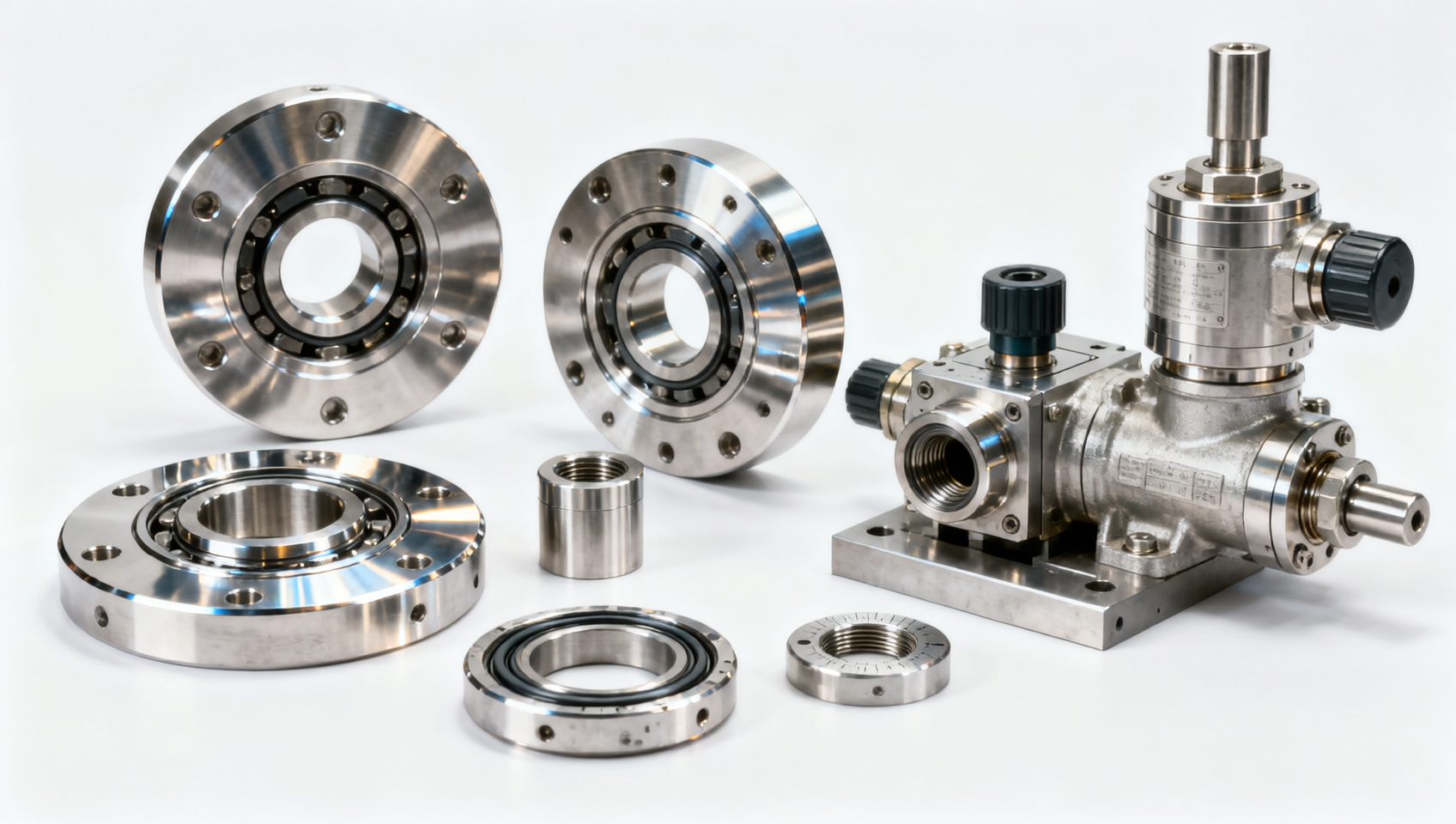
Hydraulic system stability depends heavily on the accuracy, balance, and surface quality of Precision Disc Parts for hydraulic systems. In today’s smart manufacturing environment, combining an Optimized Machining Process for stainless steel with Industrial Automation integration for production line operations helps manufacturers improve sealing performance, pressure consistency, and long-term reliability. This article explores how precision machining choices directly influence hydraulic efficiency, maintenance outcomes, and production quality.
Why do precision disc parts matter so much in hydraulic system stability?
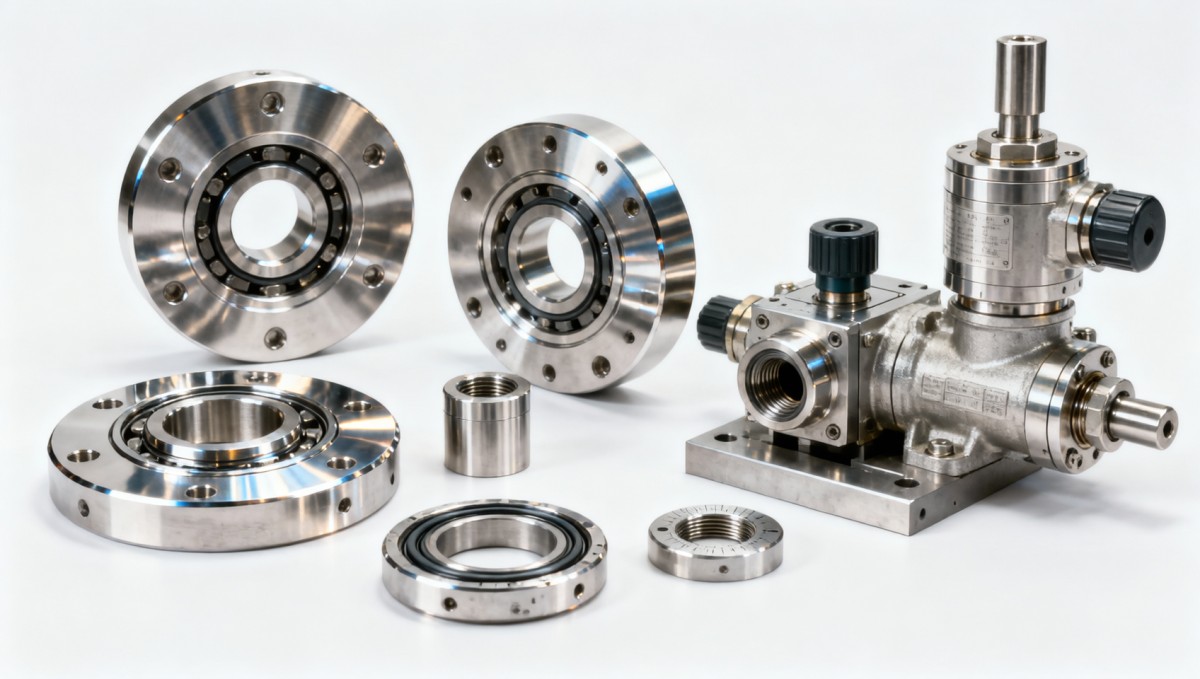
In hydraulic systems, a disc part is rarely just a simple round component. It may act as a valve seat, sealing interface, rotating support element, spacer, pressure distribution surface, or precision positioning part inside pumps, valves, actuators, and control assemblies. When tolerances drift beyond common working ranges such as ±0.01 mm to ±0.03 mm, system behavior can change from stable pressure delivery to leakage, vibration, and inconsistent response.
For operators, instability often appears as pressure fluctuation, slower actuation, abnormal heat generation, or repeated seal replacement. For procurement teams, the challenge is different: two disc parts may look identical on drawings, yet one performs reliably for 12–24 months while another causes early wear within a few hundred operating hours. The difference usually lies in machining precision, material consistency, and surface finishing discipline.
For decision-makers in modern manufacturing, precision disc parts are also linked to broader production goals. In automated lines serving automotive, aerospace, energy equipment, and electronics production, hydraulic system interruptions can affect takt time, scrap rates, and maintenance scheduling. A small deviation in disc flatness or concentricity can cascade into higher downtime across a multi-station process.
This is why CNC machining and precision manufacturing capabilities matter. CNC lathes, machining centers, and multi-axis systems make it possible to control disc geometry, face runout, edge conditions, and bore precision in a repeatable way. In practical terms, stable hydraulic performance depends not only on design intent, but also on how consistently every batch is machined, inspected, cleaned, and delivered.
The three stability mechanisms buyers and engineers should track
- Geometric accuracy: flatness, concentricity, parallelism, and thickness consistency directly affect sealing contact and pressure distribution.
- Surface integrity: roughness values often need to stay in application-appropriate ranges such as Ra 0.4–1.6 μm to avoid leakage or accelerated wear.
- Dynamic balance and fit: in rotating or pulsating hydraulic assemblies, imbalance and poor fit increase vibration, noise, and component fatigue.
When these three mechanisms are controlled together, hydraulic systems typically show more consistent pressure holding, more predictable maintenance cycles, and lower risk of seal damage. When one of them is neglected, stability declines even if the material grade itself appears acceptable on paper.
Which machining factors have the biggest impact on sealing, pressure, and wear?
Precision disc parts for hydraulic systems are strongly influenced by the machining route. Material preparation, turning strategy, heat control, clamping method, finishing sequence, and cleaning all affect the final component. Stainless steel discs, for example, often require an optimized machining process to reduce work hardening, preserve dimensional stability, and maintain smooth sealing surfaces after fine turning or grinding.
One common issue in production is assuming that nominal dimension is enough. In reality, hydraulic stability also depends on face flatness, bore alignment, chamfer consistency, and burr control. Burrs that are barely visible can cut seals during installation. Surface waviness that escapes casual inspection can create micro-leakage under cyclic pressure. These are small manufacturing details, but they produce system-level consequences.
Temperature control during machining is another major factor. If stainless steel disc parts are machined aggressively without accounting for heat build-up, thermal distortion may alter thickness or circularity. In medium to high precision applications, shops often separate roughing and finishing into 2 stages, allowing dimensional relaxation before final passes. This is especially relevant when delivery lots range from small prototype runs to mid-volume production.
Industrial automation integration for production line operations adds another layer of value. Automated loading, in-process measurement, and controlled part handling help reduce variation caused by manual contact, orientation errors, or mixed batches. For procurement and operations teams, this usually translates into more repeatable incoming quality, simpler traceability, and fewer disputes over batch-to-batch inconsistency.
Key technical indicators that deserve closer review
The table below highlights machining and quality indicators that frequently influence hydraulic system stability more than buyers initially expect. These indicators are especially useful when comparing suppliers of precision disc parts for hydraulic systems.
These values are not universal design rules, but they are practical review points. A capable supplier should explain not only the target dimensions, but also the inspection method, process stability, and whether the same control level can be maintained over 10 pieces, 500 pieces, or recurring monthly orders.
Common machining choices that affect real-world results
- Single setup versus multiple setups: fewer reclamping steps usually improve concentricity and positional consistency.
- Fine turning versus grinding: grinding may be preferred when flatness and surface finish windows are especially tight.
- Manual handling versus automated transfer: automated transfer reduces edge damage and mixed-part risk on larger production lines.
- Basic inspection versus in-process measurement: real-time checks help prevent drift during longer machining cycles.
For applications with repeated pressure cycling or long duty hours, these decisions often matter more than headline machine capability alone. Stable results come from the full process chain, not just from one advanced CNC machine on the shop floor.
How should buyers compare suppliers and choose the right precision disc parts?
Procurement teams often compare quotations mainly by unit price, but hydraulic reliability depends on a broader evaluation model. A lower-cost disc part may increase maintenance intervals from every 6 months to every 2–3 months if surface quality or dimensional repeatability is weak. That cost then shifts into downtime, inspection labor, fluid leakage, and emergency replacement inventory.
For information researchers and decision-makers, the best approach is to define application risk first. A disc used in a general fixture clamp may allow wider tolerance windows than one installed in a high-cycle servo-hydraulic valve block. Once the risk level is clear, supplier comparison becomes more objective and less dependent on marketing language.
Lead time is another frequent pressure point. In global manufacturing, common sample lead times may fall within 7–15 days for standard complexity, while production delivery may require 2–4 weeks or longer depending on material, surface treatment, inspection level, and order quantity. Buyers should confirm whether quoted lead time includes inspection reports, cleaning, packaging, and export handling.
It is also useful to ask whether the supplier supports industrial automation integration for production line operations. If your factory uses robotic loading, traceability systems, or flexible production lines, component consistency and packaging logic become operational issues, not just purchasing details. Good suppliers understand this and align their process with downstream automation requirements.
A practical supplier evaluation table for procurement teams
The following table can help compare suppliers of precision disc parts for hydraulic systems across quality, delivery, and application fit, rather than relying only on price.
A supplier that performs well across these 4 dimensions is often a safer long-term choice than one offering the lowest initial quote. In B2B manufacturing, stable quality and response speed frequently protect more value than a small price difference on each unit.
Five checks before releasing a purchase order
- Confirm the functional surfaces and identify whether roughness, flatness, or concentricity are critical-to-performance features.
- Check whether stainless steel machining needs special tool strategy or finishing sequence to avoid work hardening effects.
- Define incoming inspection items, such as 3–5 key dimensions and 1 surface requirement, before shipment.
- Review packaging and cleanliness expectations if parts will move directly into automated assembly or hydraulic subassembly lines.
- Ask for sample validation before full-volume commitment, especially for new drawings or replacement suppliers.
These checks are simple, but they significantly reduce procurement uncertainty. They also create a more productive discussion between engineering, purchasing, and the machining supplier before cost and time pressures intensify.
What application scenarios reveal the difference between average and high-precision disc parts?
Not every hydraulic application requires the same level of disc precision. The right specification depends on pressure cycling frequency, contamination sensitivity, seal design, operating temperature, and expected service life. However, the difference between average and high-precision disc parts becomes very visible in applications where pressure stability and repeatable response are essential over long production schedules.
In automotive manufacturing lines, hydraulic fixtures and clamping systems often run in repeated cycles over one or multiple shifts. If precision disc parts have inconsistent thickness or surface finish, clamp force can vary, which may affect part positioning and process repeatability. In this environment, even small dimensional variation can lead to unstable cycle behavior over weeks of continuous use.
In aerospace and energy equipment, hydraulic assemblies usually face stricter reliability expectations and more demanding validation. Here, buyers often pay closer attention to machining route, inspection records, and material consistency. The reason is straightforward: when systems operate under higher loads or longer service intervals, wear patterns and sealing integrity matter more than short-term cost savings.
Electronics production and smart factory lines present another challenge. They may not always run the highest hydraulic loads, but they require stable, repeatable, low-disruption operation. Industrial automation integration for production line operations means components must arrive in a condition suitable for fast installation, minimal rework, and traceable batch control. Precision disc parts support that goal by reducing variation at the component level.
Scenario-based differences procurement teams should note
The table below shows how application context changes the priority of machining and quality factors for precision disc parts used in hydraulic systems.
This scenario view helps avoid over-specifying low-risk applications or under-specifying critical ones. It also supports better budget allocation, because not every hydraulic disc part requires the same inspection depth or finishing cost.
A useful rule for balancing cost and reliability
If a disc part directly affects sealing, pressure balance, or high-cycle contact surfaces, prioritize precision and process control first. If the part mainly supports spacing or non-critical positioning, cost optimization may be easier. This 2-level classification can improve sourcing efficiency and reduce unnecessary spending without exposing critical hydraulic functions to avoidable risk.
What mistakes cause unstable hydraulic performance, and how can teams avoid them?
Many hydraulic issues are incorrectly blamed on seals, oil quality, or assembly technique when the root cause actually comes from the disc part. A part can pass a basic dimensional check and still create field problems if its contact surface is too rough, its edge condition is poor, or its geometry changes under real operating load. This is why troubleshooting should consider component manufacturing quality early, not only after repeated failures.
Another common mistake is using the same sourcing logic for all part categories. Precision disc parts for hydraulic systems are functional components, not general hardware. Treating them as interchangeable commodity items often leads to mismatched tolerances, inconsistent finishes, and insufficient validation. For plants with monthly replacement cycles or multi-site procurement, this mistake can spread quality instability across several lines at once.
Teams also underestimate the impact of cleanliness and packaging. After precision machining, small particles, handling marks, or mixed batches can reduce the value of otherwise well-machined parts. This becomes more critical when parts are installed into compact valve bodies or automated production line assemblies, where contamination control and quick identification matter in daily operations.
The most effective prevention method is to build a short but disciplined verification process. Even a 4-step review covering drawing confirmation, sample validation, incoming inspection, and performance feedback can reveal most mismatch risks before they become recurring maintenance problems.
FAQ: practical questions from engineers, operators, and buyers
How do I know if a disc part is causing hydraulic instability?
Look for repeated symptoms such as pressure fluctuation, uneven wear on seals, abnormal contact marks, leakage after short operating periods, or vibration that appears after component replacement. If these issues occur across 2–3 batches or return after maintenance, check flatness, surface roughness, and burr condition on the disc part before replacing larger assemblies.
Is stainless steel always the best choice for precision disc parts?
Not always. Stainless steel is often selected for corrosion resistance and dimensional reliability, but the right material depends on fluid compatibility, wear conditions, cost target, and machining difficulty. What matters most is matching material selection with an optimized machining process for stainless steel or other chosen alloys, rather than assuming one material solves every hydraulic problem.
What should procurement ask for when ordering a new batch?
At minimum, ask for confirmation of critical dimensions, surface finish requirements, deburring expectations, inspection method, and delivery schedule. If the parts support automated lines, also confirm labeling, packaging orientation, and batch traceability. These 5 items usually prevent the most common misunderstandings between drawing release and receiving inspection.
What is a reasonable lead time for samples and production orders?
For standard disc geometries, sample delivery often falls in the 7–15 day range, while production can take 2–4 weeks depending on quantity, material, finishing, and inspection scope. Complex tolerance combinations, secondary operations, or export packaging may extend the schedule, so lead time should always be confirmed against the final technical requirement.
Why choose a precision manufacturing partner that understands CNC, automation, and hydraulic application risk?
A strong machining partner does more than produce drawings at face value. They connect CNC capability, precision measurement, material handling, and production planning into one workable supply model. For hydraulic disc parts, that means understanding how machining details affect sealing, pressure stability, wear, assembly speed, and field maintenance. This is especially important in industries moving toward higher precision, greater automation, and digital integration.
Our focus on global CNC machining and precision manufacturing supports buyers, operators, and decision-makers who need practical answers, not generic promises. We understand the production realities behind CNC lathes, machining centers, multi-axis systems, automated production lines, and smart factory requirements. That makes it easier to discuss not only part geometry, but also recurring supply, process suitability, and application-specific risk.
If you are evaluating precision disc parts for hydraulic systems, we can help you review 3 core areas early: critical dimensions and surface requirements, achievable machining routes and lead times, and packaging or traceability needs for manual or automated production environments. This approach helps shorten qualification time and reduces costly trial-and-error during sourcing or line changes.
Contact us to discuss drawing review, parameter confirmation, optimized machining process options, sample support, batch delivery planning, automated line compatibility, and quotation communication. Whether you are comparing suppliers, validating a new part, or solving recurring hydraulic instability, a focused technical discussion can save weeks of rework and improve long-term production reliability.
Recommended for You
![]() Iranian LNG Vessels Breach U.S. Strait Blockade; Shanghai Crude Surges 4%Manufacturing Market Research Center
Iranian LNG Vessels Breach U.S. Strait Blockade; Shanghai Crude Surges 4%Manufacturing Market Research Center![]() Pakistan Launches CNC Localization Tender for CPEC II Smart Manufacturing ParkGlobal Machine Tool Trade Research Center
Pakistan Launches CNC Localization Tender for CPEC II Smart Manufacturing ParkGlobal Machine Tool Trade Research Center![]() NVIDIA Joins $1T Club; AI-Driven CNC Digital Twin Gains Global TractionCNC Machining Technology Center
NVIDIA Joins $1T Club; AI-Driven CNC Digital Twin Gains Global TractionCNC Machining Technology Center![]() World's First 5-Axis Middle-Grade Wire EDM Machine Enters Mass ProductionMachine Tool Industry Editorial Team
World's First 5-Axis Middle-Grade Wire EDM Machine Enters Mass ProductionMachine Tool Industry Editorial Team![]() China’s CNC Machine Tool Export Prices Up 11.3% in Q1 2026Global Machine Tool Trade Research Center
China’s CNC Machine Tool Export Prices Up 11.3% in Q1 2026Global Machine Tool Trade Research Center![]() Saudi Energy Security Boosts CNC Import Efficiency in Middle EastGlobal Machine Tool Trade Research Center
Saudi Energy Security Boosts CNC Import Efficiency in Middle EastGlobal Machine Tool Trade Research Center


Aris Katos
Future of Carbide Coatings
15+ years in precision manufacturing systems. Specialized in high-speed milling and aerospace grade alloy processing.
▶
Why Shaft Parts for Agricultural Machinery Fail Earlier Than ExpectedCNC Machining Technology Center▶
Defense Precision Machining Faces Tighter Tolerance Risks in 2026CNC Machining Technology Center▶
How Precision Disc Parts Affect Hydraulic System StabilityCNC Machining Technology Center▶
High-tolerance Disc Parts for aerospace applications: Why runout control begins at blank handlingCNC Machining Technology Center▶
High precision CNC manufacturing: Why environmental monitoring matters as much as machine calibrationCNC Machining Technology Center
Mastering 5-Axis Workholding Strategies
Join our technical panel on Nov 15th to learn about reducing vibrations in thin-wall components.

Providing you with integrated sanding solutions
Before-sales and after-sales services
Comprehensive technical support