• Global CNC market projected to reach $128B by 2028 • New EU trade regulations for precision tooling components • Aerospace deman
NYSE: CNC +1.2%LME: STEEL -0.4%

High precision CNC manufacturing: Why environmental monitoring matters as much as machine calibration
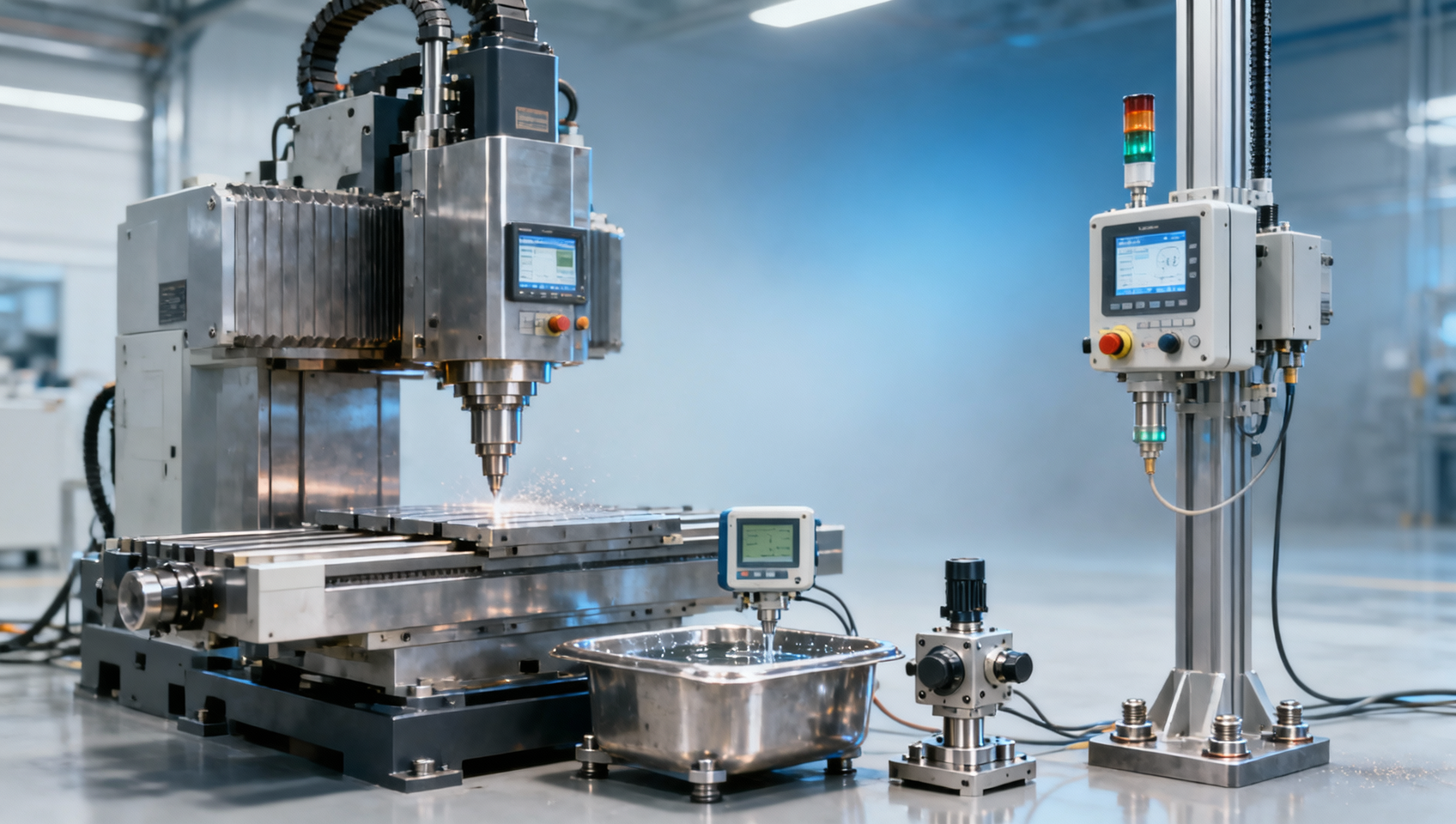
In high precision CNC manufacturing, achieving micron-level accuracy isn’t just about machine calibration—it’s equally dependent on real-time environmental monitoring. Fluctuations in temperature, humidity, and vibration directly impact dimensional stability of precision CNC manufacturing for aerospace, medical devices, and energy equipment. As demand surges for compact machine tool solutions, space-saving CNC manufacturing, and low maintenance CNC manufacturing, forward-thinking CNC manufacturing factories and exporters are integrating digital manufacturing technology for smart factory environments. Whether you’re a procurement professional sourcing a CNC manufacturing wholesaler or an engineer optimizing automated CNC manufacturing, understanding this interplay is critical to ensuring cost-effective, high-speed, and energy-saving CNC manufacturing performance.
Why Environmental Stability Is a Non-Negotiable Dimension of Precision
Micron-level tolerances—commonly ±0.002 mm in aerospace structural components or ±0.001 mm in implant-grade medical device housings—cannot be sustained without strict control over ambient conditions. Thermal expansion alone can introduce deviations up to 11.5 µm/m per °C in aluminum workpieces and 6.5 µm/m per °C in steel. A 2°C drift across a 500-mm machining zone may shift final dimensions beyond ISO 230-2 Class 3 acceptance limits (±0.005 mm).
Humidity above 65% RH accelerates oxidation of cutting tools and fixture surfaces, increasing micro-chatter by up to 18% during titanium alloy milling. Meanwhile, floor-borne vibrations from nearby stamping lines or HVAC compressors exceeding 2.5 µm/s RMS at frequencies between 10–100 Hz degrade surface finish Ra values by 0.2–0.4 µm—critical when finishing optical mounts or fluidic manifolds.
Unlike calibration—performed periodically—environmental variables act continuously and cumulatively. A study across 12 German Tier-1 automotive suppliers found that 68% of unplanned rework events linked to dimensional nonconformance occurred during morning shifts, correlating with diurnal temperature gradients of 1.2–2.7°C before HVAC stabilization.
This table underscores why environmental monitoring must be embedded—not bolted on—in precision CNC facilities. It’s not auxiliary infrastructure; it’s part of the metrological chain, as essential as laser interferometers or ballbar systems.
Real-Time Monitoring: From Sensors to Smart Factory Integration
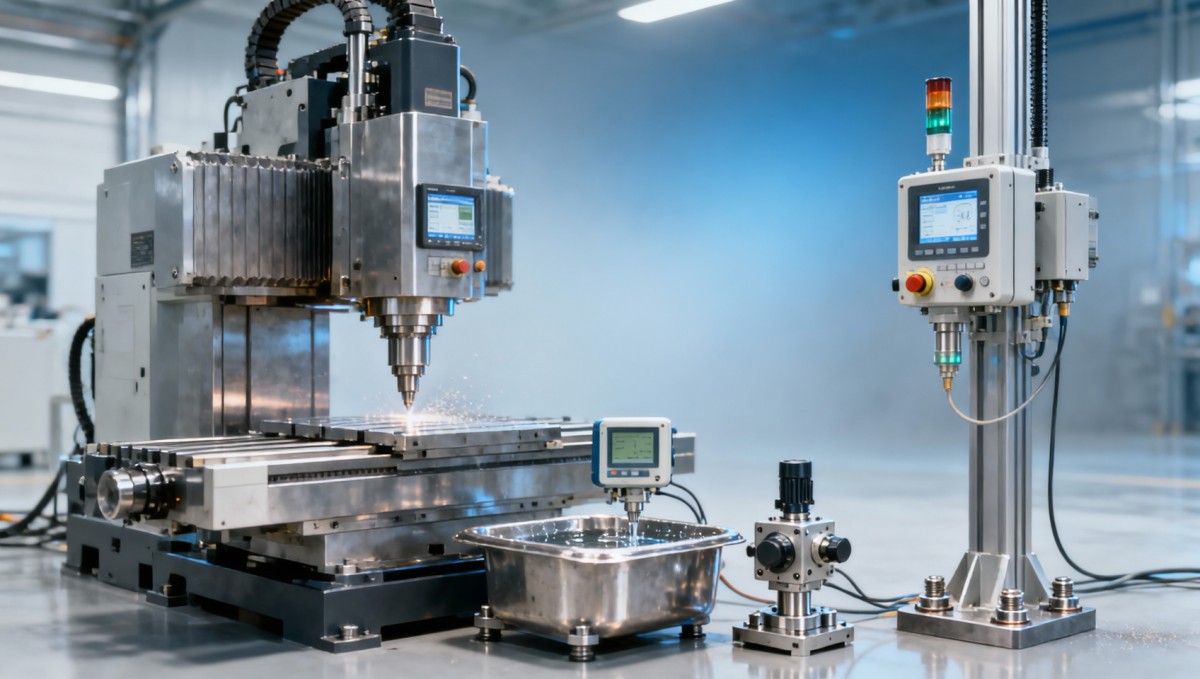
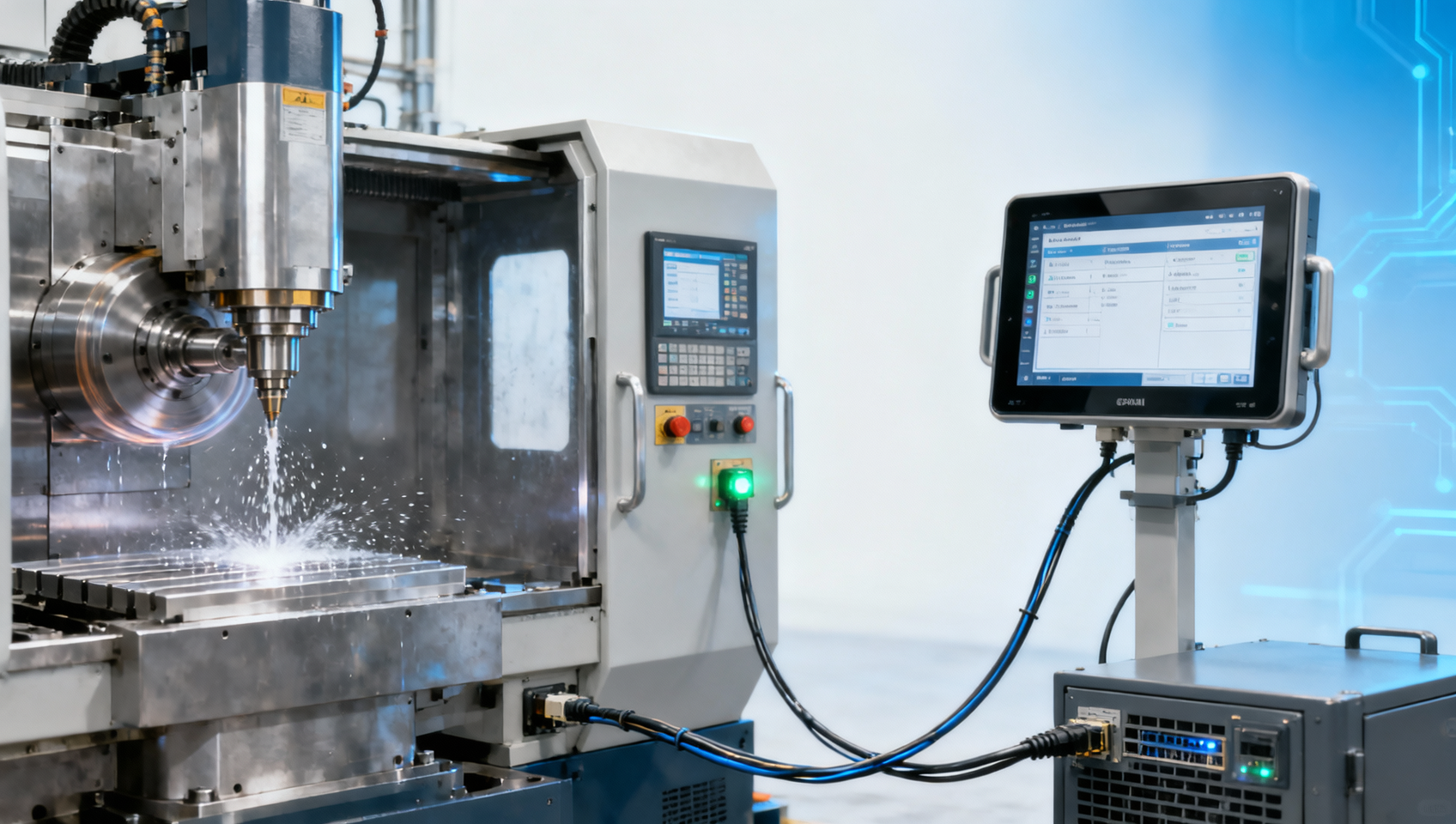
Modern environmental monitoring goes beyond standalone thermohygrometers. Leading CNC manufacturing plants deploy distributed sensor networks with 10–15 measurement points per 100 m²: air temperature at spindle height and workpiece level, floor vibration at machine feet, localized humidity near coolant reservoirs, and airborne particulate counts near chip conveyors.
These sensors feed into edge-computing gateways, applying ISO 230-10-compliant algorithms to calculate real-time thermal error budgets. When temperature at the Z-axis column exceeds 20.3°C, the system triggers automatic compensation via CNC macro variables—adjusting tool offsets by calculated µm increments before the next positioning cycle.
Integration with MES platforms enables predictive alerts: e.g., “Coolant sump humidity rising—expected tool life reduction of 17% within 4.2 hours.” Such data-driven interventions reduce unplanned downtime by 29% and extend average tool life by 14%, according to field data from 8 Japanese precision machining exporters (2023–2024).
Key Integration Requirements
- OPC UA or MTConnect compatibility for seamless CNC controller communication
- Data logging resolution ≤1 second for vibration transients
- Calibration traceability to NIST or PTB standards, verified every 6 months
- Redundant Ethernet + LTE failover for continuous cloud sync
Procurement & Deployment: What Decision-Makers Must Evaluate
For procurement professionals and plant managers, environmental monitoring is no longer a facility upgrade—it’s a production-critical subsystem requiring rigorous evaluation. Suppliers should demonstrate compliance with ISO 230-10 Annex B (vibration measurement methodology) and provide third-party validation reports for thermal drift modeling accuracy (±0.05°C uncertainty at 20°C).
Delivery timelines vary significantly: off-the-shelf sensor kits ship in 5–7 business days, while turnkey integrated solutions—including custom mounting brackets, network configuration, and CNC macro integration—require 6–10 weeks. Lead time compression is possible only with pre-validated hardware/software bundles certified for Fanuc 31i-B, Siemens Sinumerik 840D sl, or Mitsubishi M800 series.
This procurement matrix helps avoid costly retrofits. For example, selecting a sensor with ±0.3°C accuracy instead of ±0.1°C adds ~0.003 mm cumulative thermal error in large-part aerospace machining—potentially triggering full inspection requalification costing $2,400–$8,600 per batch.
Operational Best Practices for CNC Operators & Engineers
Operators must treat environmental data as actionable process input—not passive dashboard metrics. Daily startup routines should include verifying thermal stabilization status (≥4 hrs post-HVAC activation), checking for condensation on coolant lines (indicating local RH >70%), and reviewing vibration history logs for abnormal spikes preceding last night’s shift.
Engineering teams should implement a three-tier response protocol: Level 1 (minor drift) triggers automatic CNC compensation; Level 2 (moderate excursion) pauses non-critical cycles and alerts supervisors; Level 3 (critical breach) halts all machining and initiates root-cause analysis within 15 minutes. This protocol reduced scrap rates by 42% across 5 Korean medical device contract manufacturers in 2024.
Common Missteps to Avoid
- Mounting temperature sensors inside control cabinets—readings reflect electronics heat, not machining zone air
- Relying solely on wall-mounted hygrometers—ignores localized humidity spikes near mist-coolant systems
- Skipping quarterly verification of vibration sensor mounting torque—loosening increases noise floor by 40%
The Path Forward: Embedding Environmental Intelligence into Digital Twins
The next evolution lies in coupling real-time environmental feeds with physics-based digital twins. By feeding live temperature gradients, vibration spectra, and humidity data into a finite element model of the machine structure, engineers simulate thermal deformation paths—predicting how spindle tilt will evolve over a 12-hour shift with ±0.3 arcsec accuracy.
Such models enable prescriptive control: adjusting coolant flow rates preemptively, scheduling high-precision cuts during thermal troughs, or dynamically reallocating jobs across machines based on real-time stability scores. Pilot deployments in German energy equipment suppliers show 19% improvement in first-pass yield for turbine blade blisks machined to ASME Y14.5 GD&T specifications.
Achieving true high-precision CNC manufacturing demands equal rigor in machine calibration and environmental governance. Neither operates in isolation—and neither should be evaluated separately during procurement, operation, or continuous improvement planning.
If your facility produces aerospace structural parts, medical implants, or energy-grade turbines—or if you source precision CNC manufacturing globally—contact our engineering team today to assess your environmental monitoring maturity and receive a tailored integration roadmap aligned with ISO 230-10, MTConnect, and your CNC controller ecosystem.
Recommended for You
 Heavy-duty Machining Center for mold making: Why coolant filtration standards evolve faster than OEM manualsMachine Tool Industry Editorial Team
 Quick-change Fixture Design for CNC turning: Why clamping force consistency drops after 200 cyclesCNC Machining Technology Center
 5 Axis Machining for impeller manufacturing: Why toolpath smoothing affects surface fatigue lifeCNC Machining Technology Center
 Lean Production Process implementation: Where value stream mapping fails to expose hidden machine downtimeManufacturing Market Research Center
 Modular Tooling System for flexible manufacturing: Why interface repeatability degrades faster than expectedMachine Tool Industry Editorial Team
 Industrial Automation control system for CNC machines: When cybersecurity updates disrupt scheduled maintenanceMachine Tool Industry Editorial Team

Aris Katos
Future of Carbide Coatings
15+ years in precision manufacturing systems. Specialized in high-speed milling and aerospace grade alloy processing.
▶
High-tolerance Disc Parts for aerospace applications: Why runout control begins at blank handlingCNC Machining Technology Center▶
High precision CNC manufacturing: Why environmental monitoring matters as much as machine calibrationCNC Machining Technology Center▶
Precision CNC manufacturing: When micron-level tolerance demands more than just machine specsCNC Machining Technology Center▶
Shaft Parts Machining Errors That Affect ConcentricityCNC Machining Technology Center▶
Production Process Variations That Trigger Repeat ReworkCNC Machining Technology Center
Mastering 5-Axis Workholding Strategies
Join our technical panel on Nov 15th to learn about reducing vibrations in thin-wall components.

Providing you with integrated sanding solutions
Before-sales and after-sales services
Comprehensive technical support