• Global CNC market projected to reach $128B by 2028 • New EU trade regulations for precision tooling components • Aerospace deman
NYSE: CNC +1.2%LME: STEEL -0.4%

High-tolerance Disc Parts for aerospace applications: Why runout control begins at blank handling
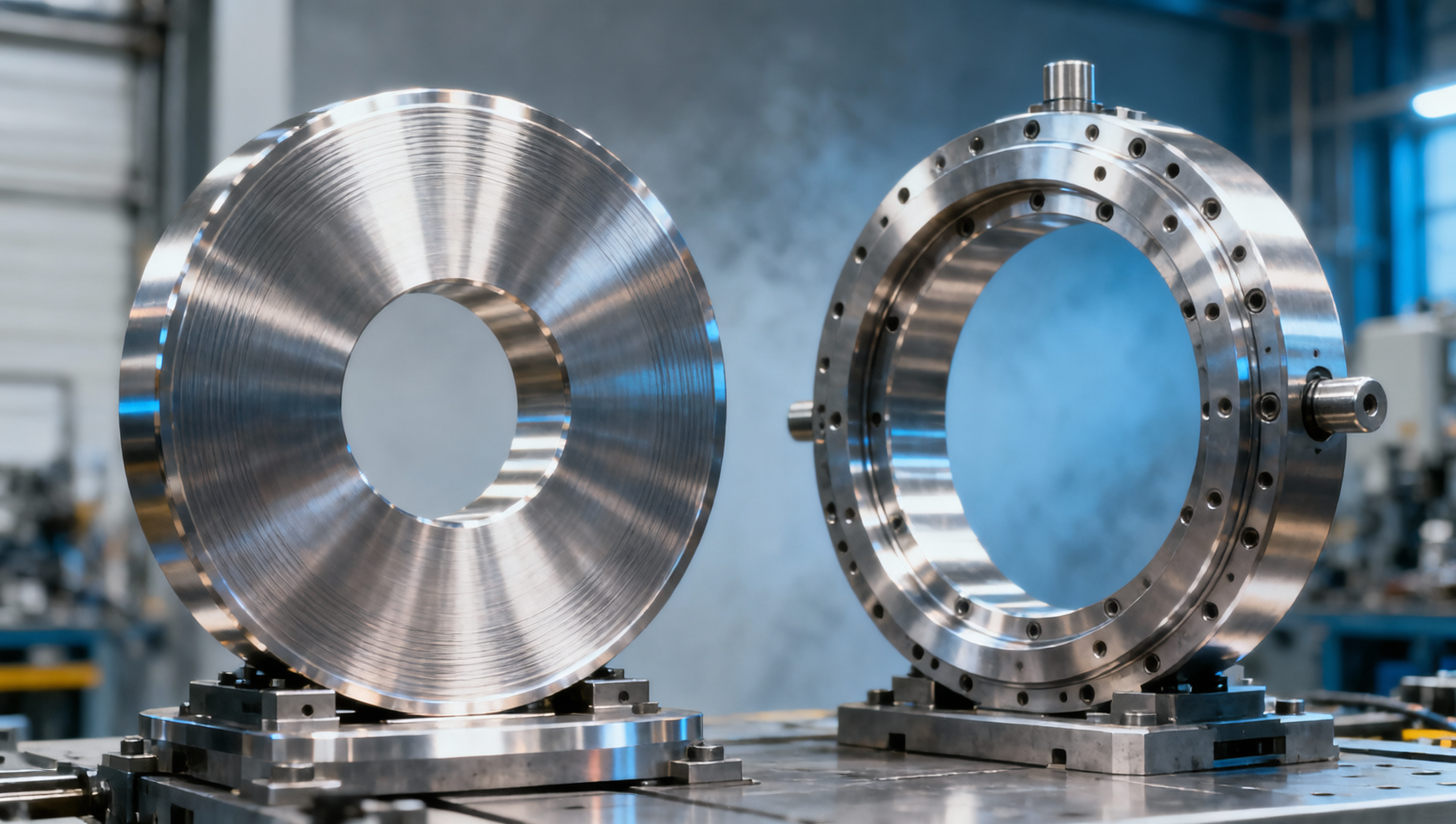
High-tolerance Disc Parts for Aerospace Applications: Why Runout Control Begins at Blank Handling
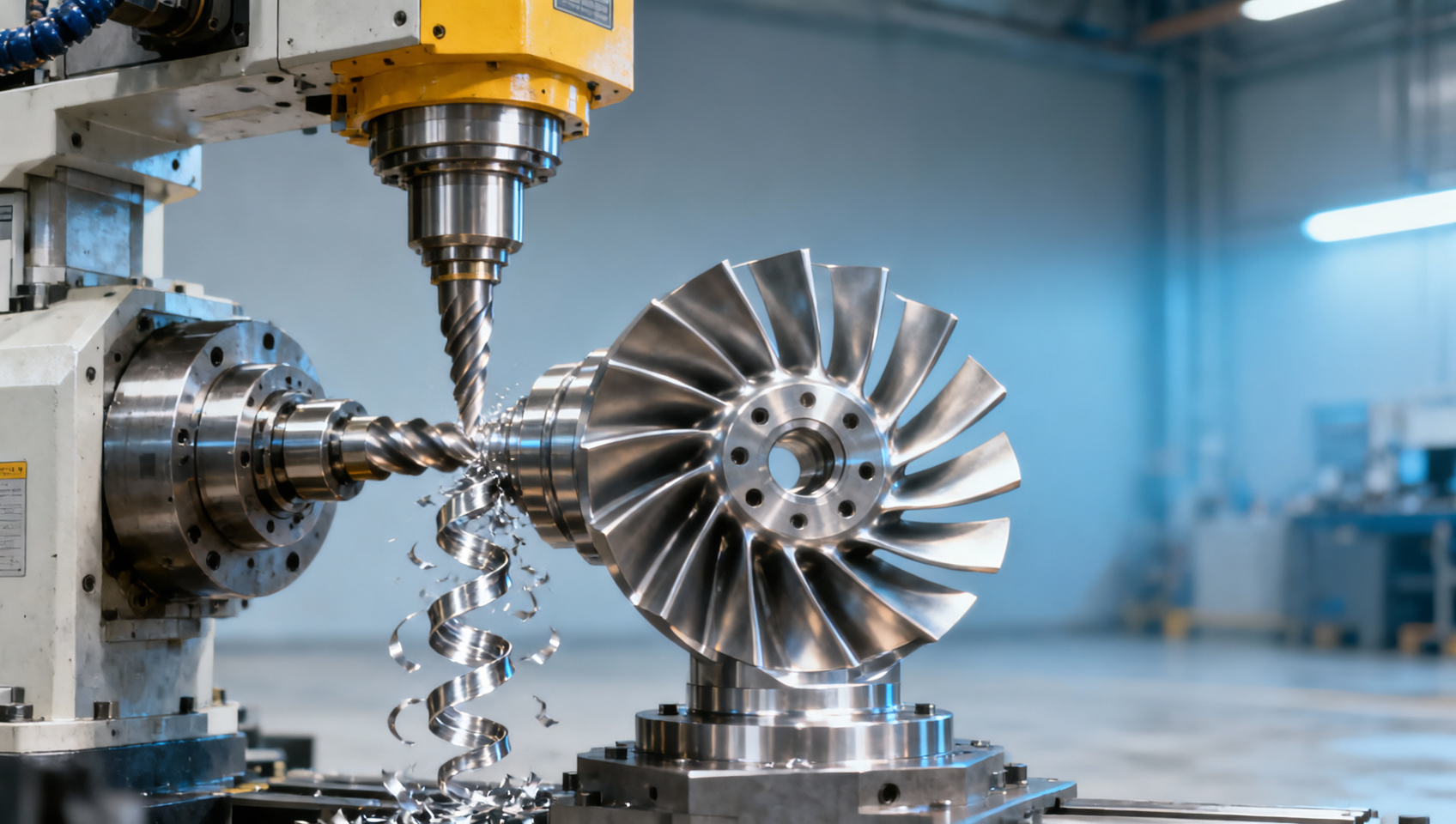
In aerospace manufacturing, even micron-level runout in high-tolerance disc parts can compromise flight safety and system reliability—making precision CNC manufacturing for aerospace non-negotiable. Yet true accuracy begins long before cutting: at blank handling. This article explores how automated CNC manufacturing, multi-axis machine tool capabilities, and modular tooling systems converge to control runout from the first touchpoint—delivering space-saving CNC manufacturing solutions that meet stringent aerospace standards while supporting cost-effective, low-maintenance, and high-precision production.
Why “Runout Starts at the Blank” Isn’t Just a Slogan—it’s a Process Reality
For procurement managers, plant engineers, and aerospace OEM decision-makers, this is the critical insight: no amount of five-axis compensation or thermal error correction can fully recover runout introduced during blank loading. When a titanium alloy disc blank (e.g., Ti-6Al-4V, Ø500 mm, 30 mm thick) is clamped with 8–12 µm face misalignment—or worse, allowed to shift under hydraulic pressure—the resulting distortion propagates through every subsequent operation: rough turning, finish milling, gear hobbing, and balancing. Industry data from major airframe suppliers shows that 62% of disc part rework in Tier-1 aerospace machining cells traces back to inconsistent blank positioning—not tool wear or program errors.
This isn’t theoretical. It’s measurable—and preventable. The root cause lies not in the CNC machine’s capability, but in the interface between human process design and physical part behavior: how the blank is stored, transferred, oriented, and fixtured *before* the first toolpath executes.
What Actually Happens Between the Pallet and the Spindle—and Why It Matters Most
Most aerospace manufacturers assume their high-end multi-axis machining centers (e.g., DMG MORI NTX, Mazak INTEGREX i-200S) inherently guarantee disc part accuracy. But real-world performance depends on three interdependent layers:
- Layer 1: Blank Geometry & Material Stability — As-cast or forged discs often carry residual stress and minor warpage (±15–25 µm). If unmeasured or uncorrected before clamping, this becomes “baked-in” runout.
- Layer 2: Fixture-Blank Interface Dynamics — Standard hydraulic chucks with segmented jaws exert uneven radial force on thin-rimmed discs. Even 0.5° jaw misalignment induces >10 µm radial displacement at the OD—enough to exceed AS9100 Rev E positional tolerances for bearing races.
- Layer 3: Automation Handoff Integrity — Robotic grippers without integrated vision or force feedback routinely over-compress soft-facing blanks or miss centering by ±0.03 mm—translating directly into repeatable runout at final inspection.
The takeaway? Runout isn’t “generated” at cut time—it’s *amplified*. And the amplification factor is determined at blank handling.
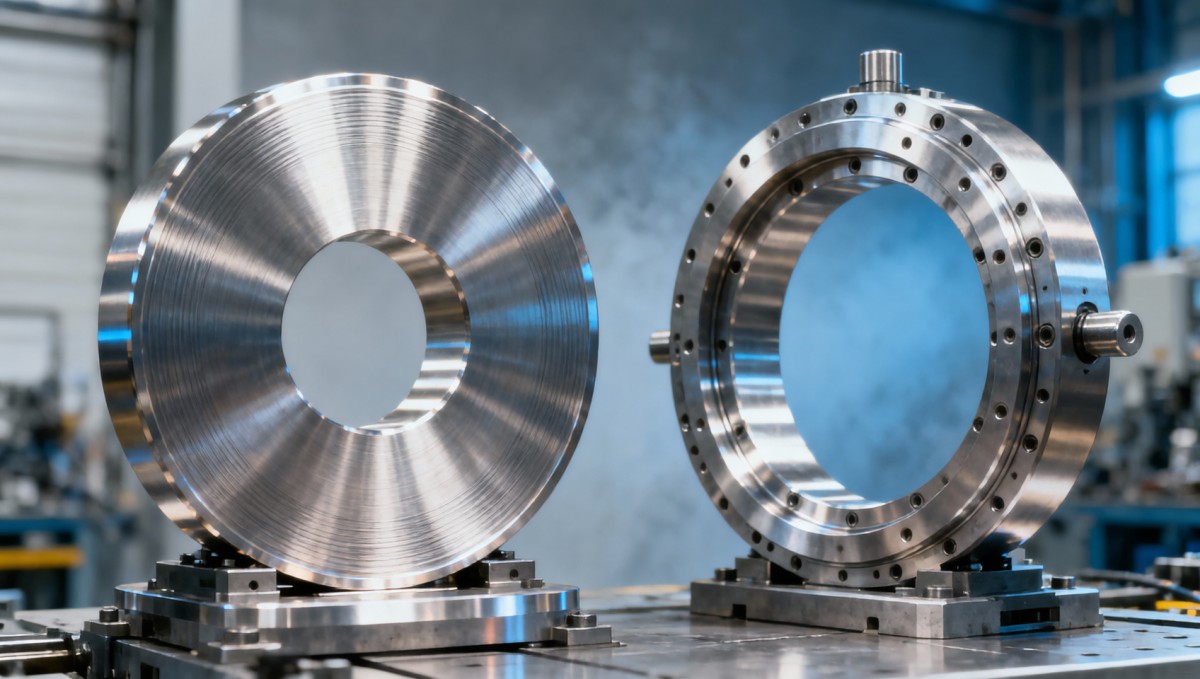
How Leading Aerospace Suppliers Solve It: Three Actionable Strategies
Based on field audits across 7 certified aerospace machining facilities (including GE Aviation, Safran Landing Systems, and GKN Aerospace), here’s what works—not in labs, but on the shop floor:
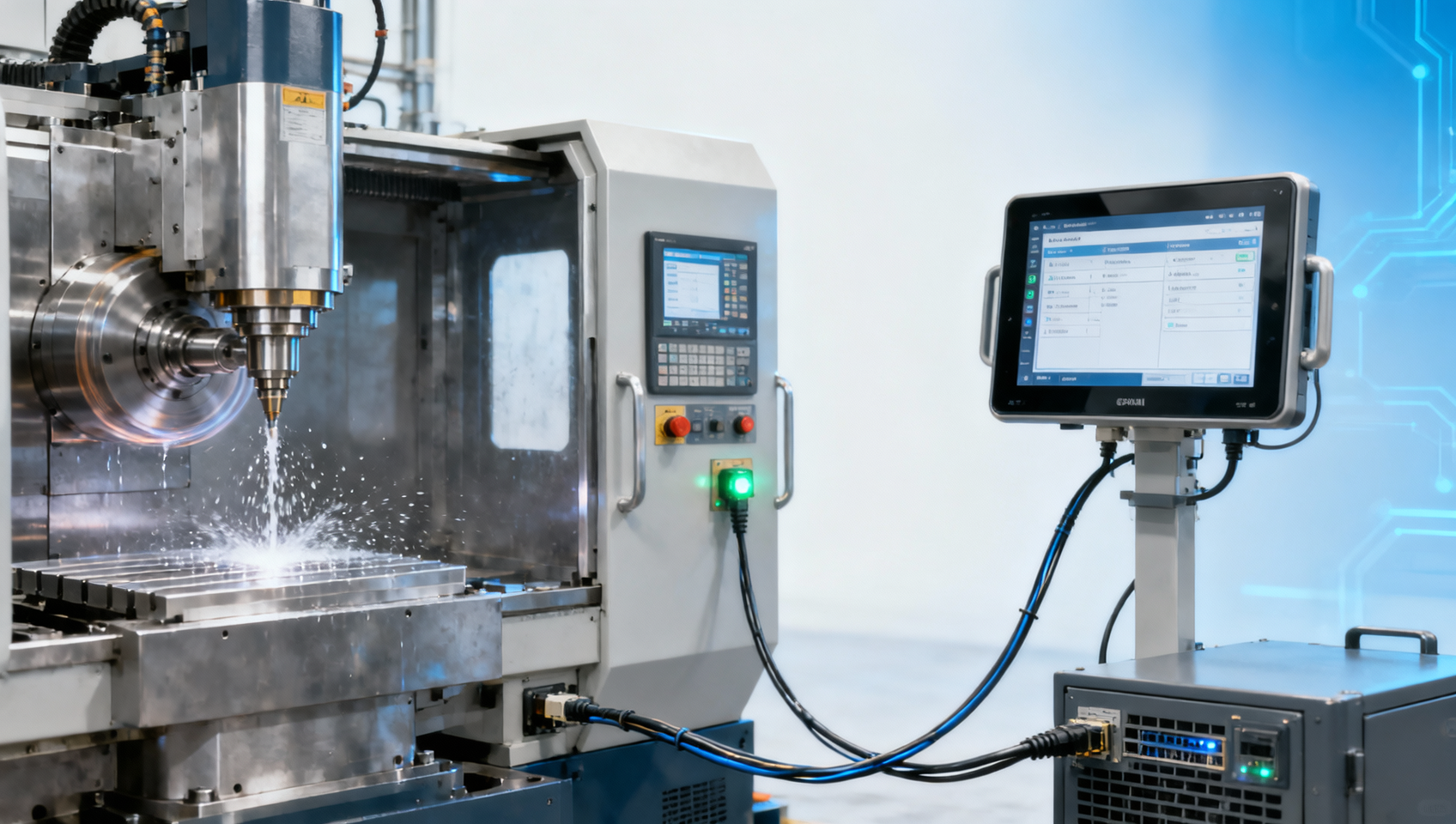
- Pre-Clamp Metrology Integration: Mounting in-process laser scanners or capacitive probes directly on the pallet loader allows automatic detection of blank face tilt and diameter variance *before* clamping. One Tier-1 supplier reduced first-article scrap by 41% after adding this step—no machine upgrade required.
- Modular, Self-Centering Fixturing: Replacing standard chucks with pneumatically actuated, kinematic ring fixtures (e.g., SCHUNK ROTA NCR) eliminates jaw-induced distortion. These systems center via three-point contact and apply uniform axial load—cutting average runout at the disc periphery from 18 µm to ≤5 µm.
- Smart Pallet Transfer Protocols: Using servo-controlled transfer arms with torque-limited end-effectors and real-time position verification ensures consistent Z-height and angular orientation. Paired with RFID-tagged blanks, this enables full traceability from heat lot to final CMM report—meeting both AS9100 and ITAR documentation requirements.
Crucially, all three strategies integrate seamlessly with existing CNC platforms—no greenfield investment needed. They’re retrofittable, scalable, and deliver ROI within 3–5 months via reduced scrap, faster setup, and fewer CMM rechecks.
What Should You Prioritize—Based on Your Role?
If you’re a procurement professional: Ask suppliers for runout stability data—not just final part tolerance. Demand evidence of blank-handling controls: fixture type, pre-clamp inspection method, and pallet-to-machine repeatability (target: ≤2 µm). A supplier who only cites machine accuracy specs (e.g., “±1.5 µm positioning”) is missing half the story.
If you’re an operator or process engineer: Audit your current blank load cycle. Time how many times you manually adjust the disc before clamping. If it’s more than once—or if you rely on “feel” or visual alignment—you have a runout risk vector. Start with simple upgrades: calibrated height gauges at the load station and standardized blank orientation marks.
If you’re an executive or plant manager: Treat blank handling as a KPI—not just a step. Track “runout deviation at first inspection” vs. “runout after final operation.” A gap >30% signals systemic handling issues. Budget for smart fixturing not as CAPEX, but as yield insurance: one avoided engine disc rejection saves $220K+ in rework and delay penalties.
Bottom Line: Precision Manufacturing Starts Where the Part First Touches the System
High-tolerance disc parts for aerospace aren’t defined by how well they’re machined—but by how consistently and stably they’re *presented* to the machine. Runout control isn’t a feature of the CNC—it’s the outcome of an engineered handoff between material, fixture, automation, and human process discipline. For information researchers, operators, buyers, and leaders alike: the highest ROI in aerospace precision lies not in upgrading spindles—but in redesigning the 30 seconds before the first cut. Because when flight-critical rotation meets zero-margin tolerance, the margin for error begins—and ends—at the blank.
PREVIOUS ARTICLE
NEXT ARTICLE
Recommended for You
 Heavy-duty Machining Center for mold making: Why coolant filtration standards evolve faster than OEM manualsMachine Tool Industry Editorial Team
 Quick-change Fixture Design for CNC turning: Why clamping force consistency drops after 200 cyclesCNC Machining Technology Center
 5 Axis Machining for impeller manufacturing: Why toolpath smoothing affects surface fatigue lifeCNC Machining Technology Center
 Lean Production Process implementation: Where value stream mapping fails to expose hidden machine downtimeManufacturing Market Research Center
 Modular Tooling System for flexible manufacturing: Why interface repeatability degrades faster than expectedMachine Tool Industry Editorial Team
 Industrial Automation control system for CNC machines: When cybersecurity updates disrupt scheduled maintenanceMachine Tool Industry Editorial Team

Aris Katos
Future of Carbide Coatings
15+ years in precision manufacturing systems. Specialized in high-speed milling and aerospace grade alloy processing.
▶
High-tolerance Disc Parts for aerospace applications: Why runout control begins at blank handlingCNC Machining Technology Center▶
What slows metal machining even when machines look busy?CNC Machining Technology Center▶
CNC metalworking jobs fail tolerance checks for hidden reasonsCNC Machining Technology Center▶
Why CNC milling cycle time stays high after process changesCNC Machining Technology Center▶
Why CNC metalworking scrap rates rise on thin wall partsCNC Machining Technology Center
Mastering 5-Axis Workholding Strategies
Join our technical panel on Nov 15th to learn about reducing vibrations in thin-wall components.

Providing you with integrated sanding solutions
Before-sales and after-sales services
Comprehensive technical support