• Global CNC market projected to reach $128B by 2028 • New EU trade regulations for precision tooling components • Aerospace deman
NYSE: CNC +1.2%LME: STEEL -0.4%

Why Shaft Parts for Agricultural Machinery Fail Earlier Than Expected
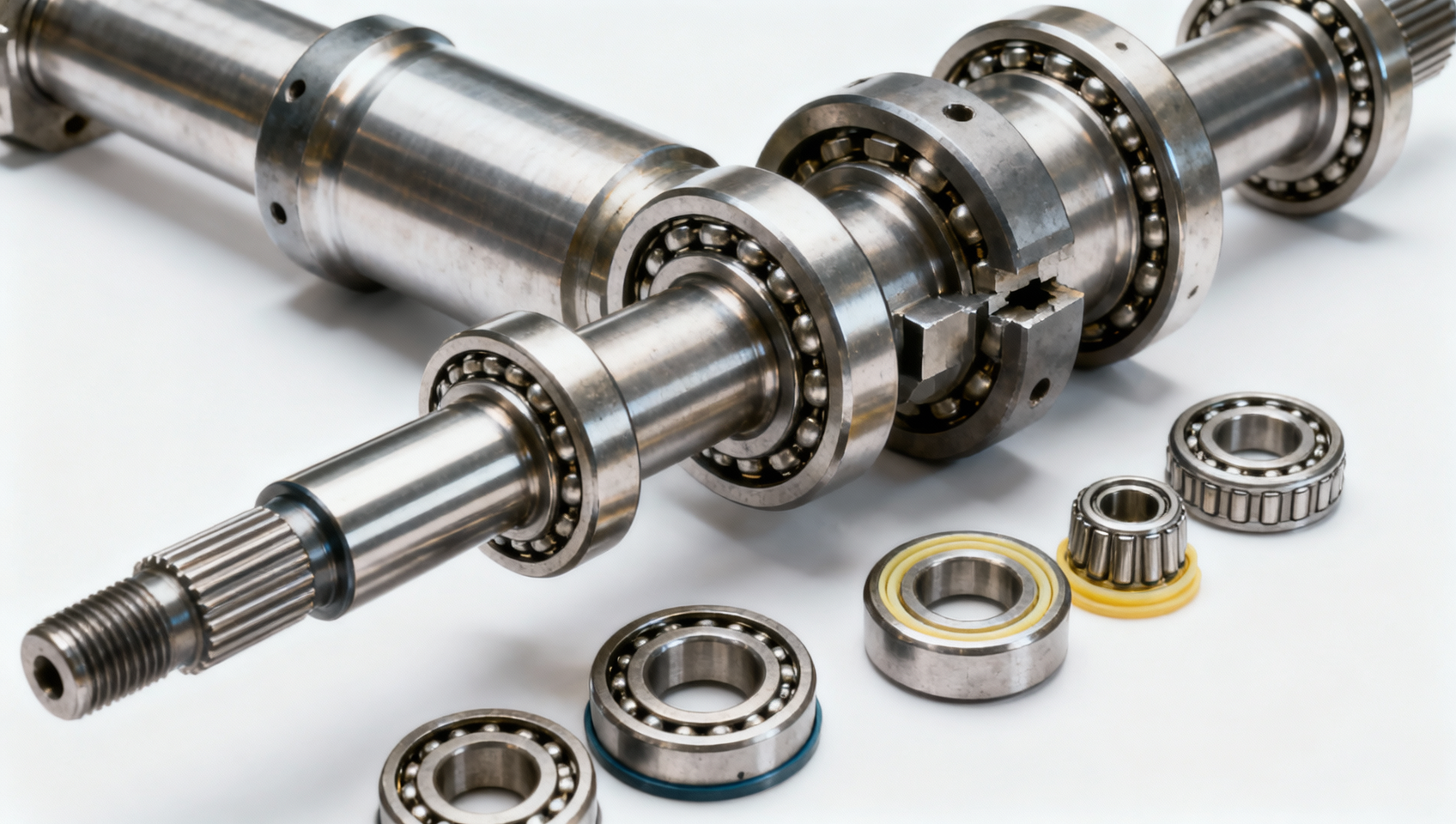
Shaft Parts for Agricultural Machinery often fail earlier than expected due to overload, poor material selection, contamination, and an Optimized Machining Process for stainless steel that is not fully matched to real working conditions. For buyers, operators, and decision-makers, understanding these failure causes is essential to improving service life, reducing downtime, and making smarter choices in precision manufacturing and maintenance.
Why do shaft parts in agricultural machinery fail so early in real field conditions?
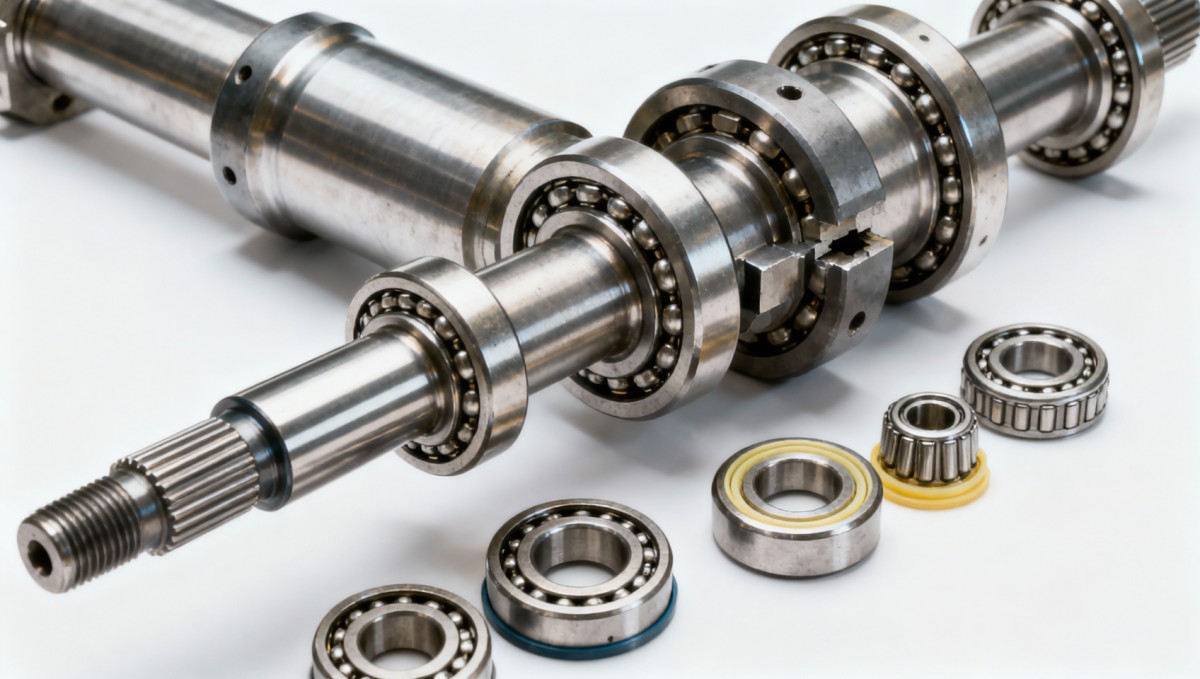
In agricultural machinery, shaft parts work under a combination of shock load, dust, moisture, mud, vibration, and irregular maintenance. On paper, a shaft may meet drawing tolerance and material requirements, yet in the field it often faces torque spikes, misalignment, and contamination that were never fully considered during design validation. This gap between nominal design and real operating conditions is one of the most common reasons premature failure appears within one season, 500–1,500 working hours, or even earlier in severe applications.
For operators, the first visible signs are usually abnormal noise, rising bearing temperature, looseness, unstable transmission, or rapid seal wear. For procurement teams, the problem appears as repeated replacement orders, uneven quality between suppliers, and uncertain lifecycle cost. For decision-makers, early shaft failure means more than spare parts expense. It can create downtime during critical planting or harvesting windows, when even a 24–72 hour stoppage may affect output, logistics, and customer commitments.
From a precision manufacturing perspective, shaft parts for agricultural machinery are not simple rotating components. They are interfaces between power, alignment, and durability. CNC lathes, machining centers, grinding systems, and inspection processes must all be matched to the application. A shaft used in a clean indoor automation line and one installed on a rotary tiller, baler, harvester, or pump drive may share similar geometry, but their load spectrum and failure risks are completely different.
This is why early failure analysis should not focus only on “material quality” or “machining quality” as isolated topics. The root cause often lies in a chain of 4 linked factors: design assumptions, raw material selection, machining process capability, and maintenance conditions. If one of these four is misjudged, the shaft may still pass incoming inspection but fail early in service.
Typical failure triggers that are often underestimated
In many agricultural applications, shaft failures are accelerated by repeated starts and stops, sudden impact from uneven terrain, and variable loads from crop density. These conditions differ from stable industrial duty cycles. A shaft that works normally at constant speed may crack or wear faster when exposed to cyclic torque changes every few seconds over a long harvest shift of 8–12 hours.
- Overload beyond design assumptions, especially when attachments or driven components are upgraded without checking shaft capacity.
- Improper material or heat treatment, leading to insufficient core toughness or excessive brittleness at the surface.
- Contamination entering bearing or seal zones, causing abrasive wear and local heating.
- Tolerance mismatch between shaft, bearing seat, keyway, spline, or coupling components, creating stress concentration and fretting.
When these issues occur together, the service life reduction is not linear. A shaft exposed to slight overload plus contamination plus poor alignment may fail far sooner than one exposed to only a single issue. That is why precision manufacturing and field-use analysis must be treated as one system, not two separate departments.
Which failure modes matter most when selecting or replacing agricultural shaft parts?
Different failure modes point to different corrective actions. If buyers and maintenance teams replace a damaged shaft without identifying the dominant mechanism, the next part may fail in the same way. In practice, the most relevant categories are fatigue fracture, abrasive wear, torsional deformation, corrosion-related damage, and fit-related surface distress. Each one leaves different evidence and requires a different response from engineering and sourcing teams.
The table below summarizes common shaft failure modes in agricultural machinery and what they usually indicate for manufacturing, assembly, and procurement decisions. It is especially useful when comparing suppliers or reviewing repeated field complaints across multiple equipment batches.
A key takeaway is that visible shaft breakage is often the final event, not the original defect. For example, a fatigue fracture may begin with micro-damage caused by rough machining marks, poor fillet transitions, or misfit assembly. This is where CNC turning, grinding, balancing, and inspection discipline become commercially important, not just technically interesting.
How machining quality changes failure risk
Precision machine tools influence shaft reliability in several measurable ways. Roundness, concentricity, runout, surface roughness, and dimensional stability all affect how loads are distributed. In many medium-duty shaft applications, even a small fit deviation can amplify vibration and bearing stress over hundreds of operating cycles. That is why CNC process capability matters from the first prototype to batch production.
Critical machining checkpoints
- Control of shoulder transitions and fillet radius to reduce stress concentration in high-load zones.
- Stable bearing seat tolerance and consistent surface finish for predictable assembly and wear behavior.
- Verification of straightness and runout after heat treatment, especially on long shafts or multi-step shafts.
- Inspection of keyways, splines, and threads where local geometry often becomes the starting point of early crack formation.
If stainless steel is used for corrosion resistance, the machining route should be optimized to its actual work-hardening characteristics and operating environment. An Optimized Machining Process for stainless steel is not a universal setting. Feed, speed, coolant strategy, and post-machining surface condition must align with whether the shaft faces fertilizer, washdown, outdoor storage, or long idle cycles between seasonal use.
What should buyers, operators, and decision-makers check before purchasing shaft parts?
A low initial unit price can become expensive if the shaft requires frequent replacement, causes bearing damage, or increases machine downtime during high-demand periods. In B2B purchasing, evaluation should include not only material and dimensions, but also processing consistency, traceability, lead time, and application matching. For seasonal industries, the cost of a missed delivery window can exceed the price difference between two shaft suppliers.
The most practical approach is to assess shaft parts through 5 core checkpoints: material suitability, process capability, dimensional control, operating environment compatibility, and service support. When these five are reviewed together, procurement teams reduce the risk of buying parts that look correct in drawings but fail under torque, vibration, moisture, or contamination.
The table below provides a structured purchasing guide for agricultural shaft parts, especially useful for sourcing managers comparing OEM, aftermarket, and custom-machined options. It combines selection, cost awareness, and lifecycle risk into one checklist.
For many projects, a standard review cycle takes 3 stages: drawing confirmation, sample validation, and batch approval. Depending on complexity, sample preparation may take 7–15 days, while batch delivery can range from 2–6 weeks. Buyers who define these milestones early usually face fewer disputes over tolerance, finish, or part interchangeability.
A practical pre-purchase checklist
- Confirm whether the shaft works under steady load, impact load, or alternating torque. This changes material and geometry priorities.
- Check if the operating environment includes water, mud, fertilizer, or frequent washdown. This affects steel choice and surface protection.
- Request key control points, not only a drawing. Ask how bearing seats, keyways, splines, and post-heat-treatment distortion are managed.
- Clarify acceptable lead times for samples, pilot lots, and repeat orders, especially if your maintenance season is narrow.
- Review whether the supplier can support redesign suggestions when repeated field failures show the original part is under-specified.
This checklist is where a precision manufacturing platform adds value. Instead of simply machining to print, an experienced CNC and precision-part partner can identify weak transitions, unsupported tolerances, or material-process mismatches before volume production begins.
How can maintenance and process control extend shaft service life?
Not every early failure requires a complete redesign. In many cases, service life can be improved through a combination of better sealing, cleaner assembly, correct lubrication intervals, and targeted dimensional review. For operators and maintenance teams, this means looking beyond replacement frequency and asking whether contamination control, alignment practices, and mounting force are actually consistent on site.
A useful maintenance model is to divide shaft reliability into 3 layers: installation quality, operating discipline, and inspection frequency. If one layer is weak, even a well-machined shaft can lose life quickly. For example, a shaft installed with excessive force or poor alignment may create hidden preload that does not appear until 100–300 hours later, when bearing and journal symptoms begin to surface.
Recommended field actions for longer shaft life
- Inspect seals and bearing areas at defined intervals, such as every 250 hours or each major seasonal service cycle, depending on duty severity.
- Monitor vibration, noise, or abnormal heat after replacement. These are early indicators of misfit, misalignment, or contamination.
- Avoid mixing unmatched bearings, couplings, or sleeves with a precision-machined shaft unless fit compatibility is verified.
- Store spare shafts in dry and clean conditions. Corrosion damage during storage can shorten life before installation even begins.
For procurement and engineering teams, process control at the supplier side is equally important. CNC turning alone is not enough if post-machining inspection is incomplete. Critical shafts often benefit from a sequence that includes raw material verification, semi-finish machining, heat treatment when required, finish machining, and final dimensional inspection. On parts with multiple functional diameters, checking only overall length and nominal diameter is rarely sufficient.
Where stainless steel helps and where it does not
Stainless steel can reduce corrosion-related failure in wet, chemical, or fertilizer-exposed applications, but it is not automatically the best solution for every shaft part. In some agricultural machinery, the required torsional strength, wear resistance, or cost target may favor alloy steel plus protective treatment instead. The decision should be based on 4 factors: load level, corrosion exposure, required finish, and budget per lifecycle, not per piece.
If stainless steel is selected, the machining process must be adjusted accordingly. Work hardening, thermal behavior, and tool wear can alter dimensional stability and surface integrity. An Optimized Machining Process for stainless steel improves consistency only when it is tailored to the specific grade, geometry, cutting tool, and final application condition.
Common questions, hidden misconceptions, and what to discuss with a precision manufacturing partner
Many repeated shaft failures come from assumptions that seem reasonable but are incomplete. A part may be “made to drawing” yet still be wrong for the operating environment. A harder shaft may appear stronger, yet become more brittle under shock. A cheaper alternative may fit initially, yet increase total cost through more frequent replacement and secondary damage. These are common B2B issues in agricultural equipment sourcing.
Is a higher hardness shaft always better?
No. Higher hardness can improve wear resistance, but if the shaft loses core toughness, it may become more vulnerable to impact fracture or fatigue in shock-loaded conditions. The right balance depends on torque fluctuation, contact surface requirements, and whether the shaft sees heavy starts, sudden jams, or uneven terrain loading.
Can the same shaft specification be used across different agricultural machines?
Not safely without reviewing real duty conditions. Two shafts with the same diameter may face very different rpm, bending moments, contamination levels, and service intervals. Shared geometry does not guarantee shared lifecycle. This is why replacement standardization should be based on operating analysis, not only dimensional similarity.
What should be discussed before requesting a quotation?
At minimum, discuss 6 items: part drawing, material preference, operating load, environment, annual volume, and expected lead time. If available, also share failure photos, used-hour data, and whether the issue involves bearing wear, fracture, corrosion, or assembly difficulty. This shortens the review cycle and makes custom machining recommendations more accurate.
How long does development usually take for a custom shaft part?
For common CNC-machined shaft components, drawing review and manufacturability feedback may be completed in 1–3 working days. Sample production often takes 7–15 days, while formal batch production may require 2–6 weeks depending on complexity, heat treatment, inspection requirements, and order quantity. Complex multi-step shafts or parts requiring additional grinding may take longer.
Why choose a precision manufacturing partner that understands both machining and field failure?
When shaft parts for agricultural machinery fail earlier than expected, the best response is not simply to reorder the same part. The more valuable approach is to connect field failure feedback with CNC machining capability, material selection, and process optimization. A qualified precision manufacturing partner should be able to review your drawing, identify likely stress points, discuss suitable steels or stainless options, and align machining routes with your actual operating conditions.
This is especially important for buyers balancing cost and reliability, operators trying to reduce downtime, and business leaders planning stable supply. Support should go beyond manufacturing itself. It should include parameter confirmation, tolerance review, sample planning, lead-time coordination, and discussion of alternatives when the current shaft design repeatedly underperforms in the field.
If you are comparing shaft parts suppliers, preparing a custom machining project, or investigating repeated agricultural machinery shaft failure, contact us to discuss your drawing, material requirements, operating environment, target service life, and delivery schedule. We can help evaluate machining feasibility, sample support options, typical production timing, and practical recommendations for product selection, design adjustment, and quotation planning.
You can also reach out for specific topics such as bearing seat tolerance confirmation, stainless steel machining routes, replacement versus redesign decisions, pilot batch arrangements, and packaging or inspection requirements for international trade. Clear technical communication at the start usually saves far more time and cost than another round of premature shaft replacement later.
PREVIOUS ARTICLE
NEXT ARTICLE
Recommended for You
![]() Iranian LNG Vessels Breach U.S. Strait Blockade; Shanghai Crude Surges 4%Manufacturing Market Research Center
Iranian LNG Vessels Breach U.S. Strait Blockade; Shanghai Crude Surges 4%Manufacturing Market Research Center![]() Pakistan Launches CNC Localization Tender for CPEC II Smart Manufacturing ParkGlobal Machine Tool Trade Research Center
Pakistan Launches CNC Localization Tender for CPEC II Smart Manufacturing ParkGlobal Machine Tool Trade Research Center![]() NVIDIA Joins $1T Club; AI-Driven CNC Digital Twin Gains Global TractionCNC Machining Technology Center
NVIDIA Joins $1T Club; AI-Driven CNC Digital Twin Gains Global TractionCNC Machining Technology Center![]() World's First 5-Axis Middle-Grade Wire EDM Machine Enters Mass ProductionMachine Tool Industry Editorial Team
World's First 5-Axis Middle-Grade Wire EDM Machine Enters Mass ProductionMachine Tool Industry Editorial Team![]() China’s CNC Machine Tool Export Prices Up 11.3% in Q1 2026Global Machine Tool Trade Research Center
China’s CNC Machine Tool Export Prices Up 11.3% in Q1 2026Global Machine Tool Trade Research Center![]() Saudi Energy Security Boosts CNC Import Efficiency in Middle EastGlobal Machine Tool Trade Research Center
Saudi Energy Security Boosts CNC Import Efficiency in Middle EastGlobal Machine Tool Trade Research Center


Aris Katos
Future of Carbide Coatings
15+ years in precision manufacturing systems. Specialized in high-speed milling and aerospace grade alloy processing.
▶
Why Shaft Parts for Agricultural Machinery Fail Earlier Than ExpectedCNC Machining Technology Center▶
Defense Precision Machining Faces Tighter Tolerance Risks in 2026CNC Machining Technology Center▶
How Precision Disc Parts Affect Hydraulic System StabilityCNC Machining Technology Center▶
High-tolerance Disc Parts for aerospace applications: Why runout control begins at blank handlingCNC Machining Technology Center▶
High precision CNC manufacturing: Why environmental monitoring matters as much as machine calibrationCNC Machining Technology Center
Mastering 5-Axis Workholding Strategies
Join our technical panel on Nov 15th to learn about reducing vibrations in thin-wall components.

Providing you with integrated sanding solutions
Before-sales and after-sales services
Comprehensive technical support