• Global CNC market projected to reach $128B by 2028 • New EU trade regulations for precision tooling components • Aerospace deman
NYSE: CNC +1.2%LME: STEEL -0.4%

Industrial turning costs more than expected when chip control is ignored
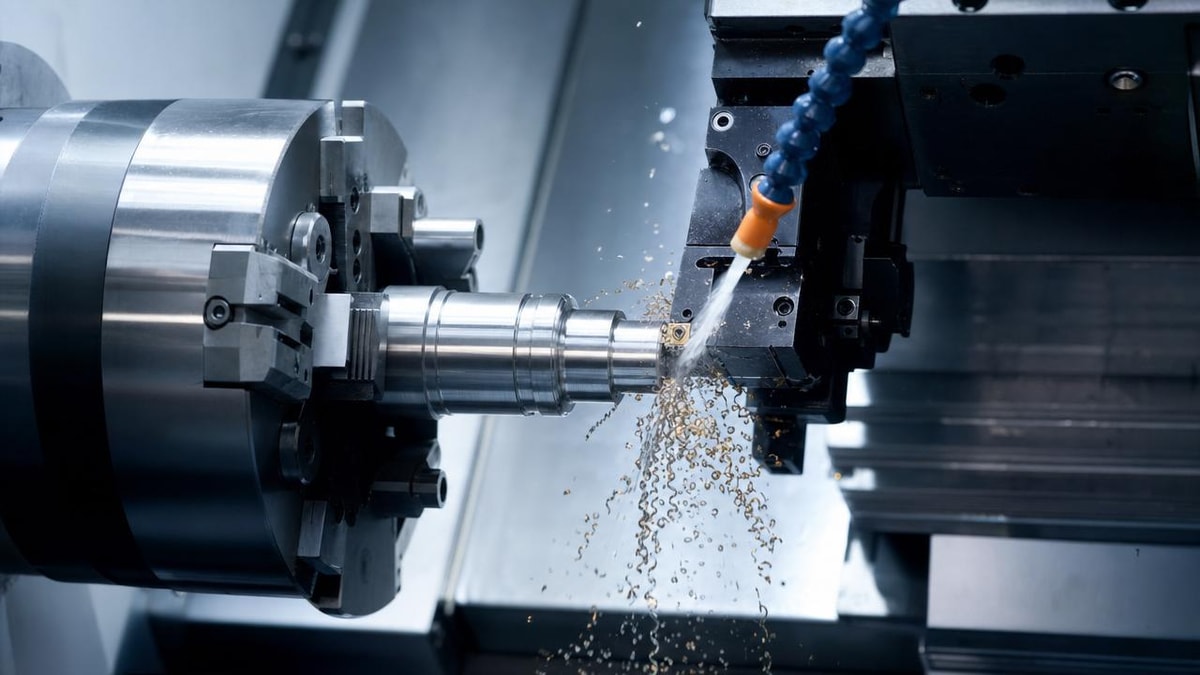
Industrial turning often costs more than expected when chip control is treated as a minor setup issue rather than a core process factor. For machine operators, poor chip evacuation can quickly lead to tool wear, unstable cutting, surface defects, downtime, and safety risks. Understanding how chip control affects daily turning performance is essential for improving efficiency, part quality, and overall production cost.
Understanding industrial turning beyond the cut itself
In modern manufacturing, industrial turning is one of the most widely used machining processes for shafts, rings, sleeves, threaded parts, sealing faces, and many rotational components. It is central to CNC lathes, turning centers, and multi-axis systems used across automotive, aerospace, energy equipment, electronics, and general precision manufacturing. Operators often focus on spindle speed, feed rate, insert grade, and dimensional control, but chip behavior can be just as important as any programmed parameter.
Chip control refers to how chips form, break, flow, and leave the cutting zone. In stable industrial turning, chips should be short enough to evacuate safely, predictable enough to avoid wrapping, and consistent enough to support repeatable cutting loads. When that does not happen, the process may still appear to run, yet hidden costs begin to build: frequent insert changes, machine stoppages, poor finish, rework, part damage, spindle load fluctuation, and reduced operator confidence.
This is why chip control deserves attention as a production variable, not just a housekeeping detail. In high-output environments, even a small loss in chip stability can affect cycle time, machine utilization, and quality metrics across an entire line. In low-volume or mixed-part environments, poor chip control makes setup more difficult and raises the chance of process variation from one batch to the next.
Why the industry pays close attention to chip control
The CNC machine tool industry has moved steadily toward higher precision, greater automation, and stronger digital integration. That shift changes how industrial turning is evaluated. It is no longer enough for a machine to cut material accurately in short tests. Production today requires long unattended cycles, predictable tool life, quick changeovers, and compatibility with automated loading, probing, and downstream assembly. In this environment, uncontrolled chips become a process bottleneck.
For operators, the issue is immediate. Stringy chips can wrap around the toolholder, collect near the chuck, interfere with coolant flow, or scratch finished surfaces. For production managers, the issue is measurable. A turning cell with recurring chip problems often shows more stoppages, lower output per shift, and less reliable cost forecasting. For quality teams, chip-related vibration and built-up edge increase the risk of inconsistent dimensions and unstable surface roughness.
As smart manufacturing expands, the value of stable industrial turning rises further. Sensors, data collection, and automated tool monitoring work best when the base cutting process is consistent. If chip control remains unstable, digital systems may report problems, but they cannot fully compensate for poor chip formation at the tool-workpiece interface.
What chip control changes in everyday industrial turning
In practical industrial turning, chip control influences more than chip shape. It affects heat distribution, cutting force variation, insert edge loading, coolant access, and how smoothly the machine can maintain the programmed path. If chips break properly, heat leaves the cutting zone more effectively and the insert works under more consistent conditions. If chips remain long and continuous, they trap heat, contact finished surfaces, and disturb cutting stability.
This matters in roughing and finishing alike. During roughing, poor chip evacuation can overload the cut and force conservative parameters. During finishing, even a smaller chip issue can leave visible damage on precision surfaces. Operators who work on shafts, bearing seats, hydraulic components, motor parts, and precision sleeves often see this directly: dimensional control may still be close, but visual quality, repeatability, and confidence in unattended running decline quickly.
Another overlooked factor is cycle interruption. Every time an operator pauses industrial turning to clear chips, inspect unexpected wear, or adjust coolant direction, the actual cost of the process moves away from what was planned. The machine may be productive on paper, yet the real cost per part rises through hidden labor, scrap exposure, and reduced machine availability.
Typical causes of poor chip control
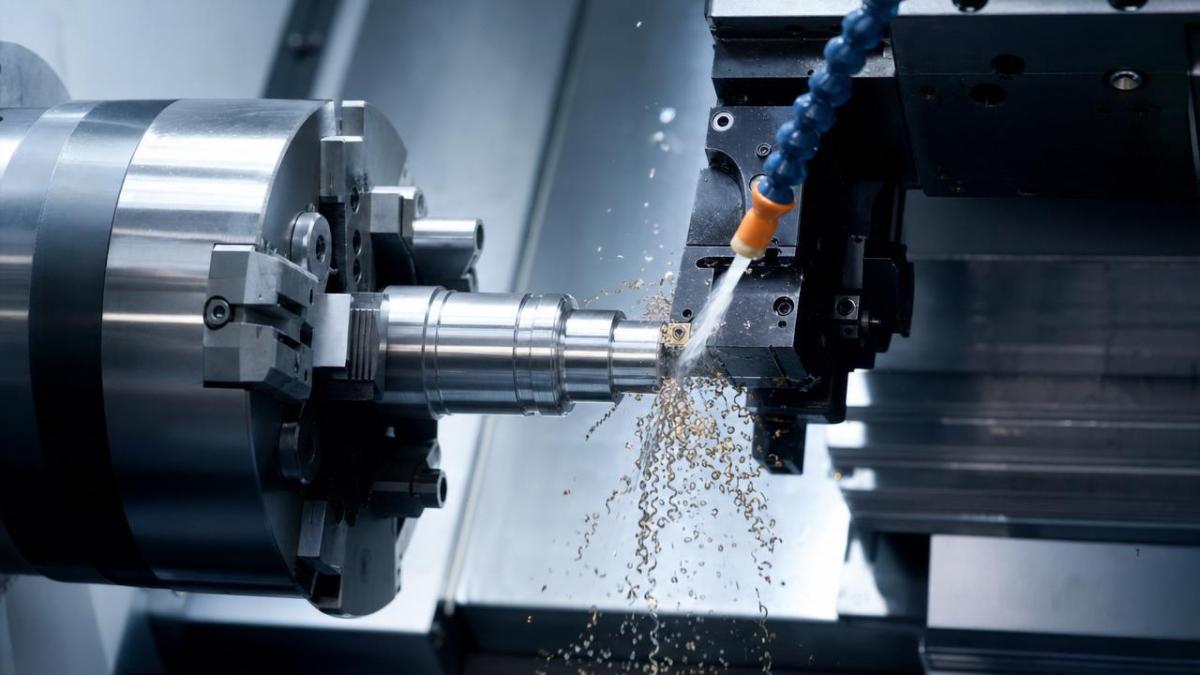
Chip control problems in industrial turning usually come from a combination of factors rather than a single error. Material behavior is a major cause. Low-carbon steels, certain stainless grades, ductile alloys, and some nonferrous materials naturally produce long chips unless cutting conditions and geometry are carefully selected. Part geometry also matters. Interrupted areas, thin walls, shoulders, grooves, and long overhangs can change how chips form and exit the cut.
Tooling choices are equally important. Insert geometry, chipbreaker design, nose radius, edge preparation, and holder rigidity all influence whether chips curl and break properly. A cutting edge that performs well in one feed range may fail to control chips in another. Coolant delivery can either support chip breaking and heat removal or, if poorly aimed or insufficient, allow chips to accumulate around the insert and workpiece.
Programming settings often complete the picture. Feed that is too low for the insert geometry, depth of cut outside the chipbreaker’s effective range, or cutting speed poorly matched to the material can all create long snarled chips. In many workshops, the process appears acceptable during initial trials, but as inserts wear and material batches vary, chip control becomes unstable and costs begin to rise.
Where this matters most across manufacturing sectors
Because industrial turning supports such a broad range of industries, the cost impact of poor chip control appears in many forms. In automotive production, high-volume shaft and hub machining requires short, repeatable cycles and dependable automation. In aerospace work, expensive alloys and tight tolerances mean chip-related tool damage can be especially costly. In energy equipment, large components often involve long cuts where chip evacuation is critical for thermal control and surface integrity. In electronics and precision equipment, smaller turned parts still demand stable finish and reliable dimensional consistency.
For operators, this means chip control is not only a roughing issue on heavy steel parts. It also matters in precision turning, bar-fed production, lights-out machining, and multi-axis work where several tools and operations interact in limited space.
Practical signs operators should watch during industrial turning
Operators are usually the first to recognize when industrial turning is becoming more expensive than planned. The warning signs are often visible before scrap rates increase. Chips may become longer, hotter, and more tangled. The cutting sound may shift from steady to irregular. Surface finish may show random scratches, tearing, or reflective inconsistency. Tool life may shorten without a clear change in material or program. Spindle load may fluctuate more than normal. Coolant nozzles may become blocked by chip buildup.
These signs should not be treated separately. Together, they indicate that chip formation, edge condition, and process stability are no longer aligned. A strong operator response is to document the cutting conditions, compare insert wear patterns, review chip shape by operation, and identify whether the issue started after a tooling change, material lot change, or program adjustment.
Practical ways to improve chip control without overcomplicating the process
Improving chip control in industrial turning does not always require a major process redesign. In many cases, the biggest gains come from disciplined adjustment. First, confirm that the insert geometry and chipbreaker match the material group and actual feed range. Second, check whether depth of cut and feed are operating inside the intended window for chip breaking. Third, review coolant direction, pressure, and access to the cutting edge. Fourth, examine machine and holder rigidity, especially in long-overhang or small-diameter work.
It is also useful to separate roughing strategy from finishing strategy. A setup that gives acceptable dimensions may still produce unstable chips because the parameters were chosen only for speed or surface quality. Industrial turning works best when toolpath, insert choice, and cutting data are treated as one system. Operators who test changes one variable at a time usually reach a stable result faster than those making several changes at once.
For shops using automated cells, repeatability should be the main target. The goal is not just to produce shorter chips once, but to produce them reliably over tool life, across shifts, and across normal material variation. That is the level at which chip control begins to lower real production cost rather than simply reduce visible mess.
Building chip control into process thinking
The most effective manufacturing teams treat chip control as part of process planning, setup approval, and continuous improvement. In industrial turning, this means documenting successful chip conditions, linking tool life data to chip behavior, and training operators to evaluate chips as a process signal rather than waste material. It also means choosing machine tools, holders, inserts, and coolant systems with chip evacuation in mind, especially when planning flexible lines or unattended machining.
As the global CNC machining sector continues moving toward precision, automation, and digital manufacturing, the shops that manage industrial turning most effectively will be the ones that connect shop-floor observation with process discipline. Chip control is not a small detail at the end of a setup checklist. It is one of the conditions that determine whether a turning process remains safe, productive, and economically sound.
Final takeaway for operators and production teams
When industrial turning costs more than expected, chip behavior is often one of the first places worth investigating. Better chip control can reduce insert waste, prevent surface damage, improve machine uptime, and make automation more dependable. For operators and users working with CNC lathes, machining centers, and precision turning systems, the practical next step is simple: observe chips closely, connect them to tool wear and part quality, and treat chip control as a core part of daily process control. That shift in attention can lead to safer machining, more predictable output, and stronger manufacturing performance over time.
Recommended for You
![]() Beijing’s New E-Bike Lock Regulation Spurs CNC Housing DemandGlobal Machine Tool Trade Research Center
Beijing’s New E-Bike Lock Regulation Spurs CNC Housing DemandGlobal Machine Tool Trade Research Center![]() New Drone Standard GB/T 44723–2026 Takes Effect May 2026Manufacturing Policy Research Center
New Drone Standard GB/T 44723–2026 Takes Effect May 2026Manufacturing Policy Research Center![]() New Maritime Code Takes Effect May 1, 2026: CNC Equipment Shipping Rules UpdatedManufacturing Market Research Center
New Maritime Code Takes Effect May 1, 2026: CNC Equipment Shipping Rules UpdatedManufacturing Market Research Center![]() 2026 China Cycle Shanghai: CNC E-Bike Frame Capacity Draws ODM FocusManufacturing Market Research Center
2026 China Cycle Shanghai: CNC E-Bike Frame Capacity Draws ODM FocusManufacturing Market Research Center![]() 2026 Foshan Tanzhou Auto Expo: EV Parts Sourcing FocusGlobal Machine Tool Trade Research Center
2026 Foshan Tanzhou Auto Expo: EV Parts Sourcing FocusGlobal Machine Tool Trade Research Center![]() New Hazardous Chemicals Safety Law Takes Effect May 2026Manufacturing Policy Research Center
New Hazardous Chemicals Safety Law Takes Effect May 2026Manufacturing Policy Research Center


Aris Katos
Future of Carbide Coatings
15+ years in precision manufacturing systems. Specialized in high-speed milling and aerospace grade alloy processing.
▶
Shaft Parts machining problems that show up only after assemblyCNC Machining Technology Center▶
Industrial turning costs more than expected when chip control is ignoredCNC Machining Technology Center▶
Metal machining bottlenecks that usually appear after capacity expansionCNC Machining Technology Center▶
Why CNC metalworking quality drops even when the specs look rightCNC Machining Technology Center▶
Shaft Parts machining problems linked to concentricity lossCNC Machining Technology Center
Mastering 5-Axis Workholding Strategies
Join our technical panel on Nov 15th to learn about reducing vibrations in thin-wall components.

Providing you with integrated sanding solutions
Before-sales and after-sales services
Comprehensive technical support