• Global CNC market projected to reach $128B by 2028 • New EU trade regulations for precision tooling components • Aerospace deman
NYSE: CNC +1.2%LME: STEEL -0.4%

Why CNC metalworking quality drops even when the specs look right
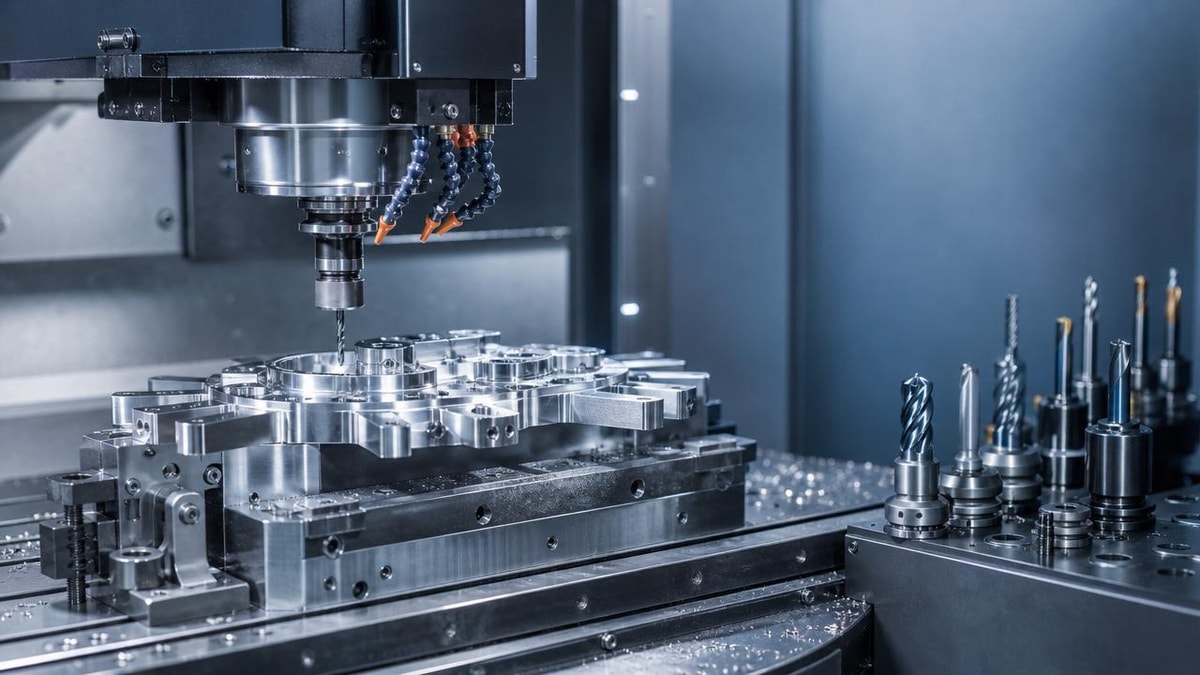
In CNC metalworking, quality problems can still appear even when every drawing, tolerance, and inspection report seems correct. For quality control and safety managers, this gap often points to hidden issues in tooling, machine condition, process stability, or operator execution. Understanding why compliant specs fail to guarantee consistent results is the first step toward reducing defects, preventing risk, and improving production reliability.
Why the issue matters in modern CNC metalworking
CNC metalworking sits at the center of modern manufacturing. Automotive plants depend on repeatable shaft and housing production, aerospace suppliers need strict dimensional stability on complex components, and electronics and energy equipment manufacturers require consistent surface finish, burr control, and assembly fit. In all of these environments, a part can appear compliant on paper while still causing downstream trouble in performance, safety, or reliability.
This is why quality in CNC metalworking cannot be judged only by whether a measured dimension falls inside tolerance. A process may pass first-article inspection yet remain unstable over a full shift. A machined feature may meet size requirements but suffer from residual stress, hidden chatter marks, edge damage, or poor surface integrity. For quality and safety managers, the real concern is not isolated compliance but predictable process behavior.
As machine tools become faster, more automated, and more digitally connected, expectations rise as well. Global manufacturers are pursuing tighter tolerances, shorter cycle times, and less manual intervention. That combination increases throughput, but it also means small weaknesses in machine condition, cutting strategy, setup discipline, or inspection planning can spread quickly across a batch.
What “specs look right” usually means—and what it misses
In many shops, the phrase “the specs look right” means the drawing is clear, the program matches the print, measured dimensions are within tolerance, and standard inspection records are complete. These are necessary controls, but they do not automatically confirm that the CNC metalworking process is healthy.
A specification is a target. Quality is the process capability to hit that target consistently under real production conditions. If the process is drifting, overcompensated, or dependent on a single skilled operator, the documented requirements may still be technically satisfied while the risk level remains high. This is especially important for parts used in rotating systems, structural assemblies, pressurized equipment, or safety-related applications.
Common gaps between specification compliance and real quality
- Dimensions pass, but surface finish causes sealing, wear, or coating issues.
- Features are in tolerance at inspection temperature but shift in actual operating conditions.
- Tool wear is controlled for sample parts, not for the full production run.
- Part geometry is correct, but burrs or sharp edges create handling or assembly hazards.
- Inspection frequency is too low to catch drift between measured samples.
Core hidden causes behind quality loss
When quality drops in CNC metalworking despite acceptable paperwork, the root cause is often found in variables that sit between design intent and shop-floor execution. These variables are not always obvious because they may change gradually, interact with one another, or remain invisible to standard final inspection.
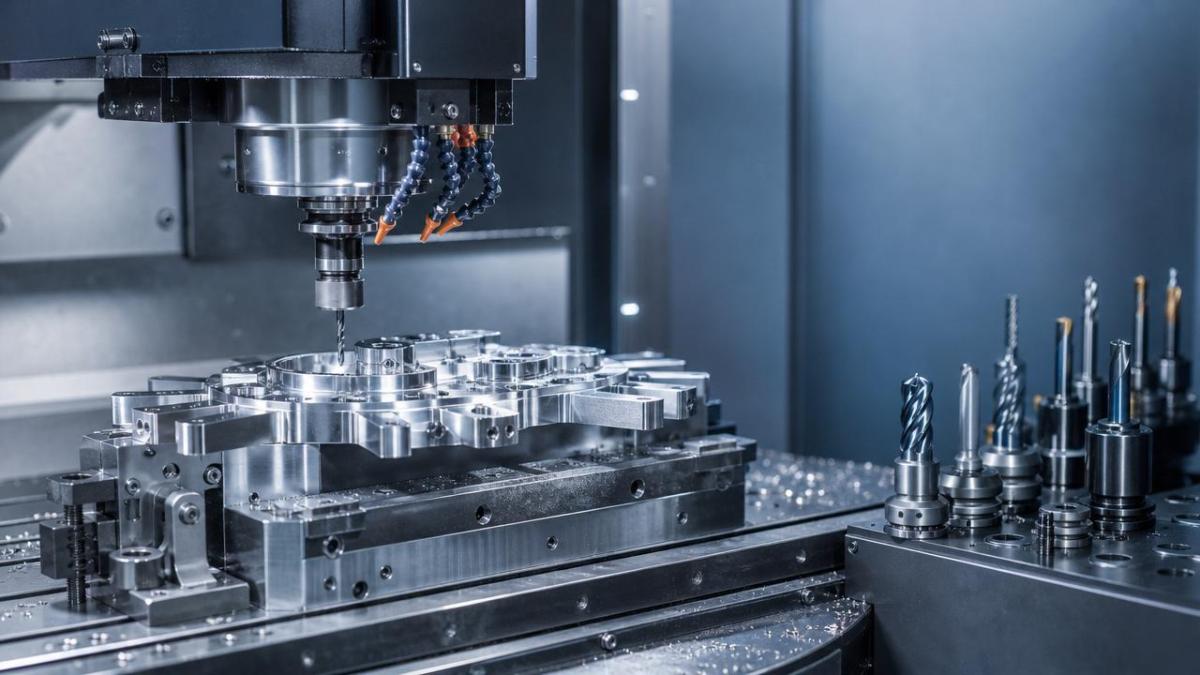
Tooling condition and wear behavior
Tool wear rarely appears as an immediate failure. More often, it shows up as progressive dimensional drift, increased cutting force, rising temperature, changing chip shape, or micro-damage on machined surfaces. If tool life standards are based on average performance rather than worst-case material variation, a process can look stable until one lot begins producing inconsistent parts. For quality managers, tool life should be treated as a controlled quality parameter, not just a cost variable.
Machine condition and thermal stability
Even advanced CNC machines are affected by spindle runout, backlash, axis misalignment, vibration, and thermal growth. A machine may still hold key dimensions during a short test but lose repeatability during long production runs or after load changes. In CNC metalworking, thermal effects are especially important because cutting heat, coolant behavior, and ambient temperature can all shift geometric results over time.
Fixturing and clamping distortion
A part can be perfectly machined in a distorted state and then move out of true shape after unclamping. This is common with thin walls, asymmetric geometry, and stress-sensitive materials. If the fixture strategy overconstrains the part or applies uneven force, measurement during setup may appear good while free-state geometry later becomes unacceptable.
Programming logic and process assumptions
CAM output and CNC code may match the drawing but still include weak process assumptions. Entry and exit moves, toolpath direction, stock allowance distribution, step-over settings, and cutter compensation strategy all influence quality. A process that is efficient on one machine may become unstable on another due to differences in stiffness, control response, or spindle characteristics.
Operator execution and shift variation
Automation reduces dependence on manual actions, but it does not remove it. Tool offset updates, part loading orientation, cleaning of locating surfaces, gauge use, and reaction to abnormal sound or chip formation still rely on people. Variation between operators and shifts is a frequent reason why CNC metalworking quality drops even when the official process sheet remains unchanged.
Industry overview: where hidden quality risk shows up most often
Not all products are equally sensitive to hidden process instability. The table below shows how quality risk in CNC metalworking tends to appear across major manufacturing sectors.
Why this matters specifically for quality and safety managers
For quality personnel, unstable CNC metalworking means more than extra scrap. It affects capability studies, audit performance, customer complaints, warranty exposure, and confidence in process release. A part that passes dimensions but fails function can damage trust far more than an obvious reject caught early.
For safety managers, the concern is broader. Hidden metalworking defects may create sharp edges, structural weakness, poor mating conditions, or premature wear in service. On the shop floor, unstable machining can also increase operational hazards through tool breakage, uncontrolled chip formation, coolant issues, or frequent manual intervention to recover the process. In other words, process instability is both a quality problem and a safety signal.
How to evaluate CNC metalworking quality beyond basic inspection
A stronger evaluation model combines conformance checks with process evidence. Instead of asking only whether the part passed, managers should ask whether the process remained capable, controlled, and repeatable across time, materials, machines, and operators.
Practical indicators worth tracking
- Tool life variation by material batch and machine
- Cp and Cpk trends on critical features, not only final averages
- First-part versus last-part deviation within the same production run
- Surface finish consistency and burr occurrence rate
- Machine warm-up influence and thermal compensation effectiveness
- Fixture repeatability and part seating verification
- Operator response to alarms, tool wear, and abnormal cutting behavior
Typical quality scenarios in CNC metalworking
Different failure patterns require different control responses. The following classification helps quality and safety teams identify where to look first when a process seems compliant but outcomes remain unreliable.
Practical improvement priorities
The most effective response in CNC metalworking is usually not adding more final inspection. Instead, it is building earlier control over process inputs and variation sources. Quality and safety managers can help by aligning production, maintenance, tooling, and engineering around a shared stability model.
Start with critical features that affect function, safety, sealing, balance, or fit. Then review whether the control plan covers the actual causes of variation, not just the final symptom. In many cases, small upgrades such as fixture verification, more disciplined offset control, machine health checks, in-process monitoring, and operator reaction standards deliver stronger results than additional paperwork.
Recommended actions
- Link inspection plans to functional risk, not only drawing frequency.
- Validate process capability over full production windows, not just startup samples.
- Include machine maintenance data in quality review for recurring CNC metalworking issues.
- Standardize tool replacement criteria and abnormal condition escalation.
- Train operators to recognize early warning signs such as sound change, chip change, or finish degradation.
Moving from compliant parts to reliable production
The real objective in CNC metalworking is not simply to produce parts that look correct during inspection. It is to maintain a process that keeps producing safe, functional, and consistent parts under real manufacturing pressure. For organizations working with CNC lathes, machining centers, multi-axis systems, and automated production lines, this distinction is essential.
If your team is seeing unexplained defects, unstable capability, or quality concerns despite acceptable specs, the next step is to investigate process behavior more deeply. Review tooling, machine condition, fixturing, inspection coverage, and operator practice as one connected system. That approach reduces defects, strengthens safety, and improves the long-term reliability that modern precision manufacturing demands.
Recommended for You
![]() Beijing’s New E-Bike Lock Regulation Spurs CNC Housing DemandGlobal Machine Tool Trade Research Center
Beijing’s New E-Bike Lock Regulation Spurs CNC Housing DemandGlobal Machine Tool Trade Research Center![]() New Drone Standard GB/T 44723–2026 Takes Effect May 2026Manufacturing Policy Research Center
New Drone Standard GB/T 44723–2026 Takes Effect May 2026Manufacturing Policy Research Center![]() New Maritime Code Takes Effect May 1, 2026: CNC Equipment Shipping Rules UpdatedManufacturing Market Research Center
New Maritime Code Takes Effect May 1, 2026: CNC Equipment Shipping Rules UpdatedManufacturing Market Research Center![]() 2026 China Cycle Shanghai: CNC E-Bike Frame Capacity Draws ODM FocusManufacturing Market Research Center
2026 China Cycle Shanghai: CNC E-Bike Frame Capacity Draws ODM FocusManufacturing Market Research Center![]() 2026 Foshan Tanzhou Auto Expo: EV Parts Sourcing FocusGlobal Machine Tool Trade Research Center
2026 Foshan Tanzhou Auto Expo: EV Parts Sourcing FocusGlobal Machine Tool Trade Research Center![]() New Hazardous Chemicals Safety Law Takes Effect May 2026Manufacturing Policy Research Center
New Hazardous Chemicals Safety Law Takes Effect May 2026Manufacturing Policy Research Center


Aris Katos
Future of Carbide Coatings
15+ years in precision manufacturing systems. Specialized in high-speed milling and aerospace grade alloy processing.
▶
Shaft Parts machining problems that show up only after assemblyCNC Machining Technology Center▶
Industrial turning costs more than expected when chip control is ignoredCNC Machining Technology Center▶
Metal machining bottlenecks that usually appear after capacity expansionCNC Machining Technology Center▶
Why CNC metalworking quality drops even when the specs look rightCNC Machining Technology Center▶
Shaft Parts machining problems linked to concentricity lossCNC Machining Technology Center
Mastering 5-Axis Workholding Strategies
Join our technical panel on Nov 15th to learn about reducing vibrations in thin-wall components.

Providing you with integrated sanding solutions
Before-sales and after-sales services
Comprehensive technical support