• Global CNC market projected to reach $128B by 2028 • New EU trade regulations for precision tooling components • Aerospace deman
NYSE: CNC +1.2%LME: STEEL -0.4%

Shaft Parts machining problems linked to concentricity loss
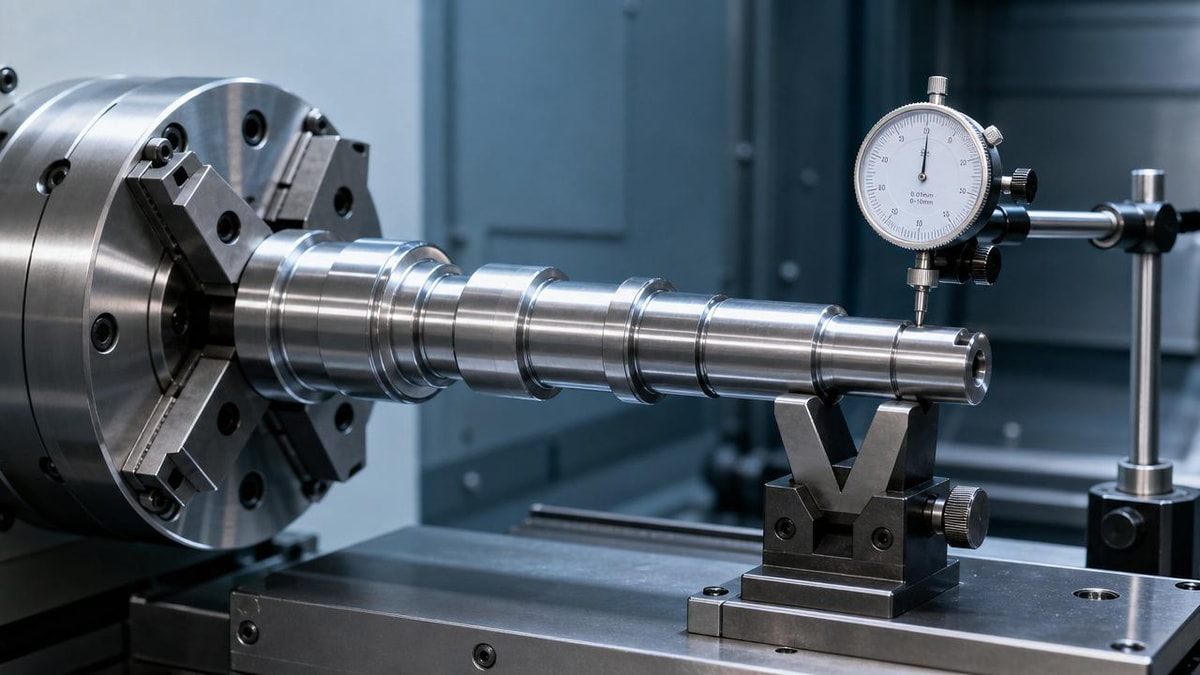
Concentricity loss is a critical issue in Shaft Parts machining, directly affecting dimensional accuracy, vibration control, and assembly performance. For technical evaluators in precision manufacturing, understanding the root causes behind this problem is essential for improving process stability and product quality. This article explores the key machining factors linked to concentricity deviation and outlines practical insights for more reliable CNC production.
What does concentricity loss in Shaft Parts actually mean, and why is it closely watched?
In practical CNC production, concentricity loss means that multiple cylindrical features on the same shaft do not share the same intended axis. For Shaft Parts, this may appear between journals, bearing seats, spline diameters, seal surfaces, or stepped shoulders. Even when each diameter seems individually within tolerance, the part can still fail in use if the centerlines are offset. Technical evaluators pay close attention to this because concentricity directly influences rotation stability, contact pressure, noise, heat generation, and long-term wear.
This issue matters across the wider manufacturing industry because shaft components are used in motors, gearboxes, pumps, automotive drivetrains, aerospace actuators, and energy equipment. In all of these applications, concentricity errors can amplify dynamic imbalance, shorten bearing life, and reduce assembly consistency. For suppliers of CNC lathes, machining centers, fixtures, and automated lines, poor concentricity also signals deeper process weakness: unstable setup, weak clamping strategy, machine geometry drift, or uncontrolled thermal behavior.
From an evaluation standpoint, concentricity loss is not only a dimensional defect. It is a process capability indicator. If Shaft Parts repeatedly show axis deviation, that often means upstream control methods are insufficient, even if final inspection catches some bad pieces. In smart manufacturing environments, the goal is not just sorting defective parts, but reducing variation at its source.
Which machining stages are most likely to create concentricity problems in Shaft Parts?
Concentricity loss usually does not come from one isolated mistake. It is often the result of tolerance stack-up across several operations. The highest-risk stages include blank preparation, first clamping, center drilling, rough turning, heat treatment, semi-finishing, grinding, and final re-clamping for secondary features. Every time Shaft Parts are removed and repositioned, the chance of axis shift increases.
One common source is poor datum creation in the first operation. If the initial center holes are not aligned with the true material axis, later turning between centers will simply reproduce that error more consistently. Another source is chucking deformation. Thin or long Shaft Parts can bend slightly during clamping, especially when jaw pressure is high or unsupported overhang is excessive. Once the clamping force is released, elastic recovery changes the geometry and reveals runout.
Heat treatment adds another layer of risk. Hardening, quenching, or stress relief can distort long shafts and shift critical surfaces away from the original rotational axis. If the post-heat-treatment grinding process does not re-establish the correct datum, the final part may look smooth and dimensionally correct while still failing concentricity requirements. For high-precision Shaft Parts, a stable routing plan is just as important as machine accuracy itself.
How do machine condition, tooling, and fixturing influence concentricity deviation?
Technical evaluators often ask whether concentricity problems are mainly caused by the operator or by the equipment. In reality, machine condition, tooling, and fixturing are deeply connected. A high-end CNC machine cannot fully compensate for a poor support method, and a skilled operator cannot permanently overcome spindle wear or fixture inconsistency.
Machine-related factors include spindle radial runout, tailstock misalignment, guideway wear, turret indexing error, and thermal growth during long cycles. On multi-axis or multitasking systems, synchronization error between turning and live-tool operations can also affect axis relationship. When evaluating Shaft Parts production, it is useful to review machine maintenance records, laser calibration reports, and spindle health trends rather than relying only on a one-time sample approval.
Tooling matters because cutting force direction and tool deflection influence how material is removed around the circumference. Worn inserts, unstable boring bars, incorrect nose radius compensation, or excessive feed in a slender region can cause uneven stock removal. Fixturing matters because it establishes the real machining axis. Soft jaws machined off-center, contaminated locating faces, inaccurate centers, weak steady rest adjustment, or inconsistent hydraulic pressure all create measurable effects on Shaft Parts concentricity.
For long and flexible shaft components, support strategy deserves special attention. Using a tailstock, follow rest, or steady rest can reduce deflection, but only if contact points are correctly aligned and monitored. Otherwise, support devices may introduce their own offset. In many failed cases, the fixture was designed for holding force, not for preserving the functional axis of the part.
What are the most common process mistakes that technical evaluators should check first?
When reviewing rejected Shaft Parts or a supplier’s unstable process, evaluators should first check the most frequent and high-impact mistakes. These are often more actionable than debating minor tolerance interpretation issues.
A major mistake is assuming that final grinding will “fix everything.” Grinding can improve roundness and surface finish, but it cannot always recover a wrong process axis if the part was mislocated in earlier steps. Another common error is inspecting only individual diameters instead of checking their relationship. Shaft Parts may pass micrometer checks and still fail during assembly because true rotational behavior depends on a shared datum structure, not isolated size values.
Evaluators should also watch for process plans that change holding methods too often. Each transfer from chuck to centers, from centers to collet, or from lathe to grinder adds uncertainty. Fewer datum changes generally improve concentricity reliability, especially in automated production lines where repeatability is critical.
How should concentricity in Shaft Parts be measured and judged without falling into false confidence?
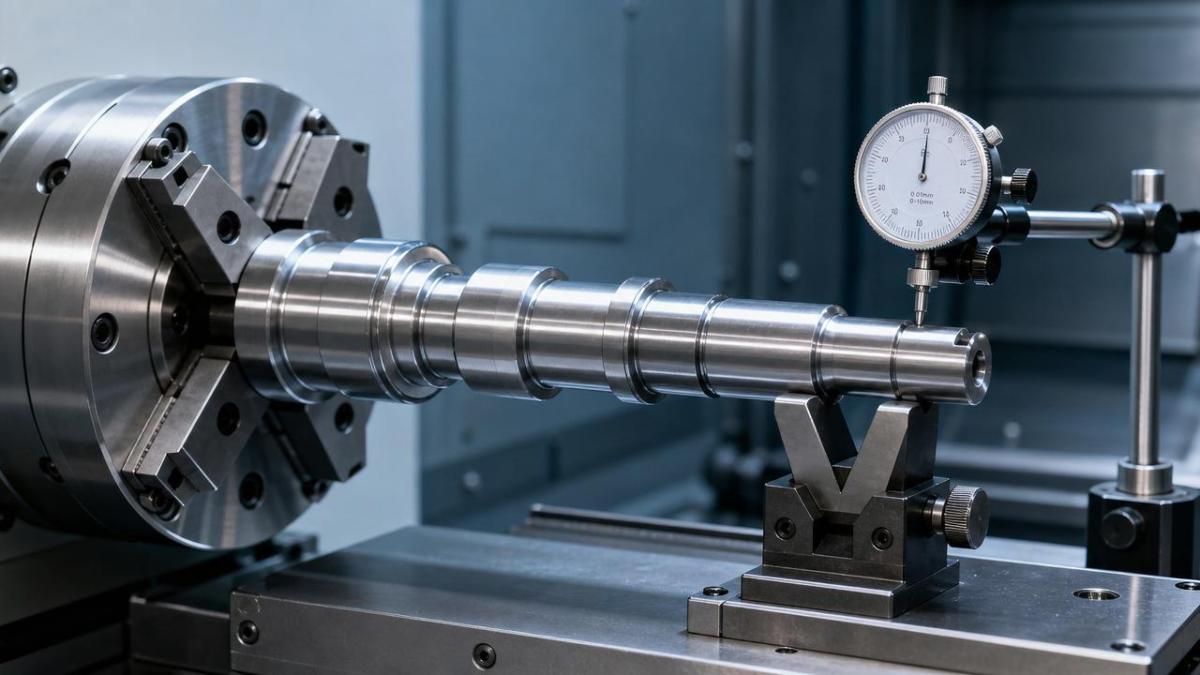
Measurement method is a frequent blind spot. Some quality teams report very low runout values, yet customers still experience vibration or poor assembly fit. The reason is that measurement conditions may not reflect how the Shaft Parts function in real use. If the part is referenced from an easy-to-hold surface rather than the design datum, inspection may hide the true problem.
A better approach is to align measurement with the functional requirement of the shaft. This can involve checking total indicated runout on a V-block, using centers, applying a CMM with proper datum simulation, or using a roundness instrument for critical journals. The selected method depends on tolerance level, production volume, and whether the shaft is rigid or slender. For precision Shaft Parts used in motors or high-speed systems, dynamic relevance matters as much as static geometry.
False confidence often comes from three situations: measuring after re-clamping on a different axis, using worn inspection fixtures, or reviewing only sample parts from a cold machine. In reality, thermal growth across a production shift can change the result. Technical evaluators should ask not only “What was the reading?” but also “How was the part located, when was it checked, and how repeatable is the gauge method?” Gauge R&R and process capability data are especially valuable when suppliers claim stable performance.
Which preventive actions are most effective for reducing concentricity loss in CNC production?
The most effective preventive actions are usually process-centered rather than inspection-centered. For Shaft Parts, the first priority is building a robust datum strategy from the first operation. Center holes, pilot diameters, and locating surfaces should be created under controlled conditions and protected throughout the process. If the functional axis is defined early and preserved consistently, concentricity performance improves significantly.
The second priority is controlling deformation. This means optimizing chuck force, reducing unsupported length, selecting appropriate cutting parameters, and using stable support devices. For long shaft machining, roughing and finishing should be sequenced to balance stress release. In some cases, intermediate stress-relief treatment or semi-finish stock reservation is justified to improve final axis stability.
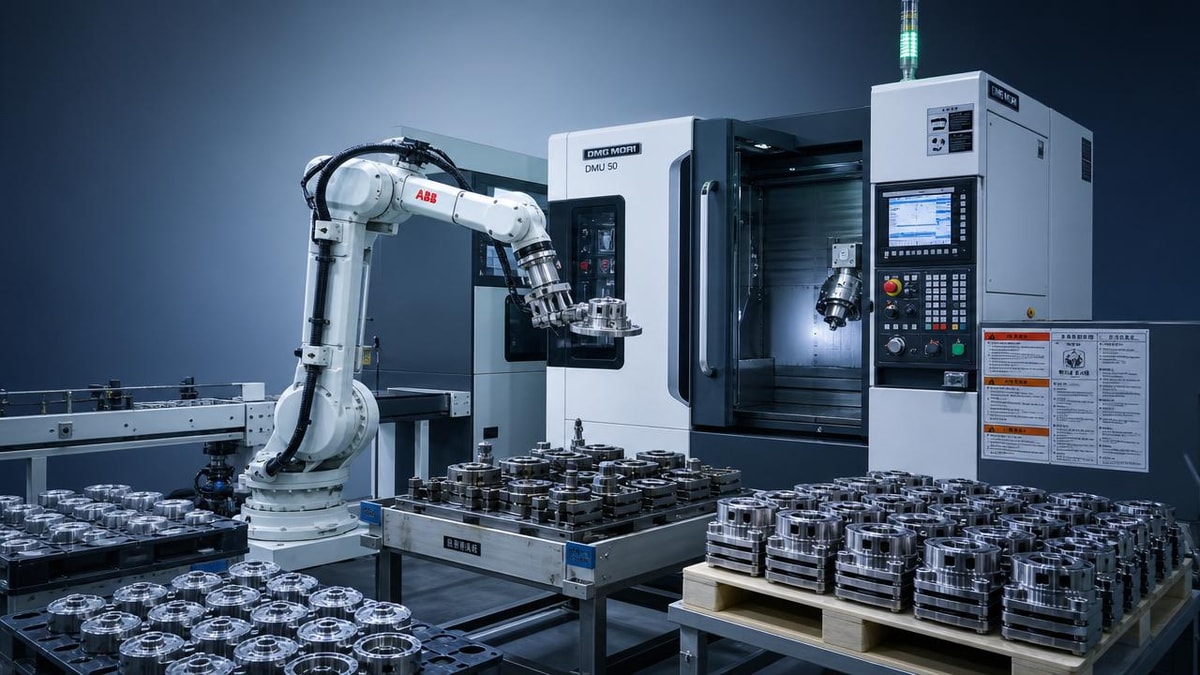
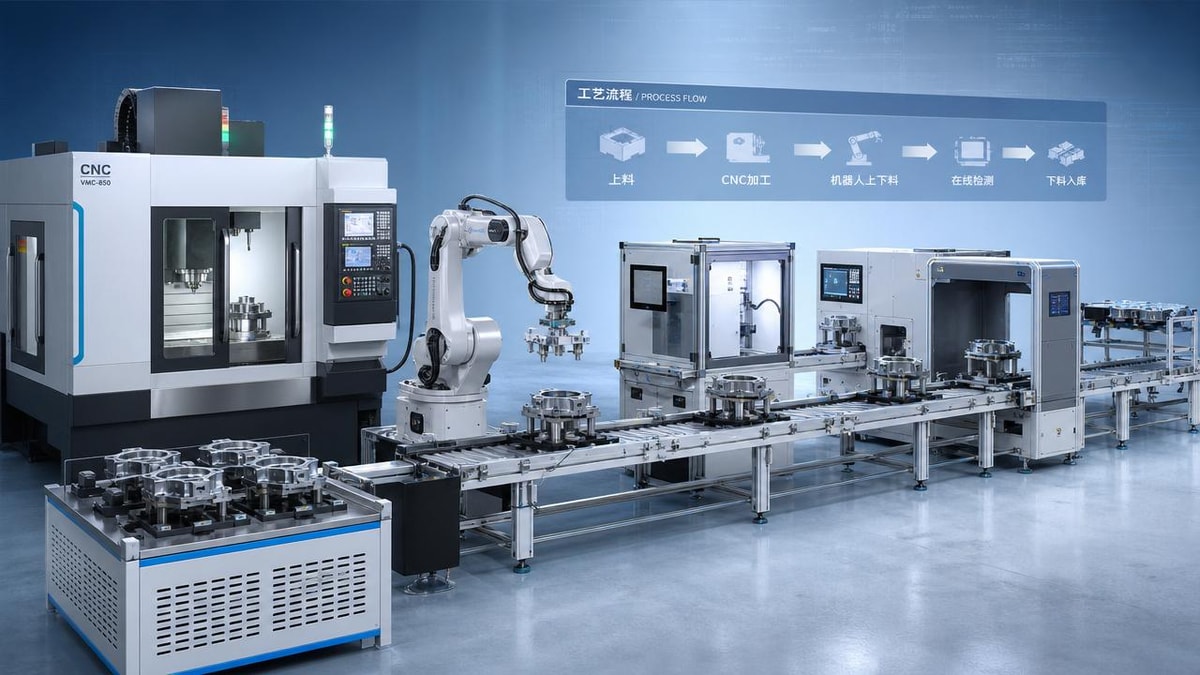
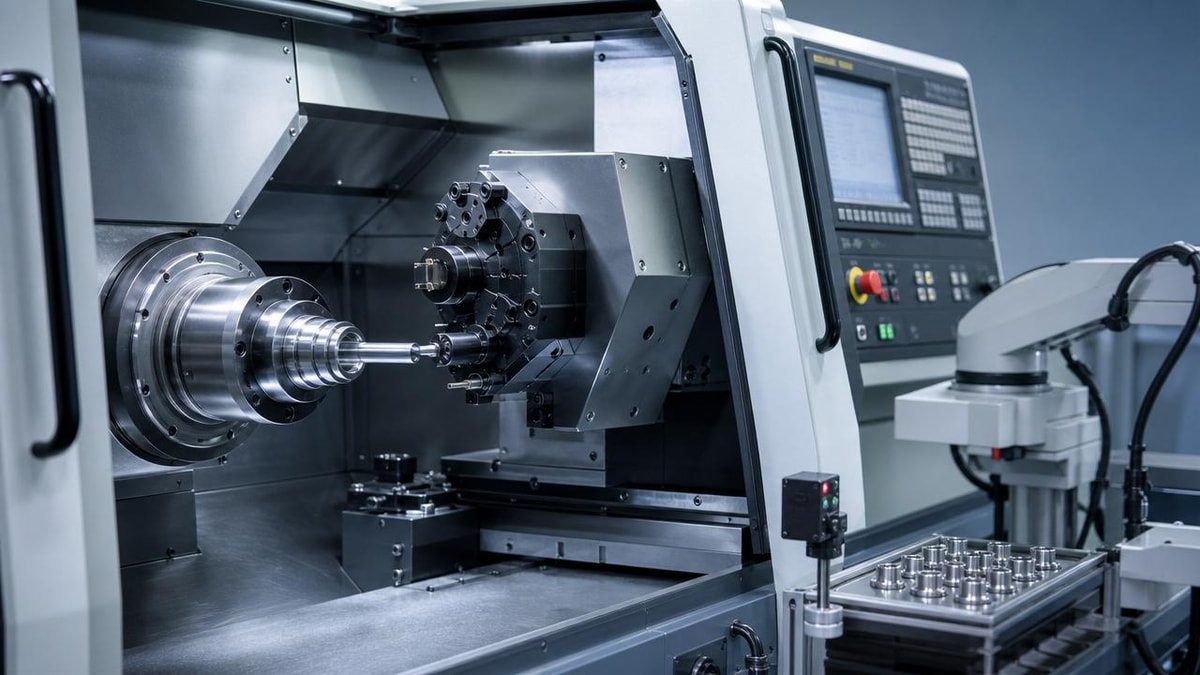
The third priority is reducing setup variation. Wherever possible, combine operations in one machine or one clamping cycle, especially on CNC turning centers or multi-axis systems designed for complete machining. This aligns well with current trends in smart manufacturing, where process integration reduces handling error and increases repeatability. For high-volume Shaft Parts, automated loading systems should also be validated for positional consistency, because robotic feeding errors can indirectly affect clamping quality.
Finally, preventive control requires data discipline. Recording runout after each key stage, monitoring machine thermal state, and linking nonconformities to specific tools or fixtures help teams identify patterns early. In advanced factories, digital traceability and SPC dashboards make it easier to spot whether concentricity drift is tied to a machine, a shift, a fixture set, or a certain material batch.
What should a technical evaluator compare when selecting a supplier for precision Shaft Parts?
Supplier evaluation should go beyond nominal tolerance claims. Many vendors can machine Shaft Parts to drawing dimensions in a trial run, but fewer can maintain axis consistency across batches, shifts, and material changes. A serious assessment should compare process capability, equipment matching, fixture design competence, and inspection logic.
Start by asking how the supplier defines and preserves the datum axis through all operations. Then review whether the selected machines are appropriate for the shaft length-to-diameter ratio, tolerance class, and expected volume. A shop focused on general turning may struggle with high-precision Shaft Parts if it lacks grinding capability, center maintenance discipline, or thermal compensation awareness. On the other hand, a supplier with integrated turning, grinding, automation, and in-process gauging may deliver better consistency even if its quoted unit price is not the lowest.
It is also useful to compare reaction speed when deviations occur. Can the supplier isolate whether the issue comes from machine geometry, fixture wear, or heat treatment distortion? Can it provide trend data, first article logic, and corrective action evidence? In industries such as automotive, aerospace, energy equipment, and industrial automation, these capabilities are often more decisive than a single inspection report.
What are the most common misconceptions about concentricity problems in Shaft Parts?
One misconception is that concentricity loss is always caused by poor machine accuracy. In fact, many capable CNC machines produce unstable Shaft Parts because fixture alignment, process sequencing, or part support was not engineered carefully. Another misconception is that short-term sample success proves mass-production stability. Concentricity is especially sensitive to cumulative variation, so process consistency matters more than isolated good parts.
A third misconception is that tighter tolerance alone solves quality concerns. If the process route is fundamentally unstable, simply imposing stricter limits may increase scrap without improving end performance. The better path is to identify where the axis is lost, redesign the datum chain, and reduce opportunities for relocation error. For Shaft Parts, robust process design is often more valuable than aggressive inspection sorting.
Another misunderstanding is ignoring the relationship between function and tolerance. Not every shaft feature needs the same concentricity level. Evaluators should focus on critical rotating interfaces, bearing seats, sealing diameters, and transmission features. This helps prioritize control resources and prevents overprocessing on noncritical surfaces.
How should companies move from diagnosis to implementation when concentricity loss becomes a recurring issue?
If concentricity loss repeatedly affects Shaft Parts, the first step is to map the full manufacturing route and mark every datum change, support point, heat treatment event, and inspection gate. This often reveals where the axis is being created, distorted, or misread. The second step is to classify the issue: is it mainly due to machine condition, part deformation, fixture repeatability, measurement method, or process design? Corrective action becomes much faster when the failure mode is clearly separated.
Implementation should then combine engineering and commercial checks. Confirm the required concentricity level, production batch size, material state, lead time target, and whether process integration is feasible. If external sourcing is involved, request actual control plans, datum diagrams, runout checkpoints, and capability evidence instead of relying on general claims about precision machining. If internal production is planned, validate fixture redesign, thermal control, operator standardization, and inspection correlation before launching full-scale output.
If you need to further confirm a specific solution, parameters, production route, cycle time, quotation basis, or cooperation model for Shaft Parts, it is best to first discuss the functional datum, tolerance priority, material and heat treatment path, machine configuration, inspection method, and expected batch consistency. These questions create a practical foundation for selecting the right CNC manufacturing strategy and reducing concentricity-related risk.
PREVIOUS ARTICLE
NEXT ARTICLE
Recommended for You
 Industrial Robotics payback depends on one hidden variableManufacturing Market Research Center
 Shaft Parts machining problems linked to concentricity lossCNC Machining Technology Center
 Production Process changes that quietly raise defect ratesCNC Machining Technology Center
 Industrial Automation projects stall without process mappingCNC Machining Technology Center
 CNC metal cutting heat issues behind poor surface finishCNC Machining Technology Center
 High precision lathe claims that deserve a closer lookMachine Tool Industry Editorial Team

Aris Katos
Future of Carbide Coatings
15+ years in precision manufacturing systems. Specialized in high-speed milling and aerospace grade alloy processing.
▶
Shaft Parts machining problems linked to concentricity lossCNC Machining Technology Center▶
Production Process changes that quietly raise defect ratesCNC Machining Technology Center▶
Metal machining bottlenecks that slow delivery timesCNC Machining Technology Center▶
NMPA Adds 74 External Experts; CNC High-Purity Tubing Standards Align with ISO 15378CNC Machining Technology Center▶
Why Shaft Parts Often Fail Tolerance Checks Late in ProductionCNC Machining Technology Center
Mastering 5-Axis Workholding Strategies
Join our technical panel on Nov 15th to learn about reducing vibrations in thin-wall components.

Providing you with integrated sanding solutions
Before-sales and after-sales services
Comprehensive technical support