• Global CNC market projected to reach $128B by 2028 • New EU trade regulations for precision tooling components • Aerospace deman
NYSE: CNC +1.2%LME: STEEL -0.4%

Metal machining bottlenecks that usually appear after capacity expansion
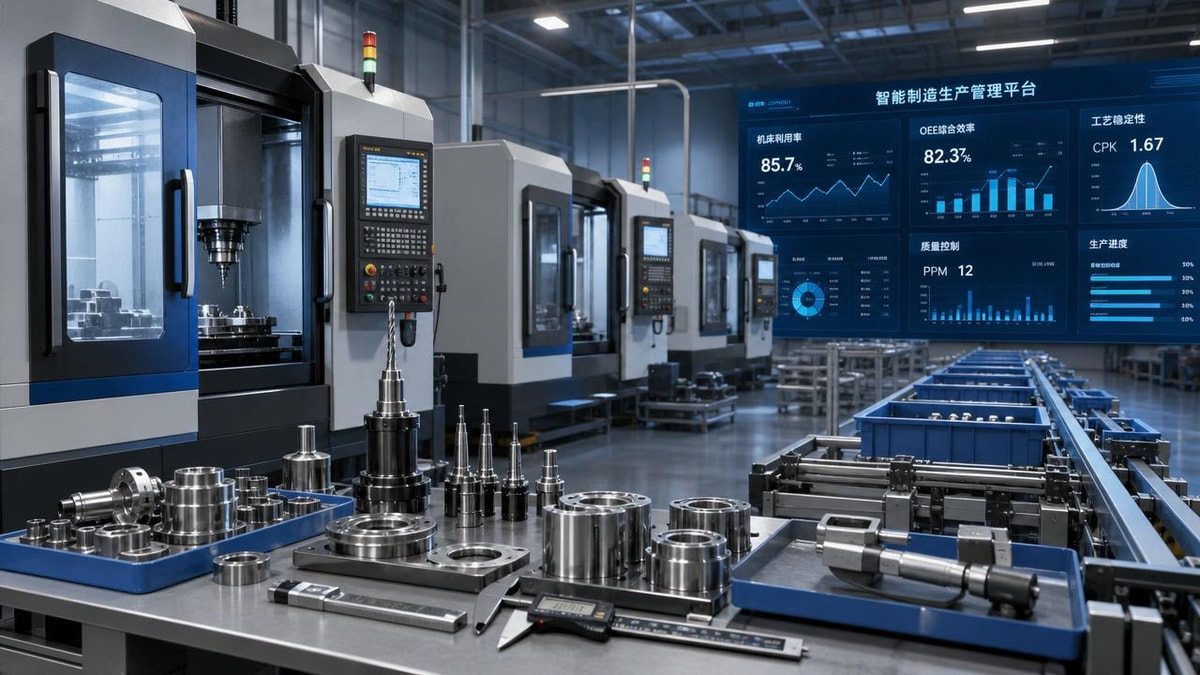
After capacity expansion, many manufacturers expect output gains but instead encounter hidden constraints in metal machining. From machine utilization and tool life to process stability, labor coordination, and quality control, bottlenecks often emerge when production scales faster than systems can adapt. This article examines the most common post-expansion challenges and how decision-makers can address them before they erode efficiency, margins, and delivery performance.
For business leaders, the central issue is not whether expansion adds nominal capacity. It is whether the expanded system can convert that capacity into stable, profitable throughput. In metal machining, the answer is often no—at least not immediately. New machines, more shifts, and larger order volumes frequently expose weaknesses that were manageable at smaller scale but become expensive under sustained load.
The most important judgment is this: post-expansion bottlenecks usually do not come from a single machine constraint. They come from mismatch. Machine capacity grows faster than tooling strategy, programming discipline, inspection capability, maintenance readiness, material flow, and frontline management. When that happens, output may rise briefly, but scrap, delays, overtime, and delivery risk rise faster.
For decision-makers in the CNC and precision manufacturing sector, the practical question is where the real bottlenecks appear after expansion, how to identify them early, and which corrective actions deliver the fastest return. The following sections focus on the issues that most directly affect throughput, cost, quality, and customer confidence in metal machining operations.
Why capacity expansion in metal machining often fails to deliver expected throughput
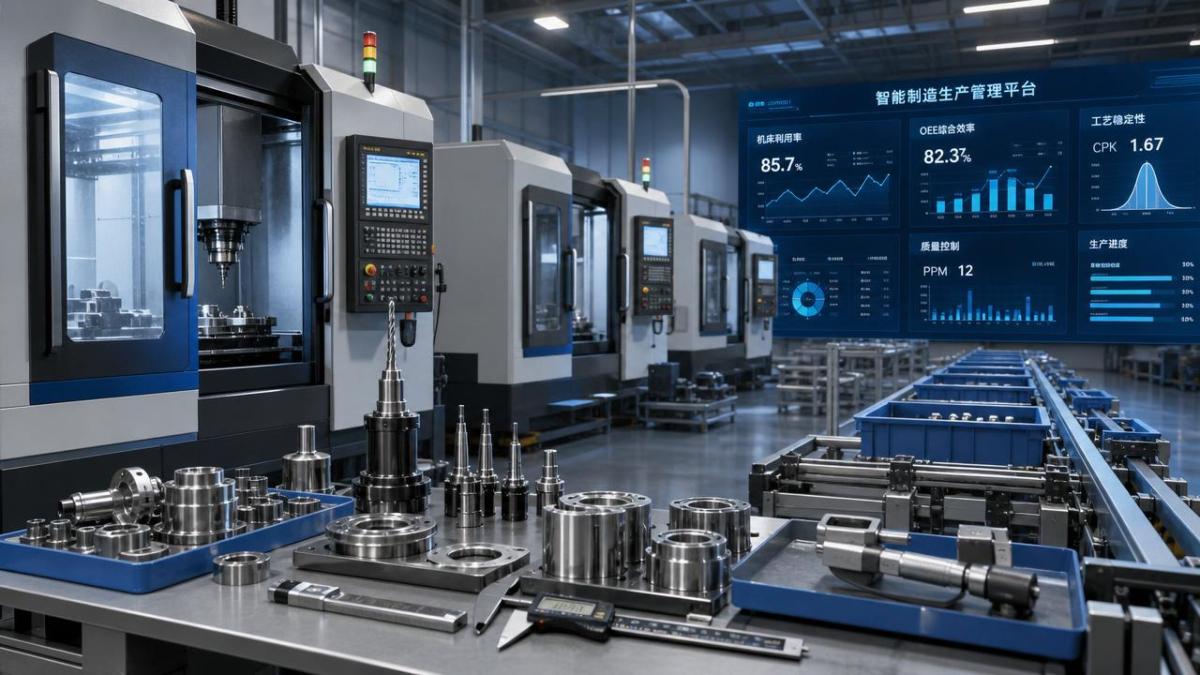
Capacity expansion is often approved on straightforward assumptions: more machines should mean more parts, lower unit cost, and better delivery flexibility. But metal machining rarely behaves in a linear way. A plant may increase spindle count by 30% and still gain only 10% effective output if the rest of the production system cannot keep pace.
This happens because machining capacity is only one layer of production capability. Real throughput depends on tool availability, setup speed, programming consistency, fixture readiness, operator skill, inspection speed, preventive maintenance, internal logistics, and scheduling discipline. If any one of these supporting systems lags behind expansion, the shop creates a new bottleneck instead of removing the old one.
For executives, this is a margin problem as much as an operations problem. New capacity adds depreciation, labor, energy use, floor-space pressure, and inventory exposure. If machine utilization remains unstable or quality losses increase, the expanded factory can become less efficient than the smaller one it replaced. That is why post-expansion reviews in metal machining should focus on realized throughput and contribution margin, not installed capacity alone.
The most common bottleneck: low effective machine utilization despite more equipment
One of the most frustrating outcomes after expansion is seeing more CNC machines on the floor but not enough sellable output. This is usually caused by low effective utilization rather than low scheduled utilization. On paper, machines are busy. In reality, too much time is consumed by waiting, setup, minor stoppages, tool changes, first-piece adjustments, and unplanned interventions.
In many metal machining environments, management tracks overall run hours but misses the reasons behind lost cutting time. A machine that appears active across a shift may still deliver weak throughput if cycle interruptions are frequent. This becomes more pronounced after expansion because the number of setups, programs, tools, and handoffs increases, making every weakness more visible.
Decision-makers should ask a sharper question than “Are the machines running?” The better question is “How much stable cutting time do we get per machine, per shift, on the right jobs?” Shops that can answer this with confidence are much better positioned to scale. Those that cannot often mistake activity for productivity.
To address this bottleneck, manufacturers should separate utilization losses into categories: setup, waiting for tools, waiting for material, waiting for inspection, programming correction, machine fault, and operator intervention. Once these losses are measured consistently, the business can prioritize the highest-value fixes instead of assuming additional equipment is the solution.
Tool life instability becomes expensive at scale
Tooling problems that seem manageable in a smaller production environment can become major profit drains after capacity expansion. As order volume rises, inconsistent tool life creates more line interruptions, unstable cycle times, dimensional variation, and unpredictable consumable costs. In high-mix and medium-volume metal machining, these issues can spread quickly across multiple cells.
Executives often underestimate the business impact of poor tooling control because tool spend looks small relative to machine investment. But the real cost is not only inserts, holders, or cutters. It is the lost spindle time, scrap risk, operator intervention, and schedule disruption caused by premature wear or inconsistent performance.
After expansion, a shop may add machines faster than it standardizes feeds, speeds, tool assemblies, presetting methods, and replacement rules. The result is variation from machine to machine and shift to shift. Even when part programs are similar, actual cutting behavior may differ enough to damage quality and throughput.
The solution is not simply buying premium tooling. Stronger performance comes from a controlled tooling system: standardized tool packages by part family, clear life limits, centralized presetting, wear tracking, and process feedback between operators, programmers, and process engineers. For metal machining companies seeking predictable expansion results, tooling discipline is a high-return investment.
Process capability weakens when new volume exposes hidden variation
Another common post-expansion bottleneck is declining process stability. A process that worked acceptably at lower volume may not be capable under continuous, higher-output conditions. Thermal growth, fixture repeatability, chip evacuation, coolant control, and machine-to-machine variation become more important when parts run longer and tolerance demands remain strict.
This is particularly relevant in precision metal machining for automotive, aerospace, electronics, and energy applications, where dimensional consistency matters as much as total output. As throughput increases, small process deviations generate larger quality losses. Scrap may rise slowly at first, then accelerate as more shifts and more operators interact with the same unstable process.
For management, the warning sign is not just customer complaints. It is internal rework, rising first-off adjustment time, inspection overload, and frequent parameter changes on the shop floor. These symptoms suggest the operation is producing volume on top of weak process control, which is difficult to sustain.
Corrective action should include capability reviews for high-volume and high-risk parts, fixture validation, machine matching by tolerance class, and tighter control of coolant condition, chip management, and thermal stabilization. Expansion should be accompanied by process requalification, not the assumption that yesterday’s settings will support tomorrow’s output.
Programming and setup discipline often become the hidden choke point
When more machines are added, programming and setup preparation often fail to scale at the same speed. This creates a less visible but highly damaging bottleneck. Machines may be available, but jobs cannot be released fast enough with reliable NC programs, proven setup sheets, fixture plans, and tool lists.
In many shops, a small number of experienced programmers or setup specialists carry too much process knowledge. During expansion, that dependency becomes risky. Lead times grow, revision control weakens, and machine-side troubleshooting increases because programs are pushed into production before they are fully validated.
From a business perspective, this creates two losses at once. First, machine assets are underused while waiting for preparation. Second, rushed launches increase scrap and delivery risk. For decision-makers, this is a capacity-planning issue, not only an engineering issue. Programming throughput and setup standardization should be treated as core production resources.
Useful remedies include offline simulation, standardized setup documentation, digital tool libraries, modular fixture strategies, and a formal first-article approval process. Expanding metal machining capacity without strengthening the digital and procedural backbone behind each job often leads to expensive underperformance.
Inspection and quality control can quickly become the new bottleneck
Many manufacturers expand cutting capacity before expanding inspection capacity. This is a classic error. As part volume increases, coordinate measuring machines, in-process gauging, first-piece approval, and final inspection can become overloaded. Parts queue up for release, and the shop experiences hidden work-in-process inflation even when machining itself is relatively efficient.
For business leaders, quality bottlenecks are dangerous because they affect both speed and trust. If inspection cannot keep up, shipments are delayed. If inspection is rushed, nonconforming parts may escape. Either outcome damages profitability. In sectors with strict traceability or certification requirements, the consequences can be larger than the original productivity gains from expansion.
The answer is not always adding more inspection equipment. In many cases, the better approach is redesigning the control plan. Companies should distinguish critical features from routine ones, shift more checks in-process where feasible, improve fixture repeatability, and use statistical methods to reduce unnecessary measurement without weakening control.
Decision-makers should review whether quality systems were scaled in proportion to machining capacity. If not, the plant may appear to have enough machines but still fail to convert output into invoice-ready product.
Labor coordination and skill gaps become more visible across shifts
Capacity expansion usually involves new operators, additional shifts, or a broader mix of temporary and permanent labor. This creates a major risk in metal machining because productivity depends heavily on judgment at the machine: setup verification, tool-change timing, offset correction, alarm response, and process discipline.
At smaller scale, experienced personnel can often compensate for weak systems. After expansion, that informal support model breaks down. Knowledge is stretched, training quality becomes inconsistent, and performance varies significantly by shift. The factory may have enough headcount on paper but still suffer from unstable output and rising error rates.
This matters directly to executives because labor inefficiency after expansion is rarely visible in one metric. It shows up as overtime, longer setups, higher supervision burden, avoidable scrap, and slower recovery from routine problems. These costs can materially reduce the return on capacity investment.
The strongest response is to reduce dependence on tribal knowledge. Standard work, visual setup verification, machine-side instructions, skill matrices, structured onboarding, and cross-shift handoff discipline are all essential. In scalable metal machining operations, consistency comes from systems first and individuals second.
Material flow, work-in-process, and scheduling complexity can erase expansion gains
As machining capacity grows, internal logistics become far more complex. More raw material, more semi-finished parts, more fixtures, and more queued jobs create congestion on the shop floor. If scheduling rules remain weak, work-in-process rises and jobs spend more time waiting between steps than being machined.
This is one of the clearest examples of how capacity expansion can reduce responsiveness instead of improving it. The plant looks busier, but lead times stretch because too many orders are released at once, priorities change frequently, and bottleneck resources are overloaded by poor sequencing. In metal machining, more work on the floor does not mean more output at the dock.
Executives should watch for signs such as increasing queue time, frequent expediting, inconsistent on-time delivery, and planner dependence on manual intervention. These are not minor coordination issues. They indicate that the production system lacks the control logic needed for larger-scale operation.
Better performance usually comes from clearer dispatch rules, capacity-aware scheduling, part-family grouping, supermarket controls for repeat jobs, and tighter synchronization between machining, inspection, and downstream assembly or finishing. Expansion works best when flow improves, not just when assets increase.
How decision-makers should evaluate and fix post-expansion bottlenecks
For enterprise leaders, the most effective approach is to evaluate post-expansion performance through a short list of operating truths rather than a long list of disconnected metrics. The key questions are: Where is throughput actually constrained? Which losses are systemic rather than incidental? Which corrective actions improve both output and margin?
A practical review framework for metal machining includes five dimensions: effective spindle utilization, process capability on high-value parts, setup and programming readiness, inspection release speed, and schedule adherence. If two or more of these are weak, the business likely has a scaling problem rather than a temporary launch issue.
It is also important to rank bottlenecks by financial impact. A moderate tooling issue on a high-volume family may matter more than a larger setup problem on a low-volume line. Likewise, a quality choke point affecting customer release may deserve higher priority than a utilization gap on noncritical work. Good post-expansion decisions are based on contribution, not noise.
In terms of action, leaders should favor improvements that strengthen system capability instead of relying on constant supervision. Examples include standardized tooling architecture, machine monitoring tied to reason codes, process-capability reviews by part family, digital setup control, targeted metrology investment, and flow-oriented scheduling rules. These changes create durable gains and reduce the need for firefighting.
Conclusion: in metal machining, successful expansion depends on system maturity, not machine count alone
The biggest misconception in post-expansion metal machining is that capacity is primarily a machine problem. In reality, the most costly bottlenecks usually appear in the interfaces around the machines: tooling, setup, process control, inspection, labor coordination, and material flow. When these areas are not scaled with equal discipline, added equipment produces complexity faster than it produces profit.
For decision-makers, the takeaway is clear. The success of expansion should be judged by stable throughput, quality consistency, delivery reliability, and margin preservation—not by installed capacity or factory activity levels. The shops that win after expansion are those that treat machining as an integrated operating system, not a collection of individual assets.
If manufacturers identify these bottlenecks early and respond with structured process, quality, tooling, and planning improvements, expansion can deliver the expected business value. If they do not, metal machining growth often turns into a costly lesson in hidden constraints. The difference lies in how quickly leadership recognizes that scale requires stronger systems, not just more machines.
Recommended for You
![]() Beijing’s New E-Bike Lock Regulation Spurs CNC Housing DemandGlobal Machine Tool Trade Research Center
Beijing’s New E-Bike Lock Regulation Spurs CNC Housing DemandGlobal Machine Tool Trade Research Center![]() New Drone Standard GB/T 44723–2026 Takes Effect May 2026Manufacturing Policy Research Center
New Drone Standard GB/T 44723–2026 Takes Effect May 2026Manufacturing Policy Research Center![]() New Maritime Code Takes Effect May 1, 2026: CNC Equipment Shipping Rules UpdatedManufacturing Market Research Center
New Maritime Code Takes Effect May 1, 2026: CNC Equipment Shipping Rules UpdatedManufacturing Market Research Center![]() 2026 China Cycle Shanghai: CNC E-Bike Frame Capacity Draws ODM FocusManufacturing Market Research Center
2026 China Cycle Shanghai: CNC E-Bike Frame Capacity Draws ODM FocusManufacturing Market Research Center![]() 2026 Foshan Tanzhou Auto Expo: EV Parts Sourcing FocusGlobal Machine Tool Trade Research Center
2026 Foshan Tanzhou Auto Expo: EV Parts Sourcing FocusGlobal Machine Tool Trade Research Center![]() New Hazardous Chemicals Safety Law Takes Effect May 2026Manufacturing Policy Research Center
New Hazardous Chemicals Safety Law Takes Effect May 2026Manufacturing Policy Research Center


Aris Katos
Future of Carbide Coatings
15+ years in precision manufacturing systems. Specialized in high-speed milling and aerospace grade alloy processing.
▶
Shaft Parts machining problems that show up only after assemblyCNC Machining Technology Center▶
Industrial turning costs more than expected when chip control is ignoredCNC Machining Technology Center▶
Metal machining bottlenecks that usually appear after capacity expansionCNC Machining Technology Center▶
Why CNC metalworking quality drops even when the specs look rightCNC Machining Technology Center▶
Shaft Parts machining problems linked to concentricity lossCNC Machining Technology Center
Mastering 5-Axis Workholding Strategies
Join our technical panel on Nov 15th to learn about reducing vibrations in thin-wall components.

Providing you with integrated sanding solutions
Before-sales and after-sales services
Comprehensive technical support