• Global CNC market projected to reach $128B by 2028 • New EU trade regulations for precision tooling components • Aerospace deman
NYSE: CNC +1.2%LME: STEEL -0.4%

Shaft Parts machining problems that show up only after assembly
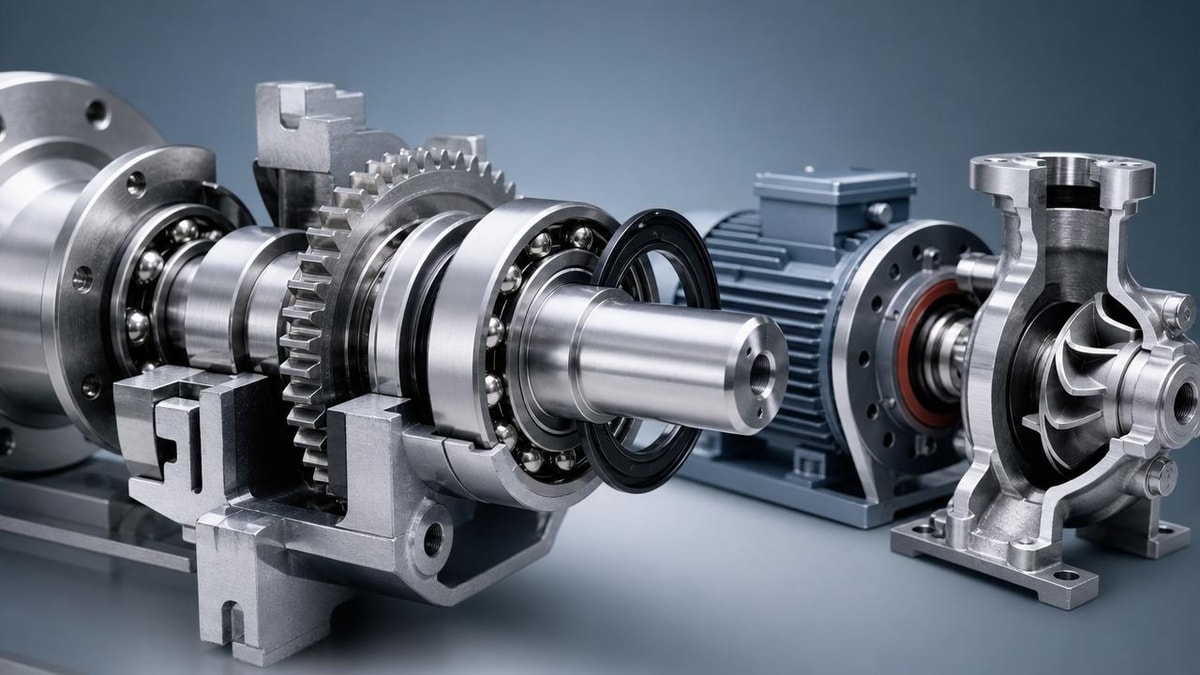
Some Shaft Parts pass inspection with no obvious issues, yet problems emerge only after final assembly, when alignment, load, heat, or vibration begin to interact. For quality and safety teams, these hidden machining defects can lead to noise, premature wear, and costly failures. Understanding why they appear late is critical to improving process control and preventing downstream risk.
Why post-assembly problems deserve different attention in different production scenarios
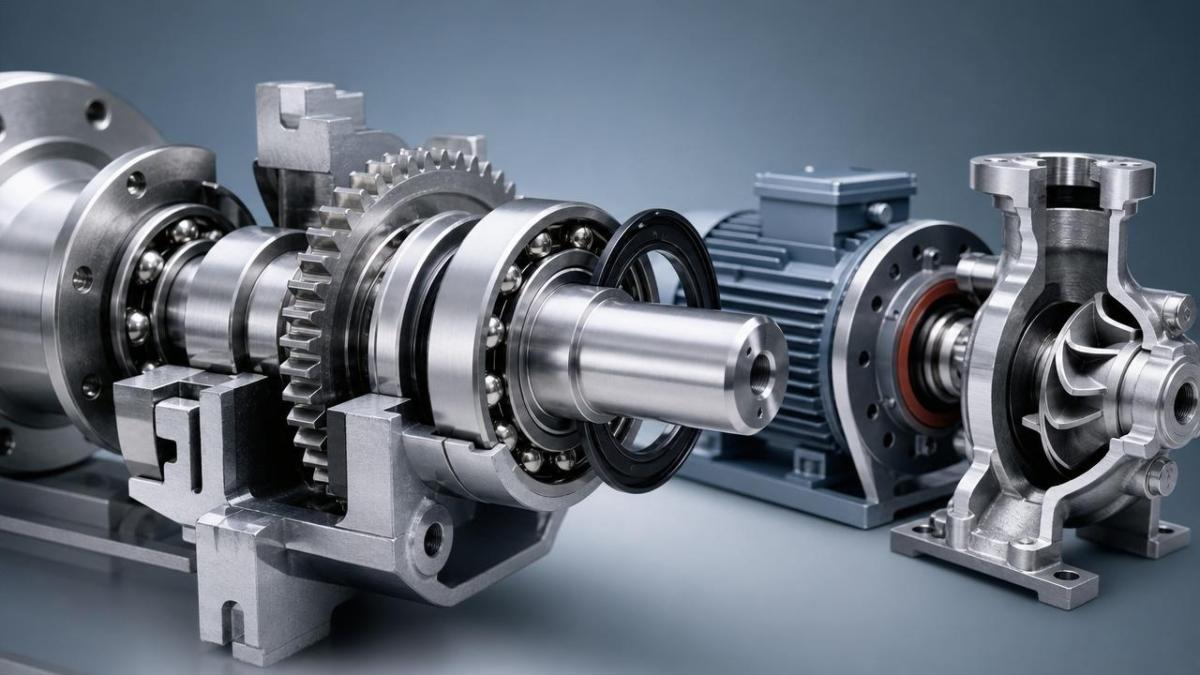
Not all Shaft Parts fail in the same way, and not all assembly environments expose the same machining weakness. A shaft used in a high-speed motor, a gearbox, a hydraulic pump, or an automated conveyor may all meet drawing dimensions, surface roughness targets, and standard incoming inspection criteria. However, once installed, the part begins working as part of a system rather than as an isolated component. That shift changes everything for quality control and safety management.
In practical manufacturing, hidden issues often appear only when several conditions combine: bearing preload, thermal growth, concentricity stack-up, coupling force, lubrication behavior, dynamic balance, and housing rigidity. This is why a shaft that looks acceptable at the machining stage may still trigger vibration, seal leakage, uneven wear, abnormal heat, or even a safety shutdown after assembly.
For quality teams, the key question is not simply whether Shaft Parts are in tolerance, but whether they are suitable for the real assembly and operating scenario. For safety teams, the concern goes one step further: which hidden defects can escalate into field failure, rotating equipment hazard, or unplanned stoppage. A scenario-based review helps both functions focus on the most relevant risks instead of relying only on generic inspection standards.
Typical scenarios where Shaft Parts problems appear only after assembly
The most common post-assembly problems tend to cluster around a few recurring applications in precision manufacturing and automated equipment. Each scenario highlights different risk points, so inspection strategy should also change accordingly.
High-speed rotating systems
In motors, spindles, fans, and turbine-related assemblies, even slight runout, residual imbalance, or local geometry error can become severe at speed. A shaft journal may pass static measurement but still generate vibration because the relationship between bearing seats, shoulders, and the rotating centerline is not stable under load. In these cases, Shaft Parts should be evaluated not only by dimensional accuracy but by dynamic behavior after assembly.
Gearbox and transmission assemblies
Transmission shafts often reveal problems after gears, bearings, spacers, and housings are combined. Typical symptoms include gear noise, localized tooth wear, elevated temperature, and axial movement. The root cause may be a shoulder squareness issue, an incorrect transition radius, or a tolerance stack that was individually acceptable but collectively harmful. In this scenario, Shaft Parts are highly sensitive to assembly sequence and mating-part interaction.
Pump, seal, and fluid equipment
In pumps and fluid-handling systems, shaft problems frequently emerge through leakage, seal wear, or sleeve damage. Here, roundness, surface integrity, and coaxiality with seal areas matter as much as nominal size. Minor chatter, burn marks, or subsurface stress from machining may not stop assembly, but they can shorten seal life dramatically once rotation and fluid pressure begin.
Automated production lines and conveyor drives
In automated lines, Shaft Parts may operate at moderate speed but long duty cycles. The risk here is often cumulative: misalignment causes repeated bearing stress, spline fit becomes unstable, or coupling wear increases over time. These failures may not look dramatic at first, yet they create reliability and safety concerns because the equipment runs continuously and downtime affects the whole line.
Heavy-load industrial equipment
For presses, reducers, energy equipment, and heavy mechanical systems, load concentration is the main concern. Fillet geometry, hardness variation, and machining-induced microcracks may remain invisible during routine checks. But once assembled and loaded, these defects can trigger fatigue failure, especially at keyways, shoulders, and threaded ends. In this scenario, quality and safety teams should pay close attention to stress raisers that standard dimensional inspection may miss.
Scenario comparison: what quality and safety teams should focus on
Why Shaft Parts pass inspection but fail in service
This problem usually comes from a gap between drawing compliance and functional compliance. Shaft Parts are often inspected feature by feature: diameter, length, hardness, surface roughness, and maybe key geometric tolerances. Yet assembly performance depends on how those features interact as a system. If inspection plans do not reflect the application scenario, defects remain hidden.
Several patterns are especially common. First, the datum used in machining may not match the datum that controls function in assembly. Second, tolerance values may be individually acceptable but too loose when stacked across bearings, gears, sleeves, and housings. Third, process-induced damage such as grinding burn, chatter, residual stress, or sharp transitions may not be visible in routine checks. Fourth, many Shaft Parts are measured in room-temperature, unloaded conditions, while real service involves temperature rise, bending force, and vibration.
For quality personnel, this means the control plan should move beyond isolated dimensions. For safety personnel, it means post-assembly symptoms should be treated as process signals, not just maintenance issues. A noisy assembly, unexpected heat rise, or repeated bearing replacement often points back to machining capability or inspection blind spots.
Different business needs require different acceptance logic
A prototype workshop, a batch supplier, and a large-scale automated factory do not need the same control depth for Shaft Parts. The right judgment depends on production volume, failure consequence, and service environment.
Low-volume, high-complexity projects
In aerospace-adjacent, custom equipment, or trial-line projects, the biggest risk is incomplete validation. Because quantities are small, teams sometimes rely on manual fitting or experience-based adjustment. That can hide a machining issue until the product enters sustained operation. Here, the best approach is detailed first-article review, functional run testing, and stronger cross-checking between machining and assembly teams.
Mass production of standard assemblies
In automotive-supporting, motor, and industrial drive supply chains, repeated defects matter more than isolated defects. A small deviation in Shaft Parts may generate widespread warranty costs if it escapes early. Process capability, SPC trends, and gauging repeatability become more important than one-time inspection results. The quality focus should be prevention at source, not sorting at the end.
Safety-critical and high-cost downtime environments
Where equipment stoppage creates serious safety or production loss, quality thresholds should be stricter than drawing minimums. In these cases, Shaft Parts should be reviewed with a failure-mode mindset: what defect could trigger a seal burst, rotor instability, overloaded bearing, or rotating component release? Additional NDT, residual stress evaluation, and assembly simulation may be justified.
How to adapt inspection and control by scenario
A useful strategy is to build a scenario-specific control plan instead of using one checklist for all Shaft Parts. The following actions are often effective:
- For high-speed applications, add dynamic checks such as total indicated runout by functional datums, balance verification, and post-assembly vibration testing.
- For gearbox and bearing-loaded assemblies, control shoulder perpendicularity, fit transition accuracy, and axial stack dimensions more tightly.
- For seal-contact areas, verify not only Ra values but waviness, lay direction, and evidence of thermal damage from grinding.
- For heavy-load Shaft Parts, inspect fillets, threads, and keyways for stress concentration and surface discontinuity using suitable methods.
- For automated lines, combine incoming inspection with early-life endurance testing to catch defects that grow under repeated cycles.
Another practical improvement is traceability by process step. If late-appearing defects are found after assembly, teams should be able to link each shaft to machine parameters, tool condition, grinding wheel status, heat treatment batch, and operator records. Without this link, repeated defects remain difficult to eliminate.
Common misjudgments that lead to hidden risk
One common mistake is assuming that CMM data alone is enough to release Shaft Parts. In many applications, a part can be dimensionally compliant but still function poorly because of balance, residual stress, or assembly interaction. Another mistake is using generic roughness acceptance for seal or bearing areas without checking actual contact behavior.
A third misjudgment is treating assembly complaints as separate from machining quality. Noise, hot running, repeat seal failure, and unusual wear are often dismissed as assembly workmanship issues. Sometimes they are, but often the root cause is hidden in shaft geometry or surface condition. Finally, some teams review defects only at the final product level. That delays correction and increases scrap, rework, and safety exposure.
FAQ for quality and safety teams managing Shaft Parts
Which Shaft Parts are most likely to show late defects?
Parts used in high-speed rotation, precision bearing fits, seal-contact zones, and heavy cyclic loading are the most likely to reveal machining problems only after assembly.
What is the first signal that inspection may be incomplete?
Repeated post-assembly symptoms such as vibration, abnormal temperature, leakage, or uneven wear are strong indicators that the inspection plan is not aligned with the functional scenario.
Should all Shaft Parts receive the same advanced testing?
No. Testing depth should follow risk. Critical rotating equipment, high downtime cost, and safety-sensitive systems justify more advanced validation than low-risk, low-speed applications.
Practical next steps for better prevention
If post-assembly issues continue to appear, start by grouping Shaft Parts by application scenario rather than by drawing family alone. Review which symptoms occur in each assembly type, then compare those symptoms with current machining controls, geometric tolerances, and release criteria. This often reveals where inspection is too generic.
The most effective prevention comes from linking machining, assembly, and field performance into one feedback loop. For quality teams, that means updating control plans based on real failure modes. For safety managers, it means identifying which shaft-related defects could escalate into rotating equipment incidents or unplanned shutdowns. When Shaft Parts are evaluated in the context of their actual operating scenario, late-emerging defects become easier to predict, contain, and prevent.
NEXT ARTICLE
Recommended for You
![]() Beijing’s New E-Bike Lock Regulation Spurs CNC Housing DemandGlobal Machine Tool Trade Research Center
Beijing’s New E-Bike Lock Regulation Spurs CNC Housing DemandGlobal Machine Tool Trade Research Center![]() New Drone Standard GB/T 44723–2026 Takes Effect May 2026Manufacturing Policy Research Center
New Drone Standard GB/T 44723–2026 Takes Effect May 2026Manufacturing Policy Research Center![]() New Maritime Code Takes Effect May 1, 2026: CNC Equipment Shipping Rules UpdatedManufacturing Market Research Center
New Maritime Code Takes Effect May 1, 2026: CNC Equipment Shipping Rules UpdatedManufacturing Market Research Center![]() 2026 China Cycle Shanghai: CNC E-Bike Frame Capacity Draws ODM FocusManufacturing Market Research Center
2026 China Cycle Shanghai: CNC E-Bike Frame Capacity Draws ODM FocusManufacturing Market Research Center![]() 2026 Foshan Tanzhou Auto Expo: EV Parts Sourcing FocusGlobal Machine Tool Trade Research Center
2026 Foshan Tanzhou Auto Expo: EV Parts Sourcing FocusGlobal Machine Tool Trade Research Center![]() New Hazardous Chemicals Safety Law Takes Effect May 2026Manufacturing Policy Research Center
New Hazardous Chemicals Safety Law Takes Effect May 2026Manufacturing Policy Research Center


Aris Katos
Future of Carbide Coatings
15+ years in precision manufacturing systems. Specialized in high-speed milling and aerospace grade alloy processing.
▶
Shaft Parts machining problems that show up only after assemblyCNC Machining Technology Center▶
Industrial turning costs more than expected when chip control is ignoredCNC Machining Technology Center▶
Metal machining bottlenecks that usually appear after capacity expansionCNC Machining Technology Center▶
Why CNC metalworking quality drops even when the specs look rightCNC Machining Technology Center▶
Shaft Parts machining problems linked to concentricity lossCNC Machining Technology Center
Mastering 5-Axis Workholding Strategies
Join our technical panel on Nov 15th to learn about reducing vibrations in thin-wall components.

Providing you with integrated sanding solutions
Before-sales and after-sales services
Comprehensive technical support