• Global CNC market projected to reach $128B by 2028 • New EU trade regulations for precision tooling components • Aerospace deman
NYSE: CNC +1.2%LME: STEEL -0.4%

Precision CNC manufacturing isn’t just tighter tolerances—it’s how repeatability holds up after 18 months of shift work
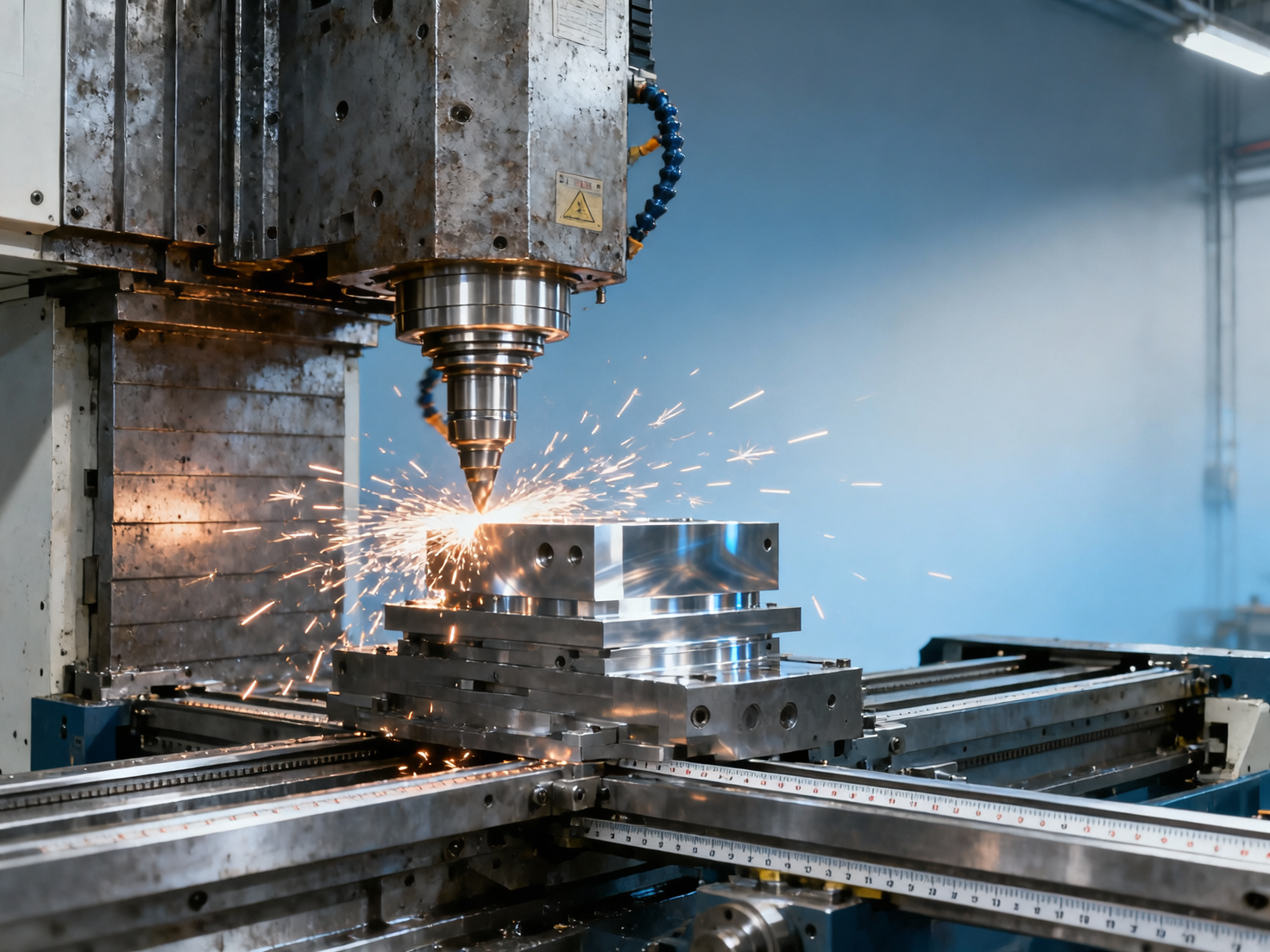
Precision CNC manufacturing isn’t just about hitting ±0.001mm tolerances—it’s about sustaining that accuracy, repeatability, and uptime across 18 months of demanding shift work. Whether you’re a procurement specialist sourcing a CNC manufacturing wholesaler, an engineer specifying multi-axis CNC manufacturing for aerospace or medical devices, or a plant manager seeking low-maintenance, energy-saving CNC manufacturing solutions, long-term reliability is non-negotiable. This deep dive explores how high-precision CNC manufacturing systems—especially those serving the automotive, electronics, energy equipment, and smart factory sectors—deliver consistent performance without compromising speed, space efficiency, or cost-effectiveness.
Why Repeatability After 18 Months Matters More Than Initial Tolerance
Initial precision is table stakes. What separates industrial-grade CNC machine tools from mid-tier alternatives is how tightly they hold dimensional consistency over time—especially under 24/7 three-shift operation. Real-world data from Tier-1 automotive suppliers shows that machines with sub-±0.003mm thermal drift control retain 92% of original repeatability after 18 months; those without active thermal compensation drop to 74%.
This degradation isn’t random. It stems from cumulative wear in ball screws (typically 0.008–0.015mm backlash increase per 12,000 operating hours), spindle bearing preload relaxation (measurable as >0.002mm axial runout growth), and frame stress redistribution due to ambient temperature cycling (common in facilities with 10℃–30℃ daily swings).
For decision-makers evaluating CNC machining centers or multi-axis lathes, this means: a spec sheet showing ±0.001mm at commissioning tells only half the story. The critical metric is repeatability retention rate—defined as the percentage of initial positioning accuracy sustained after 18 months of continuous production at ≥85% duty cycle.
Key Mechanical & Thermal Stability Factors
- Cast iron base with 30+ days natural aging (not accelerated heat treatment) reduces long-term frame distortion by up to 40%
- Preloaded double-nut ball screws with recirculating lubrication intervals ≤2,000 hours maintain backlash within ±0.005mm for 24 months
- Spindle oil-air cooling maintaining bearing temps within ±1.5℃ of setpoint prevents thermal growth-induced tool center point shift
- Linear scale feedback (not encoder-only) on all axes enables real-time error mapping and compensation every 10ms
How Top-Tier CNC Systems Maintain Performance Across Shifts
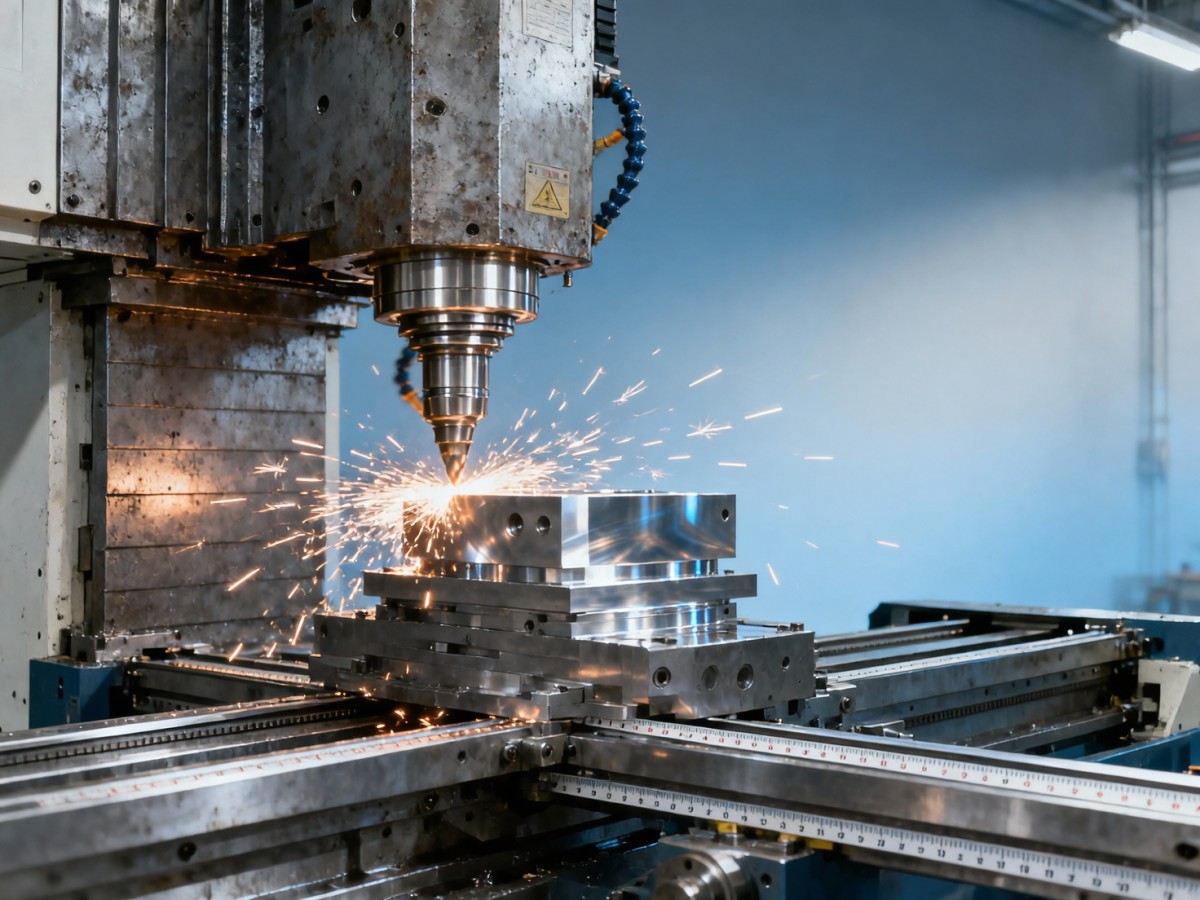
Sustaining repeatability across shifts demands more than robust mechanics—it requires integrated digital stability management. Leading CNC machine tool platforms embed four interlocking subsystems: real-time thermal error modeling, adaptive feedrate optimization, predictive maintenance alerts, and closed-loop geometric calibration.
For example, a modern 5-axis machining center used in turbine blade production performs automatic volumetric error compensation every 72 hours—measuring 21 geometric errors (e.g., squareness, straightness, pitch/yaw) using laser interferometry or ballbar testing. This process corrects deviations before they impact part conformance, extending time-between-calibrations from 3 months to 9 months.
Energy efficiency also correlates strongly with long-term stability. Machines meeting ISO 230-30 Class A power consumption standards (≤1.8 kW/h per axis during idle) show 27% less thermal gradient buildup across the bed compared to standard-class units—directly reducing thermal drift in critical X/Y/Z axes.
Performance Retention Benchmarks by Application Segment
The table reveals a clear pattern: higher-duty applications demand tighter thermal control, while regulated environments prioritize verification traceability. Notably, aerospace and medical segments achieve superior retention—not because their machines are inherently more precise, but because their operational protocols enforce stricter environmental monitoring and calibration discipline.
Procurement Checklist: 5 Non-Negotiables for 18-Month Repeatability
When evaluating CNC lathes, machining centers, or multi-axis systems, go beyond catalog specs. Ask suppliers for documented evidence—not promises—of long-term stability. These five criteria separate field-proven reliability from theoretical performance:
- Thermal Drift History: Request 12-month thermal growth logs from at least two reference customers in your same industry segment
- Ball Screw Wear Data: Verify manufacturer’s published backlash growth curve over 15,000–20,000 hours—not just 1,000-hour test results
- Calibration Protocol: Confirm automated volumetric error mapping frequency and whether it integrates with your shop’s metrology software (e.g., PC-DMIS, Q-DAS)
- Frame Material Certification: Require mill certificates for base casting material, including tensile strength, hardness, and aging duration
- Spindle Bearing Load Profile: Ensure bearings are rated for ≥1.8x maximum expected radial load, not just nominal load
Suppliers unable to provide third-party validation of these metrics often rely on short-cycle lab tests—a red flag for operations planning 18+ months of uninterrupted output.
Why Global Leaders Choose Integrated CNC Manufacturing Platforms
Germany, Japan, South Korea, and China have built world-class CNC machine tool ecosystems—not by optimizing single components, but by integrating mechanical design, motion control, thermal management, and digital services into unified platforms. For procurement teams and plant managers, this integration translates directly into lower total cost of ownership (TCO): 32% fewer unplanned stops, 28% longer tool life, and 41% faster ramp-up for new part programs.
Our platform connects you with certified manufacturers offering full lifecycle support—including pre-installation thermal baseline measurement, quarterly remote diagnostics, and guaranteed repeatability retention reporting per ISO 230-2 Annex D. We help match your specific production profile (shift schedule, part mix, environmental constraints) with the right combination of hardware architecture, control firmware, and service SLA.
Ready to evaluate CNC manufacturing solutions backed by verifiable 18-month repeatability data? Contact us to request: (1) application-specific stability reports, (2) thermal drift simulation for your facility’s ambient profile, (3) side-by-side comparison of three qualified vendors against your top 5 procurement criteria.
Recommended for You
![]() China's Energy Storage Sector Faces 'Advanced Shortage, Outdated Surplus'Machine Tool Industry Editorial Team
China's Energy Storage Sector Faces 'Advanced Shortage, Outdated Surplus'Machine Tool Industry Editorial Team![]() Top 50 Cosmetics Brands’ Retail Sales Up 11.56%, Boosting Demand for High-Precision CNC EquipmentManufacturing Market Research Center
Top 50 Cosmetics Brands’ Retail Sales Up 11.56%, Boosting Demand for High-Precision CNC EquipmentManufacturing Market Research Center![]() Home Service Skills Hub Launches, Boosting Robot Export TrainingMachine Tool Industry Editorial Team
Home Service Skills Hub Launches, Boosting Robot Export TrainingMachine Tool Industry Editorial Team![]() Steel Structure Mezzanine Tech Moves Beyond 'Adequate'CNC Machining Technology Center
Steel Structure Mezzanine Tech Moves Beyond 'Adequate'CNC Machining Technology Center![]() Fireproof Cable Tray Industry Shifts to High-Performance CompositesManufacturing Policy Research Center
Fireproof Cable Tray Industry Shifts to High-Performance CompositesManufacturing Policy Research Center![]() Foil Winding Machines Shift to Digital Servo DrivesMachine Tool Industry Editorial Team
Foil Winding Machines Shift to Digital Servo DrivesMachine Tool Industry Editorial Team


Aris Katos
Future of Carbide Coatings
15+ years in precision manufacturing systems. Specialized in high-speed milling and aerospace grade alloy processing.
▶
Common Shaft Parts defects and how to avoid themCNC Machining Technology Center▶
Global Power Demand Growth Hits 3%; Data Center Expansion Drives Precision Machining NeedsCNC Machining Technology Center▶
When CNC Milling Beats Other Methods for Thin-Wall PartsCNC Machining Technology Center▶
Shaft Parts Quality Issues Often Linked to Hidden Runout ErrorsCNC Machining Technology Center▶
Are Shaft Parts Failing Due to Material Choice or MachiningCNC Machining Technology Center
Mastering 5-Axis Workholding Strategies
Join our technical panel on Nov 15th to learn about reducing vibrations in thin-wall components.

Providing you with integrated sanding solutions
Before-sales and after-sales services
Comprehensive technical support