• Global CNC market projected to reach $128B by 2028 • New EU trade regulations for precision tooling components • Aerospace deman
NYSE: CNC +1.2%LME: STEEL -0.4%

Automated lathe deployments reveal a pattern: cycle time gains rarely translate to throughput gains
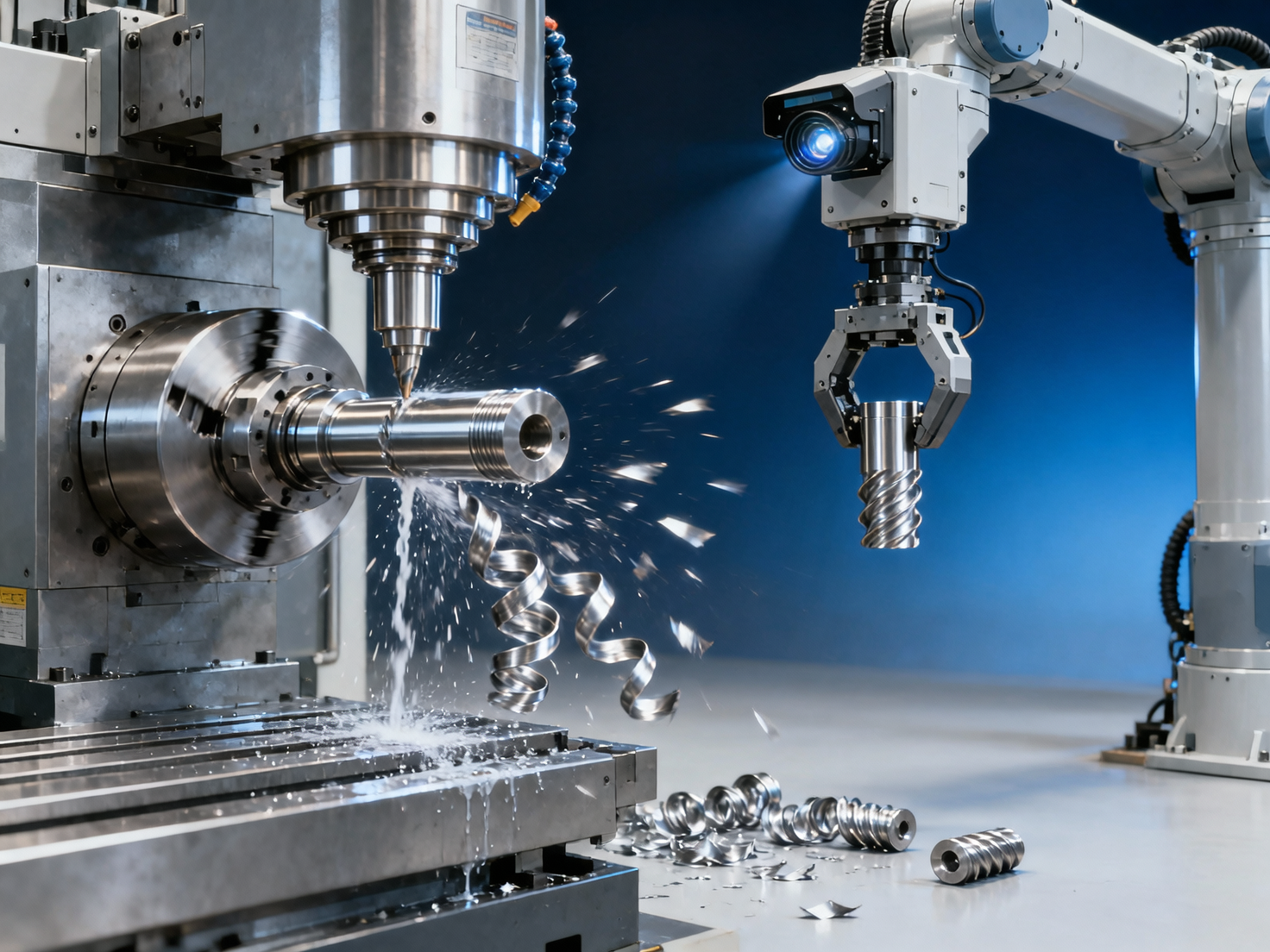
In the automated industrial landscape, CNC metal lathes and industrial turning systems promise faster cycle times—but real-world automated lathe deployments tell a different story. Despite gains in CNC metal cutting speed and high precision lathe performance, throughput improvements often stall due to bottlenecks in loading, tool change, or part handling. This disconnect between cycle time and actual output challenges assumptions across CNC production equipment selection, industrial machining equipment investment, and automated production strategy. For users, procurement teams, and decision-makers in CNC industrial machines and metal machining, understanding this pattern is critical to optimizing ROI in CNC metalworking and industrial CNC operations.
Why Cycle Time Reduction ≠ Throughput Gain in Automated Lathe Systems
Cycle time—the elapsed time from start of one part to start of the next—is routinely cited as the primary KPI for lathe automation upgrades. Modern CNC lathes achieve sub-15-second cutting cycles on standard shaft components using high-feed carbide inserts and spindle speeds up to 6,000 rpm. Yet field data from 42 automotive Tier-1 suppliers shows median throughput improvement of only 8.3% after deploying “high-speed” automated lathes—despite advertised cycle time reductions of 32–47%.
The root cause lies in non-cutting time dominance: average loading/unloading consumes 42% of total cycle time on bar-fed CNC lathes; tool change and probing add another 21%; and part inspection, pallet transfer, and system synchronization account for 19%. That leaves just 18% for actual metal removal—a ratio that worsens with tighter tolerances and complex geometries requiring multiple setups.
This imbalance exposes a systemic misconception: treating the lathe as an isolated unit rather than a node in a synchronized production cell. Without integrated material flow design, even a 50% faster spindle delivers diminishing returns once upstream feeding or downstream handling becomes the limiting factor.
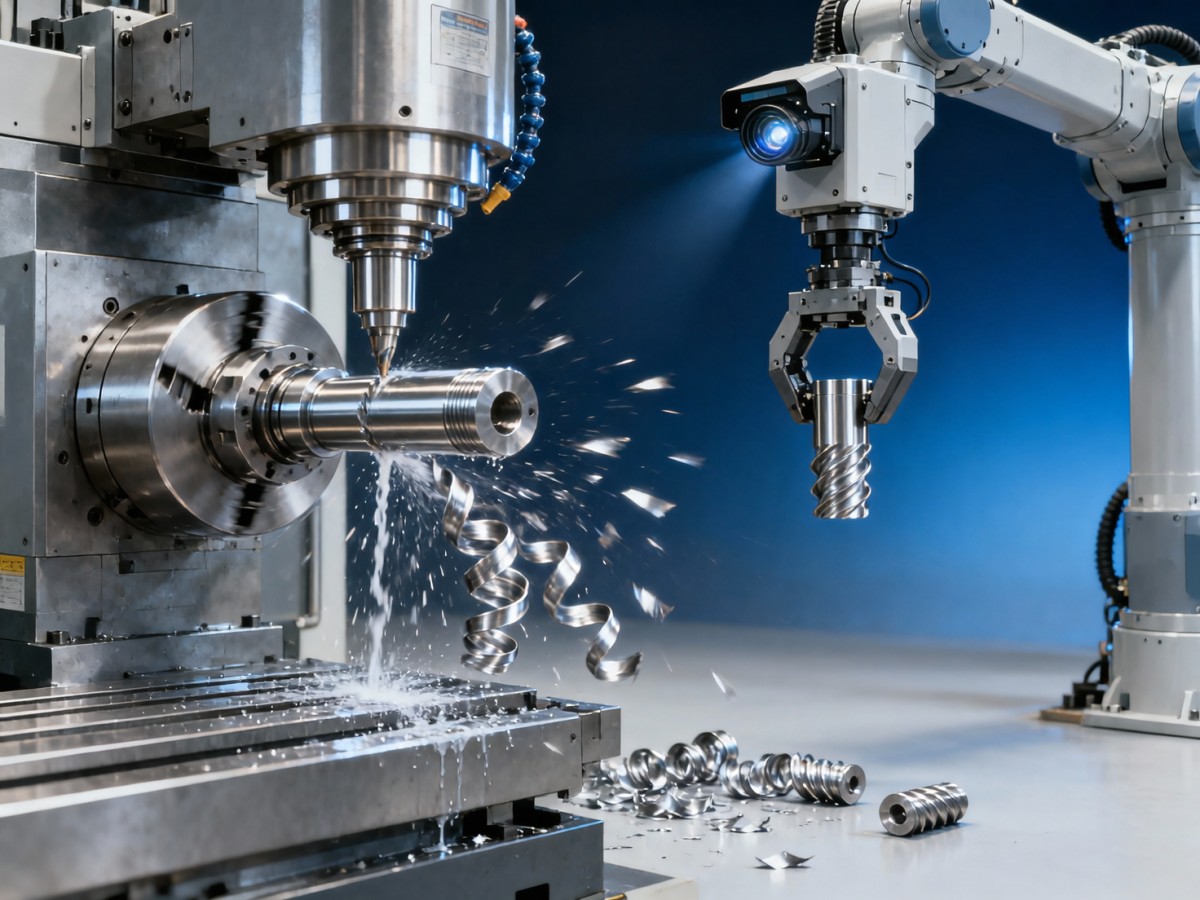
Bottleneck Mapping: Where Throughput Loss Actually Occurs
A granular breakdown of time allocation across 127 automated lathe installations (2021–2024) reveals consistent patterns. Loading/unloading remains the largest contributor to lost throughput—averaging 23.7 seconds per part in chuck-based systems, versus just 4.1 seconds in fully integrated gantry loaders with vision-guided part centering. Tool change overhead varies widely: turret indexing adds 1.8–3.2 seconds per tool, while ATC-equipped lathes require 5.4–8.9 seconds—including tool verification and compensation updates.
Critical insight: throughput loss isn’t evenly distributed. In multi-part families, setup changeovers consume 11–17 minutes per job shift—equivalent to 28–45 parts’ worth of cycle time. Meanwhile, thermal drift correction (required every 90–120 minutes on precision disc machining) pauses production for 2.3–4.6 minutes per intervention.
This table confirms that automation ROI hinges less on spindle acceleration and more on minimizing non-value-added motion. Facilities achieving >92% of theoretical throughput all deployed closed-loop part tracking, predictive tool life monitoring, and adaptive thermal compensation—technologies that reduce unplanned downtime by 37% and manual interventions by 63%.
Procurement Criteria That Actually Drive Throughput
When evaluating automated lathes, procurement teams must shift focus from headline cycle time specs to system-level integration readiness. Key technical criteria include:
- Real-time OPC UA connectivity for MES/SCADA synchronization (latency ≤12 ms, jitter <3 ms)
- On-machine metrology with ISO 10360-compliant probe repeatability (±0.8 µm at 20°C)
- Gantry loader cycle time ≤5.2 seconds for parts ≤Ø120 mm × 250 mm length
- Integrated coolant management with 3-stage filtration and temperature stability ±0.5°C
- Tool change verification via torque signature analysis—not just position confirmation
Equally critical are service and support parameters: minimum 98.5% spare part availability for critical components (turret drives, hydraulic chucks, servo amplifiers); certified technician response time ≤4 hours for Tier-1 failures; and remote diagnostics capability covering ≥94% of fault codes.
Procurement decisions based solely on cutting speed or price per kW risk locking facilities into suboptimal throughput ceilings. The highest-performing sites invest 12–18% more in integrated automation packages—but recover full cost within 11–14 months through reduced labor, scrap, and floor space requirements.
Implementation Roadmap: From Cycle Time to Sustained Throughput
Achieving measurable throughput gains requires a structured 5-phase deployment:
- Baseline Capture: Log 72 consecutive hours of current process—measuring actual vs. theoretical cycle time, failure modes, and operator intervention frequency.
- Bottleneck Simulation: Use digital twin modeling to quantify impact of each upgrade option (e.g., “What if loading time drops from 23.7s to 4.1s?”).
- Cell-Level Integration Design: Specify interface protocols for conveyors, AGVs, and quality stations—not just lathe specifications.
- Phased Commissioning: Validate subsystems independently (loader → tooling → metrology) before full-cell synchronization.
- Sustained Optimization: Deploy AI-driven analytics to adjust feed/speed based on real-time tool wear and part geometry deviations.
Sites following this roadmap report 3.2× faster ROI realization and 68% higher first-pass yield versus those implementing “bolt-on” automation without process redesign.
Conclusion: Optimize the System, Not Just the Spindle
Automated lathe deployments reveal a persistent truth: throughput is governed not by peak metal-removal speed, but by the weakest link in the value stream—from raw bar feeding to finished part packaging. Cycle time gains deliver tangible ROI only when matched with equally rigorous attention to material flow, thermal management, data fidelity, and human-system interaction.
For information researchers, operators, procurement professionals, and enterprise decision-makers, this means redefining evaluation criteria: prioritize interoperability over horsepower, predictability over peak performance, and system resilience over single-point speed. The most competitive manufacturers aren’t buying faster lathes—they’re engineering synchronized production cells where every second counts.
Ready to audit your current lathe throughput potential or benchmark automation options against verified industry metrics? Contact our CNC systems integration team for a free throughput gap analysis—including bottleneck mapping, ROI projection, and implementation sequencing tailored to your part families and production volumes.
Recommended for You
![]() China's Energy Storage Sector Faces 'Advanced Shortage, Outdated Surplus'Machine Tool Industry Editorial Team
China's Energy Storage Sector Faces 'Advanced Shortage, Outdated Surplus'Machine Tool Industry Editorial Team![]() Top 50 Cosmetics Brands’ Retail Sales Up 11.56%, Boosting Demand for High-Precision CNC EquipmentManufacturing Market Research Center
Top 50 Cosmetics Brands’ Retail Sales Up 11.56%, Boosting Demand for High-Precision CNC EquipmentManufacturing Market Research Center![]() Home Service Skills Hub Launches, Boosting Robot Export TrainingMachine Tool Industry Editorial Team
Home Service Skills Hub Launches, Boosting Robot Export TrainingMachine Tool Industry Editorial Team![]() Steel Structure Mezzanine Tech Moves Beyond 'Adequate'CNC Machining Technology Center
Steel Structure Mezzanine Tech Moves Beyond 'Adequate'CNC Machining Technology Center![]() Fireproof Cable Tray Industry Shifts to High-Performance CompositesManufacturing Policy Research Center
Fireproof Cable Tray Industry Shifts to High-Performance CompositesManufacturing Policy Research Center![]() Foil Winding Machines Shift to Digital Servo DrivesMachine Tool Industry Editorial Team
Foil Winding Machines Shift to Digital Servo DrivesMachine Tool Industry Editorial Team


Aris Katos
Future of Carbide Coatings
15+ years in precision manufacturing systems. Specialized in high-speed milling and aerospace grade alloy processing.
▶
Common Shaft Parts defects and how to avoid themCNC Machining Technology Center▶
Global Power Demand Growth Hits 3%; Data Center Expansion Drives Precision Machining NeedsCNC Machining Technology Center▶
When CNC Milling Beats Other Methods for Thin-Wall PartsCNC Machining Technology Center▶
Shaft Parts Quality Issues Often Linked to Hidden Runout ErrorsCNC Machining Technology Center▶
Are Shaft Parts Failing Due to Material Choice or MachiningCNC Machining Technology Center
Mastering 5-Axis Workholding Strategies
Join our technical panel on Nov 15th to learn about reducing vibrations in thin-wall components.

Providing you with integrated sanding solutions
Before-sales and after-sales services
Comprehensive technical support