• Global CNC market projected to reach $128B by 2028 • New EU trade regulations for precision tooling components • Aerospace deman
NYSE: CNC +1.2%LME: STEEL -0.4%

Industrial Automation saves labor, but can raise new costs
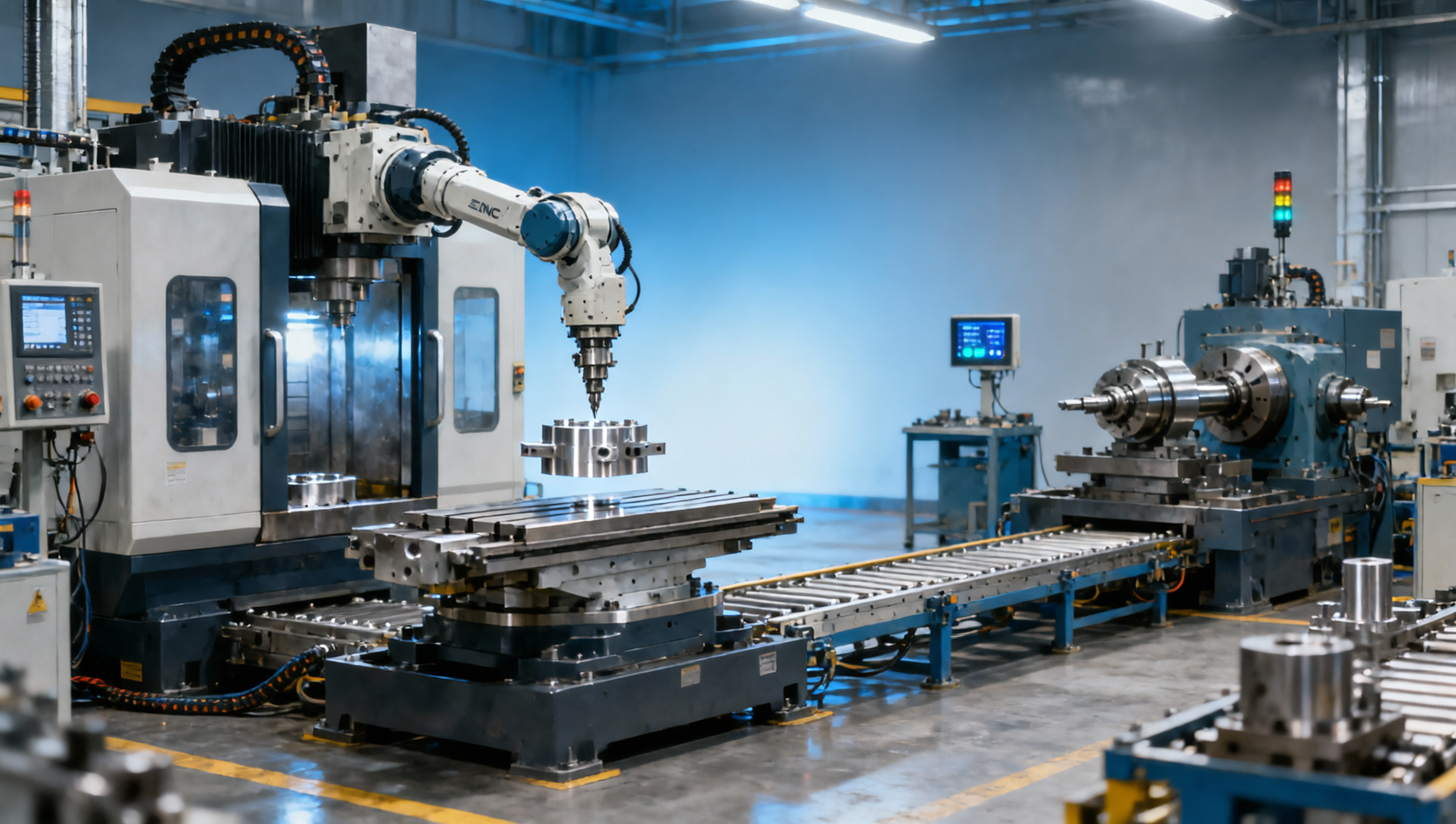
Industrial Automation can reduce labor dependence, but it also introduces new expenses in software, maintenance, training, and system integration. For companies in metal machining, industrial CNC, and automated production, the real challenge is balancing efficiency with total cost. This article explores how CNC production, CNC milling, automated lathe systems, and Industrial Robotics are reshaping the Manufacturing Industry and what decision-makers should consider before scaling automation.
For researchers, operators, buyers, and business leaders, the key question is no longer whether automation matters. The practical question is how to calculate its full impact across labor, quality, uptime, throughput, and long-term operating cost. In CNC machining and precision manufacturing, even a well-designed automation project can create hidden expenses if machine compatibility, programming standards, or maintenance resources are underestimated.
This is especially relevant in sectors such as automotive parts, aerospace components, energy equipment, and electronics production, where tolerances can range from ±0.005 mm to ±0.05 mm and delivery windows are often measured in 2–6 weeks. In these environments, automation must do more than replace labor. It must protect consistency, support flexible production, and deliver a measurable return within a realistic implementation cycle.
Why Industrial Automation Lowers Labor Pressure but Raises Total System Cost
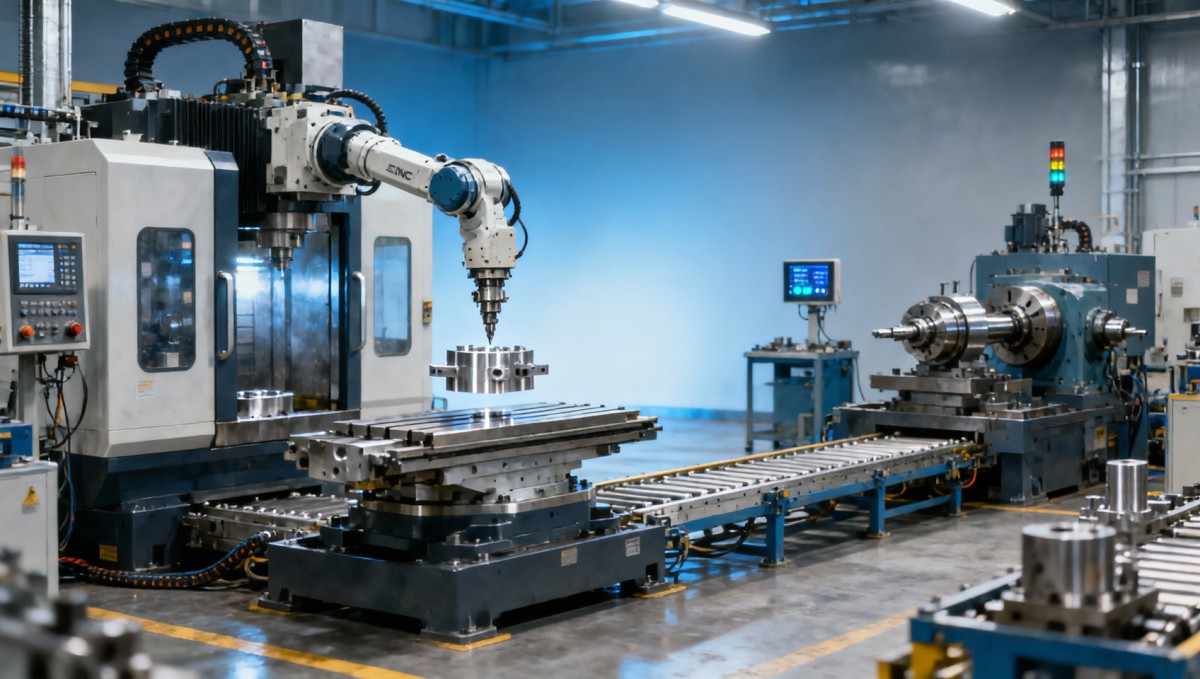
In the CNC machine tool industry, automation typically reduces direct labor in loading, unloading, inspection support, pallet transfer, and repetitive handling. A single automated lathe cell or CNC milling unit with robotic tending can allow 1 operator to supervise 2–4 machines instead of only 1. That shift can improve labor utilization, reduce night-shift staffing pressure, and stabilize output during labor shortages.
However, labor savings are only one part of the cost structure. Once a factory installs industrial robots, machine interfaces, safety systems, MES connectivity, sensors, and offline programming software, the investment moves from equipment purchase to system ownership. New cost items often include PLC integration, software licenses renewed every 12 months, spare parts stock, tool monitoring modules, and external engineering support during the first 3–9 months of ramp-up.
For procurement teams, this means that comparing automation with manual production based only on headcount reduction is incomplete. In many projects, direct labor may drop by 15%–40%, but maintenance and digital infrastructure costs can rise by 8%–20%. If batch size is unstable or product changeovers exceed 6–10 times per week, the system may not deliver the expected payback unless flexibility is built into the design.
Operators and production managers also face a skills transition. Manual machining knowledge remains valuable, but automated production needs additional competence in program offsets, robot teach points, alarm diagnostics, network communication, and fixture repeatability. Training is not a one-time event. Many factories need 2–3 rounds of instruction across commissioning, pilot production, and stable mass production.
Main cost categories that appear after automation deployment
The following comparison shows why total cost of ownership is often more useful than machine purchase price when evaluating industrial automation in CNC production environments.
The key takeaway is that industrial automation often converts visible labor cost into less visible technical cost. That is not a negative outcome by itself. In high-mix or high-precision manufacturing, it can still be the right decision. But buyers should evaluate the full system over 3–5 years, not just the first purchase order.
Where Automation Creates the Most Value in CNC Production
Not every workshop gains the same value from automation. In general, the strongest results appear in production environments with repeatable part families, cycle times between 45 seconds and 12 minutes, and predictable quality checkpoints. CNC lathes producing shafts, discs, sleeves, and threaded parts are often good candidates because loading patterns are stable and fixtures can be standardized across batches.
Machining centers also benefit when parts require consistent orientation, pallet exchange, and high spindle utilization. In a manual setup, an operator may spend 20%–35% of shift time on loading, cleaning chips, and moving workpieces. With robotic handling or pallet automation, that non-cutting time can be reduced, helping the machine stay closer to its designed capacity. For medium-volume orders, that efficiency gain can be more valuable than pure labor reduction.
For business leaders, another advantage is process stability. In precision manufacturing, variation in manual handling can affect datum positioning, clamping consistency, and in-process inspection rhythm. Even if the machine itself is capable of tight tolerances, output quality can still drift when upstream handling is inconsistent. Automation reduces part-to-part variation when fixtures, grippers, and feed systems are designed correctly.
At the same time, value depends heavily on production type. A plant running 500 to 5,000 similar parts per month will often capture automation benefits sooner than a workshop changing programs 15 times per day. That is why solution design must begin with part flow, takt time, and changeover frequency, not just equipment catalog specifications.
Typical applications with better automation economics
Below is a practical comparison of common CNC manufacturing scenarios and their likely fit for automation investment.
This comparison shows that automation value rises when repeatability, throughput, and process linkage are strong. It becomes harder to justify when product variety is extreme and setup logic changes every few hours. For buyers, the best approach is to map automation to the most stable 20%–30% of production first, then expand after proving the economics.
Signals that a CNC line is ready for automation
- Machine utilization stays below 65% because operators are busy with loading, deburring, or internal transport.
- Similar parts account for at least 40% of monthly volume, allowing fixture and gripper reuse.
- Quality drift appears more often during shift changes, overtime, or night operation.
- Labor turnover is affecting delivery performance or forcing repeated training cycles every 3–6 months.
The Hidden Cost Drivers Buyers Often Miss
Many automation projects fail to meet financial expectations not because the machines are poor, but because cost estimation is incomplete. The hidden drivers are usually outside the machine quotation itself. Integration engineering, fixture redesign, safety guarding, compressed air preparation, chip removal upgrades, and production interruption during installation can add meaningful cost. In some facilities, line modification alone takes 1–3 weeks before commissioning even starts.
Software is another recurring expense. CNC production cells increasingly rely on HMI interfaces, data collection tools, remote diagnostics, and scheduling systems. These tools improve visibility, but they require licensing, backups, version compatibility checks, and sometimes cybersecurity controls. If a factory operates across multiple sites in China, Germany, Japan, or South Korea, integration standards and communication protocols may also vary by supplier ecosystem.
Maintenance planning is often underestimated during procurement. A robotic tending cell may need preventive checks every 500–1,000 operating hours, while grippers, cables, and sensors may require faster replacement depending on chips, coolant exposure, and vibration. If spare parts are not stocked locally, a low-cost component can cause 24–72 hours of unplanned downtime, which quickly offsets labor savings.
Training cost also grows when automation crosses departments. Operators, maintenance technicians, quality engineers, programmers, and supervisors all interact with the new system differently. A plant that trains only the launch team may still struggle after 60 days if night-shift personnel cannot recover from alarms or adjust offsets correctly. For this reason, training plans should cover at least 4 roles and include documented work instructions.
A practical checklist for total cost evaluation
Before issuing a purchase decision, buyers should review the project against a broader cost checklist rather than focusing only on machine and robot prices.
- Calculate direct equipment cost, including CNC machine, robot, feeder, safety units, and fixture package.
- Add integration cost, including programming, communication setup, guarding, and line modification.
- Estimate downtime during installation, trial runs, and first article validation, usually 3–15 days depending on complexity.
- Include annual maintenance, spare parts stock, lubrication, sensor replacement, and software support.
- Budget training for operators, maintenance staff, and process engineers across at least 2 operating shifts.
- Measure expected gains in scrap reduction, cycle stability, labor redistribution, and machine utilization.
A more disciplined review prevents a common mistake: approving automation on a narrow ROI model and then discovering that the actual payback period extends from 18 months to 30 months. That does not mean the project is wrong. It simply means the business case should reflect real operating conditions from the beginning.
Common misconceptions in automation procurement
- Assuming one robot can support every part family without extra grippers or fixture changes.
- Believing labor savings begin on day 1, while ignoring 4–8 weeks of stabilization and debugging.
- Overlooking the cost of preventive maintenance tools, backup batteries, and local service response time.
- Expecting automated production to solve poor process capability when tooling and fixturing remain unstable.
How to Choose the Right Automation Strategy for CNC and Precision Manufacturing
The best automation strategy depends on part type, production volume, tolerance level, shift pattern, and internal engineering capability. For some factories, a simple bar feeder, pallet changer, or automatic door system provides better returns than a full industrial robotics cell. For others, a linked machining and inspection line creates stronger value because quality traceability matters as much as cycle time. The selection should match operational bottlenecks, not market trends alone.
Decision-makers should start with three baseline questions. First, which process loses the most hours per week to manual handling, waiting, or reloading? Second, how stable are the part families over the next 12–24 months? Third, does the factory have internal staff able to maintain the system after handover? If the answer to the third question is weak, supplier service capability becomes a more important selection factor than headline equipment speed.
In the machine tool industry, precision is critical. A system that boosts output but introduces clamping variation or thermal instability can damage customer confidence. That is why fixture repeatability, robot reach, part orientation control, chip management, and inspection integration should all be reviewed together. For high-accuracy parts, even a 0.02 mm positioning inconsistency can trigger downstream quality loss.
A phased approach is often safer than large-scale deployment. Companies can automate one stable product family first, monitor OEE, scrap, maintenance response, and changeover time for 8–12 weeks, and then decide whether to expand. This method gives both operators and management a realistic view of ownership cost and operational maturity.
Selection criteria by business role
Different stakeholders evaluate automation through different priorities. The matrix below helps align technical, financial, and operational concerns before project approval.
This matrix highlights why a successful automation purchase is rarely a single-department decision. Strong projects connect factory floor needs with commercial reality. When supplier proposals are reviewed jointly by production, maintenance, quality, and procurement, the risk of post-installation surprises drops significantly.
Minimum points to verify before signing
- Target cycle time and actual tested cycle time under realistic loading conditions.
- Fixture repeatability, part family limits, and the number of grippers or toolholders required.
- Local or regional service response commitment, ideally within 24–48 hours for critical faults.
- Training scope, documentation language, and handover responsibilities after acceptance.
Implementation, Risk Control, and Long-Term Maintenance
Automation performance is determined not only by what is installed, but by how it is implemented. In CNC and automated production, the most stable projects usually move through 5 stages: process review, concept design, interface confirmation, pilot commissioning, and performance validation. Depending on complexity, the full cycle can take 4–16 weeks. Rushing commissioning to meet a shipment deadline often creates more downtime later.
Risk control begins with process discipline. Tool life monitoring, coolant management, fixture cleanliness, and datum control become even more important in unattended or semi-attended operation. A robot can repeat a bad loading condition just as efficiently as a good one. That means automation should be introduced after core machining stability is proven, not while the process is still struggling with recurring scrap or unstable cutting parameters.
Long-term maintenance should be documented from the first day. A preventive plan may include daily checks for air pressure and chip buildup, weekly inspection of sensors and gripper wear, monthly backup verification, and quarterly review of cycle alarms and downtime logs. In many cases, a 30-minute daily inspection routine prevents a costly 6-hour stop later in the week.
For global manufacturers and export-oriented suppliers, support capability also matters. Plants sourcing equipment across regions should confirm spare parts routes, remote service availability, software language options, and compatibility with existing factory systems. A technically strong machine is still a business risk if parts need 10–14 days to arrive during peak production.
Recommended implementation workflow
- Define the target process, including part family, batch size, current cycle time, and quality baseline.
- Audit machine interfaces, floor space, utilities, guarding requirements, and operator access points.
- Run a pilot plan with acceptance criteria such as uptime, repeatability, alarm rate, and output consistency.
- Train core personnel first, then extend training to backup operators, maintenance, and quality staff.
- Review performance after 30, 60, and 90 days to decide whether scaling is commercially justified.
FAQ: questions often asked before scaling automation
How long does an automation project usually take?
A basic CNC tending upgrade may take 4–8 weeks from confirmation to stable operation, while a multi-machine production line can require 10–16 weeks. The range depends on fixture complexity, software integration, and validation requirements.
Is automation suitable for small and medium-sized manufacturers?
Yes, if the company starts with a focused use case. Many smaller factories gain value from automating one repeatable process rather than building a fully connected line. A single CNC cell with standardized loading can be easier to justify than a factory-wide upgrade.
What is the biggest mistake in automation planning?
The biggest mistake is treating automation as a labor replacement project only. In precision manufacturing, it is also a process control project, a maintenance project, and a data management project. Ignoring any one of those areas weakens the result.
Which KPI should be tracked first after launch?
Track machine utilization, alarm frequency, scrap rate, and changeover time in the first 30 days. Those indicators reveal whether the automated system is truly stable or only running well under close supervision.
Industrial automation can absolutely save labor, but the better strategic view is that it redistributes cost from repetitive manpower to engineering, control, and reliability. In CNC production, CNC milling, automated lathe systems, and industrial robotics, the winning projects are not simply the most advanced. They are the ones matched to stable part flow, realistic payback expectations, strong maintenance planning, and operator-ready implementation.
For manufacturers, buyers, and decision-makers evaluating the next step in smart production, a structured review of total cost, technical fit, and service support will produce better results than a speed-first purchasing decision. If you are planning automation for precision machining, metal cutting, or flexible production lines, now is the right time to compare options carefully, clarify requirements, and build a roadmap that supports both efficiency and long-term control. Contact us to discuss your application, request a tailored solution, or learn more about practical automation strategies for the global manufacturing industry.
NEXT ARTICLE
Recommended for You
 Heavy-duty Machining Center for mold making: Why coolant filtration standards evolve faster than OEM manualsMachine Tool Industry Editorial Team
 Quick-change Fixture Design for CNC turning: Why clamping force consistency drops after 200 cyclesCNC Machining Technology Center
 5 Axis Machining for impeller manufacturing: Why toolpath smoothing affects surface fatigue lifeCNC Machining Technology Center
 Lean Production Process implementation: Where value stream mapping fails to expose hidden machine downtimeManufacturing Market Research Center
 Modular Tooling System for flexible manufacturing: Why interface repeatability degrades faster than expectedMachine Tool Industry Editorial Team
 Industrial Automation control system for CNC machines: When cybersecurity updates disrupt scheduled maintenanceMachine Tool Industry Editorial Team

Aris Katos
Future of Carbide Coatings
15+ years in precision manufacturing systems. Specialized in high-speed milling and aerospace grade alloy processing.
Mastering 5-Axis Workholding Strategies
Join our technical panel on Nov 15th to learn about reducing vibrations in thin-wall components.

Providing you with integrated sanding solutions
Before-sales and after-sales services
Comprehensive technical support