• Global CNC market projected to reach $128B by 2028 • New EU trade regulations for precision tooling components • Aerospace deman
NYSE: CNC +1.2%LME: STEEL -0.4%

Choosing a Machine Tool Exporter: Delivery, Warranty and Support Checks
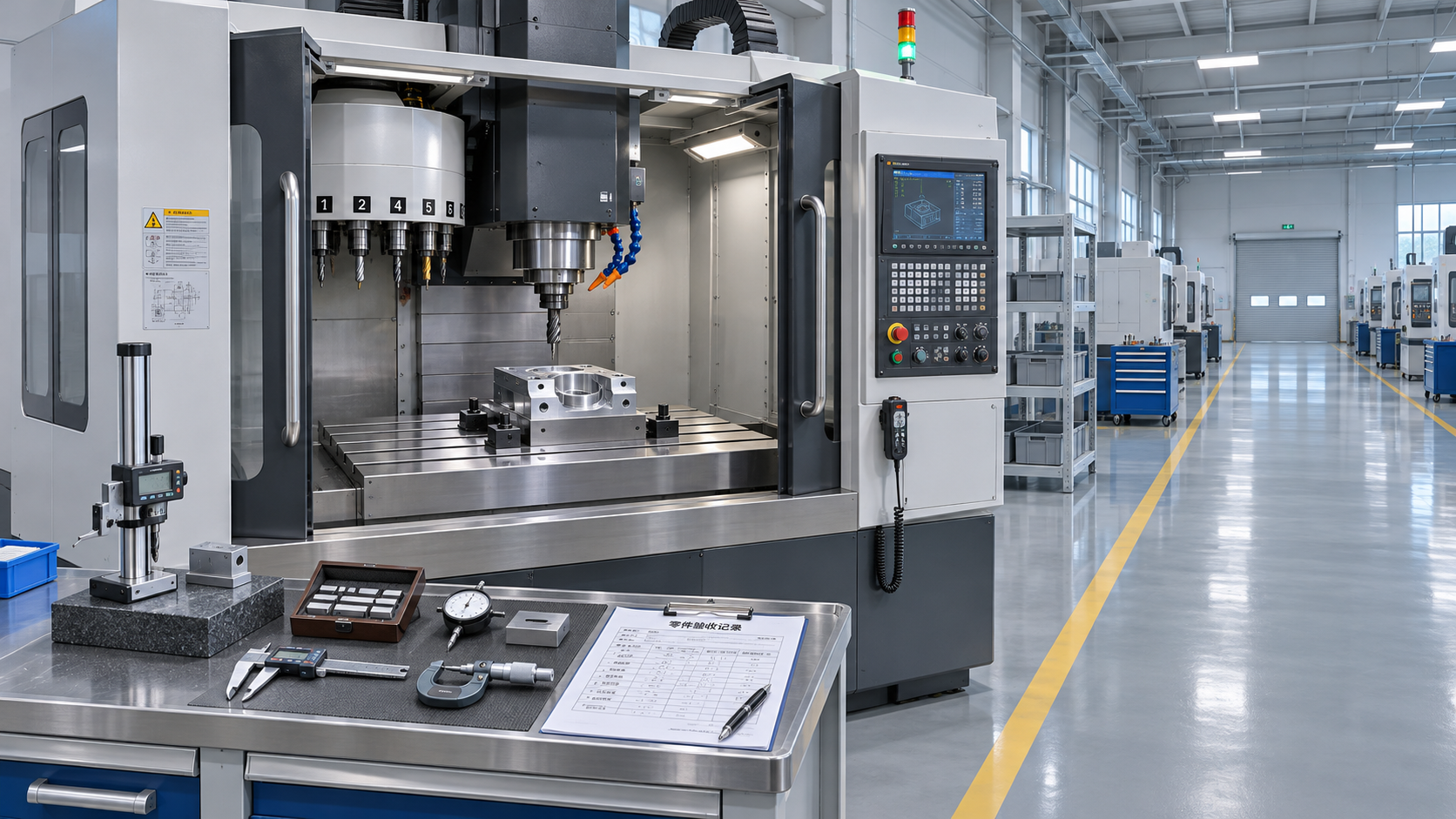
A machine tool exporter’s quoted price and shipping date tell only part of the purchasing story. The stronger offer is usually the one that defines when the machine will be ready, how its performance will be accepted, who pays when a component fails, and how quickly qualified support can reach the plant.
For a machine needed on a fixed production schedule, a lower purchase price can lose its appeal if installation, replacement parts, or service travel remain uncertain. Start by comparing offers against the same delivery milestones and acceptance criteria, then examine whether the warranty and support arrangements can keep the machine operating after handover.
Turn the delivery date into a usable production schedule
Ask each exporter what its quoted lead time covers. “Delivery in 16 weeks,” for example, could refer to factory completion, departure from the port, or arrival at the buyer’s facility. Those are different milestones, with different costs and risks between them. A contract should identify the starting event as well: the clock may begin after receipt of a deposit, approval of drawings, or confirmation of technical specifications.
Build a schedule backward from the date the machine must produce acceptable parts. Allow for factory acceptance, packing, export clearance, transit, import formalities, unloading, positioning, installation, and commissioning. Site work may have to begin before the machine ships: foundation preparation, power supply, compressed air, lifting access, and network connections can all affect the handover date.
Request a milestone schedule that identifies responsibility and evidence for each stage. Useful checkpoints include design or configuration approval, completion of the machine, factory testing, readiness for shipment, arrival, installation, and final acceptance. For a machine with custom automation or a specialized fixture, include the completion and integration of those items; a finished machine without its required workholding may not meet the production schedule.
Ask what happens if a milestone slips. The response should address notice, revised scheduling, and any agreed contractual remedy. A date in a sales email is less useful if the purchase agreement does not identify the obligation it creates.
Check who controls the machine and its components
An exporter may manufacture the machine, represent a manufacturer, or source equipment from another factory. Any of these arrangements can work, provided responsibility is clear. Identify the contracting seller, the machine builder, and the organizations responsible for the CNC control, drives, spindle, and automation where relevant.
This matters when a schedule changes or a fault occurs. If the exporter depends on a third-party factory for engineering decisions, ask how design changes, production updates, and technical escalations are handled. Request the exact model and configuration, including control system, spindle specification, tool magazine, accessories, and options. Substitutions should require written approval, especially where they affect service access or compatibility with existing equipment.
Delivery terms also deserve attention. The agreed Incoterms rule and named place should match the quotation and contract, with freight, insurance, customs clearance, duties, unloading, and inland transport allocated explicitly. Transfer of risk and transfer of ownership can be governed separately; neither should be assumed from a delivery date alone. Involve the freight and customs teams early if the shipment includes oversized equipment, separate cabinets, or multiple crates.
Define acceptance before the machine leaves the factory
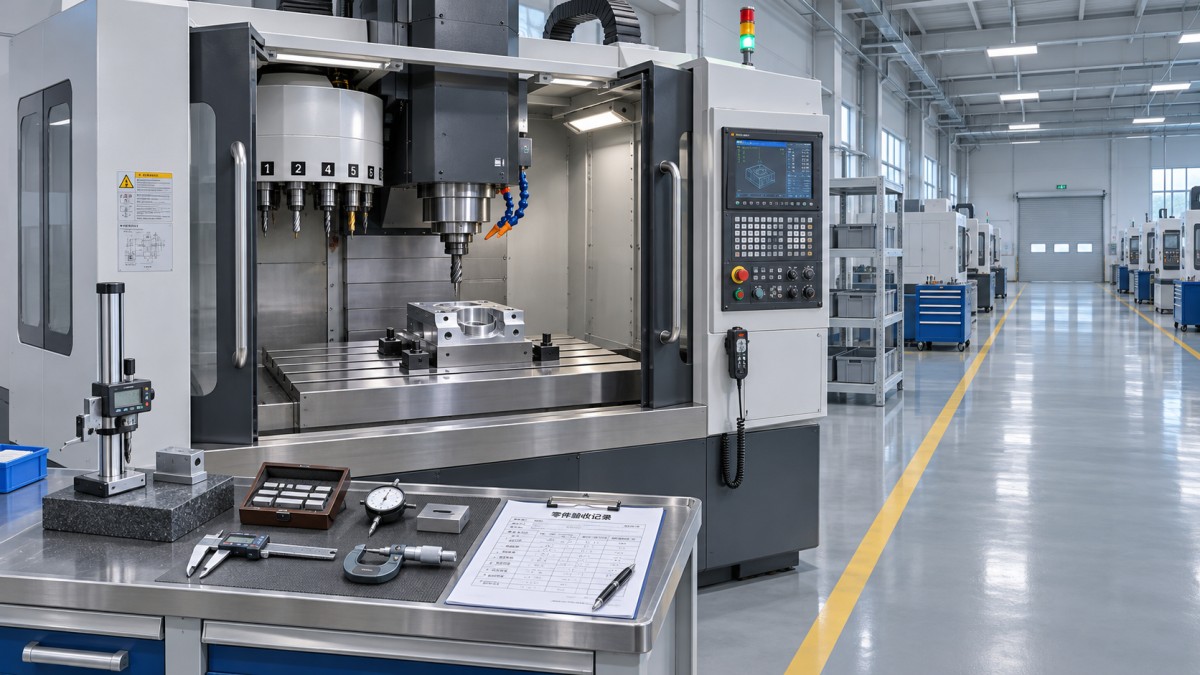
Factory acceptance testing gives the buyer an opportunity to check the agreed configuration and performance before shipment. It is most useful when the procedure is settled before the order is placed, rather than negotiated after the machine has been built.
For a machining center or CNC lathe, the test might include a review of the supplied equipment, safety functions, machine geometry, control operation, and a representative cutting trial. Where part quality is critical, define the workpiece material, tooling, fixture, program, measurement method, and required results. A promise that the machine is “high precision” does not establish what will be measured or under which conditions.
Keep factory acceptance and final site acceptance distinct. Transport, installation, utilities, and the operating environment can affect results after shipment. The agreement should state which checks will be repeated at the buyer’s plant, who supplies the test materials and tooling, and how deficiencies will be documented and corrected. It should also state whether acceptance can proceed with minor open items and when those items must be closed.
If the supplier offers remote factory testing, agree on what can be observed, which records will be provided, and whether an independent inspection is permitted. Remote observation can help establish progress, but the buyer should decide whether it provides enough evidence for the machine’s complexity and value.
Read the warranty as a set of responsibilities
Two quotations can advertise the same warranty duration while offering very different protection. Compare the start and end dates, covered components, exclusions, response process, and allocation of labor and transport costs. A warranty that starts at shipment can lose substantial coverage before a delayed installation is complete. Where possible, link the start to commissioning or site acceptance, with any outer limit stated explicitly.
Pay particular attention to the following points in the written terms:
- Covered items: Identify coverage for the spindle, CNC control, drives, motors, ball screws, electrical components, and supplied automation. Check whether individual components carry different terms.
- Exclusions: Distinguish consumables and routine maintenance from failures of covered components. Examine exclusions for tooling crashes, power problems, coolant, operating conditions, and unauthorized repairs.
- Repair costs: Specify who pays for diagnosis, technician travel, labor, replacement parts, freight, customs charges, and the return of defective components.
- Claim process: Establish how a fault is reported, what evidence is needed, who authorizes work, and how disputes over the cause of failure are resolved.
- Duration after repair: State what coverage applies to a repaired or replaced component and whether the original machine warranty continues unchanged.
The contractual counterparty matters as much as the wording. A component manufacturer’s warranty may not automatically cover the buyer’s labor or logistics costs, and the machine builder may expect the exporter to coordinate the claim. Obtain a written explanation of who owns the issue from initial report through repair, especially when several suppliers are involved.
Also check the conditions the buyer must meet. Maintenance records, approved consumables, environmental requirements, or restrictions on third-party work may be reasonable, but they should be practical for the plant to follow. If compliance depends on a maintenance procedure, ask for it before signing.
Test the support plan against a production stoppage
A service promise becomes useful when it identifies people, locations, coverage hours, and escalation routes. Ask who answers the first call, what languages are supported, and whether the contact can diagnose the specific control and machine model. Confirm the difference between a response time and a repair time: acknowledgement of a ticket does not mean a technician or replacement part is on its way.
For a production-critical machine, walk through a realistic fault scenario with the supplier. If a drive fails during a shift, how is the problem diagnosed? Can the service team access the machine remotely, subject to the buyer’s security rules? Who decides whether a site visit is needed? Where would a replacement drive come from, and who arranges its shipment and installation?
The answers should include any limits. A local service partner may be able to handle mechanical repairs but need manufacturer support for control software or machine-specific parameters. Remote access may reduce diagnosis time, but only if the plant permits it and the necessary connection is available. On-site support may depend on technician availability and travel arrangements.
Ask for the manuals, electrical diagrams, backup and restore procedures, parameter records, maintenance instructions, and recommended spare-parts list in the language agreed for the project. Confirm when these documents will be delivered and who can access software, licenses, and backups after the warranty expires. Training should identify the operators and maintenance staff covered, the subjects taught, and whether it takes place before or after production begins.
Make spare-parts availability specific
A broad claim that spare parts are available provides little protection during downtime. Request part numbers and indicative supply arrangements for components relevant to the machine’s configuration. For items with potentially disruptive lead times, ask whether stock is held locally, regionally, or at the factory, and whether the quoted availability depends on prior purchase or reservation.
Decide which parts justify holding inventory at the plant by weighing their replacement cost against the consequence of a stoppage and the practical time needed to obtain them. A buyer running a single critical machine may make a different decision from one with a compatible backup. Confirm whether common components can be purchased through authorized local channels and whether fitting them affects warranty obligations.
Compare the offers on the same commercial basis
Before selecting an exporter, convert each quotation into an estimated cost through acceptance at the plant. Include the machine and options, packing, freight, insurance, import charges, rigging, installation, commissioning, training, tooling or fixtures needed for the acceptance trial, and any service travel excluded from the quoted price. Keep uncertain items visible as estimates and assign an owner for obtaining firmer figures.
Then compare the remaining exposure. One supplier may quote a lower machine price but exclude commissioning and technician travel; another may include them but offer a narrower warranty on the spindle or control. The difference should appear in the evaluation, alongside the effect of a delayed delivery or a prolonged repair on the buyer’s production plan.
Resolve material gaps in the purchase agreement and its technical appendices before releasing the order. If a requirement matters to the production plan, it should be identifiable in the documents the parties will use to manage delivery, acceptance, and service—not left as an assumption between the quotation and the factory floor.
NEXT ARTICLE
Recommended for You
![]() Chinese Five-Axis Machine Tool Prices Reach Around 40,000 YuanMachine Tool Industry Editorial Team
 Choosing a Machine Tool Exporter: Delivery, Warranty and Support ChecksGlobal Machine Tool Trade Research Center
![]() US Lawmakers Warn China Has Overtaken US in Four Manufacturing SectorsManufacturing Policy Research Center
 What Is CNC Cutting? How It Works and Which Materials It Can CutCNC Machining Technology Center
![]() Philadelphia Fed Manufacturing Index Falls to 6.3, a Six-Month LowManufacturing Market Research Center
 Choosing a Shaft Parts Manufacturer in Japan: Quality, Capacity and Lead TimesGlobal Machine Tool Trade Research Center


Aris Katos
Future of Carbide Coatings
15+ years in precision manufacturing systems. Specialized in high-speed milling and aerospace grade alloy processing.
▶
Choosing a Machine Tool Exporter: Delivery, Warranty and Support ChecksGlobal Machine Tool Trade Research Center▶
Choosing a Shaft Parts Manufacturer in Japan: Quality, Capacity and Lead TimesGlobal Machine Tool Trade Research Center▶
Machine Tool Prices: What to Budget Beyond the Purchase PriceGlobal Machine Tool Trade Research Center▶
What proves a precision tool factory in China can hold tolerances?Global Machine Tool Trade Research Center▶
How to Evaluate a Machine Tool Factory Before Sourcing CNC EquipmentGlobal Machine Tool Trade Research Center
▶
Mastering 5-Axis Workholding Strategies
Join our technical panel on Nov 15th to learn about reducing vibrations in thin-wall components.

Providing you with integrated sanding solutions
Before-sales and after-sales services
Comprehensive technical support