• Global CNC market projected to reach $128B by 2028 • New EU trade regulations for precision tooling components • Aerospace deman
NYSE: CNC +1.2%LME: STEEL -0.4%

Machine Tool Prices: What to Budget Beyond the Purchase Price
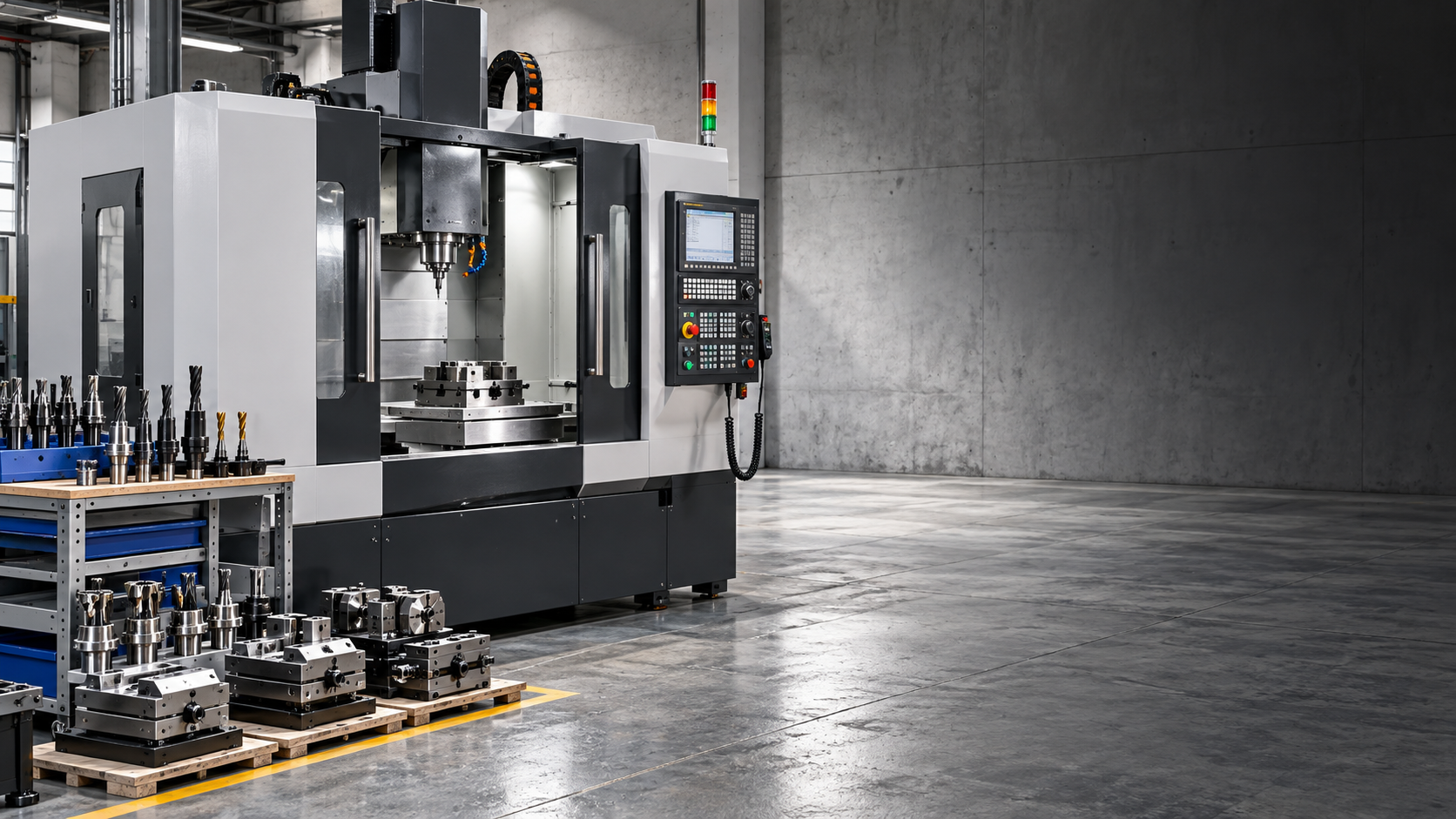
A machine tool price is only the starting point for a sound procurement budget. Freight, installation, tooling, operator training, maintenance, and energy consumption can all affect the total cost of ownership. For buyers comparing CNC lathes, machining centers, or multi-axis systems, identifying these expenses early prevents surprises and makes supplier quotations easier to compare. The practical question is not simply what the machine costs, but what it will cost to produce acceptable parts, at the required rate, throughout its working life.
Start with the job, not the machine specification
A useful budget begins with a representative part and a realistic production plan. Material, tolerances, annual volume, batch size, setup frequency, and surface-finish requirements all affect the equipment and support needed. A CNC lathe for repeat production of shaft components has different cost drivers from a five-axis machining center intended for complex structural parts.
That distinction matters when comparing machine tool prices. A machine with a lower quoted price may need additional workholding, inspection equipment, or more setups to complete the same part. A more expensive configuration may reduce handling, but its value depends on whether the expected workload actually uses those capabilities.
Ask engineering and production teams to identify the operations the machine must perform, the acceptable cycle time, and the required accuracy on the finished component. Then request quotations against that common scope. Otherwise, the procurement team may be comparing a basic machine with a production-ready package.
Read the quotation as a list of boundaries
The headline number often covers the machine in a stated configuration, not necessarily everything needed to run the intended job. Check whether the quotation includes the CNC control functions, spindle specification, tool magazine capacity, coolant system, chip conveyor, guarding, probing, and any required interface for automation.
For a turning application, confirm whether the chuck, jaws, toolholders, bar feeder interface, parts catcher, or tailstock are included where needed. For a machining center, check the rotary table, through-spindle coolant, tool setter, and workholding provisions against the process plan. These are not universally necessary options; their importance depends on the parts and operating method.
Look for exclusions as carefully as inclusions. A supplier may quote commissioning but exclude electrical connection, cutting trials, or travel expenses. Another may include basic training while charging separately for programming support. Ask for a written option list with prices and lead times, including items that could be difficult or costly to retrofit.
Getting the machine onto the floor
Freight is more than a line for moving equipment from one address to another. The budget may need to cover export packing, insurance, port or terminal handling, customs clearance, duties, local delivery, unloading, rigging, and positioning. The applicable charges depend on the route, contract terms, product classification, and destination requirements.
Agree on the delivery point and the transfer of responsibility in the purchase contract. A machine delivered to the site entrance is not necessarily unloaded or placed on its foundation. If the quotation uses an Incoterms rule, verify the named place and what each party must arrange; do not assume the rule covers unloading, insurance, or import formalities in the way your project requires.
Before accepting a delivery date, check the physical route into the building: door openings, floor load capacity, turning space, overhead obstructions, and access for lifting equipment. Large enclosures or separate electrical cabinets can complicate an apparently straightforward move. If a machine must be partially dismantled, clarify who performs the work and whether the supplier must reassemble and verify it.
Imported equipment adds another layer. Currency movements, payment timing, local taxes, and customs documentation can change the landed cost. Confirm the current treatment with the responsible customs and finance specialists rather than relying on a supplier’s general estimate.
Installation costs begin before delivery day
Site preparation can include foundation work, leveling provisions, electrical distribution, compressed air, coolant handling, extraction, and network connections. The machine supplier should provide utility and installation requirements early enough for the site team to check capacity and obtain contractor quotations.
Pay attention to responsibility gaps. The supplier may terminate its work at the machine cabinet while a local electrician must provide the upstream supply and connection. A coolant unit may be included without the initial fill, disposal arrangements, or filtration needed for the material being cut. Those details are easy to overlook when the project is still focused on equipment selection.
For precision work, ask whether the intended location has conditions suitable for the required tolerances. Temperature variation, vibration from nearby equipment, and available floor support may affect results. The appropriate remedy depends on the machine, part, process, and site; it should be assessed before the layout is frozen.
Commissioning also takes time. Allow for leveling, geometry checks, control setup, safety checks, and any agreed cutting trials. If the production schedule assumes saleable parts immediately after unloading, the budget is already under pressure.
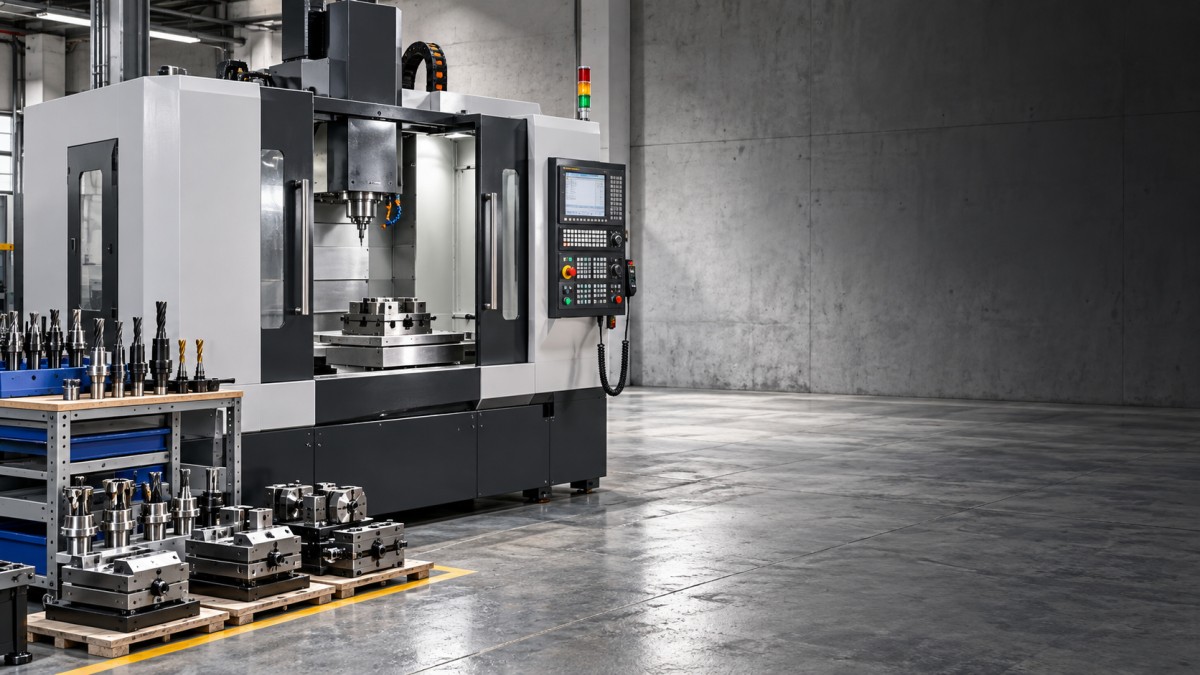
Tooling and workholding: the cost of making the first part
A machine may arrive operational but unable to produce the selected component without a substantial package of cutting tools, holders, fixtures, jaws, and inspection equipment. Build that package around the actual process, not a generic tooling allowance copied from an earlier purchase.
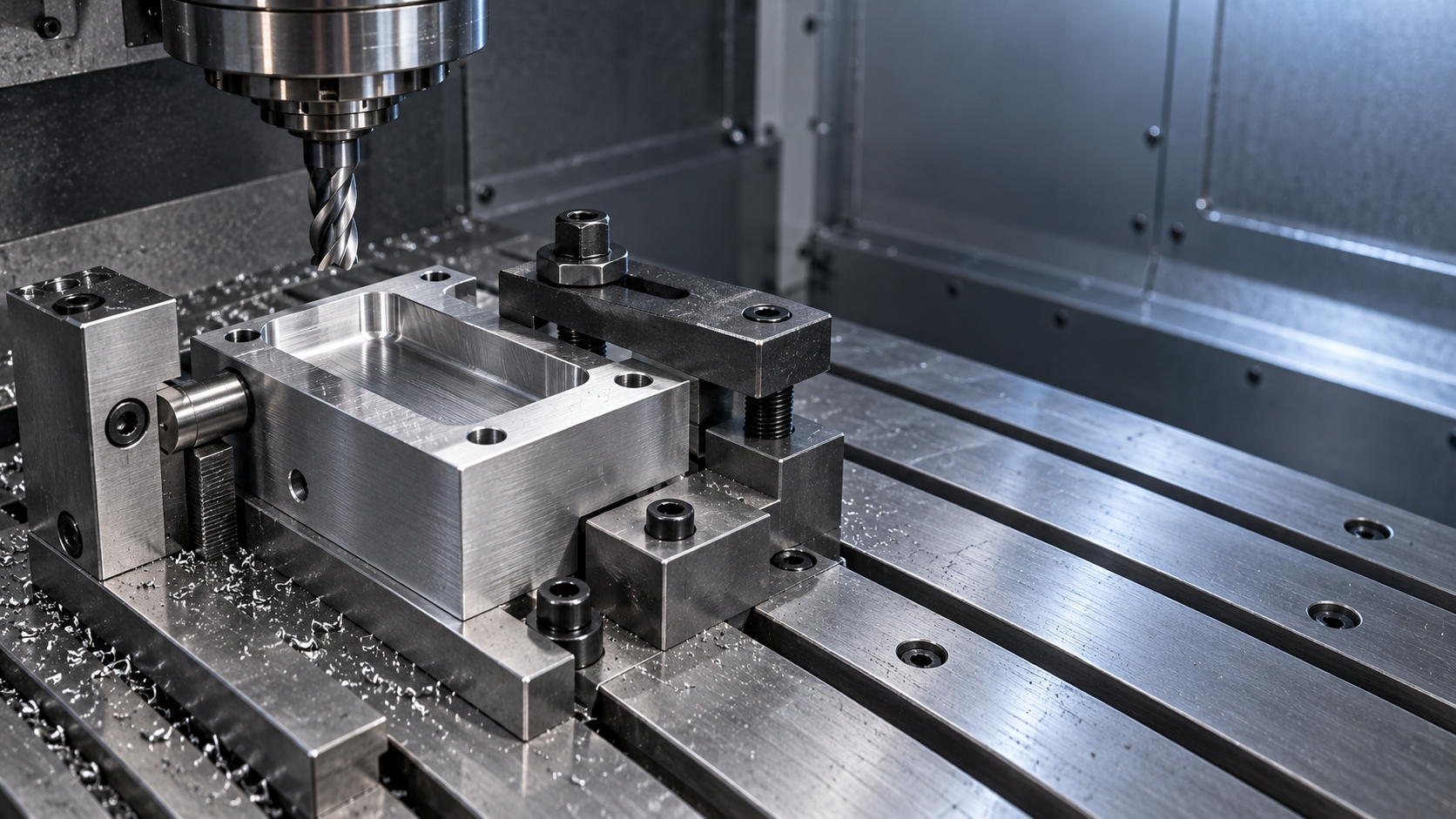
Consider the difference between a shop using familiar three-axis workholding and one moving a complex part to a multi-axis process. The latter may need new fixtures that provide tool access without sacrificing rigidity, along with longer-reach tools and revised inspection methods. The machine’s ability to reach a feature does not guarantee that the chosen fixture, tool, and cutting conditions will produce it reliably.
Include consumables and spare capacity for the first production runs: inserts, drills, coolant, filtration media, and replacement wear items as appropriate. Existing tooling can reduce the initial spend, but verify interface compatibility, condition, reach, and tool magazine constraints before counting it as available.
Software deserves the same scrutiny. The control may include basic programming functions, while the intended work requires CAM programming, post-processor development, simulation, data transfer, or additional licenses. Establish who is responsible for testing the post-processor and resolving issues during the first part program.
Training, acceptance, and the ramp-up gap
Training is not just an operator standing beside a technician during installation. Depending on the equipment, programmers, setup personnel, maintenance staff, and inspectors may each need different instruction. Budget for their time away from normal duties as well as any supplier charges, travel, materials, and follow-up support.
Define what successful handover means before signing. A machine that powers up and completes a basic motion test may still be a long way from producing the required component. An acceptance plan can specify the checks, the test part or program if applicable, the measuring method, responsibilities, and the procedure for correcting nonconformities. If a production trial is important, agree on the material, tooling, cycle conditions, and acceptance criteria in advance.
Keep the ramp-up allowance separate from the machine invoice. Programming changes, fixture adjustments, first-article inspection, and learning a new control can consume capacity before output stabilizes. For a replacement machine, consider whether the existing equipment must remain available during this period and what that means for floor space and scheduling.
Compare ownership costs over a defined period
A practical total-cost model can be kept simple: add the landed machine cost, site and startup costs, and expected operating and support costs over the chosen evaluation period. Treat any expected resale value separately and conservatively. Use the same period, production assumptions, currency basis, and operating schedule for every supplier.
The model should distinguish one-time expenditure from recurring costs. Useful categories include:
- Planned maintenance: inspections, lubrication, calibration or verification, service labor, and scheduled replacement parts.
- Unplanned support: likely response arrangements, technician travel, diagnostics, and access to critical spare parts. These are estimates, not guarantees.
- Production inputs: tooling consumption, coolant, filters, utilities, and disposal where applicable.
- Software and connectivity: subscriptions, maintenance agreements, network integration, and any paid control options needed after installation.
- Capacity and quality: setup time, inspection effort, expected scrap, and the operational impact of downtime.
Energy is worth estimating, but the nameplate rating alone is a poor proxy for the electricity bill. Demand changes with cutting load, spindle use, coolant equipment, idle time, and operating schedule. Ask for representative consumption information where available, then test the estimate against the planned duty cycle and local tariff.
Avoid treating faster quoted cycle time as automatic savings. A shorter cut may be offset by tool changes, loading, deburring, inspection, or more frequent tool replacement. Compare the complete process and identify which assumptions need a trial rather than presenting uncertain savings as established fact.
Automation and service support can change the decision
A robot, pallet system, or bar feeder can make sense when it addresses a real constraint: loading time, unattended operation, or frequent changeovers. The purchase, however, may also require guarding, interfaces, integration engineering, fixtures, part presentation, and validation. Ask who owns the complete system performance when the machine and automation come from different suppliers.
Service capability matters just as much when comparing international offers. Suppliers may manufacture in established machine tool markets such as Japan, Germany, South Korea, or China, but the relevant question is what support is available at the installation site. Confirm the local service contact, working hours, escalation process, spare-parts supply route, and any response commitments in writing.
Read the warranty alongside the maintenance requirements. Check its start date, covered components, exclusions, labor and travel provisions, and the procedure for authorizing repairs. A long warranty is less useful if routine service is difficult to obtain or if the buyer must fund significant travel for each visit.
Make the final comparison on the same scope
Before choosing a supplier, prepare a comparison that separates quoted amounts, internal estimates, and unresolved items. Assign an owner and a confirmation date to every material gap. If one offer excludes rigging and another includes it, normalize the figures rather than comparing the totals as printed.
A contingency is sensible for uncertain site work and startup requirements, but it is not a substitute for obtaining quotations. Where uncertainty remains, test a lower and higher cost scenario and see whether the preferred option changes. If the decision depends on an optimistic cycle time, a particular service response, or a fixture that has not yet been designed, resolve that point before issuing the purchase order.
The best machine tool price is the one attached to a configuration that can be installed, supported, and used for the intended work within the approved budget. Keep the acceptance criteria, exclusions, delivery responsibilities, and support commitments in the contract—not just in the comparison spreadsheet.
PREVIOUS ARTICLE
NEXT ARTICLE
Recommended for You
![]() Li Daokui: China Overtakes Germany With 21.6% of Global Machine Tool ExportsGlobal Machine Tool Trade Research Center
 Machine Tool Prices: What to Budget Beyond the Purchase PriceGlobal Machine Tool Trade Research Center
![]() Survey: 81% Expect US Cutting Tool Shipments to Rise or Hold Steady in 2026Machine Tool Industry Editorial Team
 CNC Fixture Design: Locating and Clamping for Accurate MachiningCNC Machining Technology Center
![]() US Decides Against New Tariffs on Robots, Industrial Machinery and PartsManufacturing Policy Research Center
![]() White House Section 232 Ruling: No New Machine Tool or Robot Tariffs, Calls for TalksManufacturing Policy Research Center


Aris Katos
Future of Carbide Coatings
15+ years in precision manufacturing systems. Specialized in high-speed milling and aerospace grade alloy processing.
▶
Machine Tool Prices: What to Budget Beyond the Purchase PriceGlobal Machine Tool Trade Research Center▶
What proves a precision tool factory in China can hold tolerances?Global Machine Tool Trade Research Center▶
How to Evaluate a Machine Tool Factory Before Sourcing CNC EquipmentGlobal Machine Tool Trade Research Center▶
How to Evaluate a CNC Machine Tool Manufacturer for Precision and Service SupportGlobal Machine Tool Trade Research Center▶
What Affects Cost-Effective CNC Manufacturing? Key Drivers Behind Part Price and Lead TimeGlobal Machine Tool Trade Research Center
▶
Mastering 5-Axis Workholding Strategies
Join our technical panel on Nov 15th to learn about reducing vibrations in thin-wall components.

Providing you with integrated sanding solutions
Before-sales and after-sales services
Comprehensive technical support